As someone who entered undergraduate school already wanting to become a therapist, graduate school had always felt like a given. If I wanted to become a licensed mental health counselor, I knew that a master’s degree would be necessary. For years, the path seemed straightforward: graduate school in mental health counseling, a Ph.D. in counseling psychology, and eventually building a private practice while occasionally teaching at a university.
Because of that clarity, I never spent much time questioning whether graduate school was the right choice. It simply felt like the next step.
That changed during the spring of my junior year.
I enrolled in a practicum course called Pathways to Purposeful Work and Life, expecting it to be an easy class. I already knew my plan, so I assumed the course would simply affirm the direction I had already chosen.
Instead, it challenged it.
In the course, we explored a framework discussed by Professor Belle Liang that mapped how students approach career development along two dimensions: their level of agency (proactive vs. avoidant) and their orientation toward the future (craving certainty vs. openness to exploration). The model illustrated four common approaches students take toward purpose and career planning.
One quadrant describes the Rigid Planner: someone who is proactive and driven but overly certain about one path. While this clarity can be motivating, it can also lead to pressure, burnout, or what psychologists call identity foreclosure – committing to a path before fully exploring alternatives.
As I listened, I had an uncomfortable realization.
That archetype sounded a lot like me.
I had been so confident about my ten-year plan that I had rarely allowed myself to imagine anything else. The goal of the framework, however, was to move toward a different quadrant: the Purpose Explorer – someone who remains proactive while also staying open to new possibilities.
So I experimented.
I stopped introducing myself as someone who’s “definitely going to become a therapist.” Instead, I leaned into other interests I had developed throughout college: communications, research, film, and educational programming – fields that did not necessarily require graduate school.
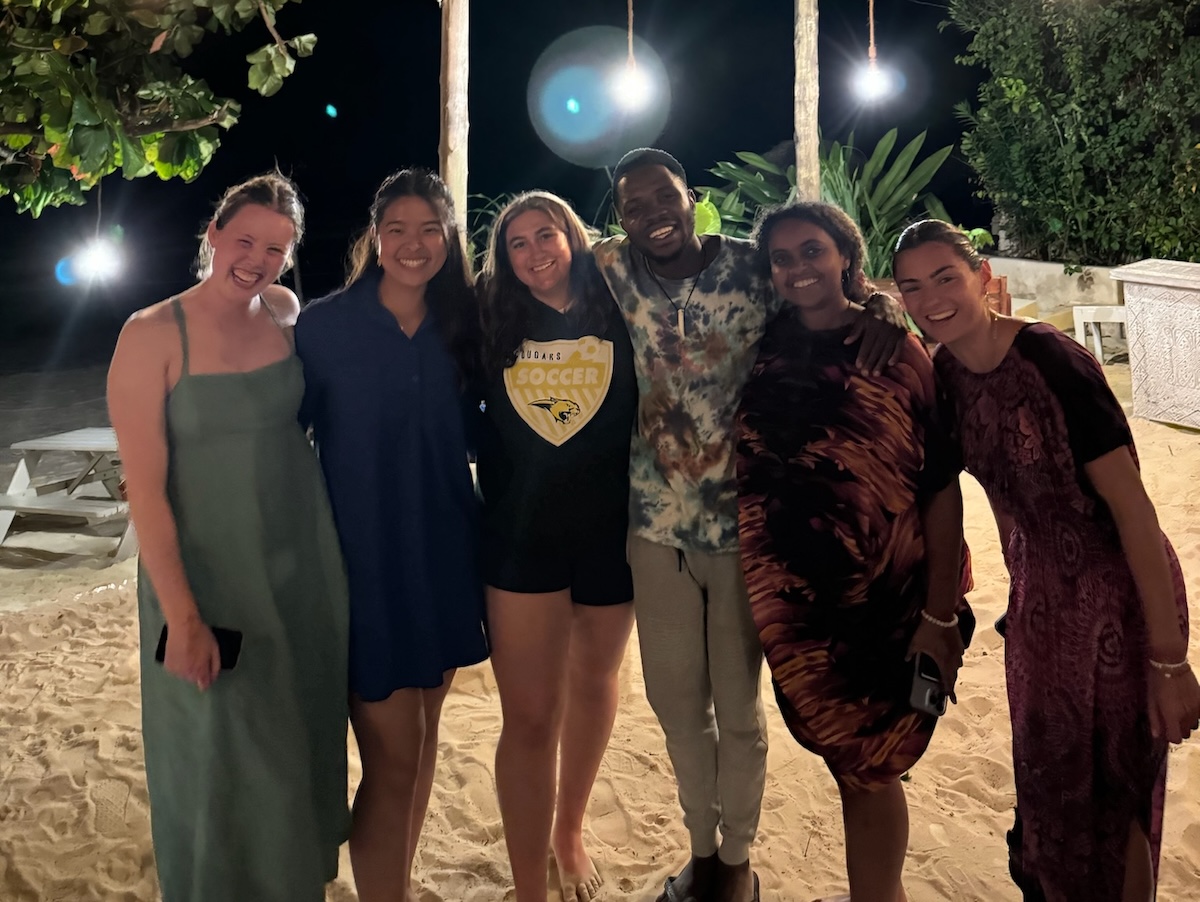
That summer, I worked in Zanzibar conducting ethnographic research and policy work. While the experience was meaningful, I quickly realized that long-term policy work was not where I felt most energized. During my senior year, I spent time in recording studios and on film projects while continuing work in youth purpose development and mental health education through The NAN Project, a suicide prevention nonprofit.
The following summer, I worked in South Korea as an education consultant with Rustic Pathways, supporting experiential learning programs for students.
Through these experiences, I was fortunate to build many relationships and receive invitations to pursue several full-time roles. For the first time, graduate school was no longer the only option in front of me.
Yet despite enjoying these different paths, something kept pulling me back.
When I reflected on the kind of lens I wanted to live through in the next stage of my life – the kind of training I wanted, the perspectives I hoped to develop, and the populations I wanted to serve – it was always the mental health work that stayed with me. The moments that felt most meaningful were the one-on-one conversations, the times when people trusted me with their stories, and the work of expanding mental health access for communities facing socioeconomic and cultural barriers.
Graduate school, I realized, was not simply a requirement for licensure. It was the environment that would allow me to pursue that work with the rigor, structure, and depth it deserves.
Could I have waited a few more years before going? Most certainly.
But I also felt a deep hunger for knowledge, for mentorship, and for training that would prepare me to do this work responsibly and well.
That realization ultimately led me to Teachers College, Columbia University, where I could deepen my training as a mental health counselor while engaging with a community committed to advancing equity and access in mental health.
Looking back, the exploration that preceded this decision continues to shape how I think about my path. Those experiences did more than clarify what I wanted to pursue. They planted meaningful seeds – perspectives, relationships, and ways of seeing the world that are still unfolding. Some of those seeds may blossom years from now in ways I cannot yet anticipate. By allowing myself to branch out, I gained a worldview and depth of perspective that I would never have developed had I followed only the path I originally imagined.