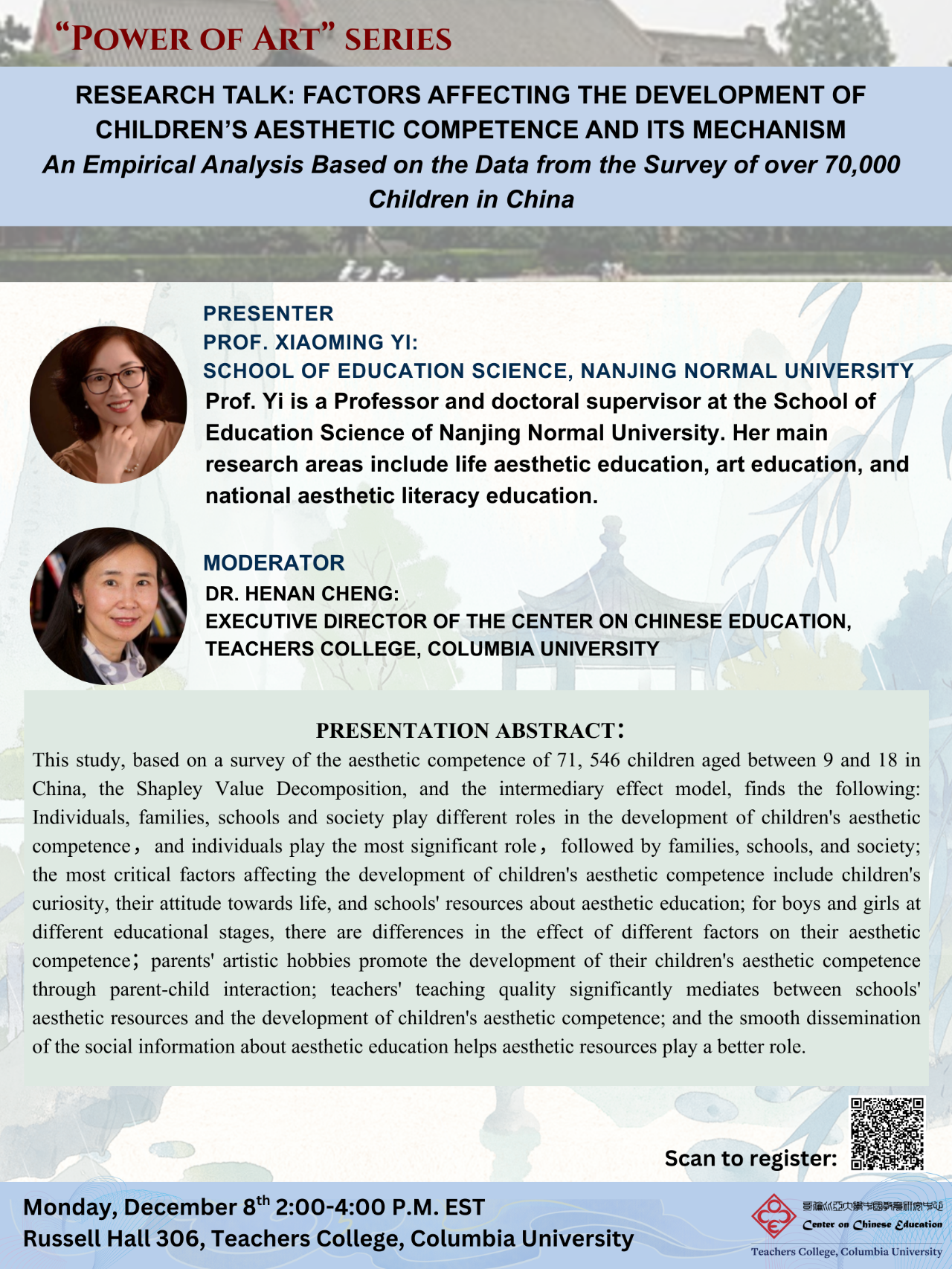
This research talk examines the development of children’s aesthetic competence in contemporary China, drawing on one of the largest datasets to date. The presentation will share key findings from a nationwide survey and provide insights into the individual, family, school, and societal factors that shape children’s aesthetic growth.
Presentation Abstract
This study, based on a survey of the aesthetic competence of 71, 546 children aged between 9 and 18 in China, the Shapley Value Decomposition, and the intermediary effect model, finds the following: Individuals, families, schools and society play different roles in the development of children's aesthetic competence, and individuals play the most significant role, followed by families, schools, and society; the most critical factors affecting the development of children's aesthetic competence include children's curiosity, their attitude towards life, and schools' resources about aesthetic education; for boys and girls at different educational stages, there are differences in the effect of different factors on their aesthetic competence; parents' artistic hobbies promote the development of their children's aesthetic competence through parent-child interaction; teachers' teaching quality significantly mediates between schools' aesthetic resources and the development of children's aesthetic competence; and the smooth dissemination of the social information about aesthetic education helps aesthetic resources play a better role.
Presenter:
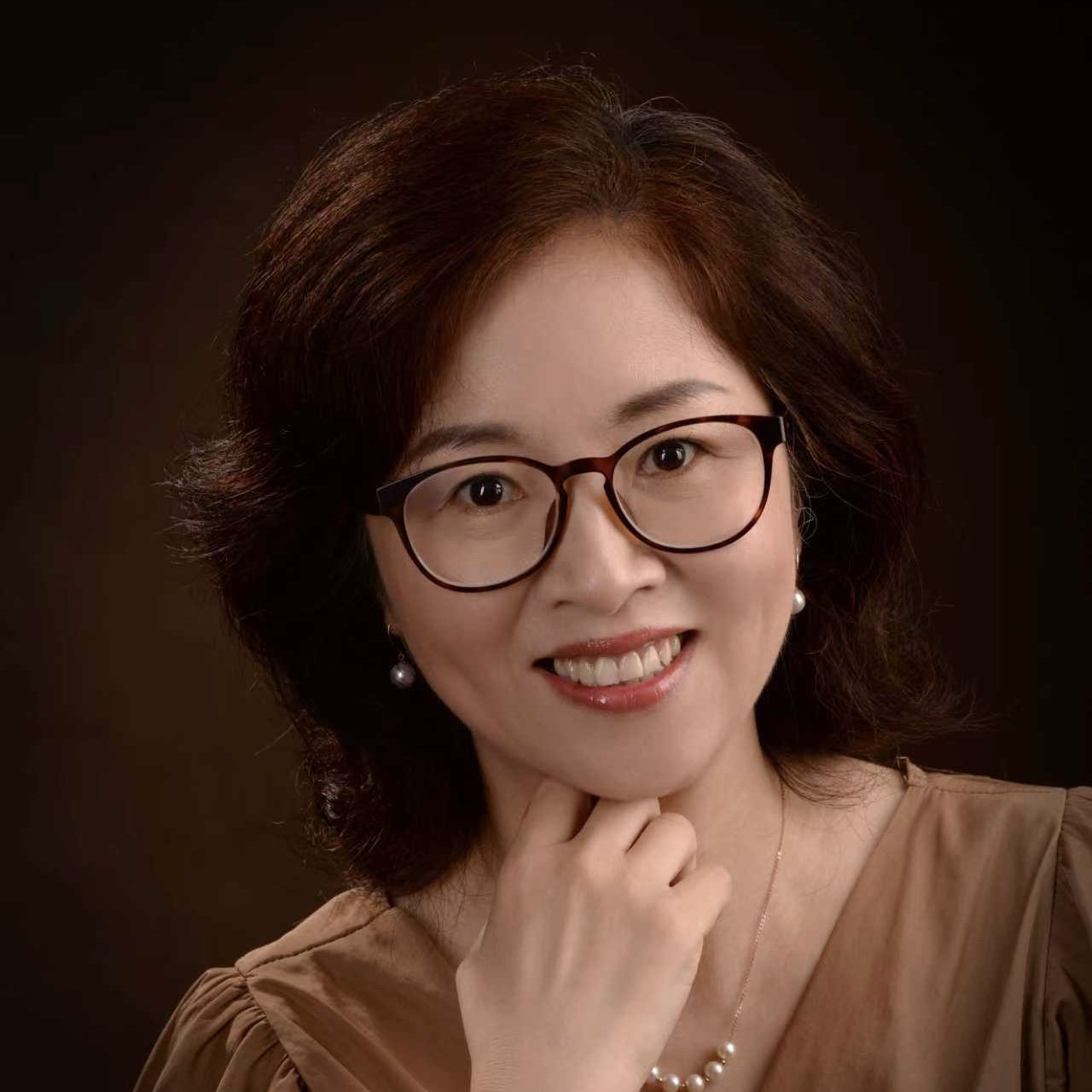 PROF. XIAOMING YI:
SCHOOL OF EDUCATION SCIENCE, NANJING NORMAL UNIVERSITY Prof. Yi is a Professor and doctoral supervisor at the School of Education Science of Nanjing Normal University. Her main research areas include life aesthetic education, art education, and national aesthetic literacy education.
Event Details
Date: Monday, December 8th
Time: 2:00–4:00 PM EST
Location: Russell Hall 306, Teachers College, Columbia University
Scan the QR code to register: