Books
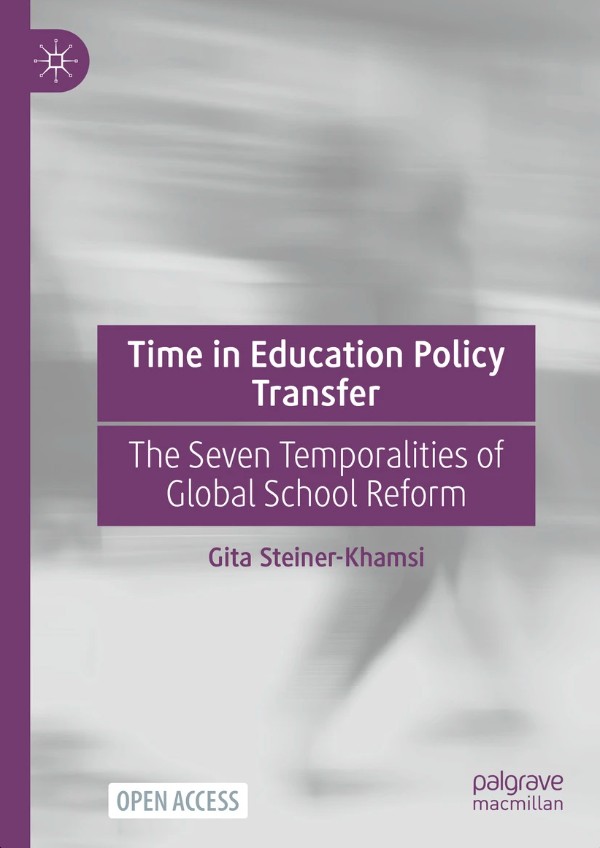
Time in Education Policy Transfer: The Seven Temporalities of Global School Reform
This open access book investigates a topic underexplored in policy transfer: time. Drawing on well-known theories from comparative education, public policy studies, political science, and sociology, but written in an easy-to-understand language, the author discusses seven temporalities of policy transfer: historical period, future, sequence, timing, lifespan, age, and tempo. The temporal dimension helps us understand when the current school reform, known as the school-autonomy-with-accountability reform, developed into a global script, why it conquered the globe, and how it was selectively adopted and translated into each local context. Also, for the first time in this book, the author demonstrates what exactly diffused and what “stuck,” that is, which features of the reform were eventually institutionalized. Internationally renowned for her seminal work on policy borrowing, the author systematically applies a comparative, transnational, and global perspective to capture the role of the OECD and the World Bank in advancing and accelerating the reform’s worldwide diffusion.

The Rise Of Knowledge Brokers In Global Education Governance
NORRAG Series on International Education and Development
How do policymakers orient themselves in an era of surplus information?
This insightful book presents a multidisciplinary investigation into the growing influence of knowledge brokers and how they utilize data to support education policy and planning.

Evidence and Expertise in Nordic Education Policy
A Comparative Network Analysis
This open access book explores how policy makers draw on national, regional and international expertise in issuing school reform within five Nordic countries. In an era of international comparison, policy makers are expected to review best practices, learn from experiences from elsewhere, and apply international standards propelled by international organizations. Do they do so? What counts, for them, as evidence and expertise? The chapters draw methodologically on bibliometric data, network analysis, document analysis and expert interviews. They show compellingly how governments use “evidence” strategically and selectively for agenda setting and policy decisions. This book will be of interest and value to scholars of education policy, specifically within the Nordic region, and international and comparative education.

Comparative Methodology in the Era of Big Data and Global Networks
World Yearbook of Education 2019
Digital methodologies, new forms of data visualization and computer-based learning and assessment are creating new challenges as well as opportunities for scholars in educational research.
Vital questions such as how we understand the technological developments that are creating new possibilities for and demands on education, and how we make sense of complex cases that cut across multiple nations, are discussed.
This newest addition to the prestigious World Yearbook of Education series provides a fascinating read for scholars in the fields of education policy and comparative education. It is not only a useful resource for educational researchers and policy makers examining new trends and emerging issues, but would be of interest to graduate students exploring innovative methodologies, particularly in the study of education and education policy.
Understanding PISA’s Attractiveness
Critical Analyses in Comparative Policy Studies
Understanding PISA’s Attractiveness examines how policy-makers and the media interpret the results of PISA league-leaders, losers, and slippers in ways that suit their own reform agendas. As a result, a myriad of explanations exist as to why an educational system is high or low performing.
The analyses in this book bring to light the wide array of idiosyncratic projections into these international tests. In some countries, these tests are also used to scandalise one’s own educational system and to generate quasi-external reform pressure.
This book offers a truly global perspective on the uses and abuses of PISA and will be of great interest to students and academics working in educational policy, comparative education, and political science, and those working on large-scale data sets.
The State, Business and Education: Public-Private Partnerships Revisited
NORRAG Series on International Education and Development
The State, Business and Education contributes to the ongoing debates surrounding the effects of public funding of private entities by examining the ways in which they affect the quality and equity of those services, and the realization of human rights. Using case studies from both the developing and developed world this book illustrates the variety of ways in which private actors have expanded their involvement in education as a business.
Researching the Global Education Industry: Commodification, the Market and Business Involvement
This book examines how the Global Education Industry (GEI) has brokered, funded, and implemented new conceptualizations of ‘good’ education. With a focus on new private providers and policy actors in education, the authors of the book analyze the impact of the GEI on educational research, policy and practice. How did philanthropies and foundations manage to make their voices heard in school reform debates, what are the implication of digital technologies and data infrastructures on teaching and learning, and should the fast advance of the GEI be merely seen as a logical consequence of the commercialization of education? Moving beyond single-country case studies, the book focuses on key issues related to the study of the Global Education Industry in an international context, discussing the rationales, processes and impacts of current developments. This comprehensive book will be of interest and value to scholars and researchers of the GEI, as well as policy makers.

The Global Education Industry
World Yearbook of Education 2016
This latest volume in the World Yearbook of Education series examines the global education industry both in OECD* countries as well as developing countries, and presents the works of scholars based in different parts of the word who have significantly contributed to this area of research. Focusing on the areas of cross-over in public-private partnerships in education, WYBE 2016 critically examines the actors and factors that have propelled the global rise of the education industry.
Split into three key sections, Part I explores how education agendas are shaped; Part II considers the private financing of education and the export of school improvements to professional consultancies; and Part III analyses new market niches, such as low-fee private schooling and for-profit education provisions.
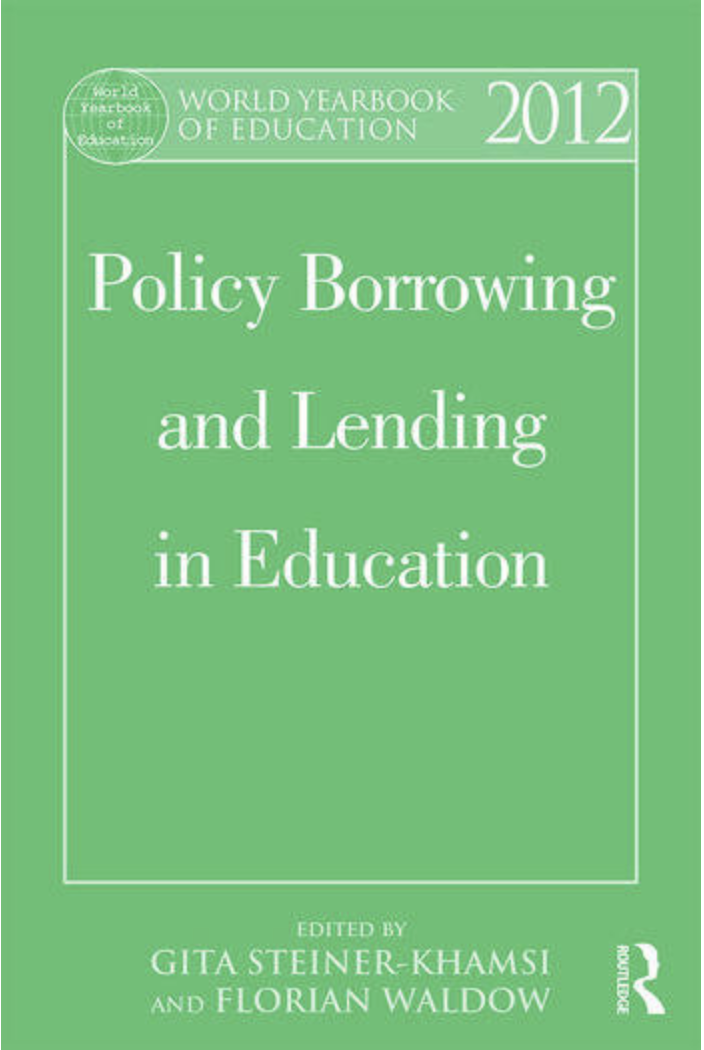
Policy Borrowing and Lending in Education
World Yearbook of Education 2012
The phenomenon of "travelling reforms" has become an object of great professional interest and intensive academic scrutiny. The fact that the same set of educational reforms is transferred from one country to another made scholars wonder whether policy transfer has increased as a result of globalization. But also the fact that policy makers increasingly import "best practices "and international standards and use them as a tool to accelerate reform has captured the imagination of many that deal with policy studies. An international comparative perspective is key for understanding why reforms travel from one corner of the world to another. Not surprisingly, the study of policy borrowing and lending constitutes one of the core research topics of comparative policy studies; a new area of research that links comparative education with policy studies.
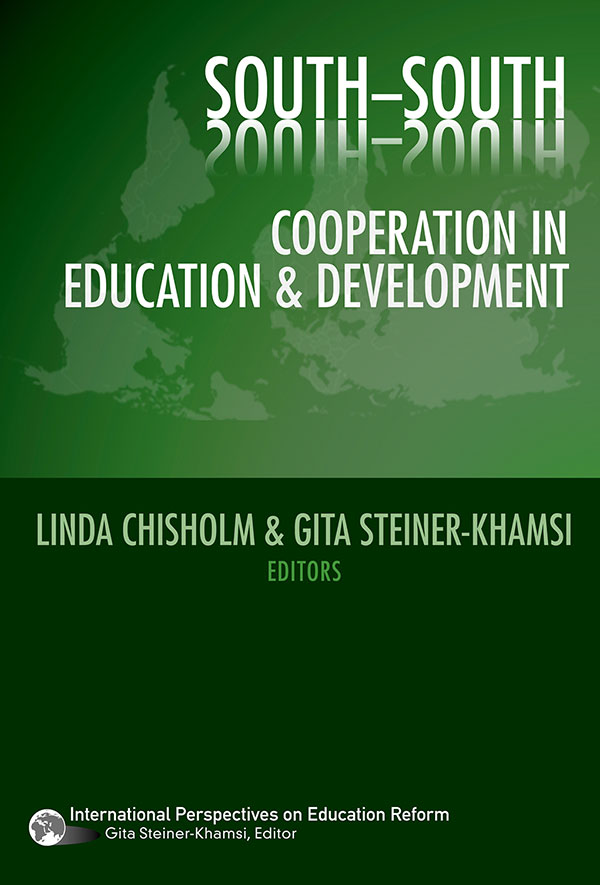
South–South Cooperation in Education and Development
How real is the collaboration between developing countries? Focusing on educational reform, this book turns the cutting-edge topic of South–South cooperation inside out with a set of challenging and diverse studies that explore what this concept means in practice.
Providing succinct analyses of the new trend of international cooperation, this valuable resource:
- Examines the institutional histories, rationales, varieties, and effects of South-South collaboration.
- Investigates the occurrence, types, and content areas of South-South transfer, including triangular partnerships and bilateral and regional initiatives.
- Explores the limits of and possibilities for South–South cooperation in the field of education.
- Features a formidable combination of perspectives from different parts of the world.
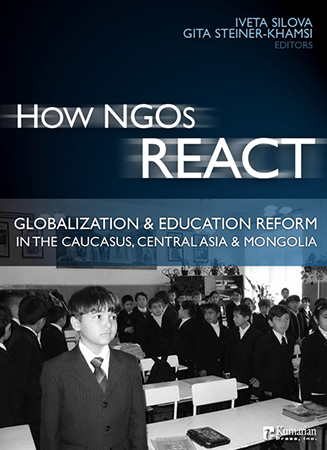
How NGOs React
Globalization and Education Reform in the Caucasus, Central Asia and Mongolia
How NGOs React follows the Soros Foundation's educational reform programs in the Caucasus, Central Asia, and Mongolia and raises larger questions about the role of NGOs in a centralist government, relationships NGOs have with international donors and development banks, and strategies NGOs use to interpret global reforms locally.
The authors, all former or current educational experts of the Soros Foundation, analyze "the post-socialist reform package" at the country-level, highlighting the common features such as decentralization, privatization, vouchers and liberalization of the textbook publishing market. They look at the global reforms and their variations as they were transferred to Armenia, Azerbaijan, Georgia, Kazakhstan, Kyrgyzstan, Mongolia, Tajikistan, Turkmenistan, and Uzbekistan over the past decade.
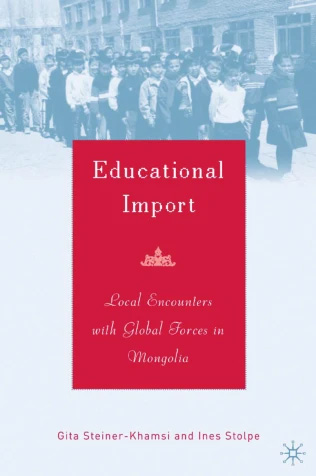
Local Encounters with Global Forces in Mongolia
This book addresses students, practitioners and scholars in educational policy studies. The authors use Mongolia as a case to illustrate how global influences shape domestic developments in education, and how imported education reforms are locally modified, re-contextualized, or 'Mongolized'.
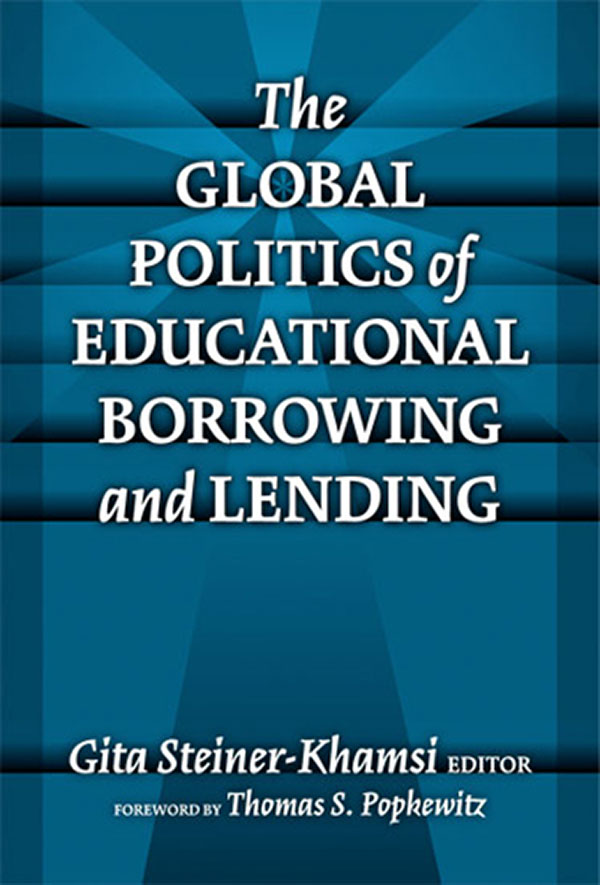
The Global Politics of Educational Borrowing and Lending
Will the “best practices” of schools in Scotland work in South Africa? Are PTAs, a mainstay of American school governance, as valuable in European countries? Who decides and why?
The globalization of educational policy has become a popular, if not ubiquitous, phenomenon among educational policymakers across the world. In this volume, Steiner-Khamsi and her colleagues provide an in-depth empirical and critical examination of the practice of global educational policy. Contributors question the value of importing and exporting educational policies, analyze who benefits from these arrangements, and test the effectiveness of adapting one country’s policies in other (often quite culturally distinct) countries. The book investigates how global policies have been implemented locally, and examines the extent to which they work in diverse locales.
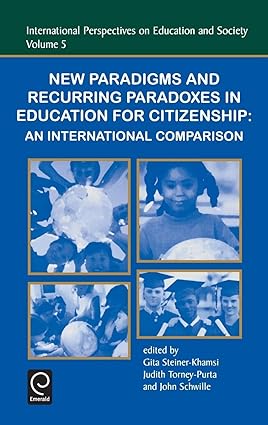
New Paradigms and Recurring Paradoxes in Education for Citizenship
Scholars in international comparative education are calling for a new paradigm - a multi-level qualitative analysis of cross-national data. In response, this volume demonstrates the application of a multi-level analysis to qualitative data. Based on an international data base and case studies on civic education in 24 countries that were gathered in the IEA Civic Education Study, scholars in civic education and international comparative education identify, analyze, and discuss three areas: first, the nature and status of civic education within countries, as well as common themes across countries; second, the paradoxes, puzzles, and complexities presented within countries; and third, new paradigms and methodologies for qualitative cross-national analyses. This work contributes to both the content of research in civic education and the methodology of research in international comparative education. Political systems of participating countries include those that are historically of a free-market orientation, as well as those of formerly socialist countries that have, in the 1990s, undergone massive political and economic change.
