Infant Classroom
2 months to 24 months
CLASSROOM ENVIRONMENT
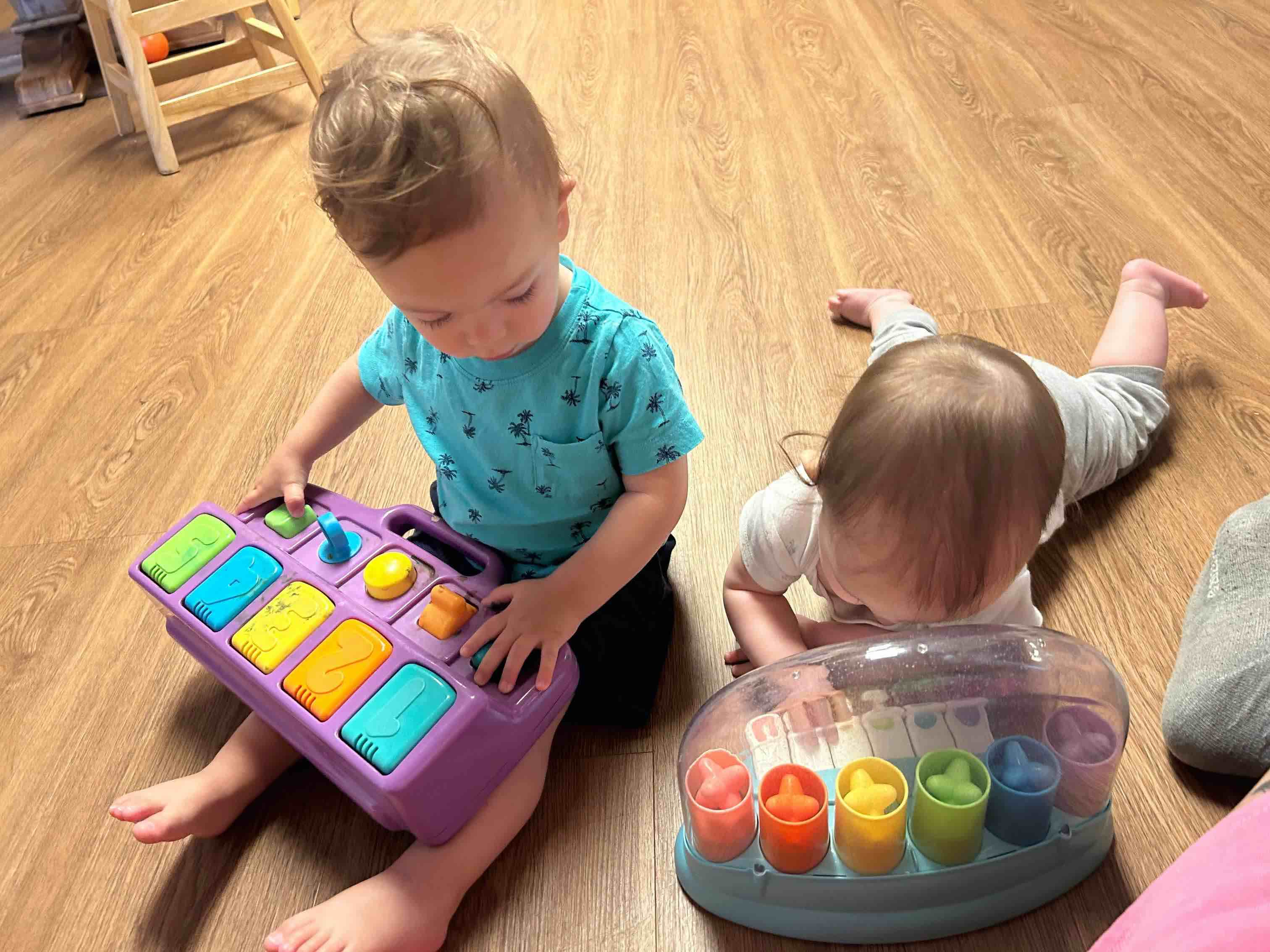
In the infant room, we strive to create a calm, nurturing, and playful environment for the children, encouraging them to explore the materials and areas of the classroom at their own pace. The physical environment changes often, sometimes drastically and sometimes in a more subtle way. There are always spaces for different types of activities, such as a quiet reading corner, gross-motor area with stairs and a slide, smaller manipulatives on a low shelf, and sensory activities like water and sand play. There are also separate areas for diapering, toileting, and eating. We respond to infants' cravings for novelty while maintaining consistency in their day-to-day activities in the classroom. Teachers are intentional about the room decor -- we emphasize natural materials, the children's artwork, and photos of the children and their families. This allows us to spotlight their interests and the materials they are engaged with to reflect a responsive environment.
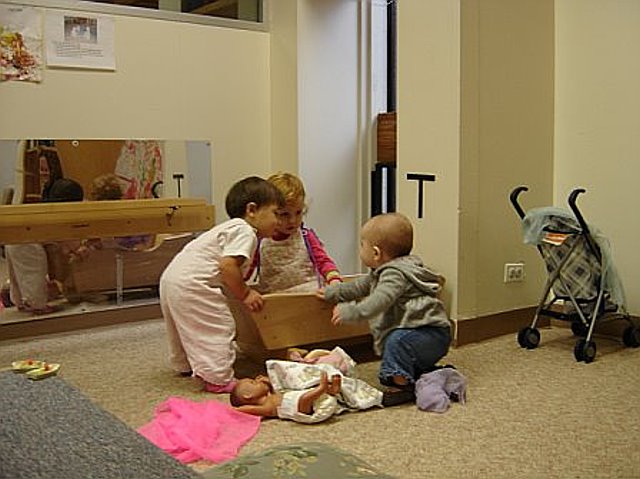
The social environment of the infant room provides many opportunities to build relationships with caregivers, family members, and peers. Along with two head teachers and two graduate assistants that work in the classroom year round, our staffing includes student teachers from the Early Childhood Master's program at Teachers College. Family members are encouraged to spend time in the classroom as much as they can, and the children have the chance to build relationships with the other families. Our mixed-age classroom supports peer relationships as younger children look to older children for ideas and help and older children learn to care for younger children.
TEACHERS AS CAREGIVERS
As teachers of very young children, we are involved in caregiving routines throughout the day. We are teachers and caregivers, spending our days developing relationships through daily routines and capitalizing on opportunities to facilitate growth. We place a special importance on learning to trust one another while supporting children to be independent.
Key caregivers focus on developing relationships with particular children and families. The infant classroom has two head teachers who serve as mentors to a number of graduate students from the Teachers College community who are working in the classroom on a semester or year-long basis. Given the number of adults in the classroom, teachers are usually able to provide individual attention on a regular basis to address the children's unique needs. In addition, the teachers and graduate students work together to create a dynamic environment that is conducive to both large- and small-group learning activities. We also practice continuity of care when working with infants, maintaining relationships throughout the day, especially during transitions.
CURRICULUM
The infant room uses a child-led, emergent, and integrated curricular approach. Most of the materials provided and the activities introduced by the teachers are connected to the children's developmental needs and interests.
In the classroom, we practice the "watch, wait, and wonder" approach in coordination with responsive teaching, providing the space for the children to initiate activities on their own as we observe the minute details of their development in order to discover how to help them to take the next steps.
By observing the children, the teachers make decisions about setting up the classroom, organizing activities, or introducing new ideas based on what the children need and in partnership with their families. Through daily routines, infants learn important socio-cultural skills like learning to work collectively and forming trusting relationships with their caregivers and peers.
RATIO OF ADULTS TO CHILDREN
There is a maximum of eight children in the room. There are at least three adults present, one of whom is a head teacher.
DAILY SCHEDULE
In the infant room, we follow the individual needs of each child. We begin the day with free play. Throughout the morning, we individualize care to provide snacks, napping, and activities for the children. We have an outing once a day to a local playground or our indoor play-space. The older children eat lunch together before taking a nap in the early afternoon. The late afternoon is similar to the morning but tends to include some quieter activities as the children are waking from nap and preparing to go home. Throughout the day, snacks, meals, napping, diapering, and toileting are all based on the individual child's needs.