Schools are a key environment for developing lifelong eating behaviors. Access to free, reduced, or full priced school meals not only promotes student wellbeing, but can also send students a message about the types of foods they should be eating regularly.
In 2024, the National School Lunch Program served 4.8 billion lunches [1]. Research shows school meals contribute to students’ well-being and academic success [2]. Knowing this, leaders in school districts and local municipalities have been increasingly investing in farm-to-school programs, which expand local food in schools as well as support school gardens and nutrition education efforts. In 2023, The 2023 U.S.Department of Agriculture Farm-to-School Census found that 74% of school food authorities reported participation in these programs - up from 65% in 2019 [3].
Farm-to-School programs make a real difference to students by providing hands-on nutrition and gardening activities. Students develop positive attitudes towards fresh fruits and vegetables that translates into increased consumption of healthy foods. In order to gain more insight on this process, The Tisch Food Center collaborated with the Center for Social Science Research at George Mason University on a pilot study evaluating the impact of culinary education in Washington, D.C. public elementary schools [4]. The research was funded by DC Public Schools, FRESHFARM (the organization that runs FoodPrints), and the USDA’s Farm to School grant program.
Researchers observed the implementation of a collaboration between Wellness in the Schools (WITS) and the FRESHFARM FoodPrints program. WITS is a national nonprofit that partners with school districts to provide nutrition education and assistance with preparing scratch-cooked lunches. FRESHFARM is a DC-based organization that operates a network of farmers’ markets and farm stands. It offers nutrition and garden education through the FoodPrints program, which uses the social cognitive theory framework [5].
This pilot study employed a quasi-experimental, nonrandomized, post-only comparison group design. It tested the hypothesis that students who have had previous exposure to a food via farm-to-school programming will be more likely to consume a larger portion when served that same food item in the cafeteria.
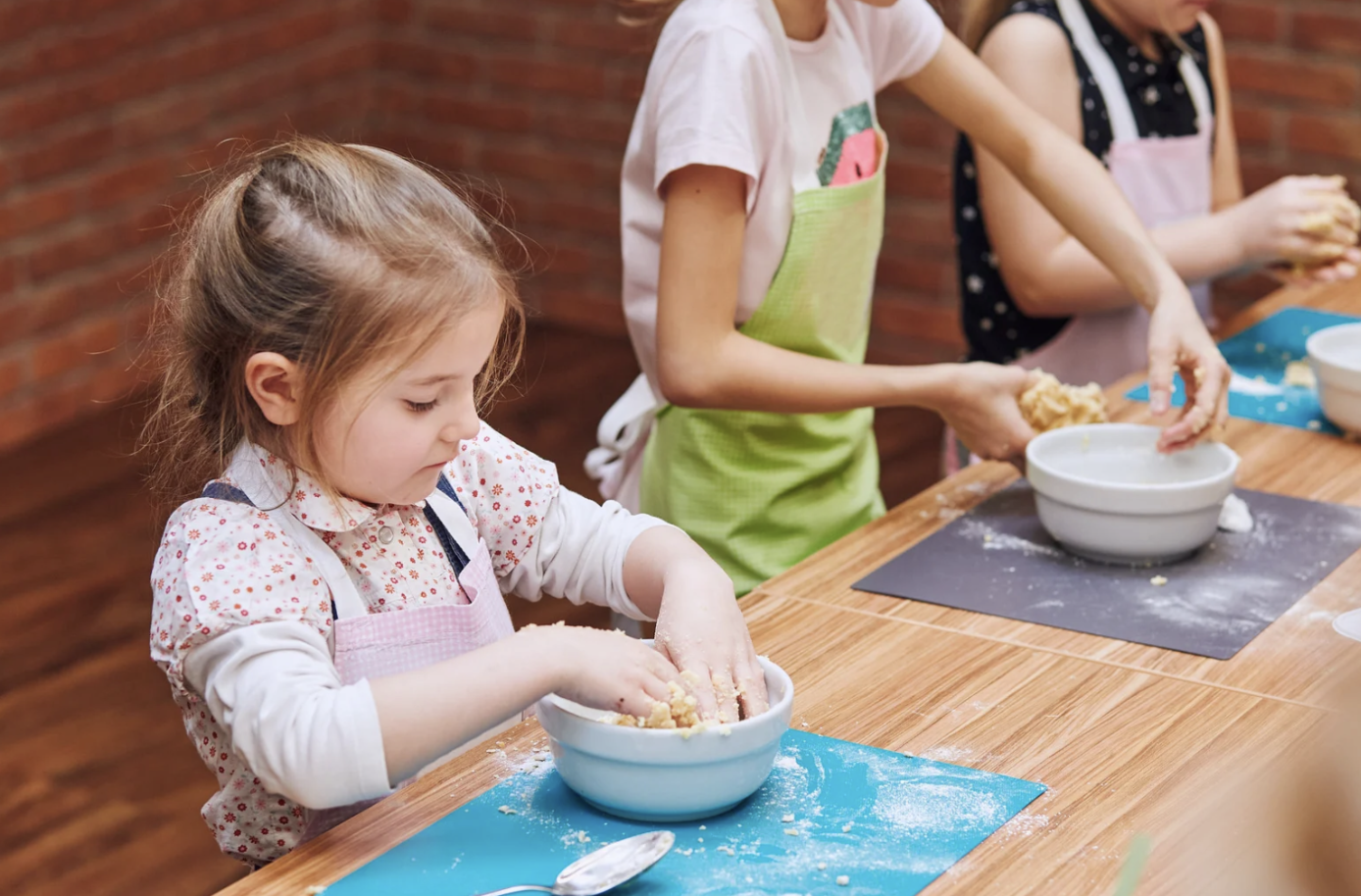
In the 2018-2019 school year, four DC elementary schools were observed: two intervention schools and two comparison schools. The schools were matched by poverty level, and included one high-poverty pair and one low-poverty pair. The intervention schools would partake in monthly in-school “field trips” with gardening and cooking activities. The same recipes were then served from scratch in the cafeteria in the following weeks. A WITS Chef Coach supported lunchroom staff with preparation, as well as talked with the students about the meals during the lunch period. The meals prepared and observed were a sweet potato quesadilla with kale salad, veggie fried rice with Asian slaw, and spinach pesto pasta.
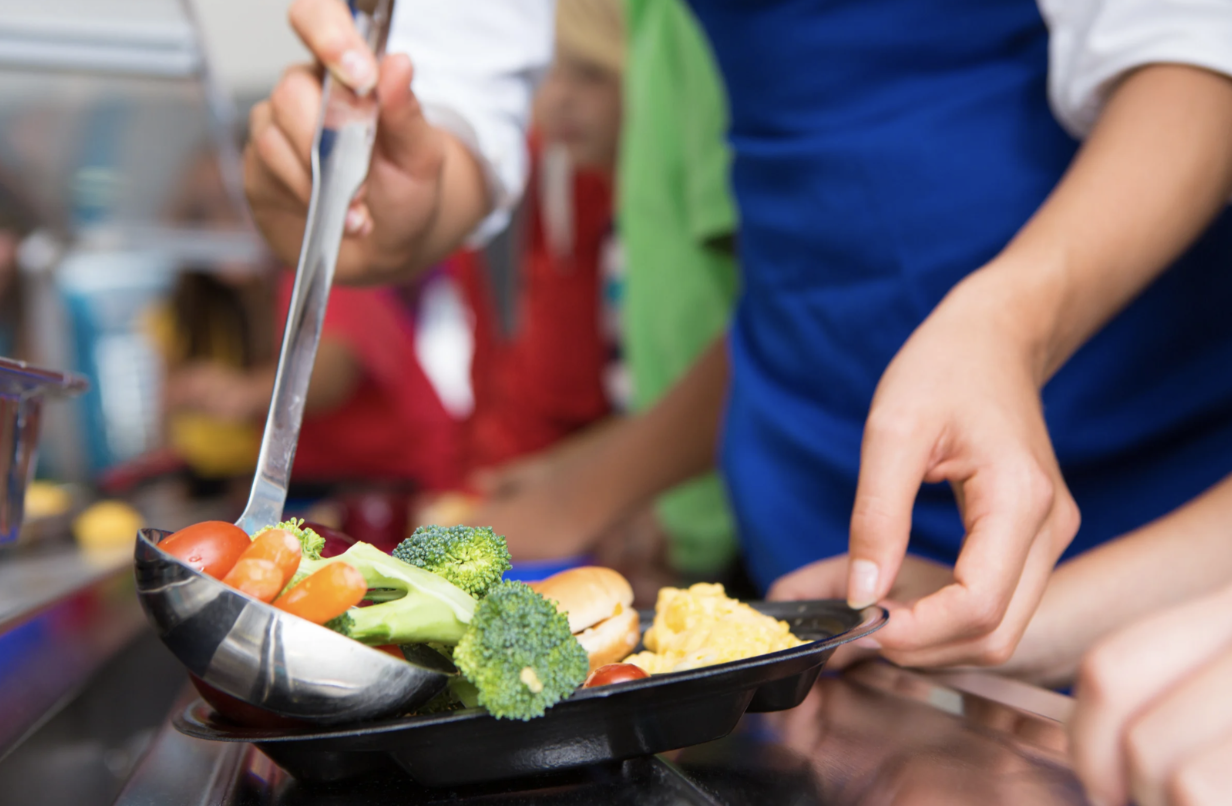
Photo credit: Canva
School Lunch Consumption was measured through using a previously validated tool called System of Observational Cafeteria Assessment of Foods Eaten (SOCAFE). SOCAFE observes and records how much of each lunch and food-from-home item is eaten throughout the lunch period [6]. Students in the intervention schools ate an average of 47.5% of their entree, compared to 34.5% in the comparison schools. For the entree plus side salad, intervention students ate an average of 44.1%, compared to 31.2% in the comparison schools. For both high- and low-poverty schools, the intervention group showed higher consumption patterns overall. Results were not predicted by grade level either. One surprising finding was that vegetable, grain, and protein portions tended to be eaten evenly. A possible explanation is that the meals had components mixed together, making it harder to avoid specific food groups.
Overall, this study suggests that farm-to-school programming - where kids grow, cook, or eat a meal in class - may help increase student interest in their school meals. Pairing classroom experience with cafeteria menus was associated with kids eating more of their school lunch. In addition, serving more mixed-dish meals may be one way to help boost children’s vegetable consumption.
While this design was limited in its ability to assess overall dietary changes among students, it does provide strong rationale for further research. Researchers hope to conduct a pre-post design with matched comparison groups utilizing a larger sample size in the future.
As for FoodPrints, they are still very involved in DC public elementary schools! At the start of the 2026-27 school year, they partnered with 20 schools and have been serving over 7,600 students with hands-on, standards-based food and garden education. Supporting organizations and schools pushing these programs forward is paramount in building healthy, lifelong eating behaviors.
Read the full research brief here.
Works Cited:
- U.S. Department of Agriculture, Economic Research Service. (n.d.). Child nutrition programs: National School Lunch Program. https://www.ers.usda.gov/topics/food-nutrition-assistance/child-nutrition-programs/national-school-lunch-program
- Descarpentrie, A., Ghosh, A., Linden, N., Zellhart, K., Lustig, R. H., Shlain, J., … Goran, M. I. (2026). Evaluating associations between the Eat Real school nutrition programme and academic outcomes in K–12: evidence from a staggered difference-in-differences study. Public Health Nutrition, 29(1), e199. doi:10.1017/S1368980026103504
- Machata, N., Jennings, L., Morrison, H., & Boyle, M. (2024). 2023 Farm to School Census report. Food and Nutrition Service, U.S. Department of Agriculture. https://fns-prod.azureedge.us/sites/default/files/resource-files/2023FarmToSchoolCensusReport_v3.pdf
- Kerstetter, K., Roberts, K. J., Trent, R., Koch, P. A., Casey, C., De Jesus-Martin, M., Trinidad, A., Mampara, J., & Bacon, B. (2026). School garden and nutrition education associated with increased consumption of school meals in pilot study. Journal of Nutrition Education and Behavior. https://doi.org/10.1016/j.jneb.2026.01.018
- Bandura, A. (1986). Social foundations of thought and action: A social cognitive theory. Prentice-Hall.
- Koch PA, Wolf RL, Trent RJ, Ang IYH, Dallefeld M, Tipton E, Gray HL, Guerra L, Di Noia J. Wellness in the Schools: A Lunch Intervention Increases Fruit and Vegetable Consumption. Nutrients. 2021 Sep 2;13(9):3085