On February 21st, 2026, the Center on Chinese Education successfully hosted its 2026 Spring Festival Gala at Milbank Chapel, bringing together scholars, students, and guests from both the United States and China to celebrate the arrival of the Year of the Horse. Over 200 Teachers College students, faculty, staff and community members attended this memorable event. Through music, dialogue, and cultural performances, the Gala created a festive atmosphere while highlighting the role of cultural exchange in education.
Opening Remarks and New Year Messages from Distinguished Guests
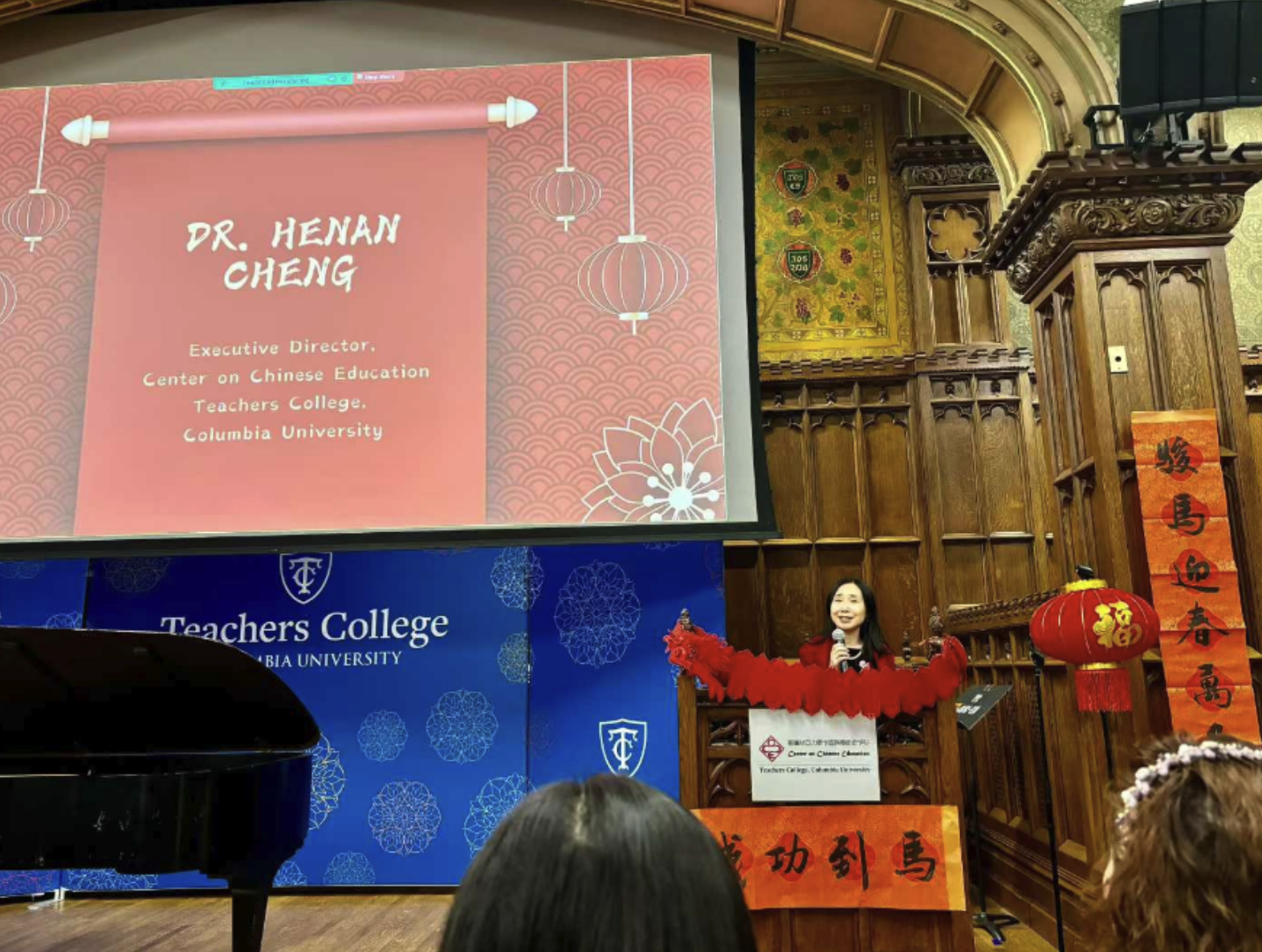 Dr. Henan Cheng, Executive Director of the Center on Chinese Education at Teachers College, delivered the opening remarks on behalf of the organizing committee. She reflected on the cultural and educational significance of the Spring Festival, emphasizing that the holiday represents not only family reunion but also the continuation of cultural traditions and shared values. For students and scholars studying abroad, she noted, the celebration also provides a sense of belonging and connection.
Speaking about the symbolism of the Year of the Horse, Dr. Cheng highlighted how horses represent strength, perseverance, vitality and beauty across many cultures. From a comparative education perspective, she suggested that such shared cultural symbols reveal deeper connections among civilizations and invite reflection on how education can contribute to building a more sustainable and peaceful global future.
Thomas Bailey, President of Teachers College, also extended his New Year greetings to the TC community around the world. Reflecting on his recent visit to China earlier this year, he emphasized the enduring importance of academic collaboration and educational exchange between the United States and China.
One special cultural highlight of the evening was a handwritten Spring Festival couplet composed by Professor Zhen Kang, Vice President of Beijing Normal University and a renowned scholar of classical Chinese literature. The calligraphy art was sent from Beijing to New York specifically for the event and displayed during the celebration, symbolizing the longstanding academic connections between Beijing Normal University and Teachers College.
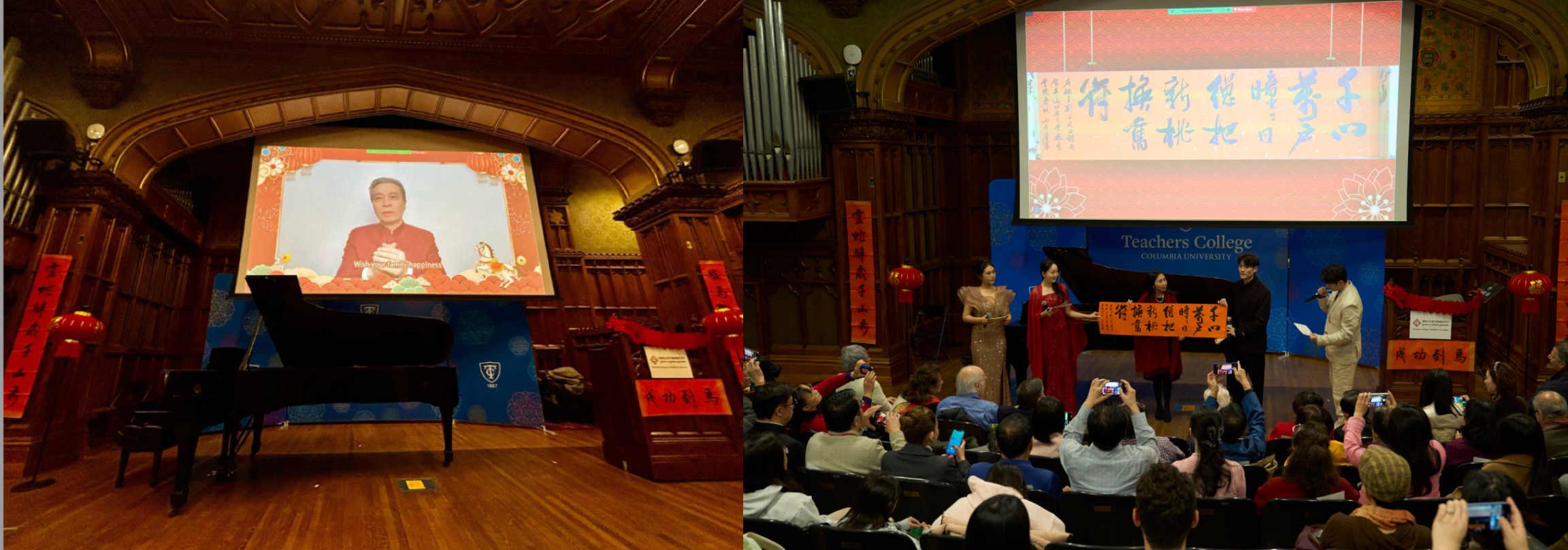
Professor Mingyuan Gu, former Vice President of Beijing Normal University, a pioneering scholar of comparative education in China, and Senior Advisor to the Center on Chinese Education at Teachers College, also shared a special New Year message. At the age of 97, Professor Gu has devoted his lifetime to advancing educational research and development. In his remarks, he reflected on the importance of academic legacy and international collaboration in education.
Guests from the academic and cultural fields also shared video messages offering New Year greetings. They included internationally acclaimed violinist Siqing Lü, Zhenyu Zhang, a key advocate for the international recognition of the Spring Festival, Professor Xishuang Yao, former Director of the Department of Language Application and Administration of China’s Ministry of Education, and filmmaker Jian Wang.
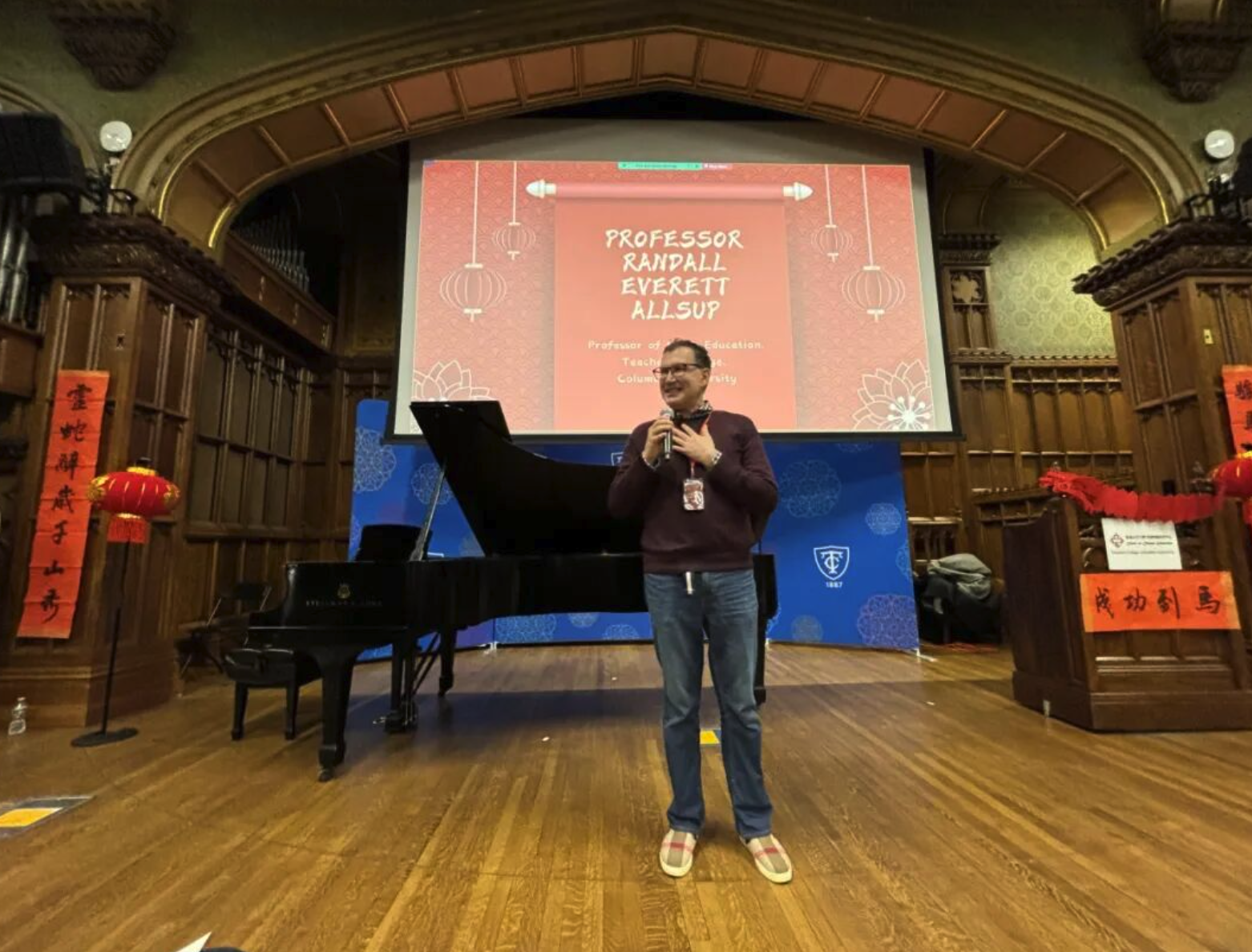
Professor Randall Everett Allsup from the Teachers College Music and Music Education program also addressed the audience in Chinese, sharing his experiences working with Chinese and American students in collaborative music projects.
Special Conversation: “Chinese Red Meets Columbia Night”
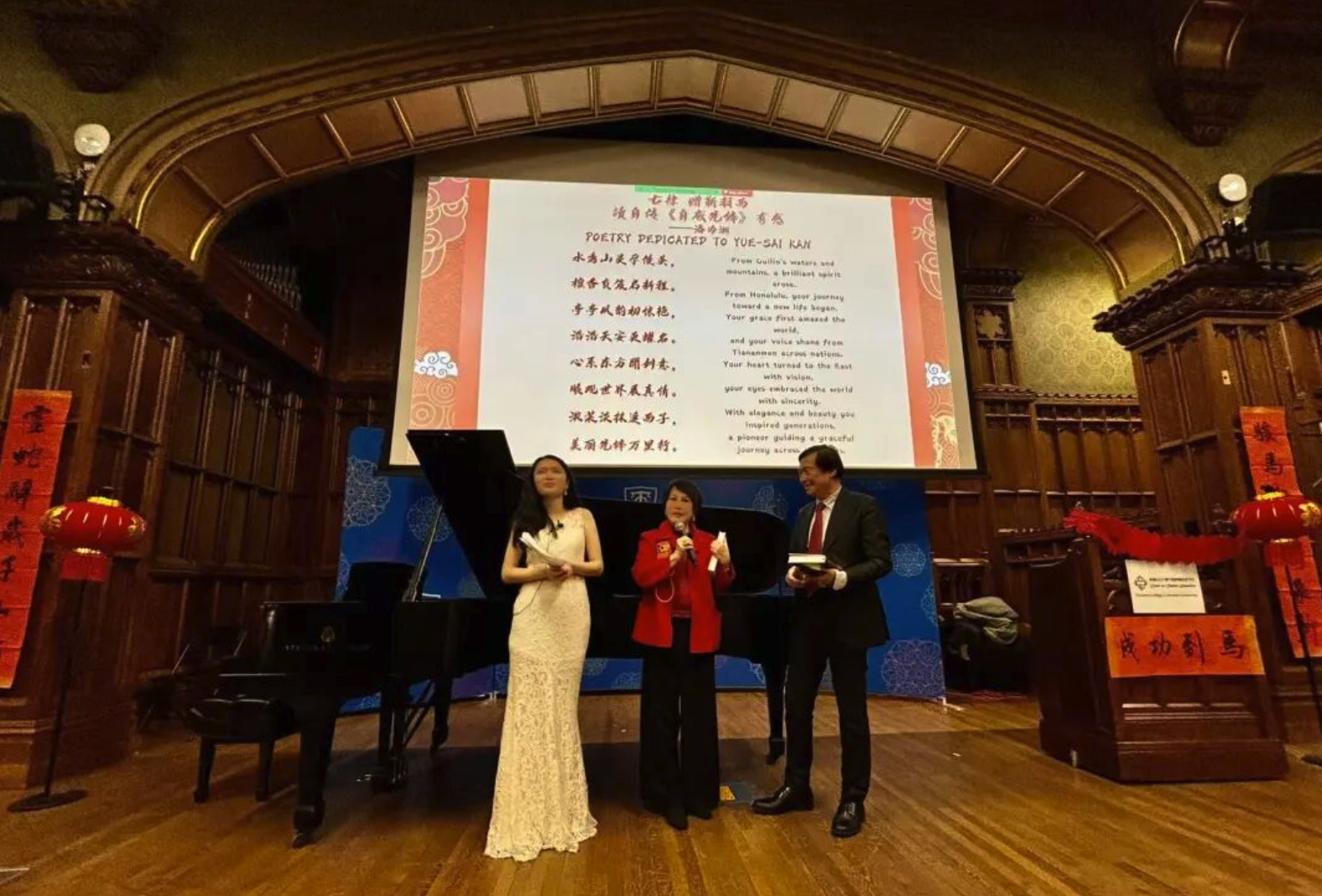
A special segment of the evening, titled “Chinese Red Meets Columbia Night,” featured a conversation with Yue-Sai Kan, Emmy Award–winning television producer, entrepreneur, philanthropist, and Co-Chair of the Board of Trustees of the China Institute in America. The session unfolded as an interactive conversation led by the Gala’s Director, Dr. Chen Wang, inviting guests into a thought-provoking dialogue at the intersection of culture and ideas.
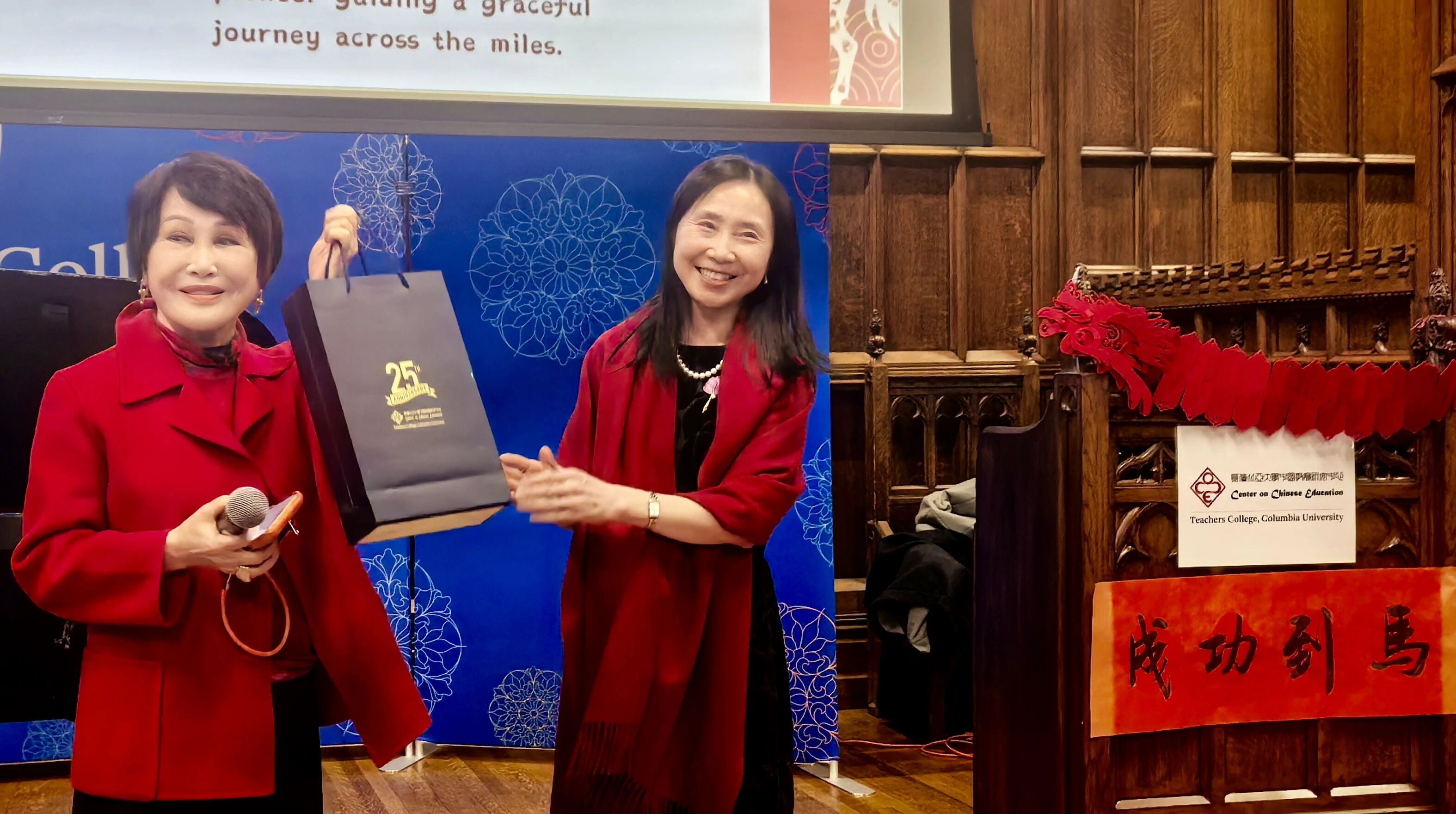
Kan’s presence carried particular significance for Teachers College. The China Institute in America shares deep historical connections with Columbia University. Four of its founders—John Dewey, Paul Monroe, Bingwen Guo, and Shi Hu—were professors or alumni of Columbia University’s Teachers College and Department of Philosophy. Kan’s presence at the gala highlighted these longstanding ties and continued the shared mission of the Center on Chinese Education at Teachers College and the China Institute in promoting cultural and educational exchange between China and the United States.
During the conversation, Kan reflected on her early experiences arriving in New York, recalling the uncertainty she initially faced and the process of learning, adapting, and engaging with a multicultural society. She also discussed the opportunities and challenges of cross-cultural communication, as well as how her work in television production, entrepreneurship, and cultural philanthropy has shaped the values and confidence of audiences across generations.
Encouraging young scholars in the audience, she shared a message about pursuing ambition and maintaining integrity: “If you aim for the moon, you may reach the stars. If you aim for the sun, you may at least reach the moon.” Her reflections resonated deeply with the audience, offering both inspiration and practical wisdom drawn from decades of experience in international cultural exchange.
The evening also featured a special literary tribute by Dr. William Pan, a distinguished alumnus of Teachers College’s Class of 1987 and Senior Researcher at the Center on Chinese Education. Drawing on his literary background, Dr. Pan composed a classical Chinese poem titled “To Yue-Sai Kan—Reflections on Be a Pioneer,” presenting it in both Chinese and English as a tribute to Kan’s achievements.
Musical and Artistic Performances
The evening featured a diverse program of musical and artistic performances that reflected both Chinese and international artistic traditions.
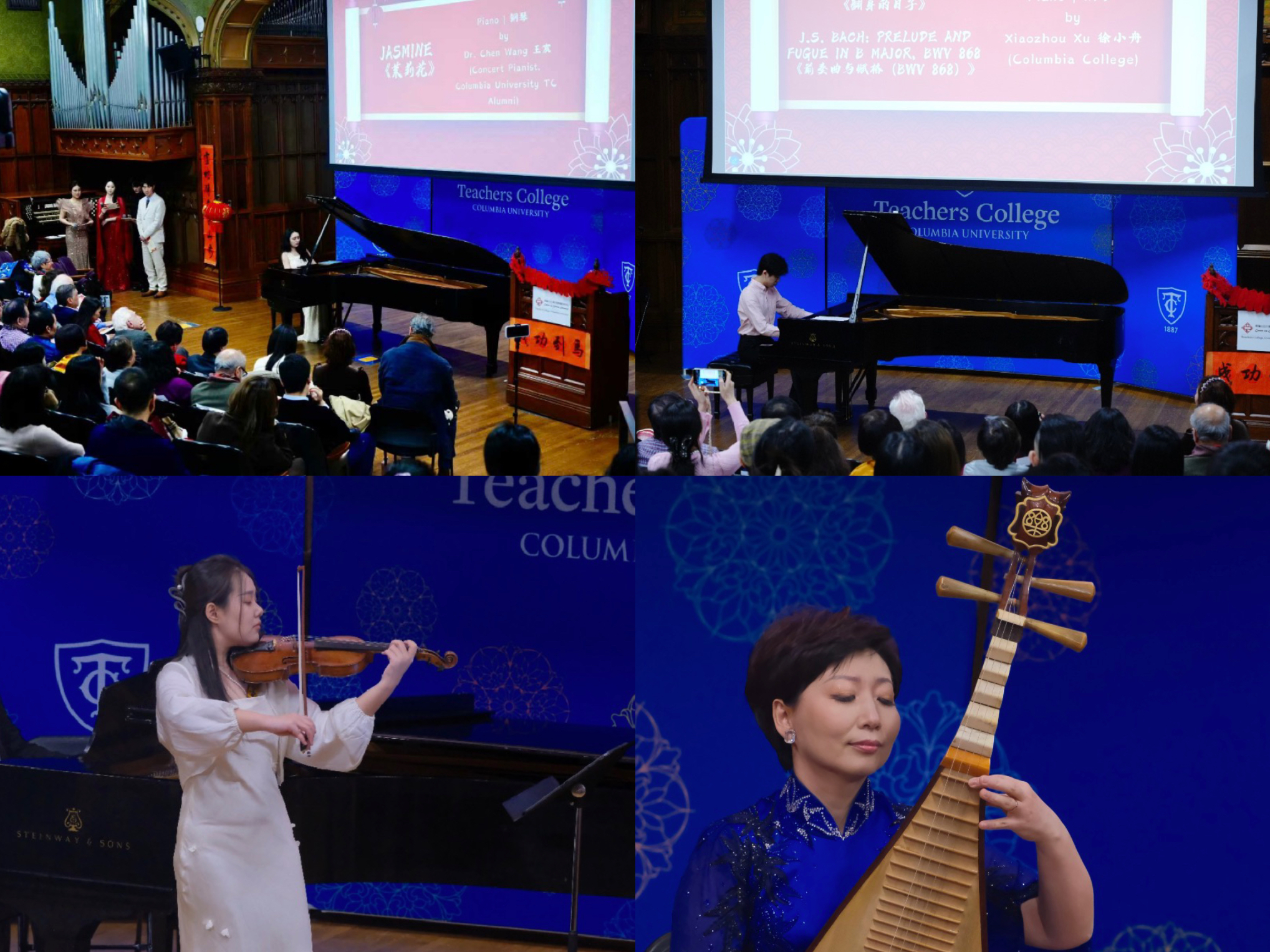
The performance segment opened with pianist Dr. Chen Wang, who presented a piano arrangement of the beloved Chinese folk melody Jasmine Flower. The performance introduced the evening’s artistic program with a refined interpretation of the familiar theme.
Columbia College undergraduate Xiaozhou Xu followed with two contrasting piano works: the Chinese composition Turning Days and J. S. Bach’s Prelude and Fugue in B Major, BWV 868. Presented side by side, the two pieces highlighted different musical traditions while sharing the expressive possibilities of the piano.
Violinist Zenan Li and pianist Nanbo performed Falling Leaves Return to Their Roots and Sunny Day, offering a lyrical collaboration that blended themes of nostalgia and warmth.
The program also featured a solo pipa performance by Professor Yong Ge of the China Conservatory of Music. Her performance of Gratitude showcased the expressive depth and rhythmic vitality of the traditional Chinese instrument, bringing the rich tonal textures of the pipa to the stage.
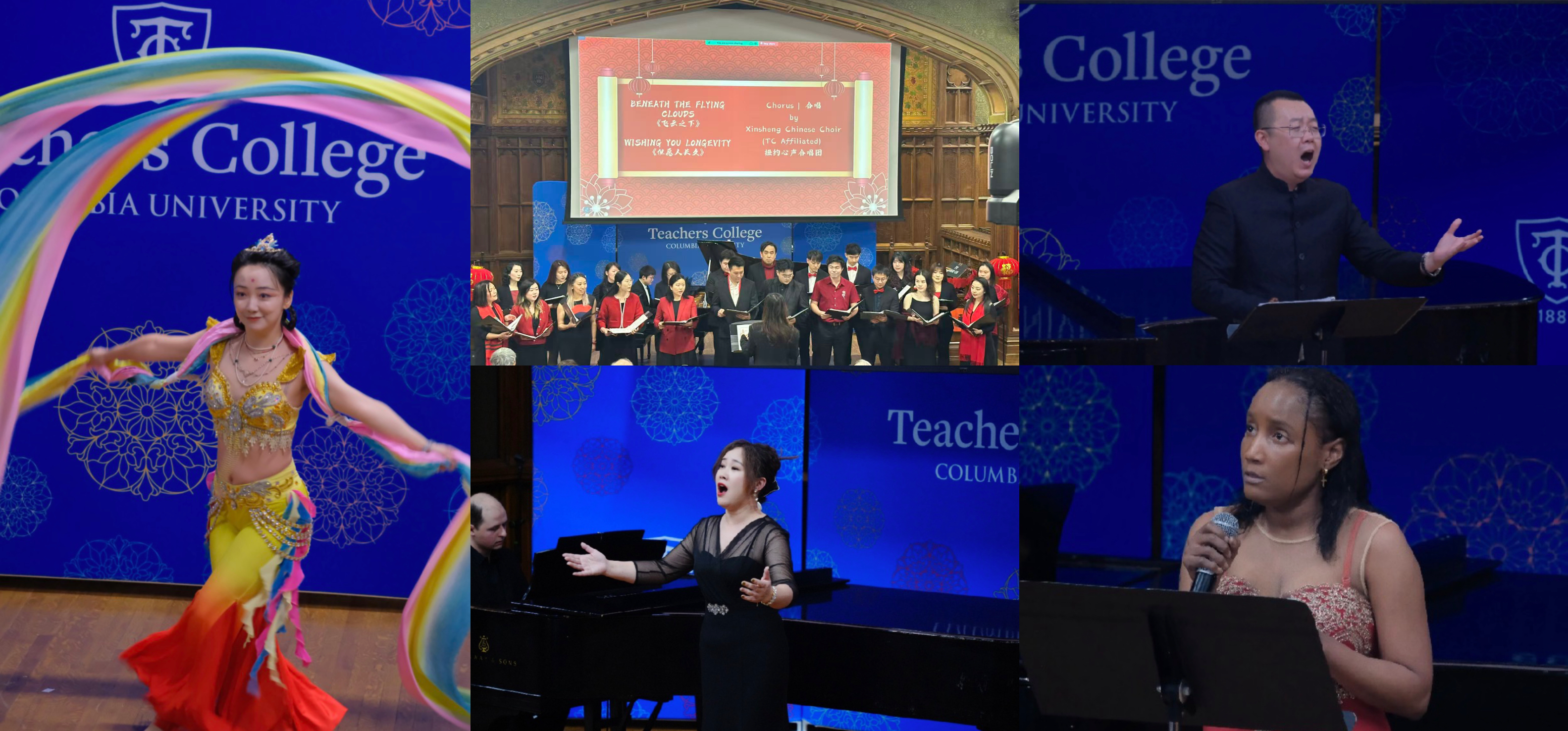
Vocal performances formed another highlight of the evening. The New York Xinsheng Choir, founded by alumni of Teachers College, performed Under the Flying Clouds and the well-known classic May We All Be Blessed with Longevity, creating a warm musical moment shared by performers and audience alike.
Guest soprano Zhi Zhang, a young Chinese soprano and vocal professor based in the United States, performed Three Wishes of the Rose and the classical song Yue Ren Ge (Song of the Yue People). In another cross-disciplinary moment, Professor Zhongyu He of Barnard College’s Department of Environmental Science delivered a powerful rendition of Ode to the Yellow River.
The evening also included the world premiere of the poetry and piano work Femme Noir, created by artists Kervy Delcy and Benjamin Nicholas. The performance combined spoken poetry and piano music, exploring themes of resilience and strength through a contemporary artistic collaboration.
Dance and traditional theatre added further cultural dimensions to the program. Dancer Kaidy Li presented Feitian, a performance inspired by the flowing forms of the Dunhuang murals.
The evening concluded with a traditional Chinese shadow puppetry performance, The Tiger’s Story, presented by the New York–based troupe Chinese Theatre Works, bringing an ancient storytelling tradition to the stage of Milbank Chapel.
Together, these performances created a vibrant artistic program that brought together classical Chinese music, Western repertoire, contemporary works, dance, and traditional theatre.
Cuisine and Cultural Activities
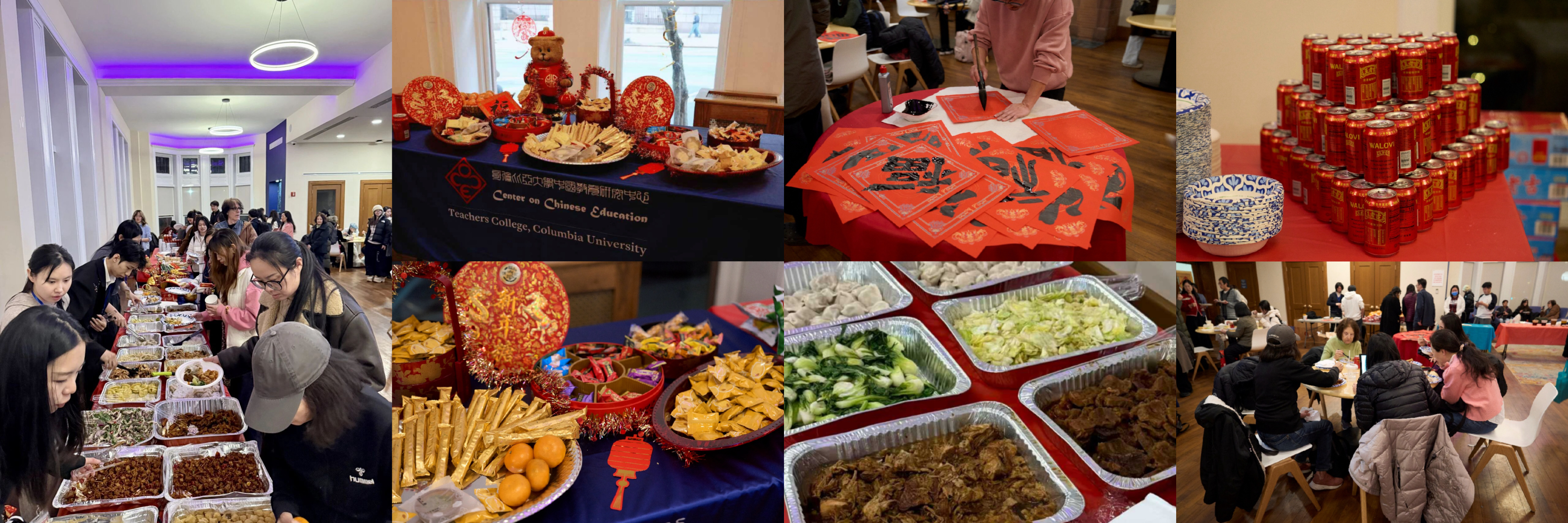
Following the performances, guests enjoyed Chinese cuisine and participated in cultural activities such as calligraphy writing and traditional paper crafts, further enriching the festive experience.
The gala served not only as a celebration of the Chinese New Year but also as a platform for cultural dialogue and academic exchange. Through music, art, and conversation, the event reflected Teachers College’s ongoing commitment to fostering cross-cultural understanding and strengthening educational connections between China and the United States.