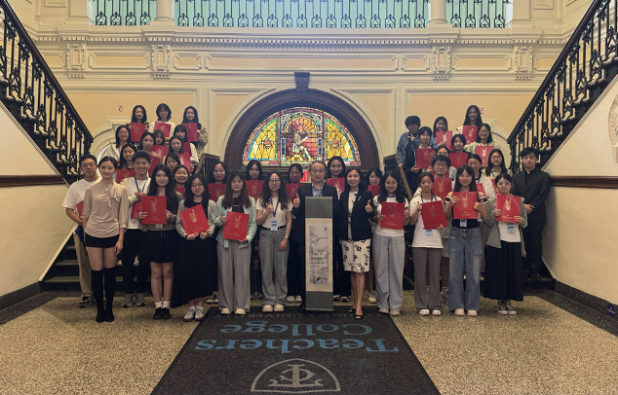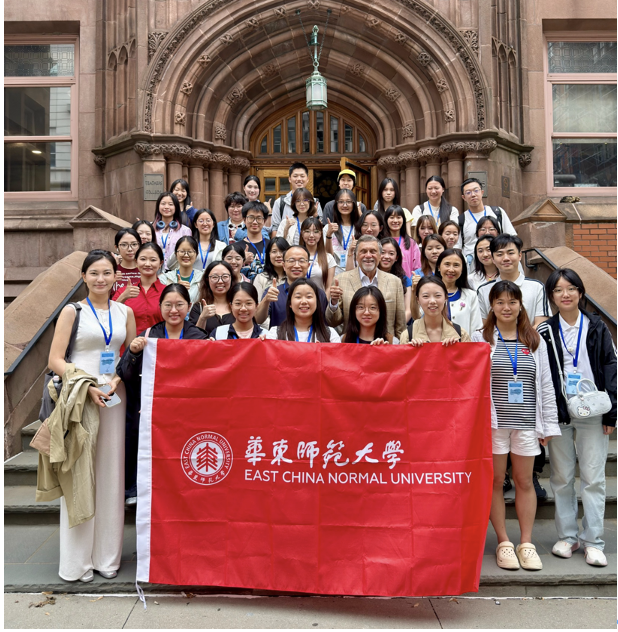
ECNU students gather outside Teachers College, Columbia University, on the first day of the 2026 summer program
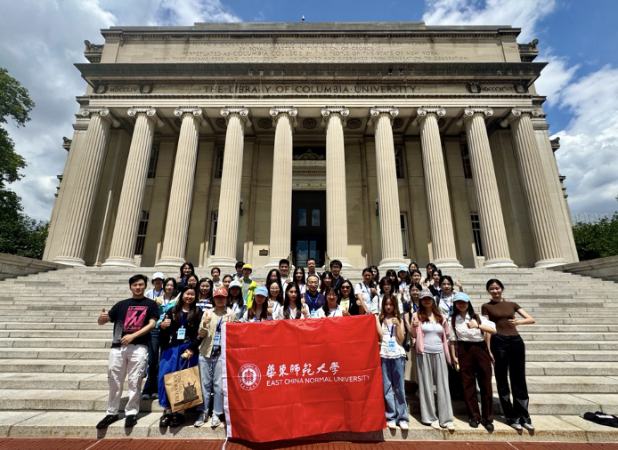
Students from East China Normal University gather on the steps of Low Memorial Library at Columbia University
From July 27 to August 13, 2026, the Center on Chinese Education at Teachers College, Columbia University, welcomed 35 undergraduate students from East China Normal University (ECNU) for an immersive Humanities and Social Sciences Global Talent Summer Program. The program offered an intensive experience in academic engagement, cultural exchange, and experiential learning across New York City.
At the heart of the program was a rich interdisciplinary curriculum led by professors from Teachers College and across Columbia University, together with distinguished guest speakers. From classical literature and academic writing to language learning, cultural identity, leadership, and the arts, each session invited students to ask enduring questions: What is education for? What does it mean to be globally competent? What responsibilities do learners and educators carry in a rapidly changing world? Through thoughtful discussion and reflection, students connected their personal experiences with broader social and historical contexts while developing new ways of understanding themselves and the world around them.
A particularly forward-looking strand of the curriculum focused on technology and future learning. During workshops at the Teachers College Digital Futures Institute, students explored multimedia, virtual reality, and artificial intelligence. Through hands-on activities, they considered how technology shapes learning, communication, and creativity. They were also encouraged to critically evaluate AI-generated responses and exercise independent judgment throughout the learning process.
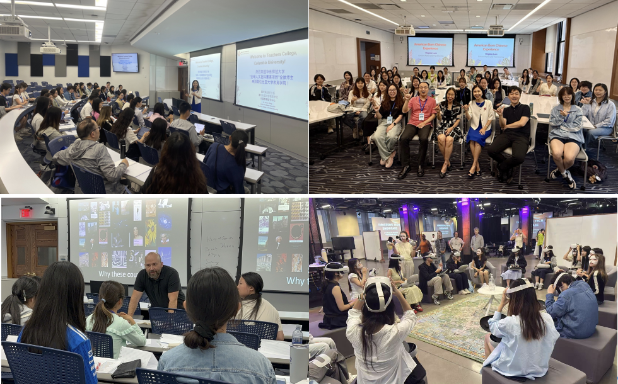
Students participate in academic sessions at Teachers College, Columbia University
Learning continued throughout New York City. Students visited the United Nations Headquarters, the Metropolitan Museum of Art, Lincoln Center, The Juilliard School, China Institute of America, Franklin D. Roosevelt Four Freedoms Park, and Federal Hall National Memorial. These site-based learning experiences allowed students to engage directly with questions of global governance, history, art, music, and cultural exchange.
At Four Freedoms Park, students revisited President Franklin D. Roosevelt's 1941 Four Freedoms speech and discussed its continuing relevance in contemporary societies. Across the visits, New York City became an extended classroom where students could connect academic ideas with institutions, communities, and public life.
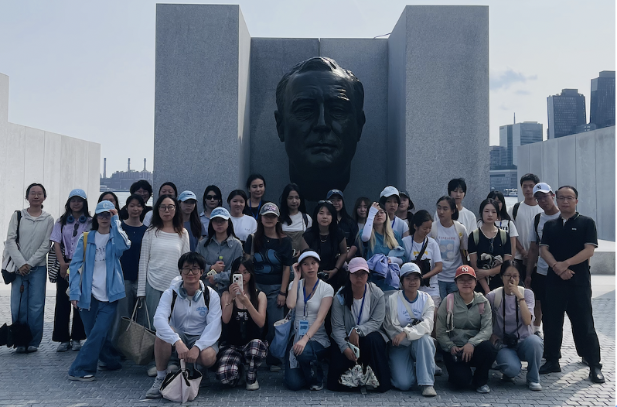
Students reflect on the legacy of the Four Freedoms at Franklin D. Roosevelt Four Freedoms Park
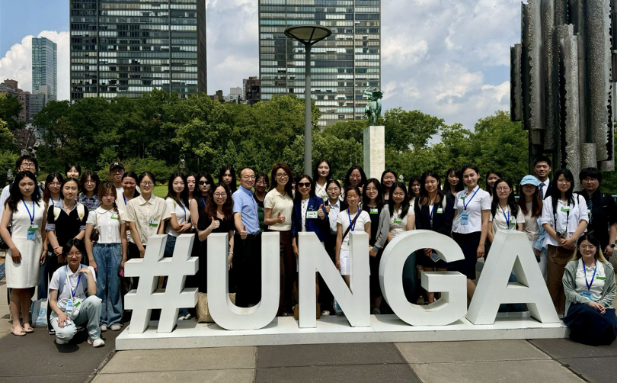
Students explore global governance at the United Nations Headquarters in New York City
During the final week, students worked in groups to develop and present their Capstone projects, bringing together ideas and perspectives from across the program. Their projects addressed three themes: rebuilding education during crises, developing global competence and transferable skills, and designing an ideal university for 2030. Students proposed responses to educational disruption, envisioned more inclusive and flexible universities, and explored the roles of artificial intelligence, community partnerships, student participation, and lifelong learning.
The presentations reflected strong teamwork and growth in English communication, critical thinking, intercultural understanding, and problem-solving. In the post-program survey, 96 percent of respondents reported being satisfied or very satisfied with the program, and all respondents said they would recommend it to other university students.
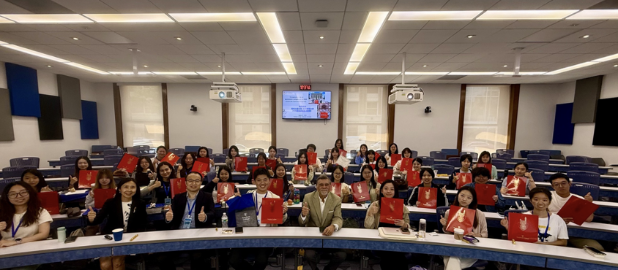
Students and faculty celebrate the completion of the 2026 summer program
The program concluded on August 13 with a closing ceremony celebrating the students’ learning and growth. Although their time in New York was brief, the experience opened new horizons for the 35 ECNU students, expanded their ways of thinking, and strengthened their confidence to engage in dialogue across cultures. From thoughtful classroom discussions to exploration throughout the city, each experience contributed to a meaningful journey of discovery and personal growth.
The Center on Chinese Education extends its heartfelt appreciation to East China Normal University, the faculty members and guest speakers, and the staff, teaching assistants, and volunteers who made this journey possible. Together, participants planted seeds of learning and friendship in Morningside Heights. The Center looks forward to nurturing these connections, deepening its partnership with ECNU, and creating more opportunities for students and educators to learn from one another across the Pacific.