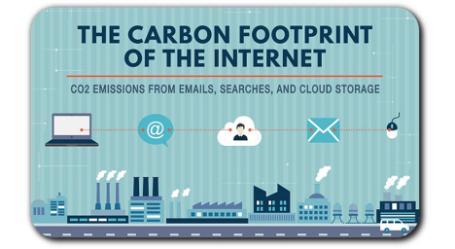
The internet allows us to send messages, share pictures, download music, and stream videos at a touch of a button. Still, our online habits have a surprising impact on the environment. Each of these activities you perform online comes with a small cost – a few grams of carbon dioxide are emitted due to the energy needed to run your devices and power the wireless networks you access. Less obvious, but perhaps, even more energy-intensive, are the data centers and vast servers needed to support the internet and store the content we access over it.
Sustainability is everyone’s responsibility and something that we can incorporate into our daily life–especially our online activities.
We all have a part to play in conserving the earth. Here are a few simple modifications to reduce your carbon footprint:
Limit Reply All
A typical business user creates about 135kg (297 lbs) of carbon dioxide each year; the more emails you send, the more emissions you create. So before looping in a large group in an email thread, think about this: Do all these people need to see this email? This may help you decide better on your email recipients and help keep their inboxes lean.
Rethink Attachments
Emails with attachments give off 50g of carbon emissions, almost a whopping 167 times more than emails without attachments. Consider using file-sharing links whenever possible. In addition this allows you to later remove access to files if required.
Clean Out Your Inbox
Every email in your inbox is using energy. It’s good practice to scan your emails once a month and get rid of those old unnecessary emails. Also, be sure to empty your Trash Folder. In addition, it's important to delete sensitive emails to keep them out of the hands of cybercriminals.
Get Rid of Old Apps
If you have not opened an application in a year, you’re unlikely to open them again. Deleting old apps frees up storage, lowers data usage and decreases your footprint for hackers to gain access to your information.