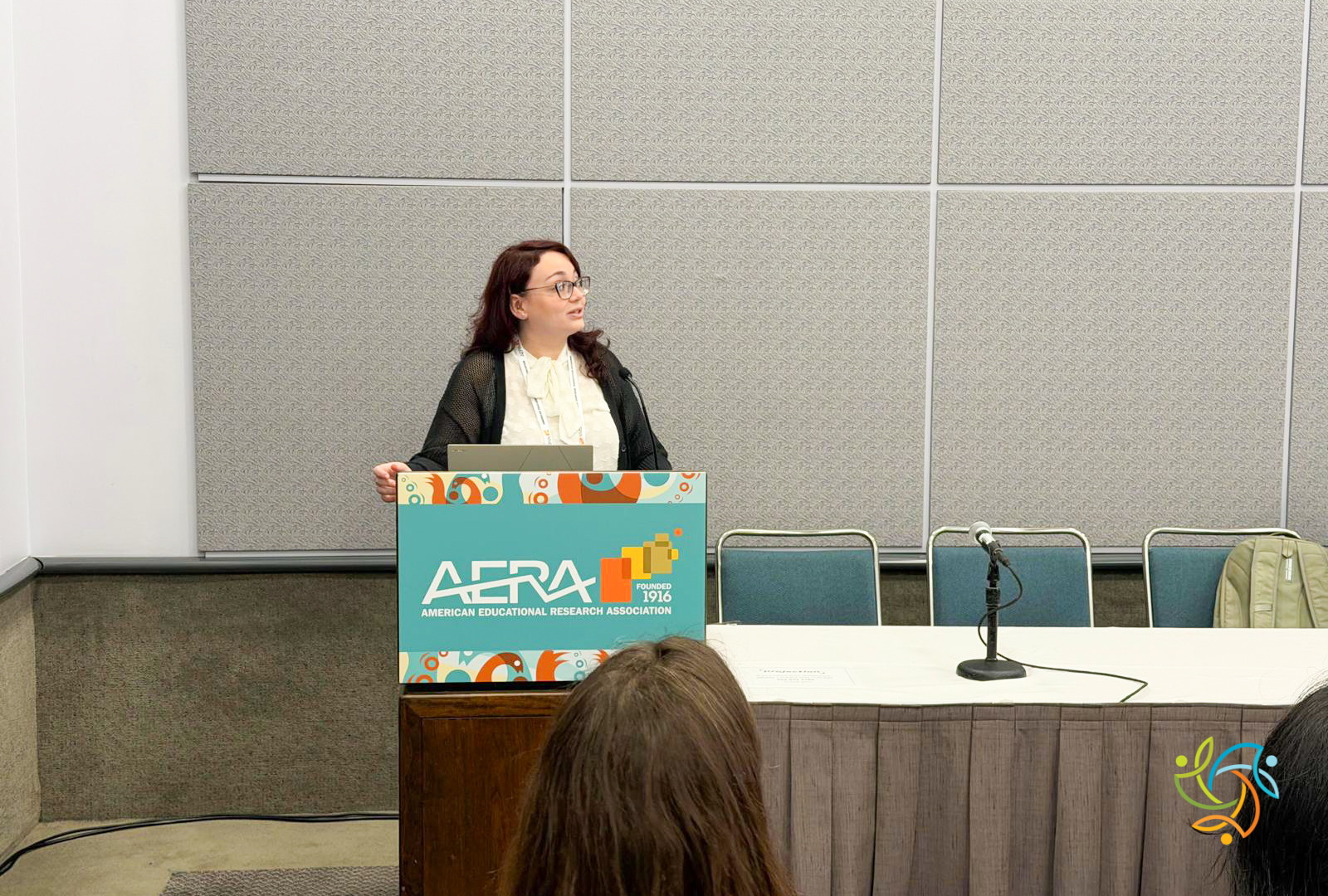
After a busy spring conference season, the Center for Sustainable Futures returned from two of the field's most prominent annual gatherings in education. Over the course of two weeks in late March and early April, CSF researchers presented at the Comparative and International Education Society (CIES) conference in San Francisco and the American Educational Research Association (AERA) meeting in Los Angeles, eleven presentations in total, and a reminder of the breadth of work the center covers.
CIES 2026: San Francisco, CA
At CIES 2026, much of CSF’s work focused on the on the intersection of climate change education (CCE) ambitions and the realities of implementation across schools and systems. Presentations explored this challenge from multiple angles, from global governance and constitutional policy to classroom practice and teacher support. Research presented by Maja Dahms examined the state of CCE governance internationally, while Renda Sun and Neil Potnis used TIMSS 2023 data to show how family background continues to shape environmental awareness among U.S. eighth-grade students. Together, the studies raised broader questions about equity, access, and who CCE is ultimately reaching. Other presentations turned toward institutions and educators themselves. Merav Hayak explored how schools respond organizationally to climate change educational demands, while other team members presented work from an ongoing research-practice partnership supporting teachers in integrating climate change across subjects. Expanding that conversation to the city level, Yixuan Yang, Maja Dahms, and Oren Pizmony-Levy shared research on large-scale professional learning models developed through work connected to the Midwinter Institute. The week concluded with Darren Rabinowitz’s cross-national analysis of whether constitutional environmental protections shape youth eco-citizenship across 22 countries, offering a broader reminder that climate education is shaped not only through curriculum, but also through civic and political structures.
AERA 2026: Los Angeles, CA
Many of those threads from CIES followed into AERA 2026. Several presentations examined what it takes to prepare educators for climate change education in practice. Research presented by Christina Torres evaluated how climate-focused professional development programs influence teacher capacity and instruction, while Jooyoung Jeon explored the design challenges involved in building effective professional learning programs across different school and subject contexts. Other presentations focused on how climate learning is experienced within schools and communities. Renda Sun presented qualitative research on youth climate engagement in New York City, examining how young people think, feel, and act in relation to climate change. CSF concluded the conference with a poster presentation by Renda Sun and Neil Potnis, which brought their TIMSS 2023 findings on family background and environmental awareness to a broader audience of researchers and educators.
CSF’s Ongoing Research Agenda
Taken together, CSF’s presentations across both conferences reflected the center’s interdisciplinary approach to sustainability and education research, connecting questions of governance, teaching, institutional change, and civic engagement across local and international contexts.