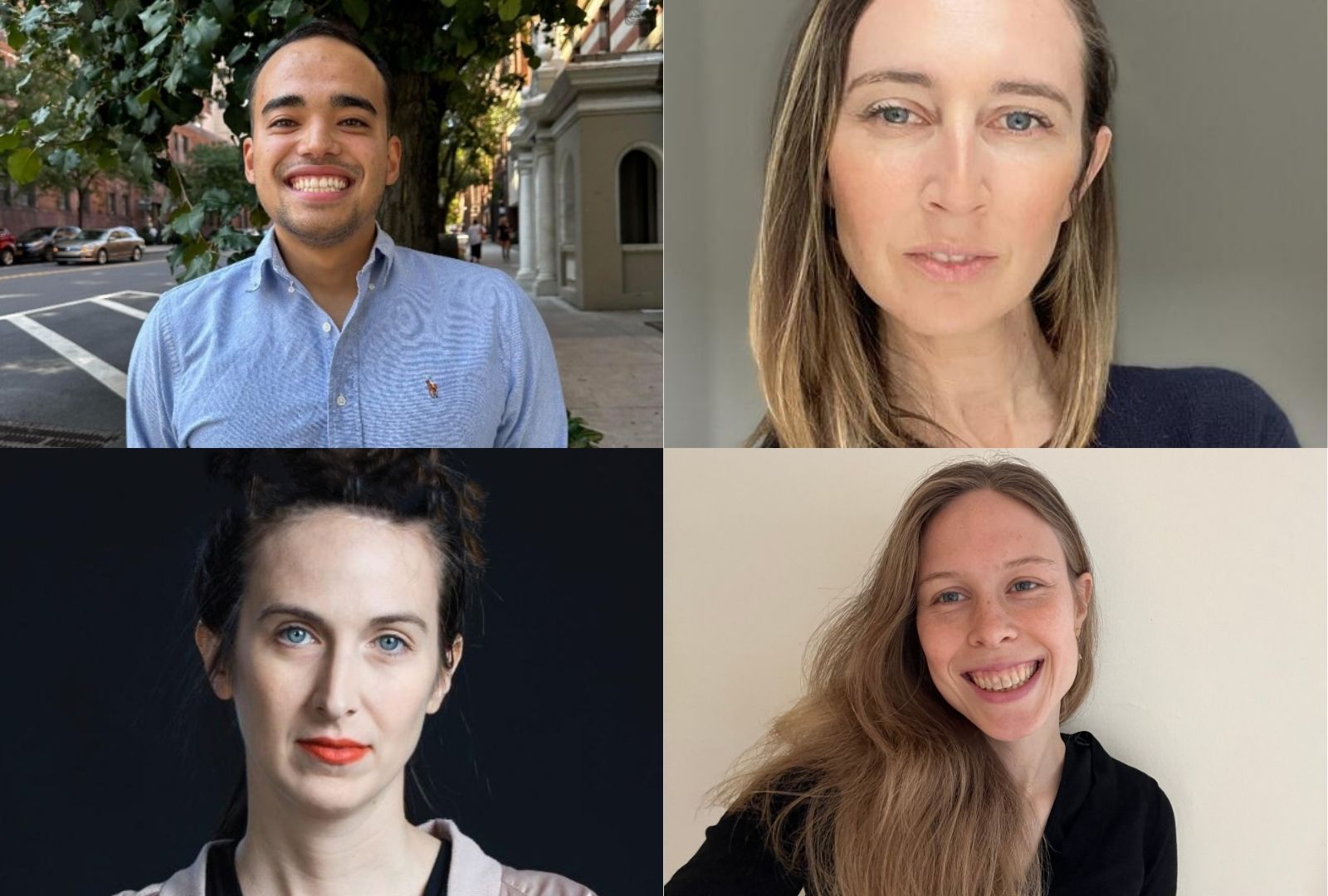
The Center for Sustainable Futures is proud to celebrate this year’s student awardees, whose research and leadership reflect the creativity, rigor, and public impact at the heart of our community. Their projects span climate change education, sustainability networks, global policy, and community engagement—demonstrating how scholarship at Teachers College not only deepens understanding but also drives meaningful change. What follows are stories of their work, the inspirations that shaped it, and the paths they are charting forward.
Niklas Nyblom
Awarded: Community Impact Award
What projects and extracurricular activities have you been involved in during your time at TC?
During my time at Teachers College, I have been deeply involved in a range of research projects, leadership roles, and community initiatives that reflect both my academic interests and commitment to a collaboratively oriented community. Academically, I have worked on projects with the Center for Sustainable Futures (CSF), the Development, Ecopsychology, and Wellness Lab (DEW Lab), the Resilience Center for Veterans and Families, and the Relationships and Psychotherapy Lab. In addition to research, I have also held teaching and leadership roles, such as a course assistant position for Military Psychology, Psychology at the UN, and Evolution of Freud’s Theories, as well as the Communication Editor for the Graduate Student Journal of Psychology (GSJP).
Extracurricularly, I also served as the co-president of the Sustainability Task Force (STF) which allowed me to create environmental community initiatives, and I frequently bridged this with my work as a community assistant with the Office of Residential Services, focusing on creating inclusive and supportive residential environments. In addition, I have been active in advocacy and global engagement, serving as a Global Advocacy Intern at the Global Healthy Living Foundation (GHLF), and lastly, I also engaged in student athletics through the Columbia Triathlon Team where I participated in Olympic-distance triathlon races.
What advice would you give to other TC students who want to get more involved?
My advice for other TC students who want to get more involved is to start by identifying what you feel deeply passionate about and to then proactively seek out opportunities that align with that passion. Most of my experiences that shaped my time at TC, including the research labs, being the co-president of STF, or becoming a Community Assistant, typically began by reaching out to faculty members, meeting involved students at various campus events, or simply introducing myself via e-mail or after class. TC and NYC offer a wide variety of incredible opportunities, and in most cases, one small step of networking or volunteering can lead to many more.
As a clinical psychology student, I would also encourage students to not limit themselves to their department alone. Some of my most rewarding experiences and collaborations have come from working with colleagues in other disciplines, specifically when it has come to working at the intersection of psychology, sustainability, and education. Lastly, while I have been heavily involved with the TC community, I would like to remind everyone that it is not about how much you do, but rather about building meaningful connections. Whether that is through research, student organizations, or networking events, it is the sense of shared purpose and belonging at TC that makes this journey special.
What are your future goals, and how do you see this project/award shaping them?
My current goal is to become a clinical psychologist specializing in global mental health. As I recently graduated with my master's degree from TC, I have begun my Ph.D. journey in Clinical Psychology under my advisor, Dr. Lena Verdeli, at the Global Mental Health Lab. My experiences at Teachers College, and working closely with the Center for Sustainable Futures have shown me the power of interdisciplinary collaboration to further advance research, policy implementations, and interventions. This award plays an essential role and symbol in that vision of continuing my work in bridging psychology, education, research, and community engagement.
Through this award and my journey at TC, I hope to further develop my ability to conduct meaningful research, to translate research into real-world practice, and to expand my global network of collaborators. Ultimately, while I have the goal of succeeding in academia in the future, I also have the goal of working with policymakers to address the intersection between mental health, climate change, and community resilience internationally. I feel incredibly grateful for this award, and I am excited to keep doing this important work, with the hope of contributing to a future where we all empower communities and inspire hope for sustainable change.
Sarah Lewis
Awarded: Emerging Scholar Award
Could you share what your project was about and what inspired it?
The study analyzed over 900 responses to an open-ended survey question asking Americans: What would you ask a scientist or expert about climate change? Our analysis was iterative, moving through three separate methods to ensure our findings were not merely interesting (offering a juicy glimpse into public curiosity and concern), but meaningful, and actionable. Ultimately, we used Latent Class Analysis to identify distinct profiles of questioners, profiles which both reflected known associations between beliefs about climate change and group characteristics, and, due to their internal diversity, complicated some assumptions about who cares about what, and why.
The project grew out of my experience at Teachers College. While I arrived with an interest in how people struggled to make sense of politics, after my first class on climate change, I found myself struggling to make sense of science – an experience I found both brain breaking and inspiring. From this new position, as a new learner of complex things, I shifted my academic focus toward informal science learning and the public understanding of socio-scientific issues – a shift entirely enabled by the interdisciplinary nature of, and composition of, the CSF group.
What are your future goals, and how do you see this project/award shaping them?
While the project certainly cemented my interest in this subject matter, more importantly, it taught me the value of the research process, got me hooked on learning the process, and ultimately, gave me the research skills I am using in my current job. So while I am fortunate to still be pursuing questions around how we live with and learn on this earth, should those questions change, I am happy I’ll have a way to explore them.
Noa Urbach
Awarded: Emerging Scholar Award
Could you share what your project was about and what inspired it?
My project (“School Ties, Green Rise: How Network Centrality Predicts Implementation of Sustainability Education in Public Schools”) mapped the social networks of schools and community-based organizations in NYC. I wanted to see if and how these partnerships affect schools’ performance across sustainability indicators. I was curious about this topic because social capital—the resources and benefits a person or organization accrues from their social connections—is an incredibly powerful, yet often invisible mechanism in education. We already know it impacts student outcomes, but its role in sustainability education was unexplored. It was important for me to try and demonstrate to schools, community-based organizations, and policymakers just how much these relationships are worth investing in.
What are your future goals, and how do you see this project/award shaping them?
This project has already had a direct, immediate impact on my career. In fact, one of the interviews I conducted for the research actually led directly to my first job out of TC! That's a tip to remember for students working on a thesis or IP: writing the paper is your best opportunity to network and deeply explore the field, industry, or space you want to enter after graduation. Now, as an active member of the very ecosystem I wrote about, I get to see how valuable those research-driven insights are on the ground. This award and the project's findings now directly inform my work, allowing me to use that knowledge to the strategic advantage of my organization. I hope to be able to publish this paper so that others can learn from it!
Maja Dahms
Awarded: Matilda Levy Award
Could you share what your project was about and what inspired it?
My project "The Global Network of International Organizations in Climate Change Communication and Education (CCCE)" focused on the collaboration patterns between different international organizations worldwide. While education is increasingly recognized as central to climate change action and adaptation, we know surprisingly little about how major international education actors are actually connected to each other in their work on climate change.
To investigate this, I used Social Network Analysis to analyze data from the International Survey of Climate Change Communication and Education Organizations, conducted by MECCE and the Center for Sustainable Futures at Teachers College. The analysis draws on survey responses from 272 national organizations working in CCCE, who were asked about their working relationships with 30 international governmental and non-governmental organizations
My analysis clearly showed that the most influential international organizations in education such as UNESCO and the OECD do not prioritize climate change communication and education yet. What inspired this research was realizing how influential international organizations are in shaping education policy. Seeing the impact of international large-scale assessments such as PISA made me wonder: What if such global efforts had focused on climate change education instead?
What are your future goals, and how do you see this project/award shaping them?
Receiving the award encouraged me to deepen this research interest and examine to what extent UNESCO’s recent Greening Education initiative supports women and girls in Central Asia, a region already highly impacted by climate change. This work has strengthened my interest in how international organizations can rethink their approaches to genuinely support youth- and community-led initiatives, rather than imposing top-down agendas. Interviewing Kazakh youth on how they want to engage with climate change at school reminded me how strongly young people want to take action and contribute meaningfully. In the long term, I hope to combine a career in research and teaching with more hands-on work in non-formal climate change education. I'm especially interested in climate change education approaches that are locally grounded, participatory, and action-oriented – and how they can inform the work of influential global actors.