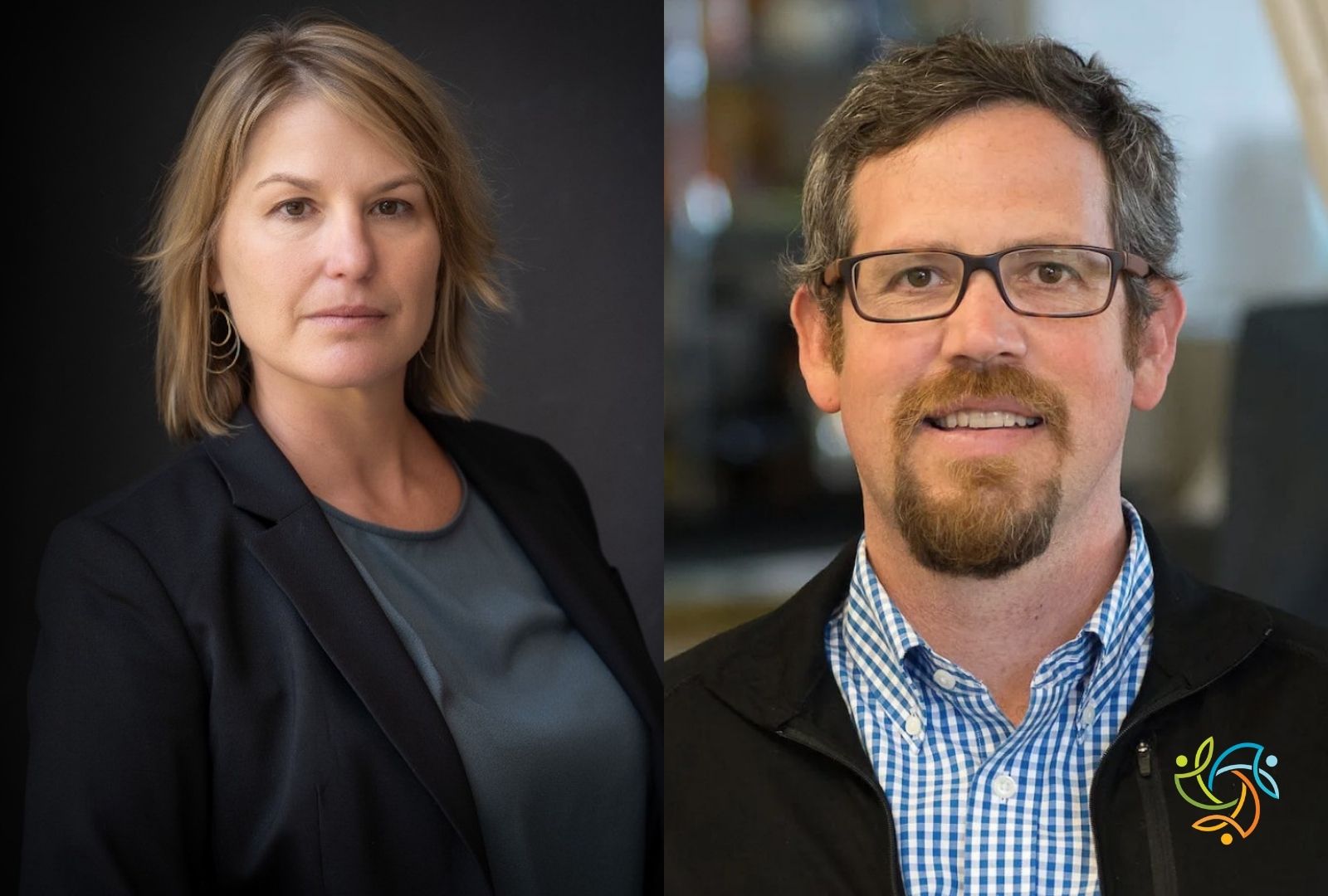
We’re excited to share a conversation with Drs. Keri Vacanti Brondo (CSF Faculty Affiliate) and Luis A. Vivanco on their new book, Culture, Nature, and Environmental Sustainability: An Anthropological Introduction. At a time when climate change is often framed through data, policy, and global targets, their work brings the focus back to how environmental change is lived and negotiated in everyday life. This conversation explores what anthropology adds to the study of sustainability, from the ways culture shapes how people relate to land and climate, to how different communities navigate environmental uncertainty. Rather than offering a single definition of sustainability, Brondo and Vivanco challenge the idea that it can be universal at all, pointing instead to the histories, relationships, and values that shape what it means to “sustain” a world. What emerges is a shift in perspective. The environment is not separate from human life, but entangled with it, shaped by centuries of interaction, and practice. In this interview, they reflect on how that understanding changes the way we think about climate change and the kinds of futures that remain possible.
Why do we need anthropology to understand the environment?
Brondo and Vivanco: Environmental anthropologists study the complex, reciprocal relationships between human societies and their surroundings through long-term immersive ethnographic research. It’s an important perspective to add to sustainability studies because much of environmental studies is drawn from natural and physical sciences, policy studies, and economics. Those disciplines trend towards objectivism and quantification, and they almost always underappreciate human cultural diversity. But anthropology adds an appreciation for the symbolic and historically specific constructions of nature, ecology, and human–nature relations that shape how environmental problems are understood and framed. Anthropology also challenges the idea that nature is ‘out there’ beyond the human world, which is a common notion among Americans—and instead shows that people and ecology are always entangled. We have a great example in the book of a river system in Virginia those environmental scientists and managers assumed was taking its natural course, and they proposed some conservation efforts. But anthropologists went in and uncovered evidence that several centuries ago people were putting in micro dams to generate power and those had reshaped the flow of the water over time. Anthropology can contribute a much more accurate picture of natural systems that don’t take humans out of the equation, and it asks us to consider what something like “conservation” might mean when the human imprint on landscapes and ecological systems is a pervasive global phenomenon.
Most people look at climate change through science or data. How does focusing on human culture and daily habits change our perspective on the crisis?
Brondo and Vivanco: Anthropology shifts the focus from abstract climate data to weather as a lived, immersive experience shaped by cultural values and daily habits, revealing how climate change is a diverse set of embodied experiences and local negotiations. In focusing on cultural interpretations and historical contexts, anthropologists avoid oversimplification. We are deeply concerned with how climate change is differentially experienced, embodied, and locally negotiated. Such a perspective transforms the climate crisis from a distant data point into a tangible human reality, illuminating distinctions in how different societies perceive, feel, and adapt to their changing worlds, which can unlock culturally-appropriate solutions toward sustainable living. One of the things we wanted to show in the book is that unruly climates are not new for humanity, and different societies have developed ingenious strategies for coping with climate change, for example, in the Pacific islands or in the Himalayas. Even though a lot of those traditions are strained by colonialism and modernist development programs, people have cultural resources they still draw on to navigate changing weather and climate. As we grapple with our own experiences of disruptive weather, we can learn a lot from those traditions of resilience.
What does it mean to have a relationship with things that are not human? You write about our connection to animals, plants, and even the weather. How does that shift in mindset change how we treat the planet?
Brondo and Vivanco: Having a relationship with the "more-than-human" world means moving past an anthropocentric view where nature only has value if it’s useful to us humans. Human nature has always been an interspecies relationship—non-human beings are in our bodies, our homes, neighborhoods, and so on—and they exercise agency that shape our lives in both obvious and subtle ways. For example, in the book we describe an ongoing dengue epidemic in urban Nicaragua. So far, public health initiatives have failed to eliminate the problem, in part because they have yet to recognize dengue as something more than a health crisis, or see mosquitos as anything other than pests. It’s also a critical environmental issue. Recent histories of civil war, revolution, social inequality, crumbling infrastructure, and globalization have created patchy, weedy urban settings, ideal conditions for mosquitos and the viruses they carry to thrive. An effective public health response starts with recognizing how these interspecies entanglements—a mixture of human history and decisions and mosquitoes and viruses going about their business—came about and are perpetuated in urban environments. It’s a shift in mindset and perspective. Some anthropologists argue that this shift in mindset can also support more sustainable futures, replacing exploitation with reciprocity and justice, recognizing that animals, plants, and some may even say the weather, have their own agency. Some of the most promising conservation initiatives out there are beginning to approach non-human beings as “partners” rather than simply economic resources for tourists to ogle at, building a more sustainable future based on mutual respect and regeneration.
What is the biggest mistake people make when they talk about sustainability? The word is everywhere now. From your research, what are we usually getting wrong about what it actually takes to keep a community and environment healthy?
Brondo and Vivanco: True, the word is everywhere! It is one of those terms that seems to mean everything and nothing at once and becomes even more elusive as its use expands. Environmental anthropologists approach “sustainability” as a contextual and contested phenomenon. In our book, we lean towards Tim Ingold’s (2024) approach to sustainability that is attentive to long-term ecological balance and embeddedness of human activities within ecological systems, where all creatures (human and other-than-human) are emplaced and entangled within their physical surroundings, and as they interact with their surroundings, their actions impact all lives within the system. Therefore, for Ingold, a sustainable world is one that enables the carrying on for everything and everyone, not just some. We agree with Ingold that definitions of sustainability based on unilinear progression and managerialism are misaligned with a view of sustainability as “carrying on” for all lifeforms.
How do we move past the feeling that the world is ending? Your book ends by looking at the future. What is one example of people organizing that gives you real hope?
Brondo and Vivanco: Our final chapters are indeed focused on future horizons, within which we encourage readers to move past depletion narratives that the world is running out. That type of thinking can pit people against one another in selfish, individualized moves to gain and hoard resources for one’s own well-being, rather than for the greater good. This is where anthropology comes in: ethnographic research has the potential to unlock patterns of resilience, such as emerging communities founded along principles of bioregionalism, an approach that rests on reinhabitation, that adopt ecological design practices of permaculture, and what Arturo Escobar calls “designing for the pluriverse,” an approach based on principles of radical interdependence and autonomy. Another way of describing this shift is what Thomas Berry called the “Ecozoic,” a new era when all life systems would be engaged in mutually enhancing relations. One example comes from the Transition Town Initiative (TTI), a global movement aimed at designing for a post-fossil fuel society. At the heart of the TTI movement are principles focused on balance, resilience, inclusivity, collaboration, social justice, and the free exchange of ideas and power. One of the key strategies for a Transition transformation is the reclamation of the local economy, referred to as “REconomy.” We are optimistic that identifying and sharing stories of small successes in sustainable living can help all of humanity move forward in building a more sustainable and just future.
What is the one big idea you want readers to take away? When a student finishes this book, how should their view of the world around them be different than when they started?
Brondo and Vivanco: Our hope is that after reading the cases in this book, students will see how anthropology offers a unique opportunity to reframe our conversations away from narratives of depletion, and the hopeless feeling that we are running about of just about everything to sustain the earth and all of its inhabitants, toward ones focused on reuse and reinhabitation. In elevating examples of degrowth and collective cultural responses to navigating environmental risk and uncertainty, the work we share in this book, we hope, makes an important intervention into the purely neoclassical rational economic analyses of environmental decline and their market-based solutions. These ethnographic contributions support a reformulation of the zero-sum game mentality to a perspective that alternative possibilities not only can take shape, but in fact already exist. What interests us as anthropologists concerned with sustainability studies are finding opportunities to practice what Donna Haraway calls “keeping heart.” With this phrase, Haraway (2019, p. 17) suggests a way of moving forward “that is not futurist but rather thinks of the present as a thick, complex tangle of times and places in which cultivating response-abilities, capacities to respond, matters.” “Keeping heart” involves actively rethinking and reframing central concepts in sustainability circles, including collapse, vulnerability, resiliency, and invasiveness, depletion, and degradation, and so on.