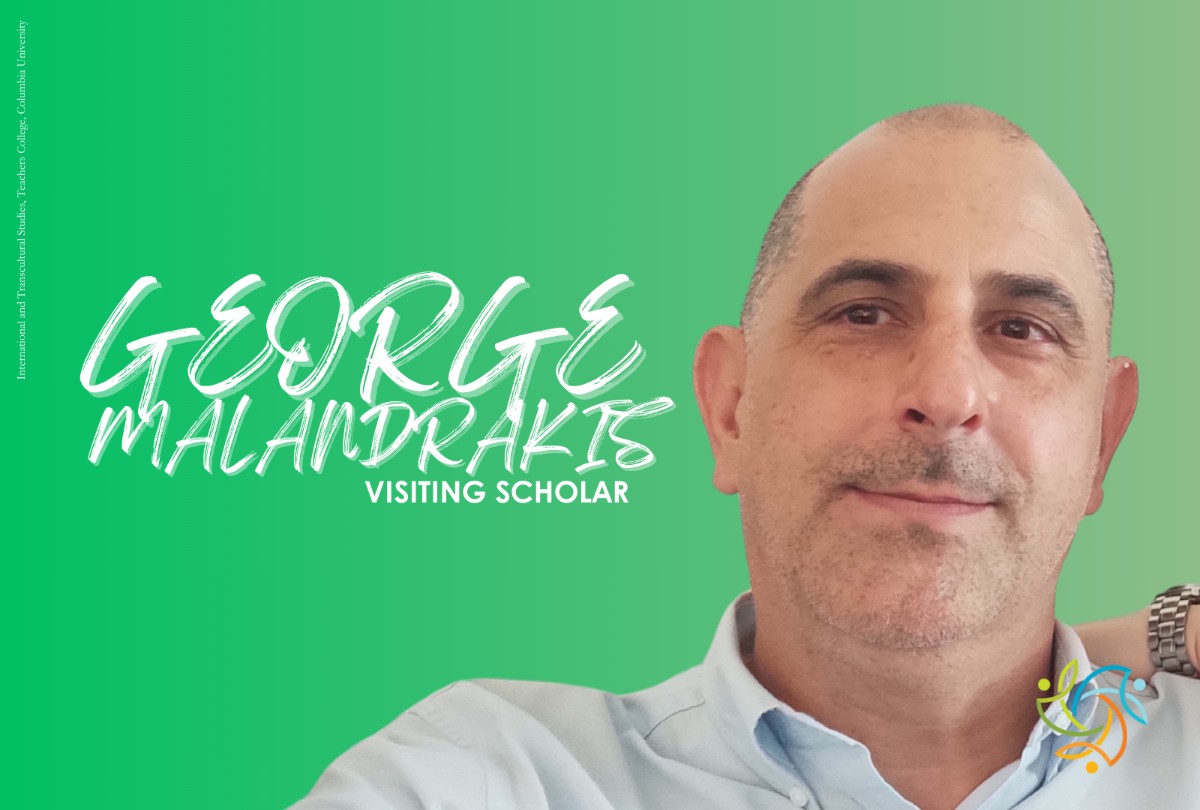
For George Malandrakis, education and sustainability are inseparable. As an Associate Professor in Education for Sustainable Development at the Aristotle University of Thessaloniki, he has dedicated his career to preparing future educators to navigate the pressing environmental challenges of our time. Before transitioning to academia, he spent over a decade as a primary school teacher, including three years as part of an Environmental Education Center—an experience that deepened his commitment to bridging sustainability and education.
Now, as a visiting scholar at the Center for Sustainable Futures (CSF), Malandrakis is focusing on Climate Change Education (CCE) for pre-service teachers. His research centers on developing and testing an educational module that equips pre-service teachers with the knowledge and tools to address climate change’s complexities, uncertainties, and necessary mediative actions. His goal is not just to inform but to empower, believing that the next generation of teachers must be prepared to communicate climate issues effectively, both in classrooms and within their broader communities.
Over the years, Malandrakis has led and contributed to numerous projects aimed at integrating sustainability into education. His research spans a wide range of topics, from ecological footprint awareness and urban sustainability to teachers’ professional development and inquiry-based science education. One such project involved adapting the Global Footprint Network’s personal ecological footprint calculator for Greek national data, while another focused on enhancing university sustainability practices through assessment tools and teaching materials. He has coordinated major research initiatives, including projects funded by the Hellenic Foundation for Research and Innovation and the European Union’s Erasmus+ program, where he is an active member and serves on the editorial board of the Journal of Environmental Education for Sustainability.
As a scholar, Malandrakis has published 32 papers in high-impact international journals and reviewed nearly 200 papers for national and international publications. He has also played a pivotal role in designing Greece’s National Science Curriculum for primary schools and has co-developed over 31 educational curricula and modules on sustainability-related topics. His current interests include integrating life cycle analysis and systems thinking into undergraduate education, as well as assessing sustainability efforts within higher education institutions (HEIs).
Malandrakis is most excited about bringing this experience to CSF and expanding climate change pedagogy beyond the classroom, making it accessible to teachers and the wider community. His time as a visiting scholar is not only an opportunity for collaboration but a chance to strengthen ties between U.S. and Greek HEIs, enriching teacher preparation programs in both countries. For Malandrakis, sustainability education is more than a professional pursuit—it is a lifelong mission. Whether through research, curriculum development, or institutional initiatives, he remains committed to ensuring that educators are equipped to inspire the next generation of students to think critically and act responsibly in the face of climate change.