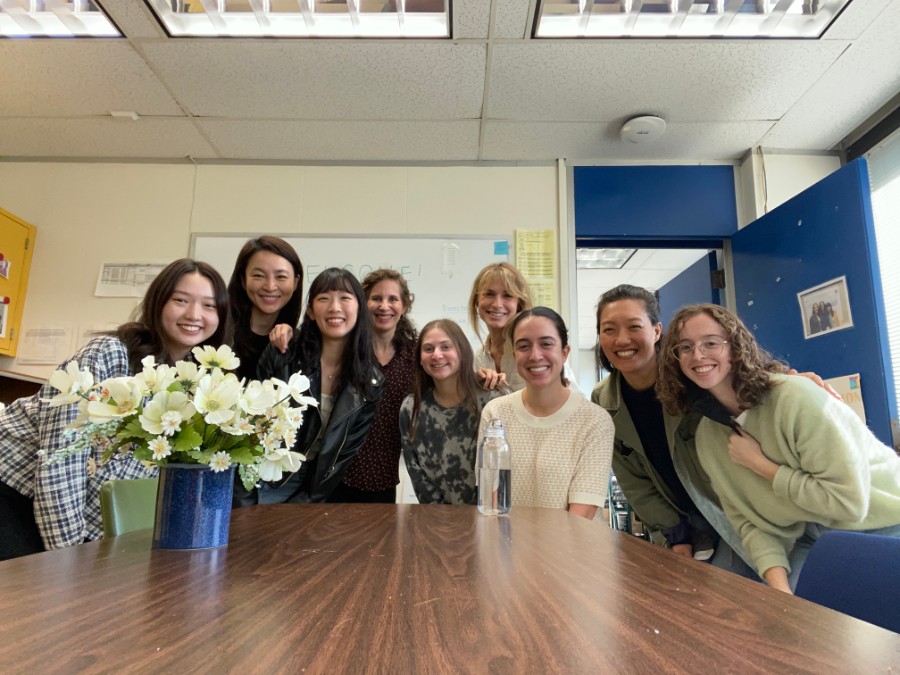
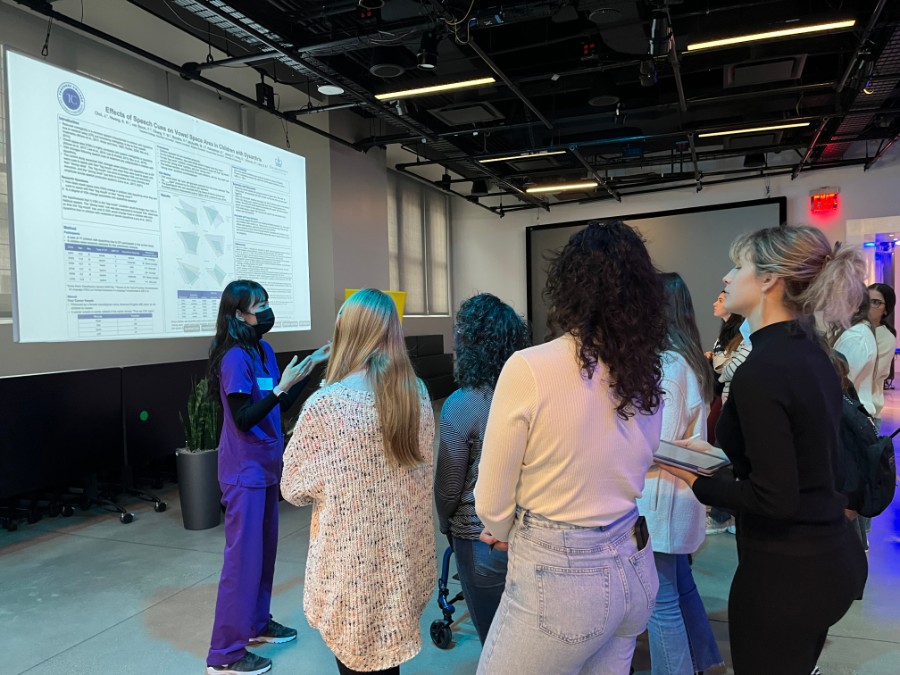
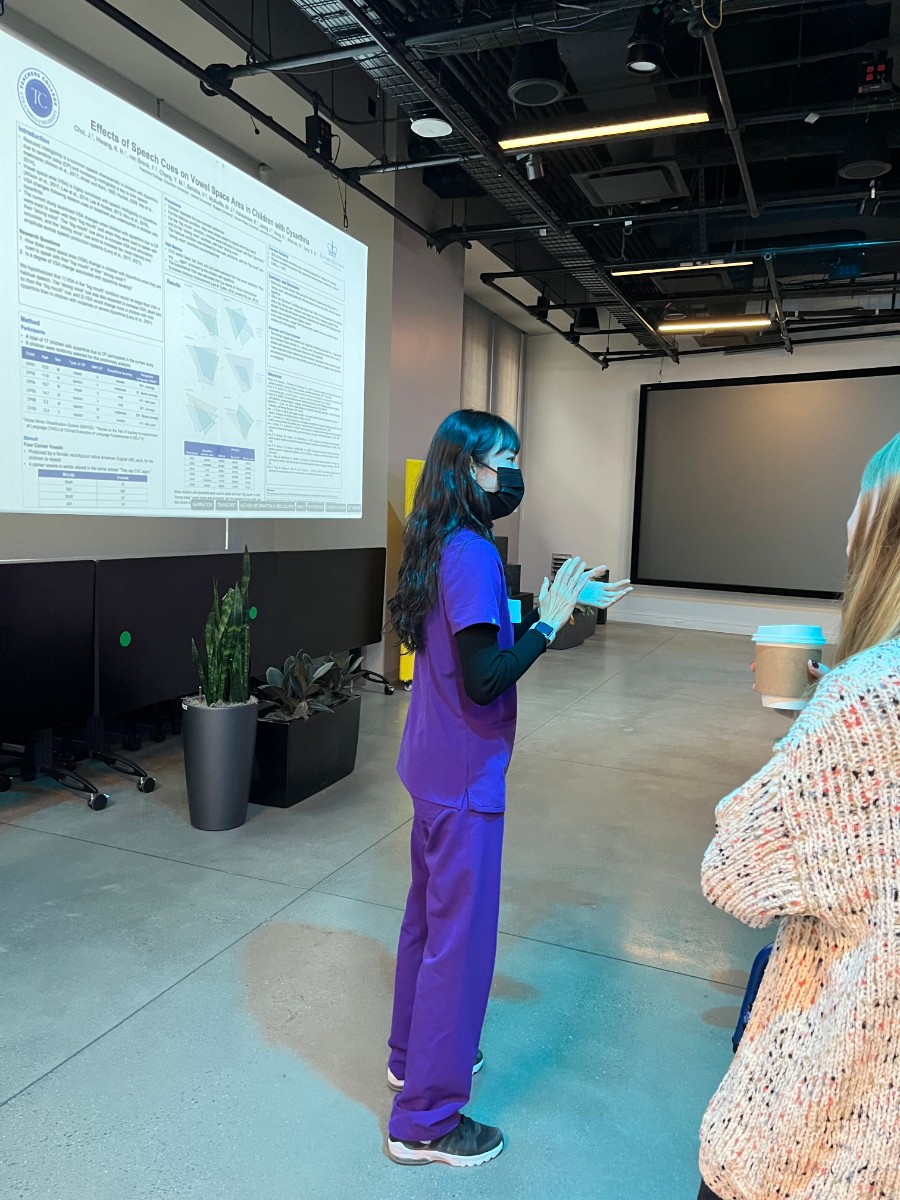
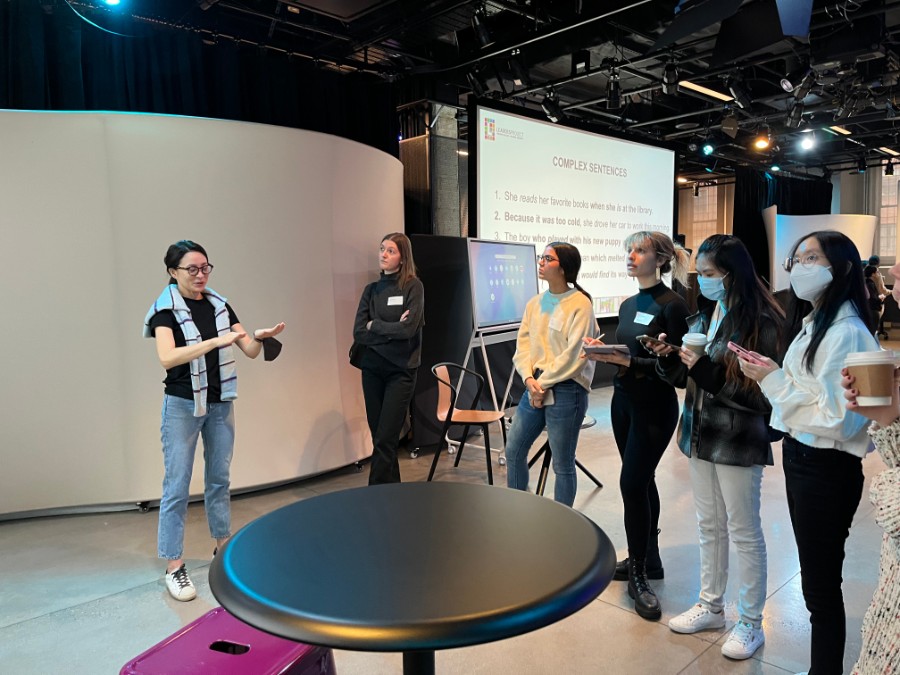
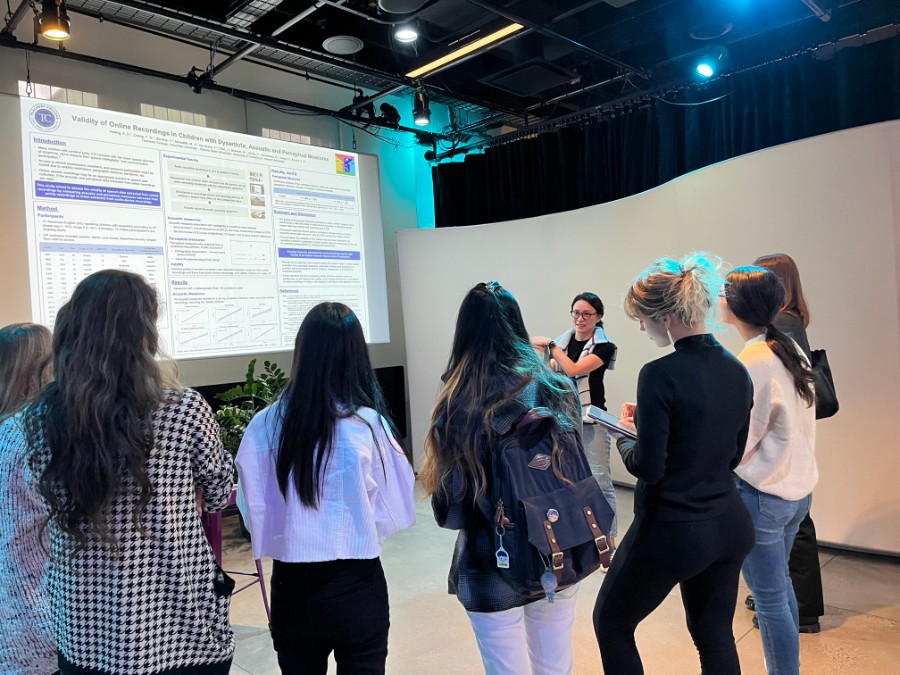
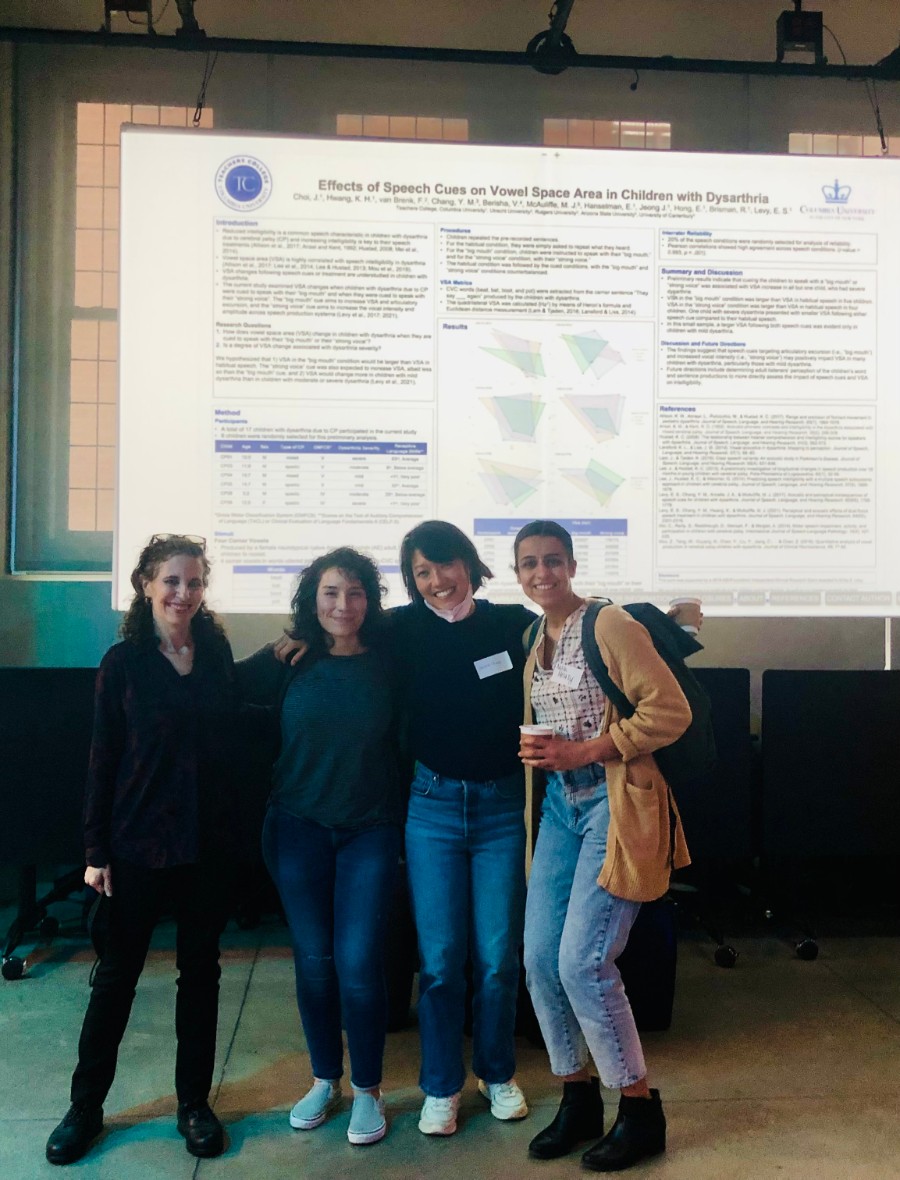
Welcome to the Speech Production and Perception Lab!
The goals of our research are to better understand patterns of speech production and perception in individuals with various language backgrounds and to develop remediation strategies, when needed, for increasing their intelligibility.
We aim to recreate natural speech patterns as much as possible within the laboratory setting. A theme of this research has been the investigation of utterances in continuous speech, in which neighboring vowels and consonants affect each other’s pronunciation, as opposed to examining speech sounds in isolation. Our work informs educational and therapeutic approaches to speech learning and disorders in multilingual populations.
Welcome to the Speech Production and Perception Lab!
Research in the Speech Production and Perception Lab examines dysarthria and its treatment across languages. Our goal is to generate and test much-needed effective, evidence-based treatments that will help individuals with dysarthria from various language backgrounds speak more intelligibly and, therefore, experience a better quality of life.
We take a three-step approach to studying dysarthria in children with cerebral palsy (CP) who speak English, French, or Korean and in adults with Parkinson’s Disease (PD) who speak English, Spanish or Mandarin. The first step of this research is to examine acoustic predictors of intelligibility in the particular language. The second involves cueing studies in which we model and cue various techniques for speech production and examine the speakers’ immediate responses to stimuli and acoustic predictors of intelligibility improvements. The third step involves explorations beyond cueing studies to testing longer term effects of treatments for dysarthria. Theoretically- and clinically-important questions include how phonological characteristics of a language may modulate effectiveness of given treatment strategies.
Speech treatment effects in children with cerebral palsy (CP):
Prof. Levy has developed Speech Intelligibility Treatment (SIT) for children with CP, and we (including doctoral students, alumnae, and master’s students) have tested the treatment in CP speech treatment summer camps at Teachers College and in Belgium, finding improvements in intelligibility post-treatment, with great variability across children. For a video about the CP speech treatment camps, please see https://www.youtube.com/watch?v=sj4Eeu4WFhs
We also examine effects of cueing “big mouth” or “strong voice” on intelligibility in children with dysarthria due to cerebral palsy who speak English, French, or Korean and examine acoustic correlates of intelligibility gains in these populations.
Speech treatment effects in adults with Parkinson’s disease (PD):
Our speech treatment studies on adults with PD have examined the effects of intensive voice treatment (LSVT LOUD®) on intelligibility in PD in the US, Taiwan, and Spain. In the first randomized controlled trial to investigate effects of speech treatment on intelligibility on English-speaking adults with PD, we found significant intelligibility gains following intensive voice treatment, but not following intensive articulation-based treatment (LSVT ARTIC™). Positive effects of intensive voice treatment were also found in our studies on Spanish speakers and on Mandarin speakers with PD. Potential universal, as well as language-specific, effects of the treatment techniques are being revealed.
We are recruiting children with cerebral palsy (4-17 years old) for online speech testing. The children will use different techniques that may improve their speech communication and we will provide feedback to parents. We will guide parents as they audio-record their child. All participant information is kept completely confidential. You will be paid $50 for your time and effort. Please see our website at www.tc.columbia.edu/spplab and contact us at cpspeech@tc.columbia.edu or (212) 678-8361 to see if your child may qualify. Study directed by Associate Professor Erika S. Levy, Ph.D., CCC-SLP and Kyung Hae Hwang, M.S., CCC-SLP. Study takes place at child's home (in online communication with researchers), takes up to 2 hours, and benefits research on speech treatment for children with CP.
TC IRB Protocol #14-245
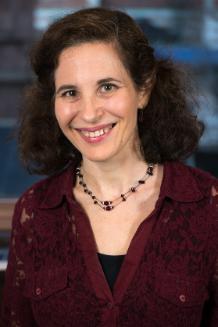 Erika S. Levy, Ph.D., CCC-SLP, is Director of the Speech Production and Perception Lab and Professor of Communication Sciences and Disorders. She is a Fellow of the American Speech-Language-Hearing Association, is on the editorial board of the American Journal of Speech-Language Pathology, and was Associate Editor of the Journal of Phonetics. Raised in Prague and Vienna, Dr. Levy received a B.A. in Psychology from Wesleyan University, an M.A. in Linguistics from New York University, an M.A. in Speech and Language Pathology from Lehman College, and a Ph.D. in Speech and Hearing Sciences from the Graduate School and University Center, City University of New York. She has published in the areas of treatment efficacy for the motor speech disorder of dysarthria and second-language speech perception and production. Dr. Levy is a trilingual speech-language pathologist and worked as pronunciation coach for Big Bird and Elmo of Sesame Street.
Carousel