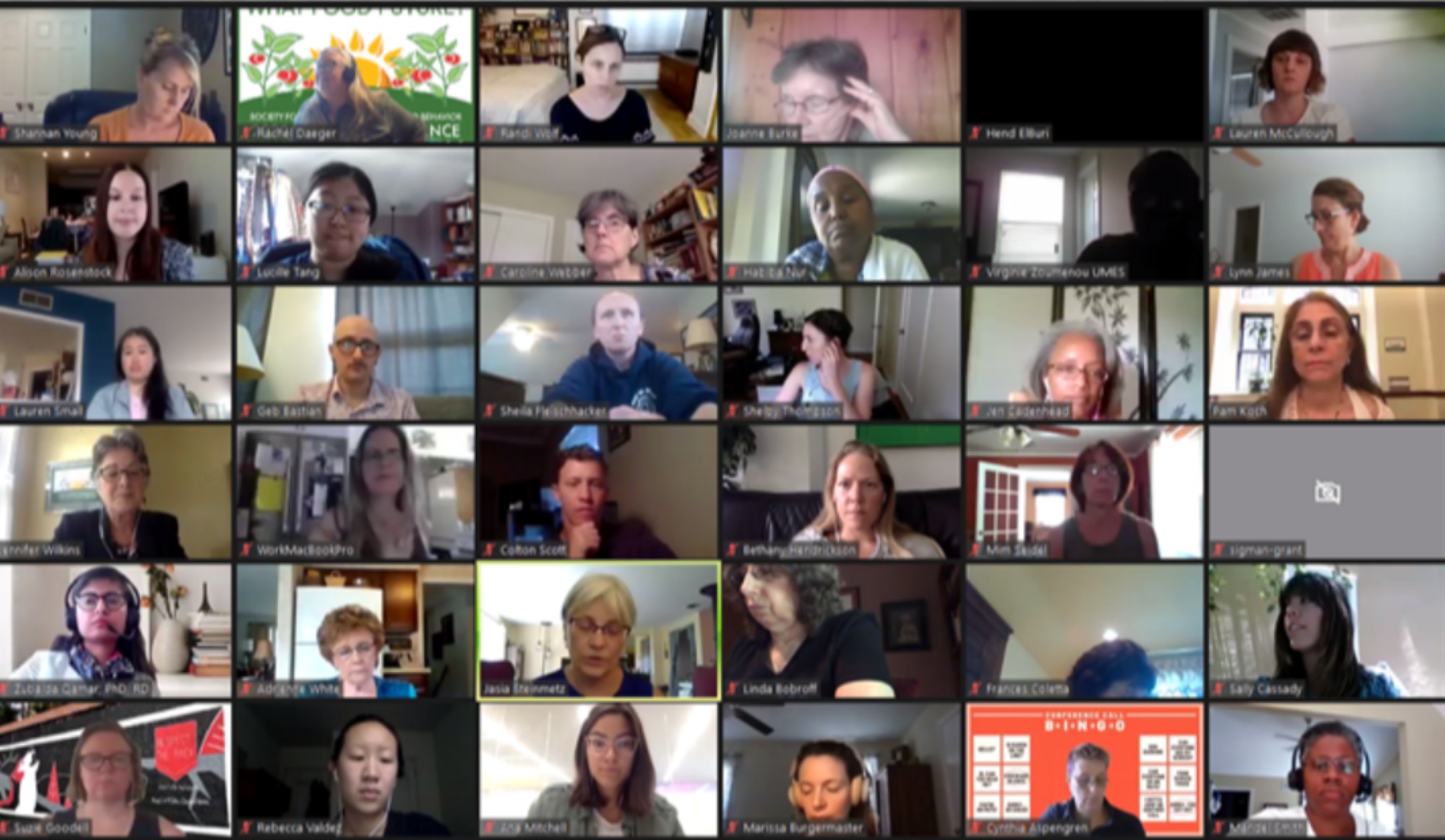
Professional conferences can range from perfunctory gatherings with lots of swag and little substance to opportunities to collaborate, learn, and be inspired by old and new colleagues. This past week’s annual conference of the Society for Nutrition Education and Behavior (SNEB) had the later in spades. Of course, the in-person conference long-planned for San Diego was not in the cards for 2020, but the SNEB team turned on a dime to create an invigorating and dynamic virtual conference.
This year’s theme – What Food Future? – underpinned the presentations throughout the week. I was struck by the breadth of presentations that covered important topics from global food system reform to tips on the logistics of managing a food donation garden. I came away from this week’s conference with a better understanding of what it means to be a “nutrition educator.” Not only do nutrition educators empower individuals to adopt healthy and sustainable lifestyles, they educate policy makers on the most effective ways to foster and support healthy and sustainable communities. For example, the presentation by the SNEB Advisory Committee on Public Policy discussed the importance of working with lawmakers, in particular at the local level as they can often be most responsive to local needs. As noted by Dr. Kimberly Libman of ChangeLab Solutions, nutrition educators may be surprised to find themselves researching zoning laws as a way to improve public health and support health equity - but, as she described, advocates successfully campaigned to revise the local zoning laws in San José, California to allow gardening in residential areas to improve access to fresh fruit and vegetables.
Current events highlight the urgency with which we need to rally in support of a more just, sustainable, and equitable food system. During her moving presidential address, SNEB President Dr. Pam Koch succinctly summarized the critical role of nutrition educators with her “5 Rs” of nutrition education: richness: think about the food system; resolve: bring more diversity into a mostly white profession; recognition: disparities in health and wealth create inequities; relevance: lift up the importance of healthy diets; resilience; use our grit. I look forward to SNEB 2021 and learning about the ways in which everyone has used their grit to shape our food future.
To watch the Presidential Address by Dr. Pam Koch, Tisch Food Center's Executive Director and SNEB President, click here.
Lesley Kroupa is a former corporate lawyer turned Registered Dietitian, public health advocate, and graduate of the Program in Nutrition, Teachers College, Columbia University. She is based in San Diego, California.