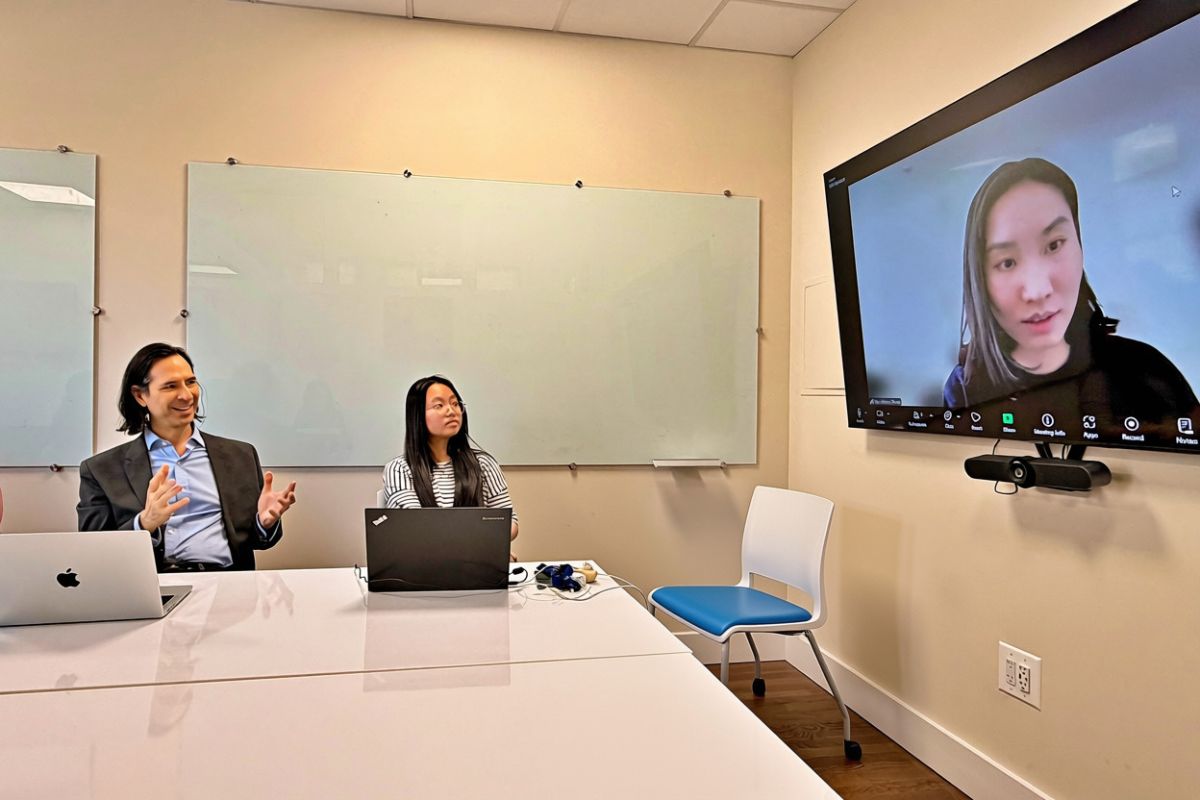
Scaling expertise into transformative education technology requires diligent product testing and aggressive seed funding. And while one might expect to hear a conversation about such topics at a business school, it’s happening around a table of ten Applied Linguistics students in a cozy conference room in TC’s Horace Mann Hall.
That’s where faculty advisor, Erik Voss, Assistant Professor of Applied Linguistics and TESOL, gathers students each week for the rigorous Language & Technology Research Group — his brain trust for translating research and practice into start-ups, marketable ed tech ideas and a springboard for additional academic pursuits.
“We’re fostering entrepreneurship ideas so that students see that what they do makes an impact,” says Voss, who leverages his expertise in AI and linguistics to guide this select group each year.
In their working sessions, students advance their product ideas through a combination of research and real-world pedagogy. They develop the beta versions of their linguistics tools, test the software, implement feedback, and speak with TC alumni who have gone on to work at Meta, Amazon and even their own start-ups.
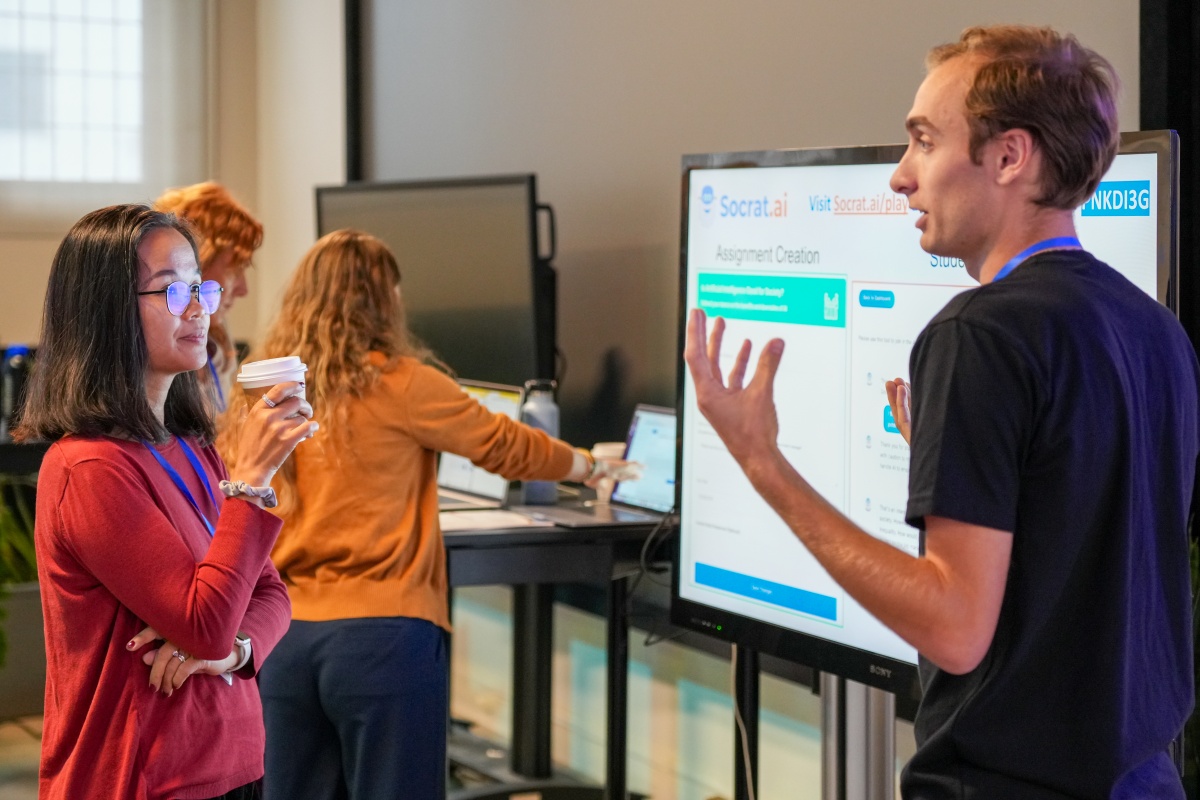
Researchers discuss their projects at the Artificial Intelligence Research in Applied Linguistics (AIRiAL) Conference in 2024. (Photo courtesy of AIRiAL)
So why do this work at Teachers College, rather than focusing more squarely on computer science or business? These students come to TC in order to help solve a critical need: ensuring that more language-learning tools reflect the needs, values and pedagogy of linguistic experts.
“We see that more personalized, customizable tools work better,” says Voss, whose students are currently focusing on software that allows teachers to see how much students use artificial intelligence in their writing, and through that transparency, offer more relevant feedback.
That specificity, with a deep understanding of what teachers and students actually need and would benefit from, differs from how traditional start-ups approach education. Rather than pursuing the most profitable idea, members of the Language & Technology Research Group “take the more fine-grained approach…rather than trying to develop a tool that is one size fits all,” explains Voss.

(Photo: iStock)
That purpose-driven approach serves as the foundation of Voss’ work with the research group, in which students must make a research-based case as to how and why a tool could help improve language learning and teaching. In Voss’ view, good ed tech tools do not rely on technical innovation alone, but rather scholarship rooted in addressing student needs, recalls Voss’ former student Yilin Zhang (M.A. ’25), now an English for Academic Purposes (EAP) lecturer at Monash College in Melbourne, Australia, who is continuing his teaching and research at the intersection of technology and language teaching and assessment.
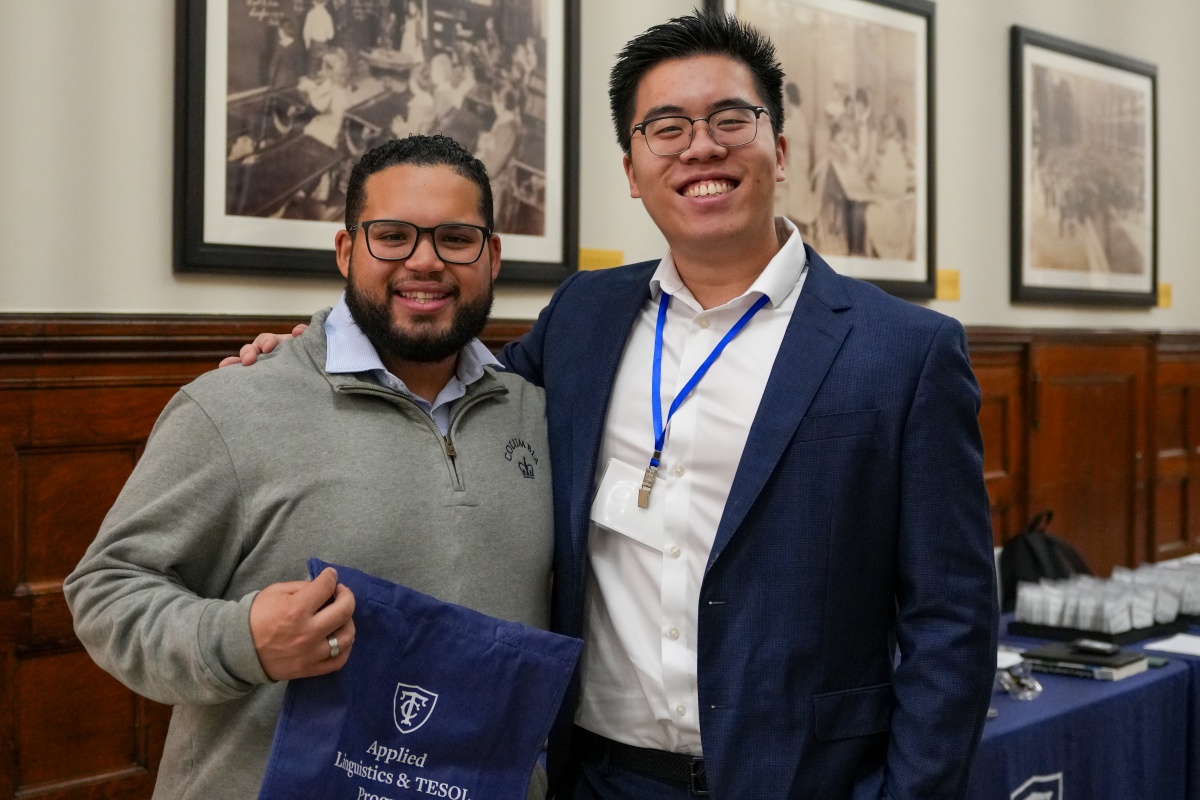
Yilin Zhang (M.A. ’25) (left) at the 2024 AIRiAL Conference (Photo courtesy of AIRiAL)
“After spending several years in this field myself, I’m confident in saying that there aren’t many professors who can genuinely bridge research with what’s happening in the rapidly evolving language technology field,” says Zhang, who first met Voss at the College’s Admitted Students Day in 2023 when the TC alumnus was still discovering his research niche. In the time since, Zhang has come to understand the unique role that he and Voss aim to serve: closing the gap between technologists with a focus on education and traditional linguistic researchers.
“Erik is one of the few faculty members I’ve worked with who can genuinely bridge these two worlds,” says Zhang. “Throughout my time at TC, he was the faculty member I consistently turned to whenever I needed advice or mentorship related to language and technology.”
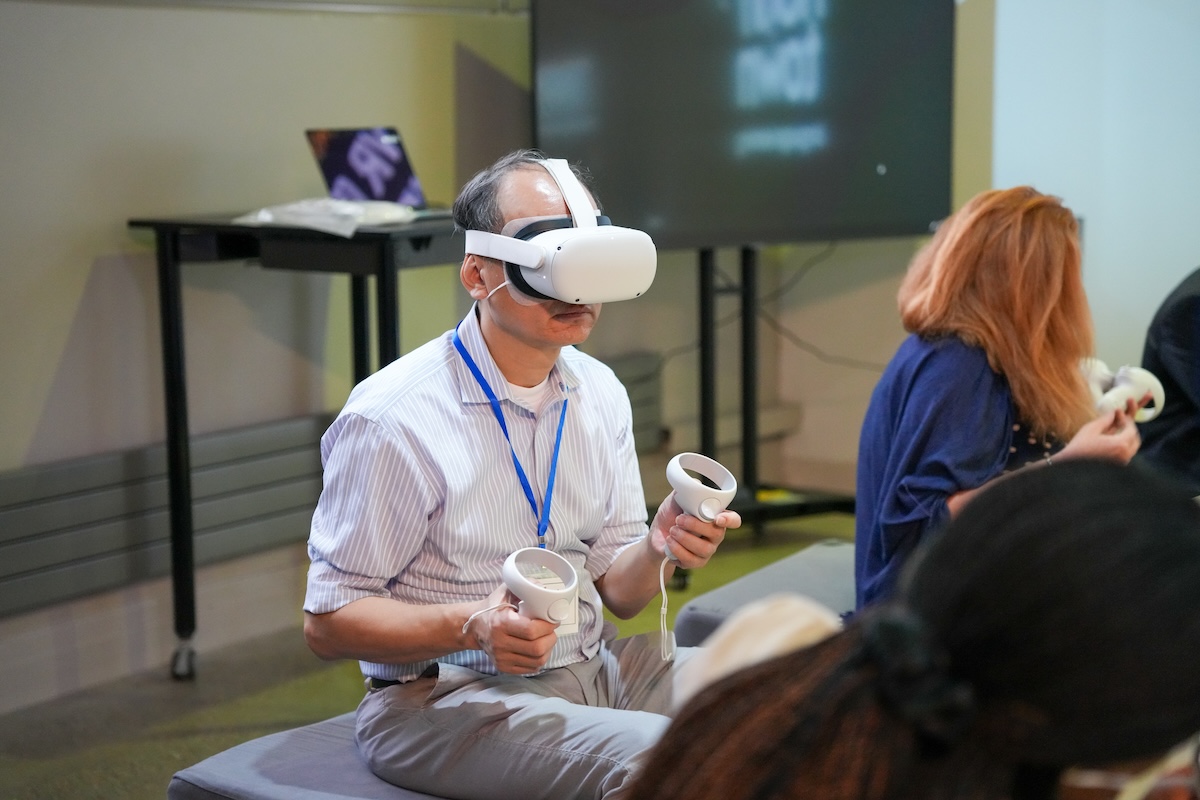
Guests experience virtual reality technology during the 2024 AIRiAL Conference at the College's Smith Learning Theater. (Photo courtesy of AIRiAL)
Voss is building on a longer history of entrepreneurship at the College, where specific interest in education technology dates back to the earliest computers. Alumni such as Will Jordan-Cooley (M.A. '14), founder of the language learning app PangeaChat, walked that same path years earlier through their own TC programs, turning their scholarship into ventures that could not have emerged from a business school or computer science program.
“Education is a good way to scale impact,” explains Jordan-Cooley, who came to TC to learn how to make educational media with Joey Lee, Associate Professor of Teaching,
after connecting with him at a conference. As a Technology, Media & Learning student, Jordan-Cooley gained hands-on experience under Lee that built his foundation as an educational-media designer. He went on to found Pangea Chat, which is now funded by a National Science Foundation Small Business Innovation and Research grant. Now approaching its 10 year anniversary, PangeaChat demonstrates the TC alumnus’ greatest advice for aspiring ed tech entrepreneurs: don’t short-change the pursuit of educational value.
“It’s increasingly easier to make software, and the differentiator for software out there is the insight into the kinds of problems your software is solving,” explains Jordan-Cooley. “You want some technical ability, and the TC programs do a pretty good job of that, but you should become a subject matter expert in your particular area of education and really focus on that.”