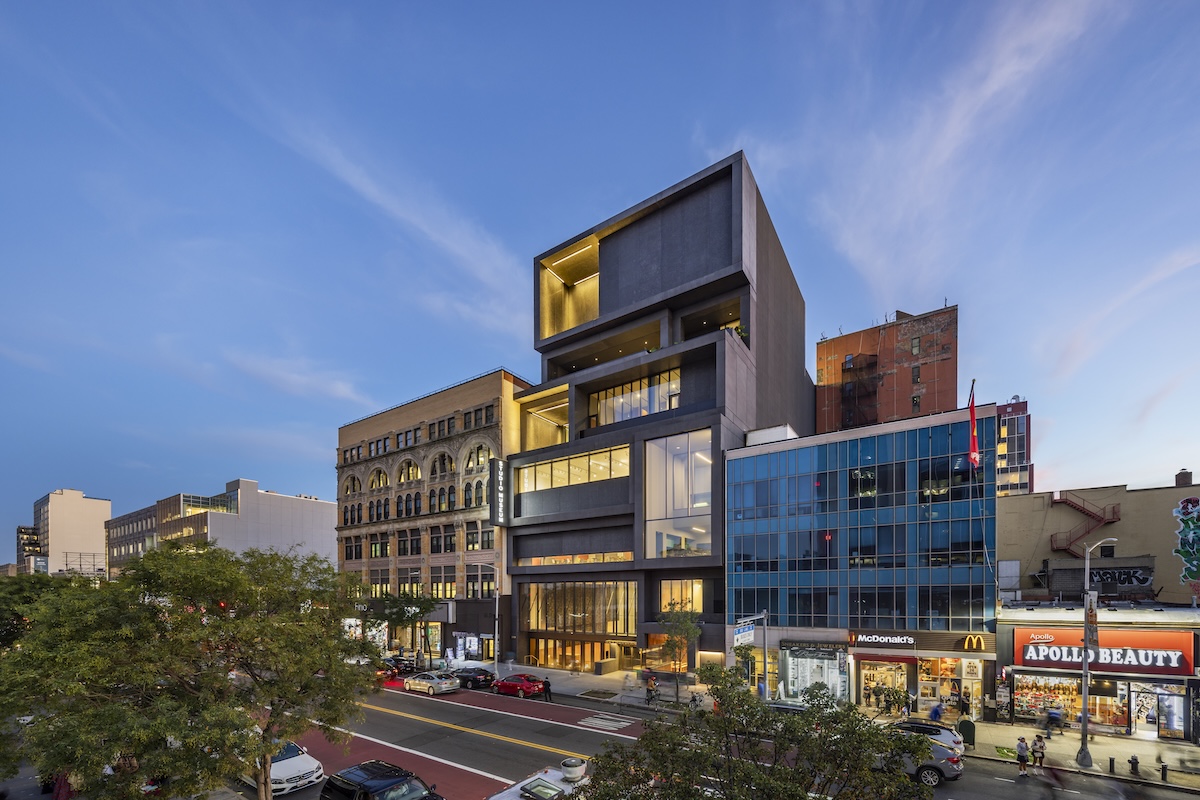
For the first time in seven years, you can stroll through the halls of the Studio Museum in Harlem and see several works by TC alumni in the same neighborhood that they called home. After a long closure due to construction, the new Studio Museum in Harlem — a defining community institution located on West 125th Street — opened its new home to the public late last fall.
In 1968, the Studio Museum was founded by a group of Harlem-based artists and activists to uplift the work of Black artists from the U.S. and African diaspora in a time of intense political and social change. The Studio Museum provided space for dozens of artists to develop their craft and exchange ideas while also strengthening ties with the surrounding community.
Today, the Studio Museum’s new, dedicated 82,000-square-foot, seven-floor building continues its mission “to serve as a laboratory and forum for artists of African descent” with
expanded space for exhibitions, community programming and its renowned Artist-in-Residence program.
Several TC alumni are among the artists, featured in the museum’s permanent collection, which includes nearly 9,000 works from 800 artists, spanning 200 years. A few works from Charles Alston (M.A. ’31) and Alma Thomas (M.A. ’34) are on view alongside a portrait of Aaron Douglas (M.A. ’44). All three alumni left their own mark on the art world while also educating future generations of artists.
Carousel
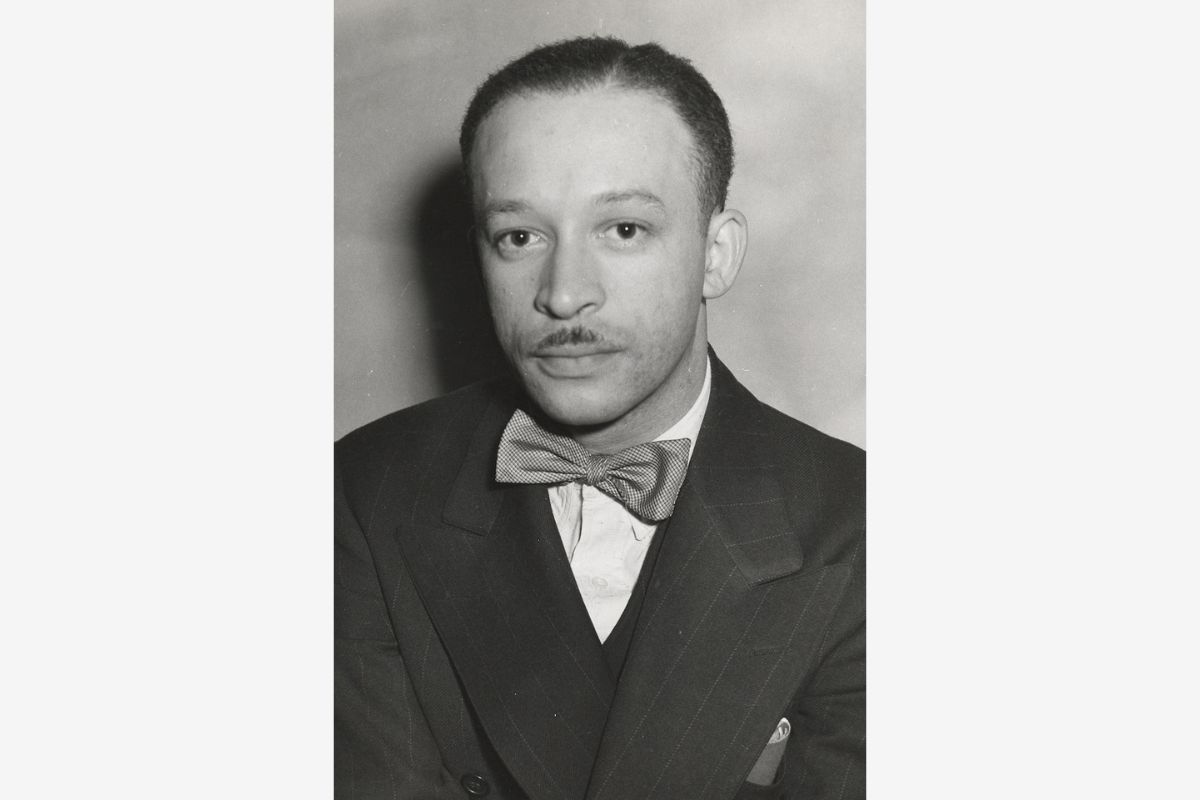
Charles Alston in 1939 (Photo: Andrew Herman/Federal Art Project, public domain)
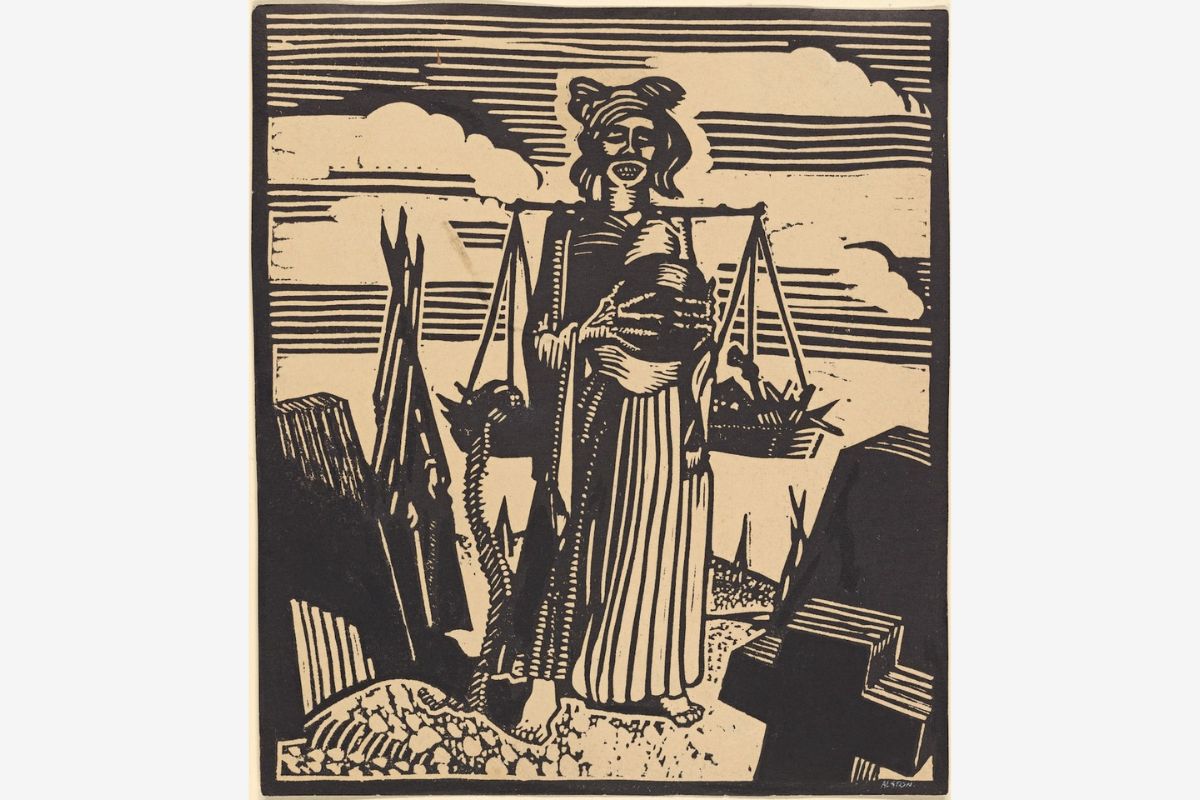
"Who Likes War" by Charles Alston (Image: The New York Public Library)
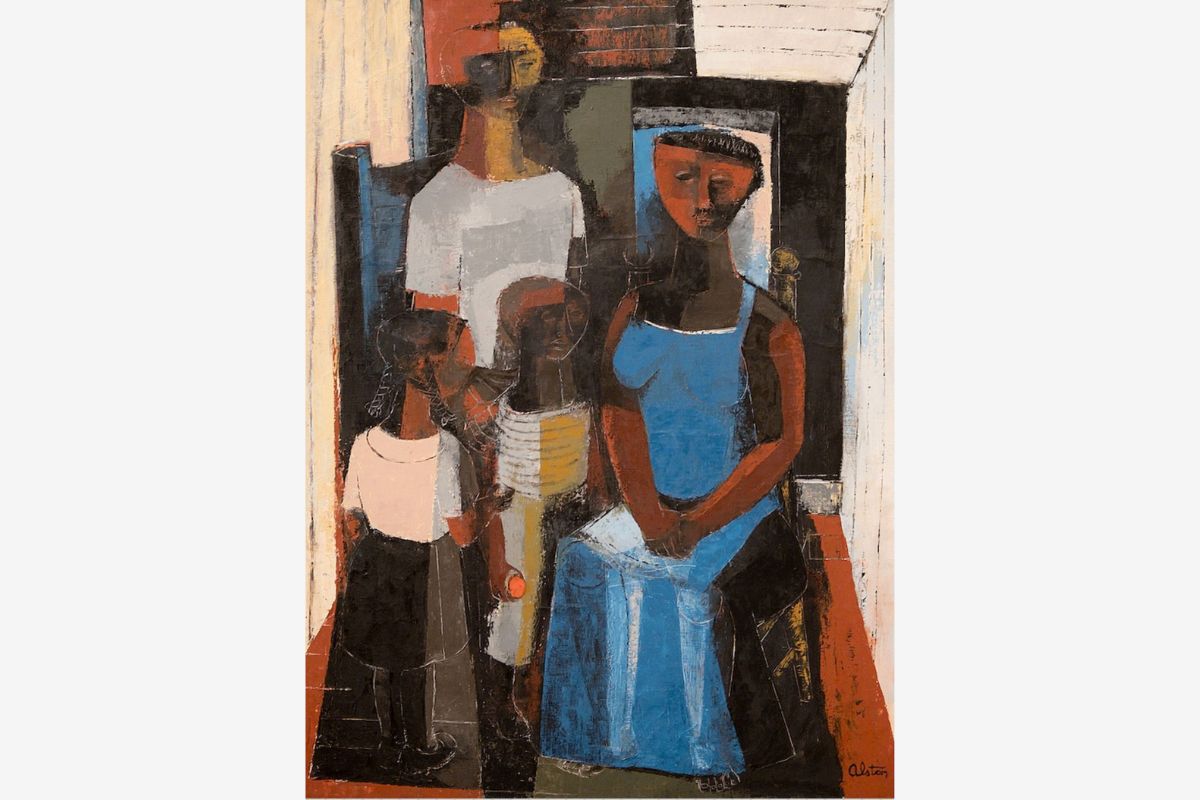
"The Family" (1955) by Alston. (Image: Sharon Mollerus, Creative Commons)
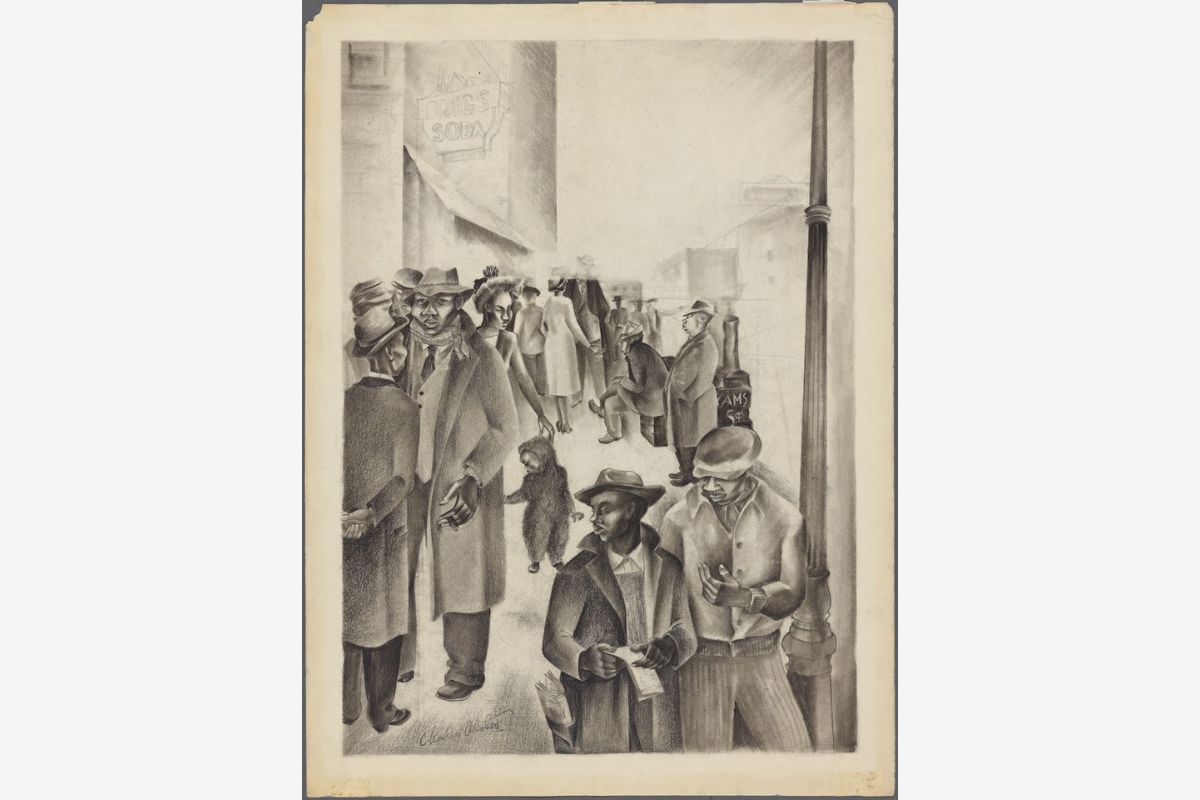
"Harlem Street Scene" by Alston (Image: The New York Public Library)
Charles Alston (M.A. ’31)
A recipient of TC’s first Distinguished Alumni Award in 1975, Charles Alston was an illustrator, muralist, sculptor and portraitist who broke barriers his entire career. As an artist he documented civil rights titans like Martin Luther King Junior and designed book covers for the likes of Langston Hughes. As an educator, he fostered new generations of Black artists using the philosophies of TC mentors John Dewey and Arthur Wesley Dow.
The five works featured in the Studio Museum’s collection were created between 1953 and 1969, a period bookended by Alston’s first solo exhibition and his appointment to the New York City Arts Commission. Two of his paintings “Untitled,” and “Black and White II” are currently on display in the museum on the fourth floor and the rest are available to view in the online collection.
Carousel
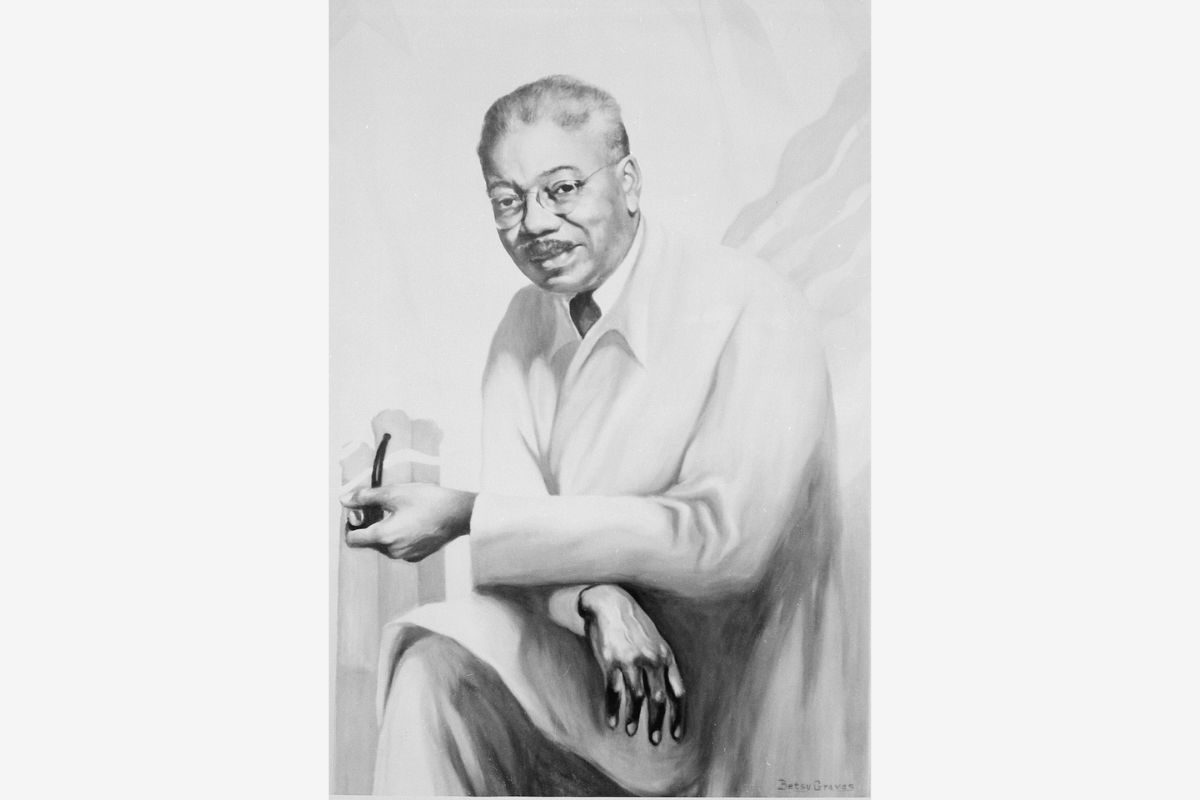
"Aaron Douglas" by Betsy Graves Reyneau (Image: National Archives and Records Administration, public domain)
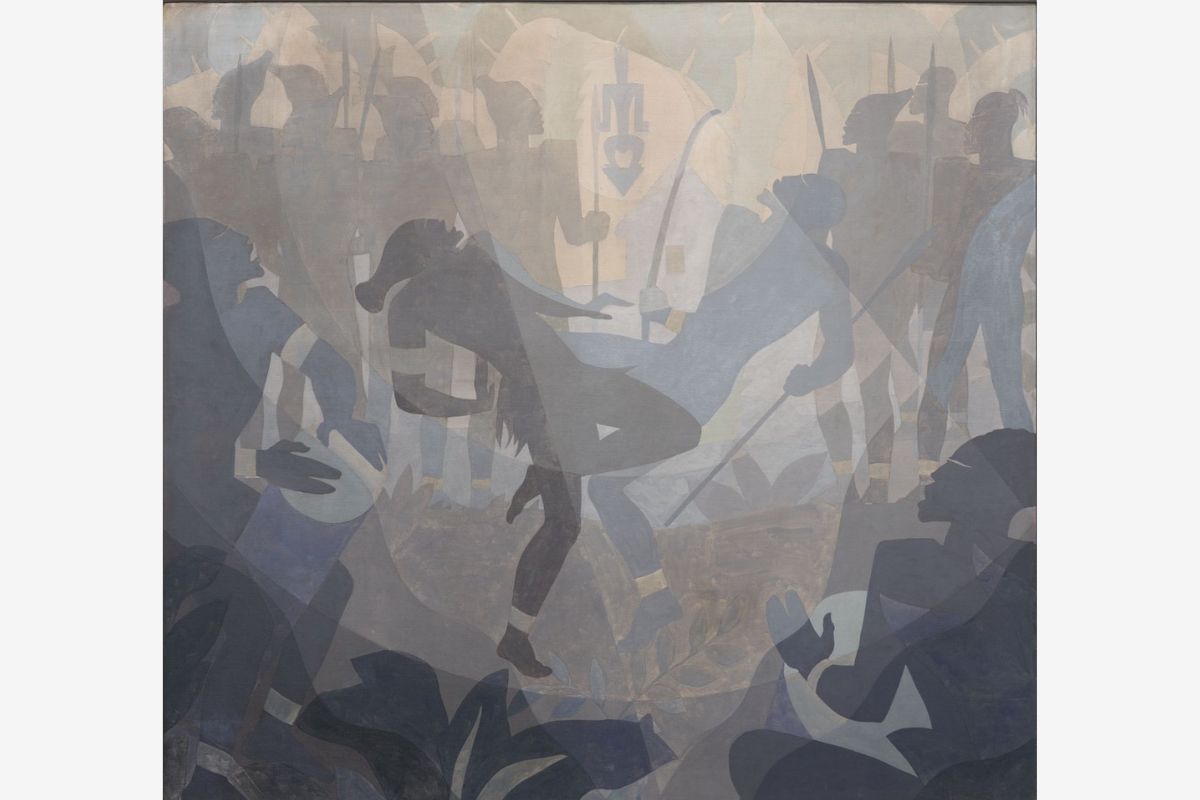
"Aspects of Negro Life: The Negro in an African Setting" (1934), Aaron Douglas (Image: The New York Public Library)
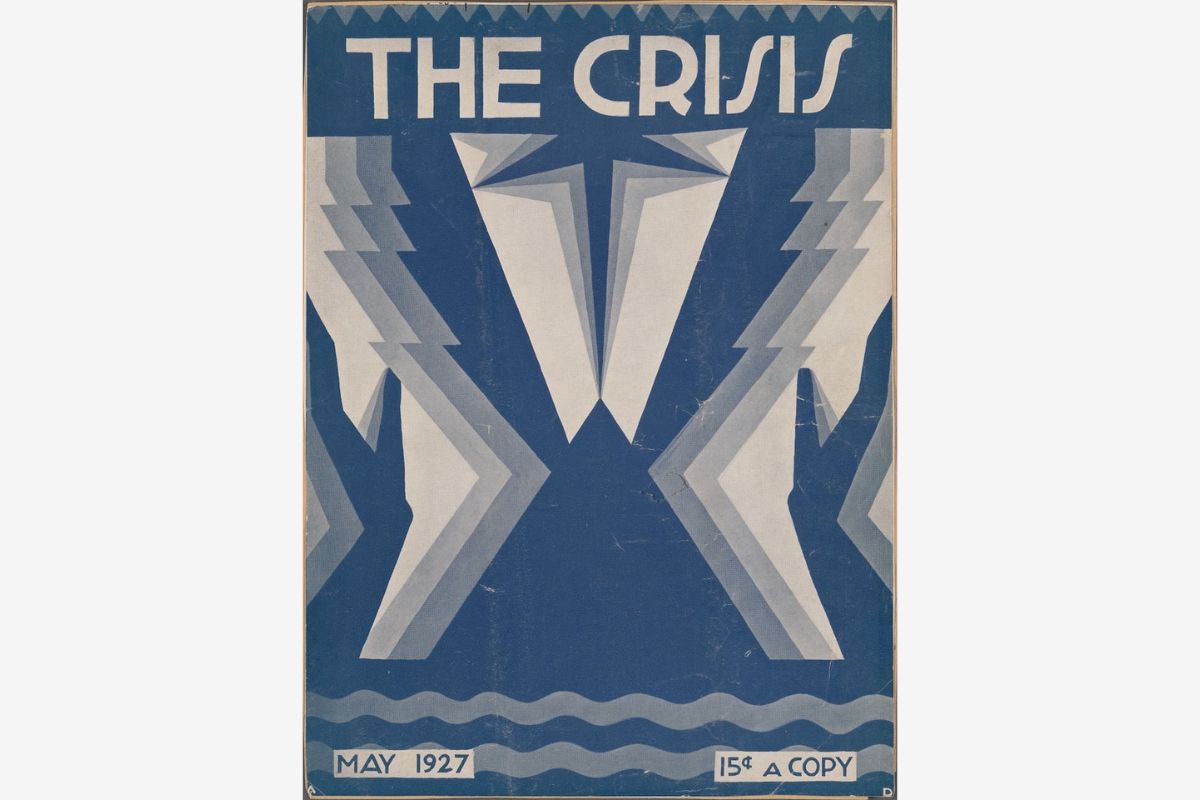
May 1927 cover of The Crisis, designed by Aaron Douglas (Image: The New York Public Library)
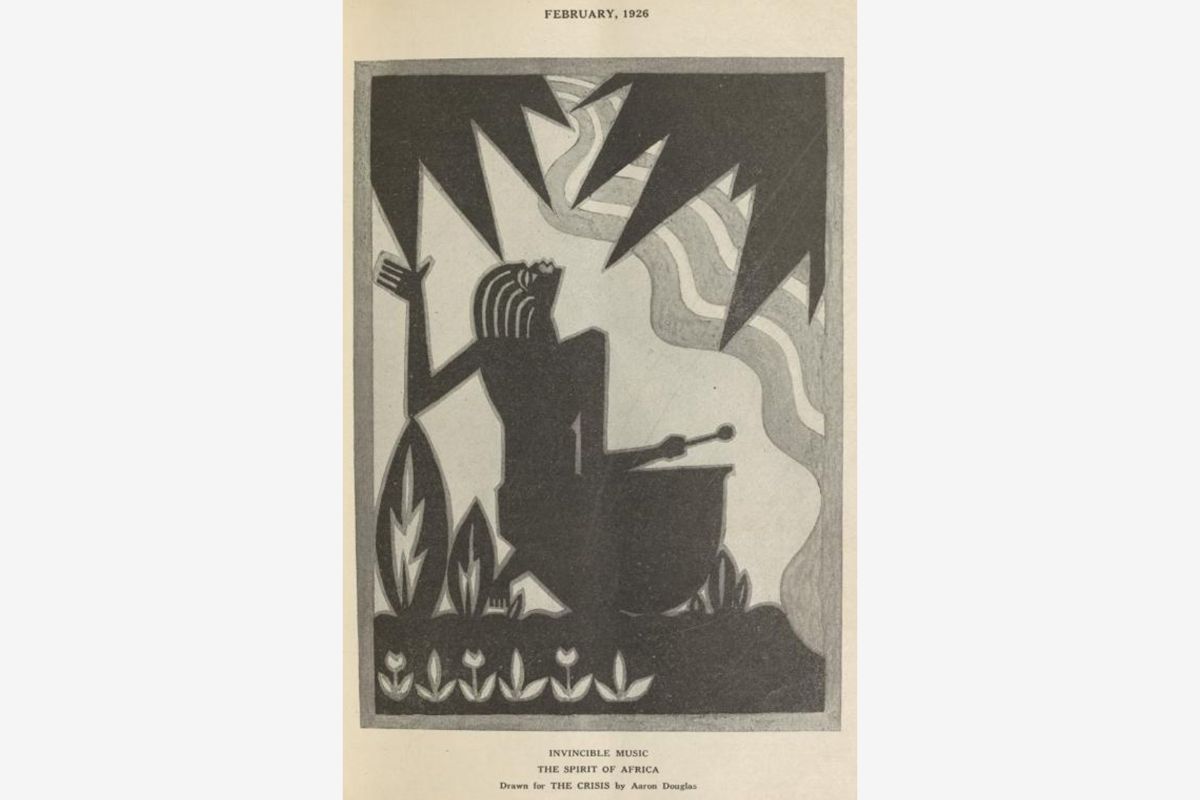
"Invincible Music. The Spirit of Africa," a drawing Douglas created for a 1926 issue of The Crisis (Image: The New York Public Library)
Aaron Douglas (M.A. ’44)
Aaron Douglas, a contemporary of and occasional inspiration to Alston, was a central figure of the Harlem Renaissance — and friends with icons like W.E.B. Dubois and Zora Neale Hurston — whose striking style became incredibly influential. Douglas founded and led Fisk University’s Art Department, opening up the educational opportunities for countless Black artists in the South, until his retirement in 1966.
The Studio Museum doesn’t currently have any works by Douglas in its collection, but he is featured in a photograph by Robert A. Sengstacke.
Carousel
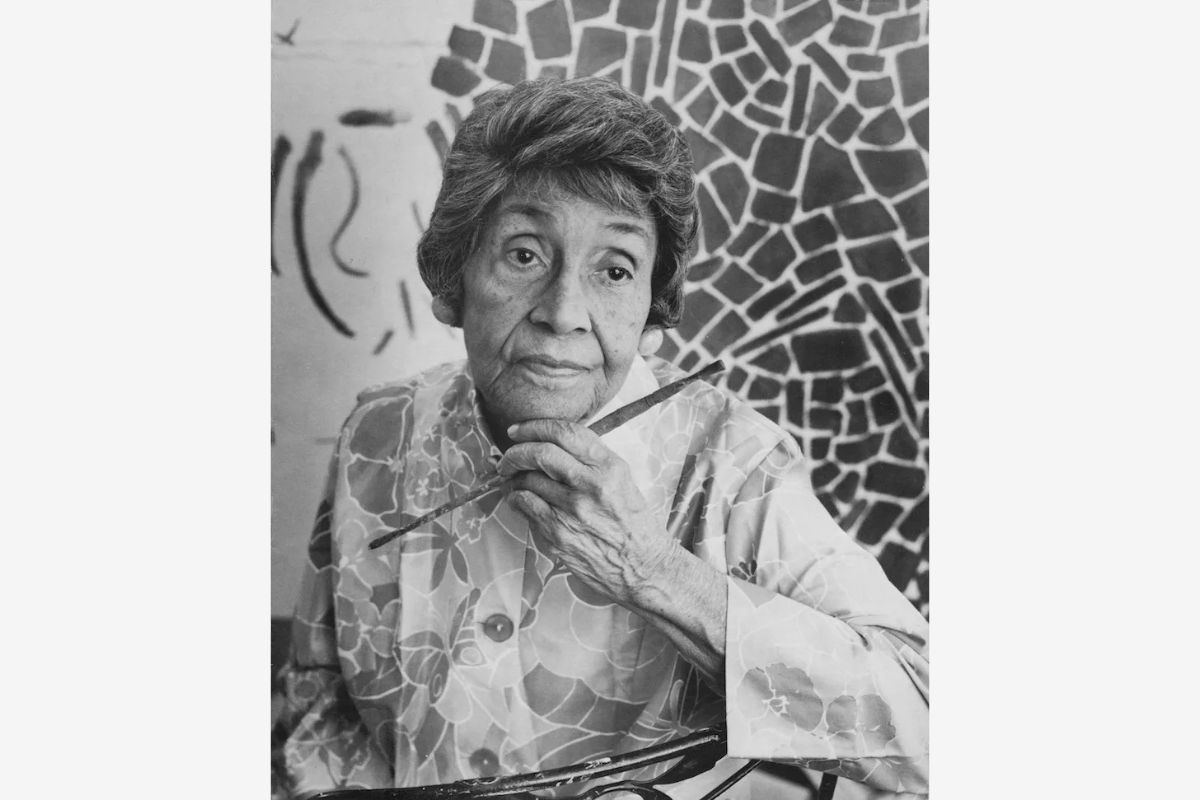
Portrait of Alma Thomas in 1976 by Michael Fischer (Photo courtesy of the National Museum of American Art, Smithsonian Institution)
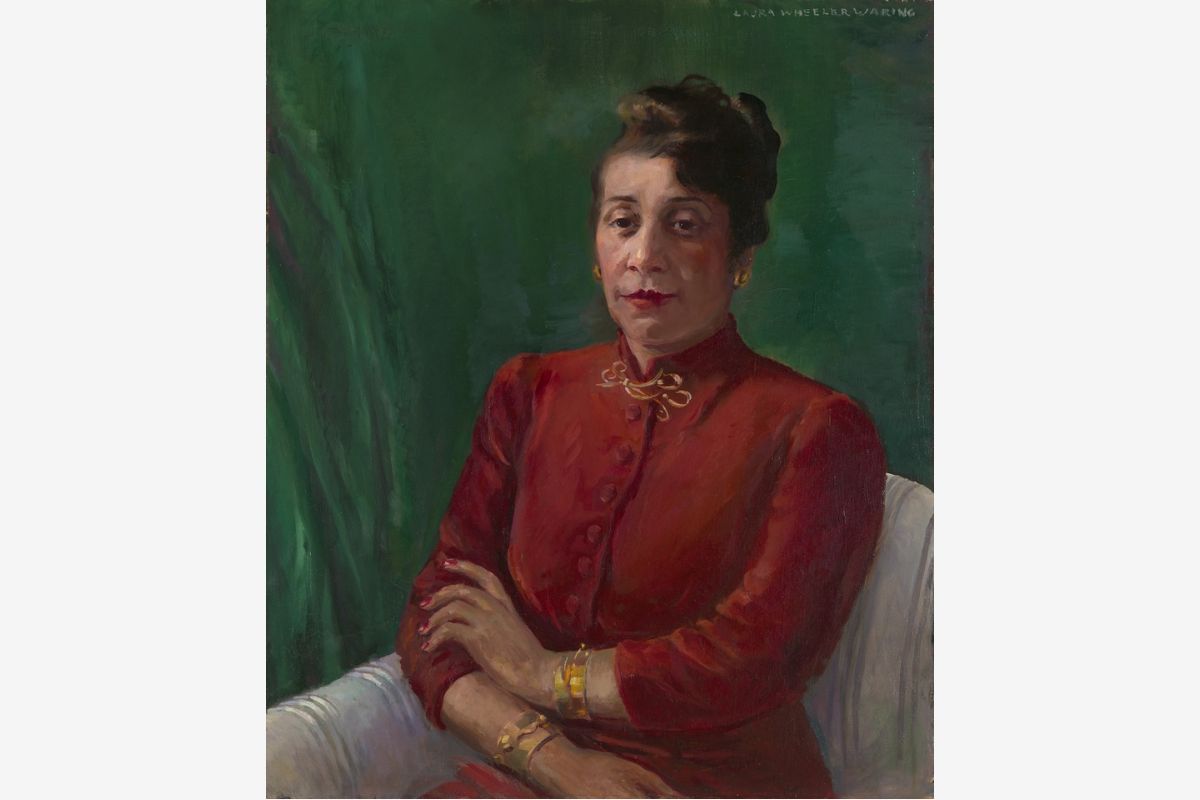
"Portrait of a Lady," a 1947 painting by Laura Wheeler Waring depicting Alma Thomas. (Image: Smithsonian American Art Museum, public domain)
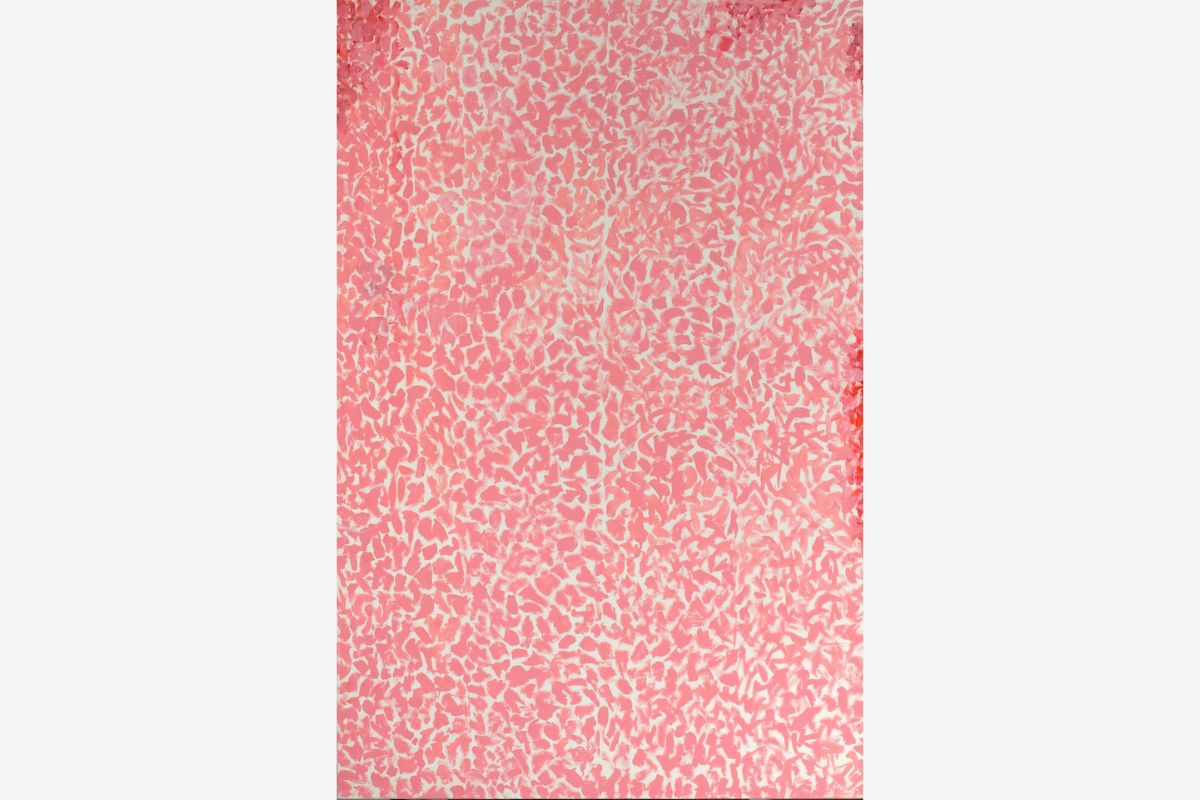
"Double Cherry Blossoms" (1973) by Alma Thomas (Image: Bowdoin College Museum of Art, public domain)
Alma Thomas (M.A. ’34)
Alma Thomas was a dedicated art educator in Washington, D.C. for 35 years who became a renowned artist in her own right after retiring from teaching at the age of 69. Her expressionist paintings, often inspired by her time in D.C., garnered national recognition and she was the first Black woman to have a solo exhibition at the Whitney Museum of American Art as well as the first Black woman painter featured in a public area of the White House.
Find two of Thomas’s early watercolor paintings, “Opus 52” and “Space,” on the fourth floor of The Studio Museum, which hosted two solo exhibitions of Thomas’s work, one in 1983 and a career retrospective in 2016.
Consider visiting on Studio Sundays, when families can participate in Family Gallery Tours, Story Time or attend one of the weekly drop-in art sessions, where guests create their own works of art inspired by the works in the museum. While admission is free on Sundays, tickets are required and advanced ticket reservations are recommended.
Learn more about the Studio Museum in Harlem, here.