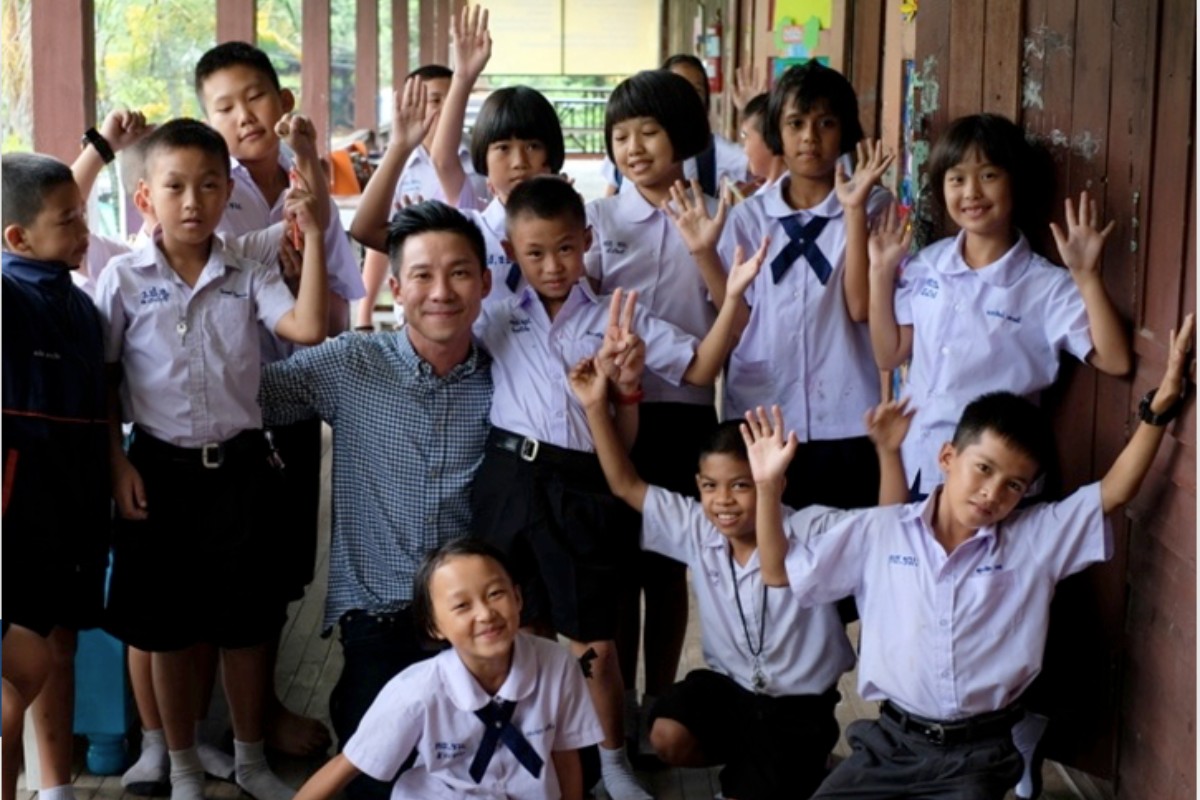
Poverty defined TC alumnus Apichai Chaiwinij’s early life in Bangkok, so much so that his own parents gave him the nickname “Bank” in hopes that he would help change their fortune. Now an adjunct at his alma mater, Chaiwinij (Ed.D. ’20, M.Ed. ’16, M.A. ’12) is also helping create opportunities for children who still live in the shadows.
His students reside in the Golden Triangle, a rural region across Thailand, Myanmar and Laos where 64 percent of people live below the poverty line, and drug and human trafficking often define everyday life. Through the Hill Tribe Education Foundation, which Chaiwinij founded in 2014, more than 10,000 local students have received mentorship opportunities designed to carve pathways to safer economic opportunities.
“We’re empowering them to believe in themselves and live for their dreams,” says Chaiwinij, who returns to the region regularly for his work while leading his team from New York while teaching in the College’s Adult Learning & Leadership program.
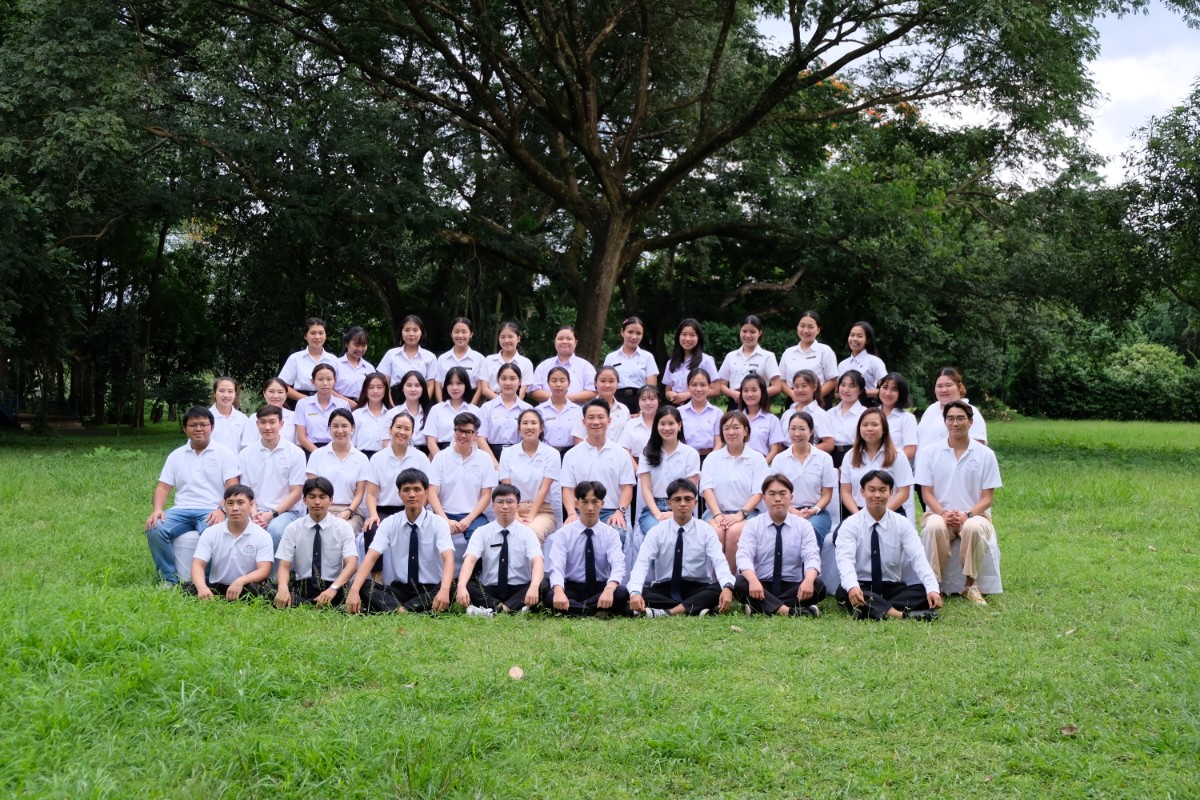
Through the Hill Tribe Education Foundation, which Chaiwinij founded in 2014, students receive full-scholarships, stipends, and intensive leadership development (Photo courtesy of HTE)
The foundation began after Chaiwinij left his fruitful career in marketing — managing multiple markets in the Asia-Pacific region for major brands like Coca-Cola and BMW.
Realizing he wanted to impact people rather than just businesses, Chaiwinij embarked on a teaching career, starting in Bangkok. The Thai scholar soon volunteered to teach in the Golden Triangle region at the suggestion of his mentor, who wanted Chaiwinij to “know the real situation” in their country before he ventured to the U.S. to begin his graduate work. The strife the TC grad witnessed was unforgettable.
In the remote highlands where Thailand, Myanmar, and Laos converge, Chaiwinij visited many villages facing poverty, where he “witnessed a painful reality: for many parents, drug and human trafficking were seen not as crimes, but as means of survival,” he said.
“It was heartbreaking,” Chaiwinij explained. “As someone from Bangkok, I used to believe everyone carried dreams and faith in the future. Then I watched my students disappear — pulled out of school by their parents to earn a living through trafficking. My understanding of Thai education had been too shallow. I had never truly touched the real soil of my own country.”

TC alumnus Apichai “Bank” Chaiwinij (Ed.D. ’20, M.Ed. ’16, M.A. ’12). (Photo courtesy of Chaiwinij)
After earning his first degree from TC, Chaiwinij returned to Bangkok following the death of his father. His responsibilities as the eldest son were fulfilled — with his siblings educated and working back home full time. He was free to make his own choices about what to do next.
Around the same time, Chaiwinij joined many Thai people in grieving the late King Bhumibol Adulyadej (Rama IX), with whom Chaiwinij shared an interest in helping the people of the Golden Triangle have more economic opportunities.
“Instead of sinking into grief, I asked myself: can I use this pain to ignite the power to do something meaningful? The answer was yes,” recalls the TC alumnus, who then established and built the Hill Tribe Education Foundation (HEF) alongside his family, close friends and colleagues.
HEF has now helped inspire more than 10,000 students, with more than 90 HEF scholarship grantees, with HEF ambassador students then going on to promote school completion in their hometowns. HEF now focuses on educator development, youth leadership and mentorship in hopes of contributing to a longer-term cultural shift.
My greatest hope is that everyone—truly everyone, from city streets to the most remote mountain villages, especially underprivileged youth — can have the chance to dream, learn, lead, and thrive.
Chaiwinij returned to TC in 2015 to continue his graduate work. Under the mentorship of Professor Victoria Marsick, he refined his focus on transformational leadership.
“While working with her as a graduate assistant, she didn’t just teach me. She instilled in me the qualities of true leaders and educators, and slowly, she transformed me,” explains Chaiwinij, who worked with her as the graduate assistant from 2016 to 2020. “I changed from a businessman into an educator and came to believe deeply in the power of empathy, compassion and hope.”
His doctoral research, supervised by instructor Judy O’Neil, now lives on through the Visionary Leadership Academy (VLA) — funded by the John F. Kennedy Foundation and supported by Thailand’s Ministry of Education — cultivating school leaders as agents of change for schools serving disadvantaged students.
Since 2022, he has returned to TC as an adjunct, teaching “Leadership Development in Non-Western Cultures,” which stems from his dissertation.
“My greatest hope is that everyone—truly everyone, from city streets to the most remote mountain villages, especially underprivileged youth — can have the chance to dream, learn, lead, and thrive,” says the scholar.