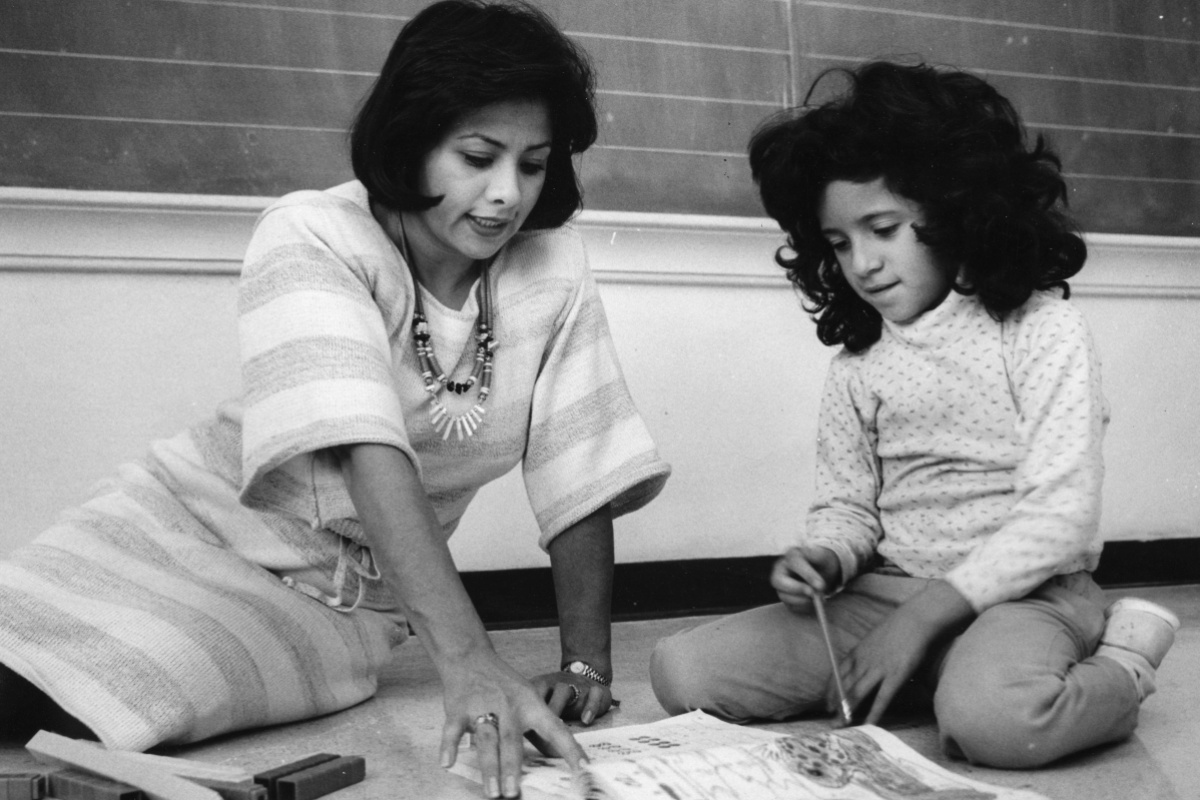
As she stood before 3,000 special educators, TC Professor Frances Connor (Ed.D. ’53, M.A. ’48), president of the Council for Exceptional Children, was set to address her colleagues at a critical moment for special education. It was 1964; half of the United States’ children with learning differences lacked access to schooling, and states did not empower teachers to meet student needs through individualized instruction. But society was changing rapidly across the country; civil rights activists would realize their hard work for a better future just a few months later with the passage of the Civil Rights Act — inspiring additional advocacy across women’s, LGBTQ+ and disability rights. Now was the time to be bold.
In the grand ballroom of a downtown Chicago hotel, Connor presented what would become the most influential work of her 50-year career, setting into motion decades of special education policy, practice and scholarship that would change the lives of millions.
“Special educators are to be liberated, not ‘trained,’” said Connor, who called for a national transformation in teacher preparation that would allow educators to individualize support and prioritize student inclusion. Her paper, “The Sword and the Spirit,” outlined her policy focus for the next ten years. “Proposed here is increased emphasis on providing children with thoughtful, inquiring, receptive professional educators rather than with trained teachers concerned with forcing children to ‘hold still while being taught what has been specified,’ thus preventing the liberation of exceptional children capable of forging ahead intellectually.”
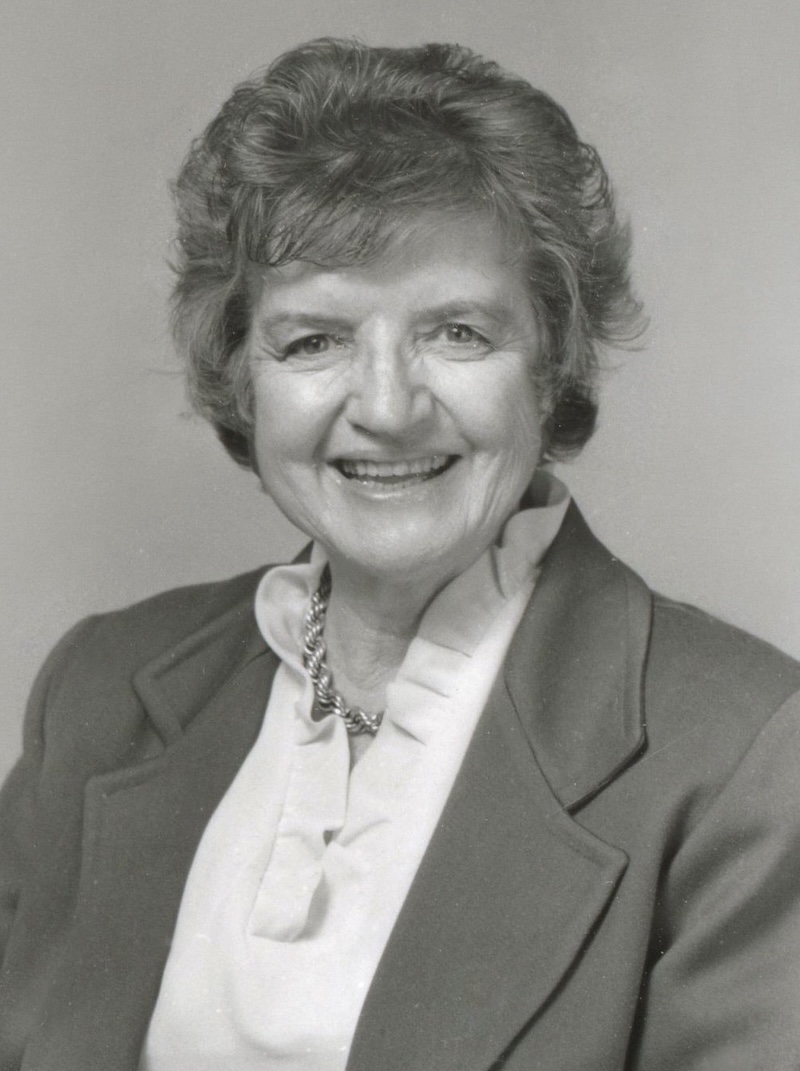
Frances Connor (Ed.D. ’53, M.A. ’48) served as TC’s Richard March Hoe Professor of Education and as the president of the Council for Exceptional Children. Connor (1919 - 2015) shaped the field of special education profoundly throughout her career. (Photo: TC Archives)
Connor’s work, among that of others such as her TC colleague Leonard Blackman, Professor Emeritus of Psychology and Education, led to Congress passing the bipartisan Education for All Handicapped Children Act in 1975. The landmark bill, later expanded and renamed to the Individuals with Disabilities Education Act (IDEA), outlined that children with disabilities were entitled to a free, accessible education in the same schools as non-disabled children.
Alongside Connor, TC faculty and students were at the forefront of advancing rights for students with disabilities. Blackman notably helped forge the multidisciplinary practice that would help define the field and shape TC’s approach, while the late Linda Hickson, Professor Emerita of Special Education, who passed away in early 2025, advanced safety protections for individuals with disabilities.
Special educators are to be liberated, not ‘trained.’
“To be a graduate student in special education at TC at that time meant you were preparing for leadership and to make change,” reflects Michael J. Lewis (Ph.D. ’79), who went on to advance dual certification opportunities for special education teachers in California. “TC [not only] prepared us to step out — [but] expected it.”
IDEA, enacted in 1999, would later fully realize Connor’s vision to empower teachers for individualized instruction with the help of disability advocates Ruth Christ Sullivan (Ph.D. ’53) and Susan Jay Spungin (Ed.D. ’75). The bill would go on to transform the opportunities available to students with disabilities, and the possibilities of the field itself, in the U.S. and around the world.
“Those who came before us in the field — through their advocacy for student opportunities and empowerment of educators — made it possible for the field to be what it is today. We are now at a moment where we think about neurodiversity from an identity-affirming perspective and honor the voices of members of that community,” says Laudan Jahromi, Professor of Psychology and Education and Director of the College’s Intellectual Disability/Autism program.
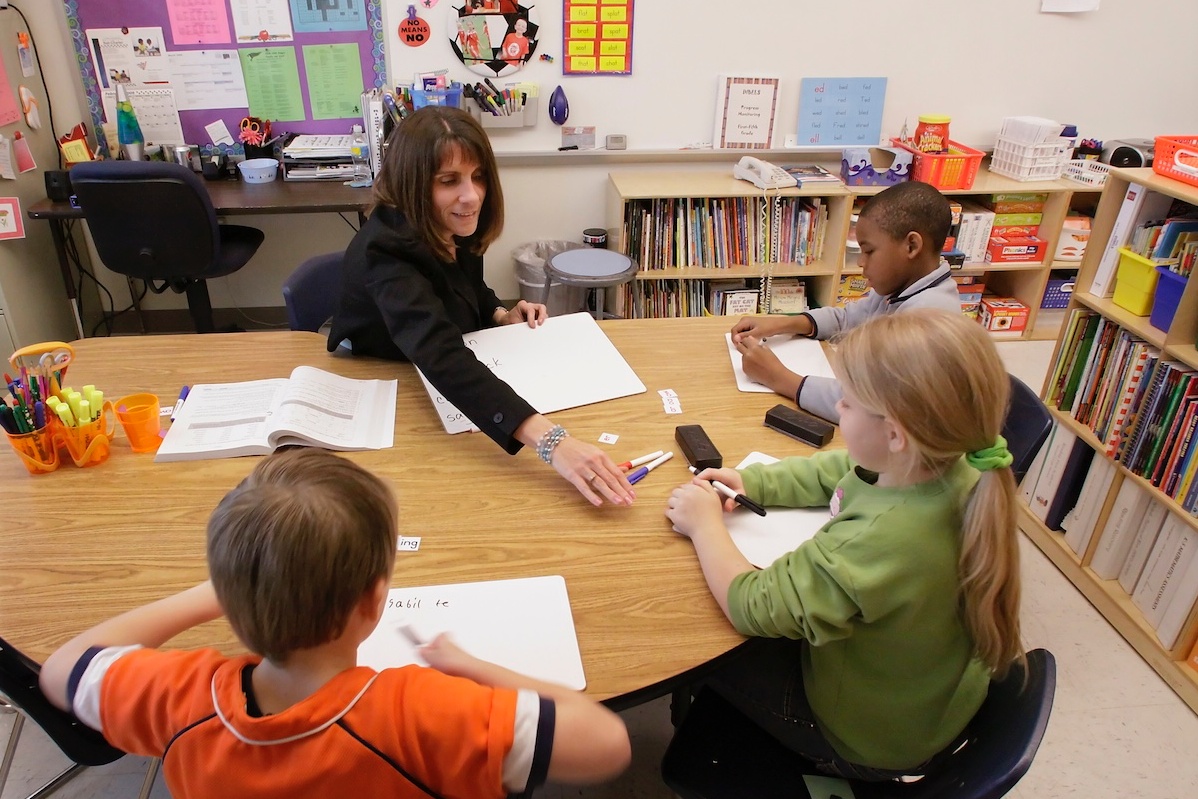
Teacher Jennifer Haberkorn works with her fourth grade students at Ridgely Elementary School in Springfield, Ill. in 2009, when the state set aside $1 billion in funding for special education and low-income schools. (Photo: Associated Press/Seth Perlman)
For Jahromi, that progress is apparent in the work happening every day at TC, citing her colleague Matt Zajic, Assistant Professor of Intellectual Disability/Autism, for his research on writing development and literacy in autistic students, and Maithri Sivaraman, Assistant Professor of Psychology and Education, whose research focuses on interventions to support language, social, and life skills development in students with learning differences. “In many ways,” Jahromi says, “Teachers College has always been forward-thinking in helping special education practice innovate in meaningful ways.”
Across TC’s multiple special education programs, educators and practitioners today are prepared to adapt and apply evidence-based practices to meet a broad variety of student needs. The College offers five distinct specialties — encompassing intellectual disability/autism, elementary inclusive education, bilingual/bicultural education, applied behavior analysis, and deaf and hard of hearing. As part of TC’s unrivaled breadth and depth, graduate students can earn dual certification across key areas to meet the moment. After all, the U.S. estimated in 2022 that approximately 12 percent of the country’s students served by IDEA were also English Language Learners (ELLs).
“We’re not preparing teachers to serve a small portion of the world’s student population. We’re really preparing teachers who can individualize and accommodate the needs of all learners,” Jahromi says of the College’s five distinct specialties. “Having options is a very important element of what makes TC unique.”
We’re not preparing teachers to serve a small portion of the world’s student population. We’re really preparing teachers who can individualize and accommodate the needs of all learners.
So what do TC graduates passionate about teaching people with learning differences have in common? Often, they embody Connor’s original vision that she outlined more than 60 years ago: the preparation to be exceptional problem solvers.
“Being resourceful is really the name of the game for a great special ed teacher . . . they have to be really creative, come up with innovative strategies, and be flexible and ready to adapt as they go. It keeps them incredibly present, and a lot of graduates love that aspect of the work,” says Jahromi.
Stay Connected
Actionable solutions and bold expert insights for true change, straight to your inbox
For faculty and students in the Elementary Inclusive Education program, the diversity of learner profiles within classrooms today offers an opportunity to rethink the interconnected process of teaching and learning. Inclusive education begins not by focusing on the student’s presumed difference but in understanding how teaching-learning conditions might create those differences in the first place. In viewing disability as part of normal human variation, graduates learn to question how we come to understand what is accepted as “normal.” Rejecting deficit ways of framing disability and hierarchical notions of ability, they learn to support a diverse array of students in any setting — general ed or special ed.
How can we help educators and families figure out a solution in a way that’s respectful of the child?
“Those additional supports become less stigmatizing when the inevitable diversity among student capacities is recognized,” explains Srikala Naraian, Professor of Education in the Elementary Inclusive Education program, who notes that the ethos of a school is relevant in understanding what happens in the classroom. Inclusive ed graduates are prepared to work collaboratively with others to ask, she says: “How can we help educators and families figure out a solution in a way that’s respectful of the child?”
As the field continues to grow, it must also contend with difficult questions. According to Tamara Handy, Assistant Professor in the Elementary Inclusive Education program, the “disproportional representation of students of color in specific disability categories is an intractable problem” in special education. TC’s Inclusive Education graduates understand that to work against this means to both recognize the importance of services for students with disabilities while also being vigilant about how race, gender, linguistic ability and other social markers can influence how those services are delivered. Faculty in the program carefully curate course and field work experiences to help preservice teachers develop these skills.
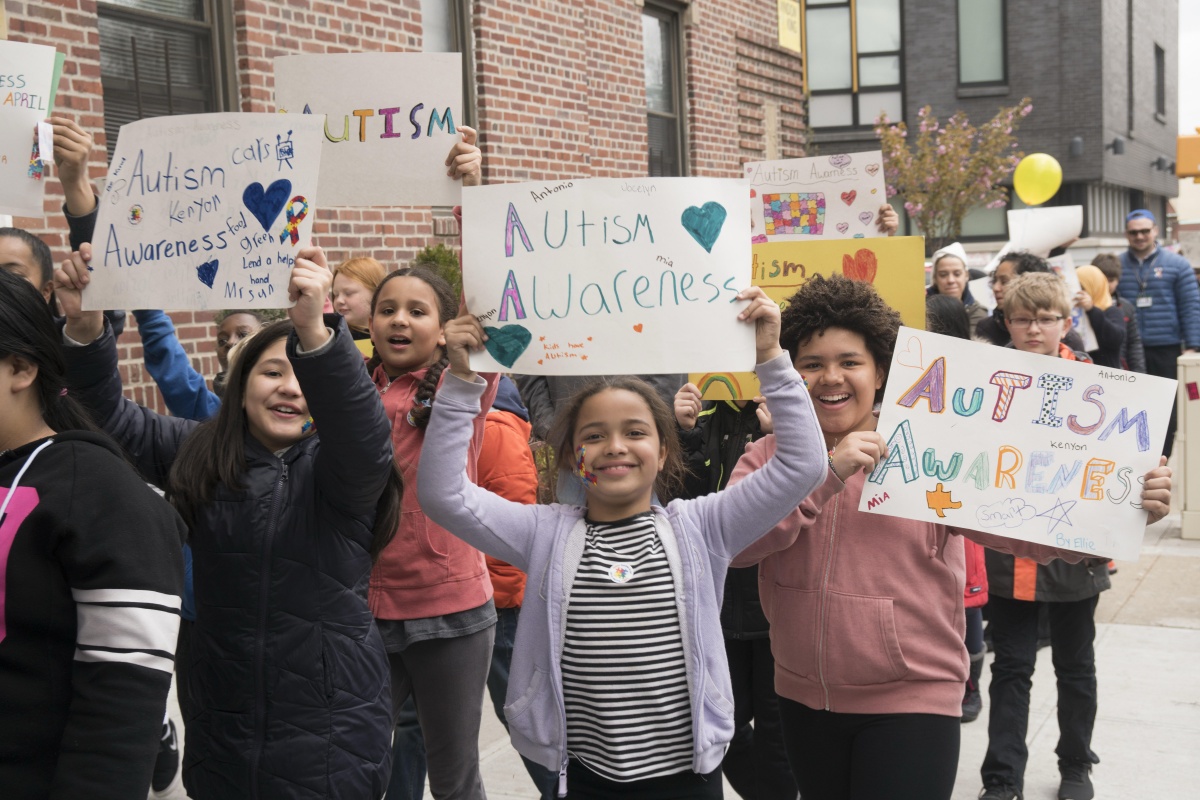
Brooklyn elementary school students celebrate Autism Awareness Month in 2018. (Photo: David Grossman)
To be a graduate student in special education at TC at that time meant you were preparing for leadership and to make change....TC [not only] prepared us to step out — [but] expected it.
More broadly, recent milestones for the special education field at Teachers College include building a developmental disabilities program that provides interdisciplinary preparation to connect special education to other disciplines (e.g., psychology) and the establishment of an online degree program in special education, which can help make this critical preparation more accessible as the United States continues to face a teacher shortage. Officials report that nearly half of all public schools reported special education teaching positions as vacant between 2022 and 2024.
In late 2024, Amanda Mazin (Ph.D. ’11), Associate Professor of Teaching in the Intellectual Disability/Autism program, testified for the U.S. Commission on Civil Rights on the issue to help inform their fall 2025 report. Addressed to the Trump administration and Congress, the report leveraged expert testimony to inform key policy recommendations: namely, fully funding the Individuals with Disabilities Education Act and supporting teacher preparation initiatives to increase the number of educators able to adequately support students with disabilities.
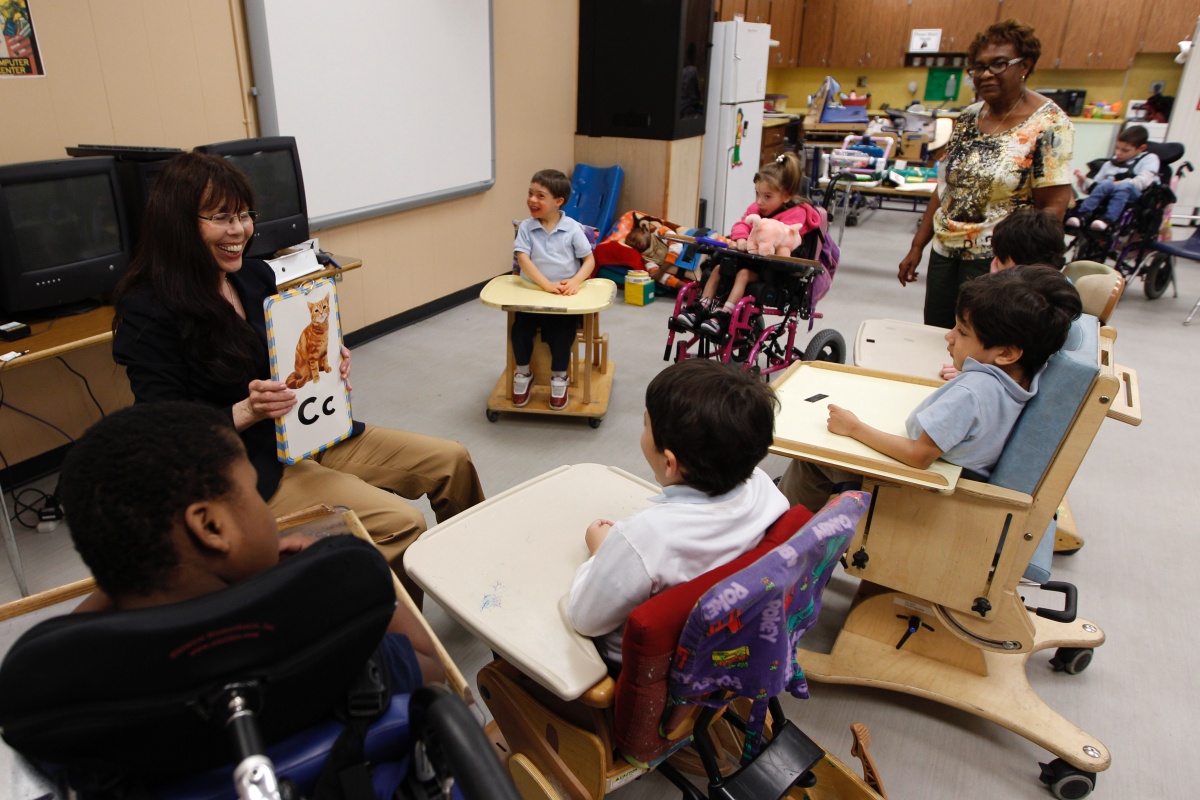
A special education class at Amelia Earhart Elementary School in Hialeah, Fla. in 2012. (Photo: Associated Press/Lynne Sladky)
“Teacher issues are student issues. Higher class size, violations of [Free Appropriate Public Education] and [Individualized Education Plans], underdiagnosis and delayed classification are directly related to the lack of special education teachers,” Mazin said in the testimony that helped inform the report. “Support for initiatives to directly address areas of recruitment, retention and respect for teachers would change the landscape of quality special education.”
Despite insight from experts like Mazin, special education in the United States — much like public education more broadly — stands at a crossroads amid significant funding cuts and changes at the Department of Education. Naraian says that students with learning differences are still too often separated from their peers unnecessarily, and Jahromi also believes there is more that educators need to do to build authentic, inclusive partnerships with families to further promote student success. This deeper, collaborative, student- and family-centered work is TC’s strategic focus in preparing educators and school leaders at a time when their expertise is needed more than ever.
“The outlook I absorbed at TC was that all children can learn, and that my role as an educator is to figure out how that learning can happen,” said Claudia V. Schrader (Ed.D. ’02, Ed.M. ’01, M.A. ’92), sharing how she translated her special education scholarship at TC into numerous school leadership roles in 2018 and was recognized for her impact with the Distinguished Alumni Award in 2024. “It’s up to us to figure out how to help [all students]. That’s been my approach wherever I’ve worked, with students of all ages.”