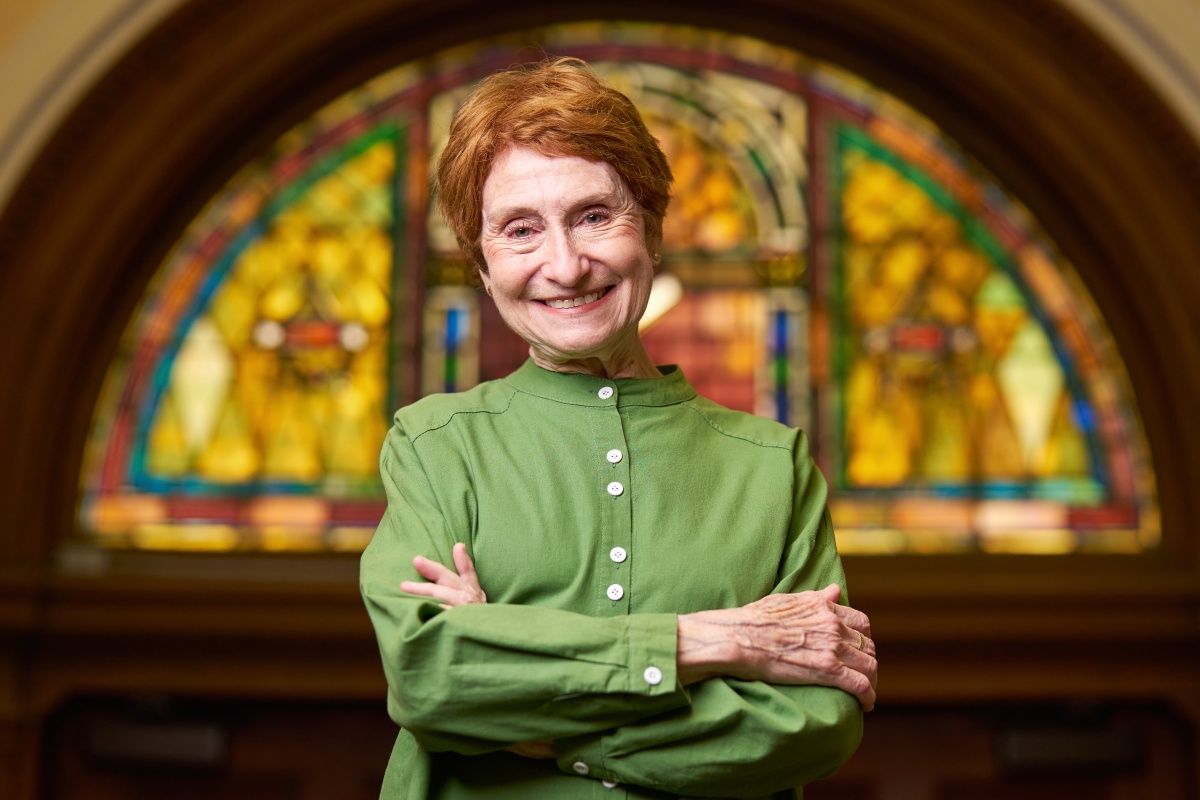
In 1977, Lida Orzeck (Ph.D. ’72) returned to Teachers College to meet with her mentor, Morton Deutsch. One of the world’s foremost social psychologists, he would certainly have an opinion about what Orzeck needed to tell him: After her years of scholarship in social psychology and her tenure as an analyst for the New York Police Department, Orzeck was on the precipice of a major career change.
She wanted to leave the field and apply her analytical skills to launching a business with her best friend, Gale Epstein, who had gifted the TC grad a handmade lingerie set for her birthday. The pair realized that they could team up to fulfill an unmet need for women: stylish, yet comfortable undergarments.
Orzeck couldn’t imagine how Deutsch, whose opinion she valued deeply, would react. He didn’t hesitate in telling her to go for it, giving Orzeck his “blessing” and the “best sendoff” she could have imagined before she and Epstein established their company, Hanky Panky.
Today, Hanky Panky has sold more than 45 million pairs of underwear in 70 countries around the globe — about one pair every ten seconds. Their innovative designs, loved by stars like Jennifer Aniston, set a new standard for what customers want, and captivated the zeitgeist in Vogue, Women’s Wear Daily, and yes, even on the front page of The Wall Street Journal.
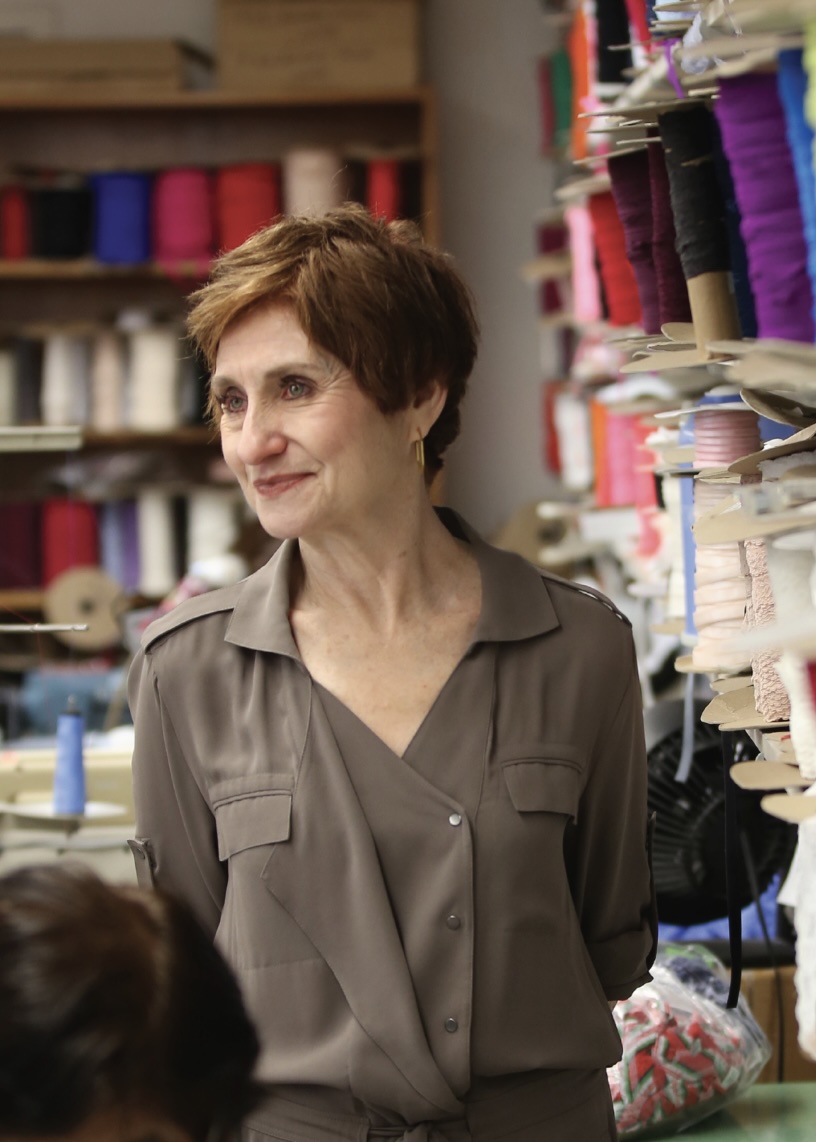
Lida Orzeck at Hanky Panky in 2017. (Photo: Bruce Gilbert)
“It was a dream come true for anybody in business that we would have that kind of attention paid,” explains Orzeck, who has stayed connected with Teachers College amid Hanky Panky’s rise. Close with Deutsch throughout his life, the TC alumna has supported social-organizational psychology students at Teachers College through the Lida A. Orzeck Scholarship since 2016.
Now, Orzeck stands on the precipice of another new chapter. While Orzeck stepped down as the company’s CEO in 2021, she will reflect on her entrepreneurial journey in a new book set for publication next year, Hanky Panky’s 50th anniversary. In the interim, she spoke with TC Today about finding the perfect fit in business.
1. Make bold choices. Success was not guaranteed when Orzeck brought her analytical skills from the research lab to the fashion industry. One retail veteran even discouraged Orzeck and her business partner from pursuing the company altogether. They didn’t listen, and committed all of their free time to building Hanky Panky — with Epstein sewing merchandise while Orzeck pitched department store buyers during her lunch breaks and hand-delivered their first order to Lord & Taylor. As she looks back, Orzeck sees that tenacity along uncharted territory as the key to their success. “Think entrepreneurially,” she says, “not corporately, which is something that we did for most of our history.”
2. Choose your business partner wisely. Hanky Panky’s female founders had been friends for 12 years when they launched the company. Orzeck says it is their complementary skills and shared values that have allowed “the company to blossom and thrive” and kept their friendship intact for nearly 60 years. “Make sure that your value system is the same in how you treat people, your work ethic, your ideas about growth, working together and time off, just everything,” Orzeck advises.
Think entrepreneurially, not corporately.
3. Know your customer. Women making intimate apparel for other women set Hanky Panky apart from the very beginning. Applying Orzeck’s research background, the business partners collaborated with women of all shapes and sizes in developing their pieces — long before inclusive sizing was the norm. “The business is built on sisterhood,” explains Orzeck. “We were so close to our customers at the beginning, and there was just no space between the product and the end user.”
4. Stay in the loop. As Hanky Panky grew, Orzeck remained committed to knowing as much about the business as possible. For many years, she opened, read and managed every piece of mail. Every bill. Every order. Every potential problem. “I learned so much about the business from doing that,” says Orzeck, who admits that she likely did not delegate as much as she could have. “I own up to the fact that that is how I lived my life. . . . It absolutely leads to a lot of stress, a lot of angst, a lot of worry. But you know, I’m that type-A personality, and that is the only way I was really able to run the company.”
5. Be open to change. In December, after 48 years, Orzeck and Epstein sold Hanky Panky to Crown Brands Group, a private equity company. The best friends remain advisors at Hanky Panky as its new ownership sets the stage for the next chapter — one that will include diversifying the business’s offerings to grow its market share. The change is “bittersweet,” Orzeck explains, but she now has time for other passions: her extensive philanthropic work, line dancing and her community choir. At their next concert, they will fittingly sing “Dreams” by the Cranberries — the 90s classic about life’s unpredictable beauty. As for Orzeck’s dreams, she is not done yet. After all, her former mentor Morton Deutsch would tell her to “go for it.”
Stay Connected
Actionable solutions and bold expert insights for true change, straight to your inbox