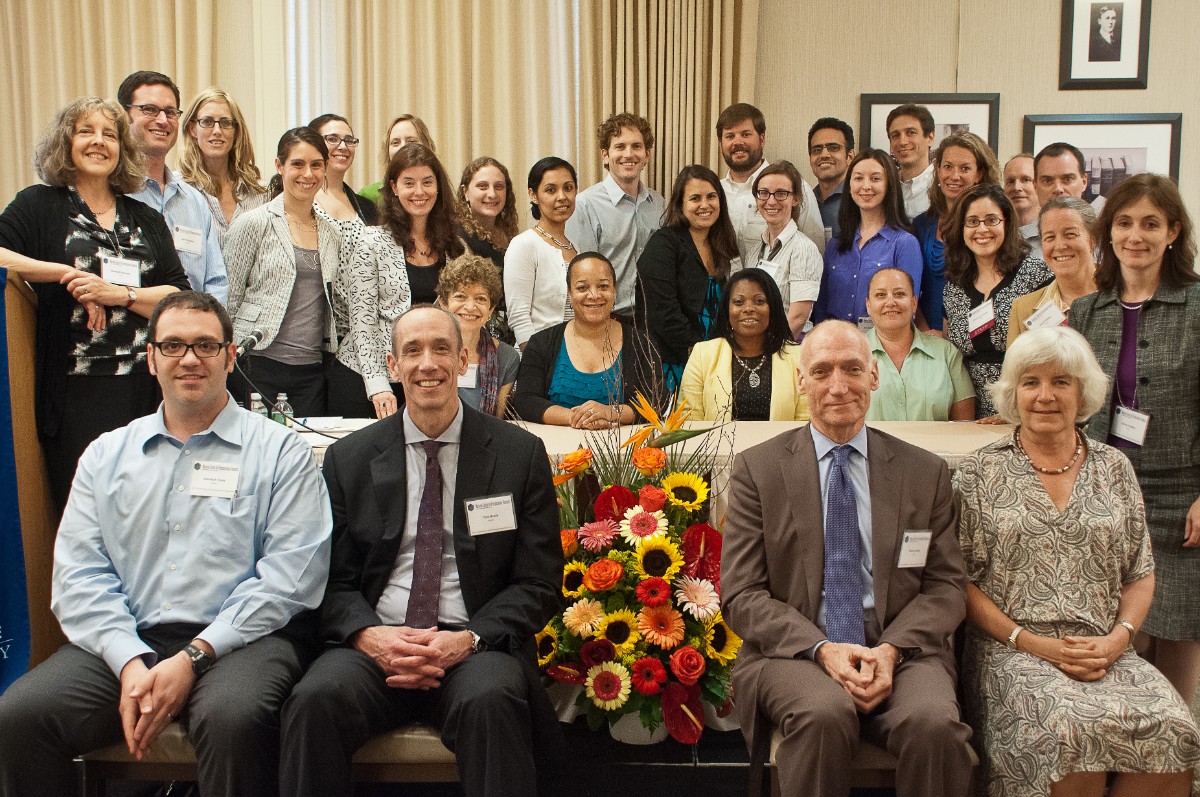
Expanding access to higher education is an unapologetically democratic act. And yet, despite the millions of students attending America’s nearly 1,000 community colleges each year, these institutions remained underexamined and poorly understood before 1996, when the Community College Research Center (CCRC) was founded at Teachers College, bringing much-needed attention to public two-year colleges.
CCRC celebrates its 30th anniversary this year, at a time when community colleges are among the most trusted institutions of higher education — a place where high school students can get their first taste of college, students seeking bachelor’s degrees can get a more affordable start, current workers can train and retrain, and adult students can find the support they need to start and finish programs that earn them a useful credential.
Founded by Teachers College President Thomas Bailey, the George & Abby O’Neill Professor of Economics & Education, who led the Center for 22 years, CCRC has conducted critical research on student outcomes and institutional innovation that has shaped policy and practice nationwide, all while training generations of TC students in rigorous analytical methods. Led by Director and Research Professor Thomas Brock since 2018, the Center’s research has been a cornerstone of the community college student success movement.
“Advancing accessibility and student success at the community college level remains integral to helping all people thrive,” said President Bailey. “CCRC’s research and scholarship have played a critical role in these efforts. I am deeply proud of our work together and the efforts that my colleague Professor Brock continues to champion.”
CCRC’s mission has long been to uncover the obstacles that block community college students from reaching their educational and career goals and to explore new structures, policies and practices that move more students through to graduation and beyond. The research tackles important questions such as: How can community colleges ensure students learn the English and math skills needed for college? How can they help more students earn college degrees? How can they prepare students for rewarding careers?
CCRC’s groundbreaking research unlocked a paradigm shift in 2015 with the introduction of the guided pathways framework, described in the book Redesigning America’s Community Colleges: A Clearer Path to Student Success by Bailey, Shanna Smith Jaggars and Davis Jenkins. The book ushered in a new era of community college reform that helped transform student opportunity with stronger onboarding, structured academic plans and more intensive support.
Ten years later, hundreds of community colleges have participated in guided pathways initiatives and worked to adopt a framework that scaffolds student success from application to graduation. CCRC’s latest book, More Essential Than Ever: Community College Pathways to Educational and Career Success, published last fall, introduces the next frontiers of CCRC’s guided pathways research and guidance.
“CCRC’s research on guided pathways found that colleges can improve momentum into and through college by removing barriers to completion,” Brock said. “The next frontier is to ensure programs are worth completing by focusing on post-college success. This means helping students choose programs of study that lead to good jobs and successful transfer to four-year colleges and universities.”
Over the past three decades, CCRC and its partners have produced more than 500 publications, worked with dozens of faculty experts and students across economics, education and policy, and contributed to legislation and policy innovations across the country. Among the highlights:
- CCRC identified dual enrollment as a strategy to open the door to college for more students and make it more affordable. Its Dual Enrollment Equity Pathways (DEEP) framework promotes proactive strategies to help colleges address declining enrollment and to provide critical outreach and support to underrepresented students and families.
- After groundbreaking research led by Tom Bailey showing that students were getting stuck in developmental (aka remedial) education, CCRC began investigating ways to help more students pass gateway math and English more quickly. CCRC research on multiple measures assessment (MMA) helped lead a movement to eliminate the overreliance on standardized tests to place students in their first math and English courses.
- CCRC is investigating the impact of Federal Work-Study on student outcomes in the first rigorous evaluation of this $1 billion program since it was introduced in the mid-1960s during the War on Poverty.
While CCRC’s research — in partnership with innovative colleges, state systems, and student success organizations — has helped lead to real progress for community colleges, the work continues.