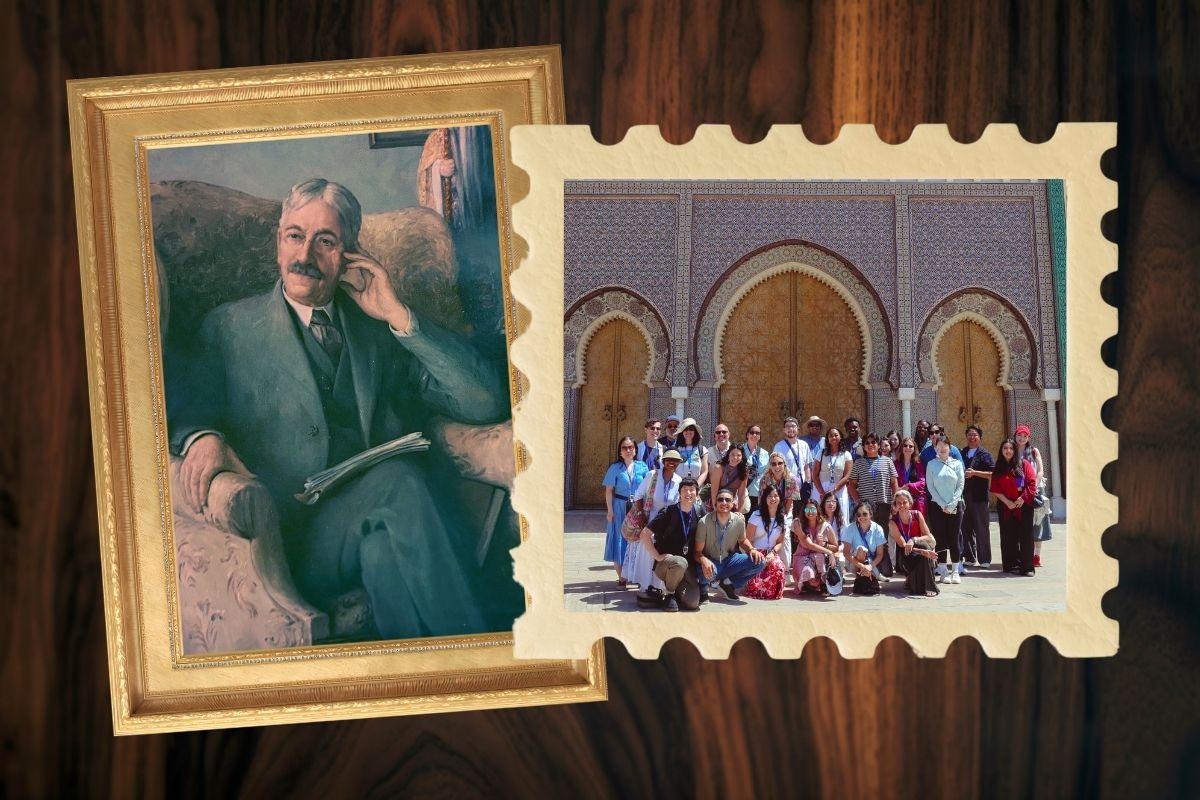
In the nearly 75 years since the death of John Dewey, TC’s legendary professor of philosophy from 1904 to 1930, his work has continued to capture the public imagination of educators and scholars across the world. Influential enough to inspire his own adjective (“Deweyan”), the TC giant conceived of education psychology principles that are now considered ubiquitous: experiential learning, class discussion and education’s essential role in building thriving societies.
Would schools as we know them today exist without Dewey? Simply not explains David Hansen, the College’s John L. & Sue Ann Weinberg Professor in Historical & Philosophical Foundations of Education, who has seen Dewey’s “ever-contemporary philosophy” continue to resonate around the world. This impact is felt in scholarly and teacher education faculties in Europe, South America, Japan, South Korea and, of special note, in China, where Dewey’s two-year sabbatical in 1919 inspired generations of additional scholarship and helped set the stage for the College’s enduring commitment to academic exchange in China and elsewhere.
“It’s remarkable how [Dewey’s] voice continues to speak to a lot of people even though contexts have changed quite dramatically,” says Hansen, whose extensive body of work includes numerous writings on the famed philosopher , educator. and psychologist.
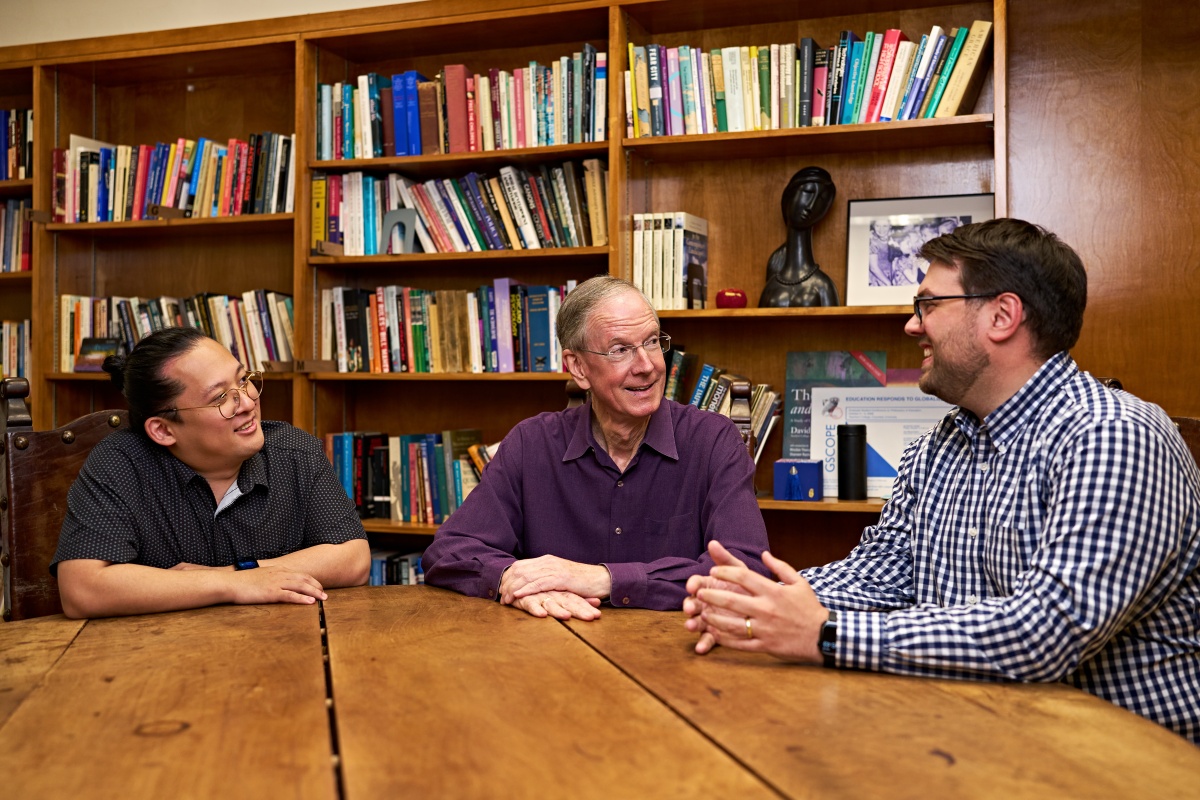
TC’s David Hansen, John L. & Sue Ann Weinberg Professor in Historical & Philosophical Foundations of Education (center), in conversation with Philosophy of Education doctoral students Jensen Okimoto (left) and Daniel Davis (right). (Photo: Rob Davidson)
Across Hansen’s many visits with colleagues in China, Dewey’s scholarship remains foundational to how education leaders, teachers and scholars conceive of possibilities for their students. At home, Dewey remains a key draw for scholars visiting the College, who may stop by to see his bust in Zankel Hall (depictedfeatured on this issue’s cover) before conversing with those who have followed in his footsteps.
Dewey’s lasting impact is a key component of TC’s broader international story, which began just two years after the school’s founding in 1887, when future TC President James Earl Russell (who served 1898–1926) offered the first course on comparative education. Thousands of international students would come to TC as a result, and the College established its International Institute — a hub for faculty research and scholarship abroad — in 1923. Led by Paul Monroe, another notable founder of progressive education, the Institute both supported education projects abroad and funded the education of international school leaders at Teachers College.
The College would go on to establish the first academic program for comparative and international education in the United States, and scholars such as Liping Bu largely credit TC with popularizing the field by the 1930s.
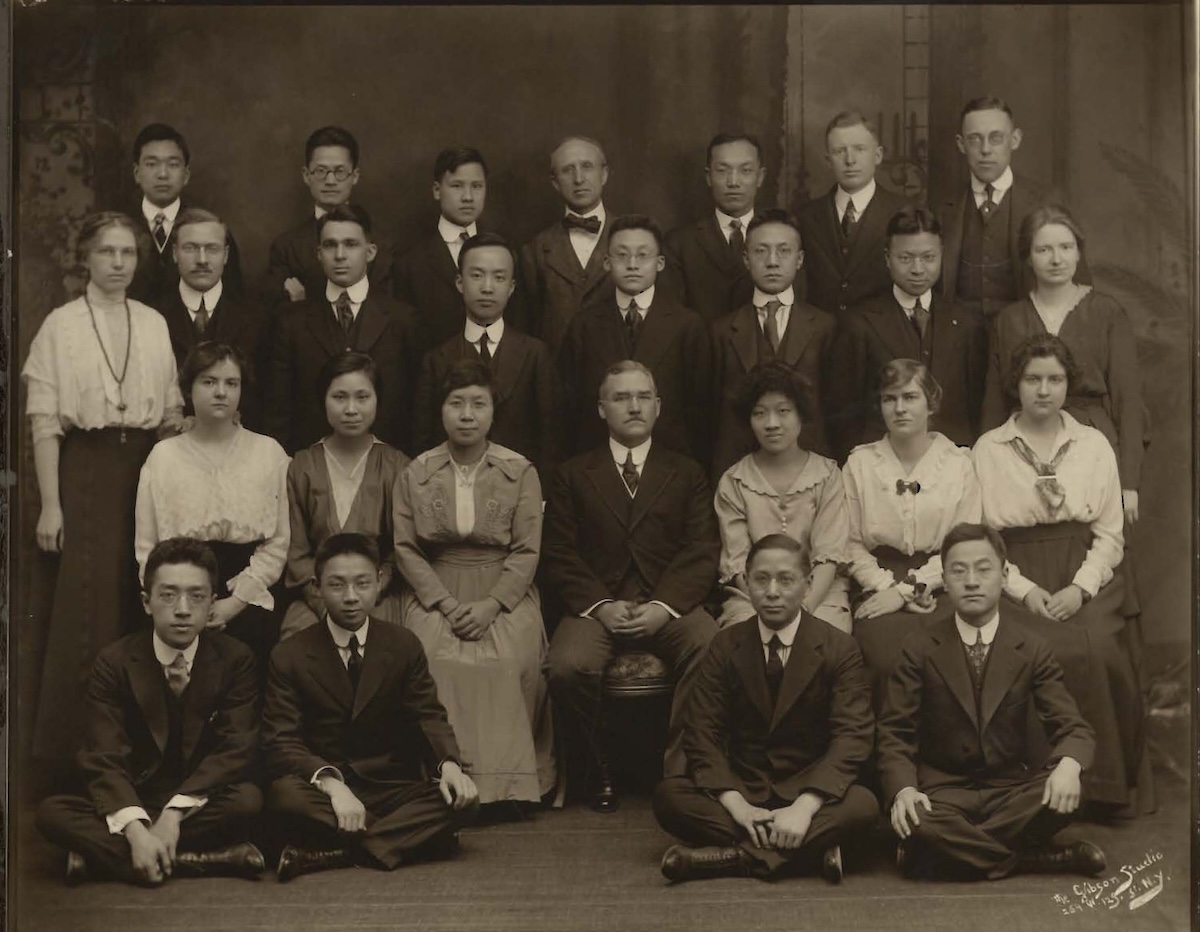
The Columbia China Education Research Association in 1916. Xingzhi Tao (second row, fifth from left), a doctoral student at TC from 1915–17, created educational opportunities for rural Chinese citizens, and inspired his mentors — John Dewey, Paul Monroe (third row, fourth from left) and William Kilpatrick — to pursue research on education in China. (Photo: TC Archives)
International academic exchange was, in Monroe’s words, “the greatest advantage . . . in cultivating international understanding and goodwill” — a perspective that has endured at the College in the century since. As TC President Thomas Bailey said of the College’s current work with international partners just this past February: “The future of education is a global responsibility.”
So what has TC’s international reach looked like in the years since Dewey? Over the next several decades, the College’s international roots and diverse community (today composed of students from 74 countries) would serve as the foundation for additional partnerships to unfold, explains Portia Williams (Ed.D. ’08), TC’s Vice Provost for Academic Planning and Global Affairs.
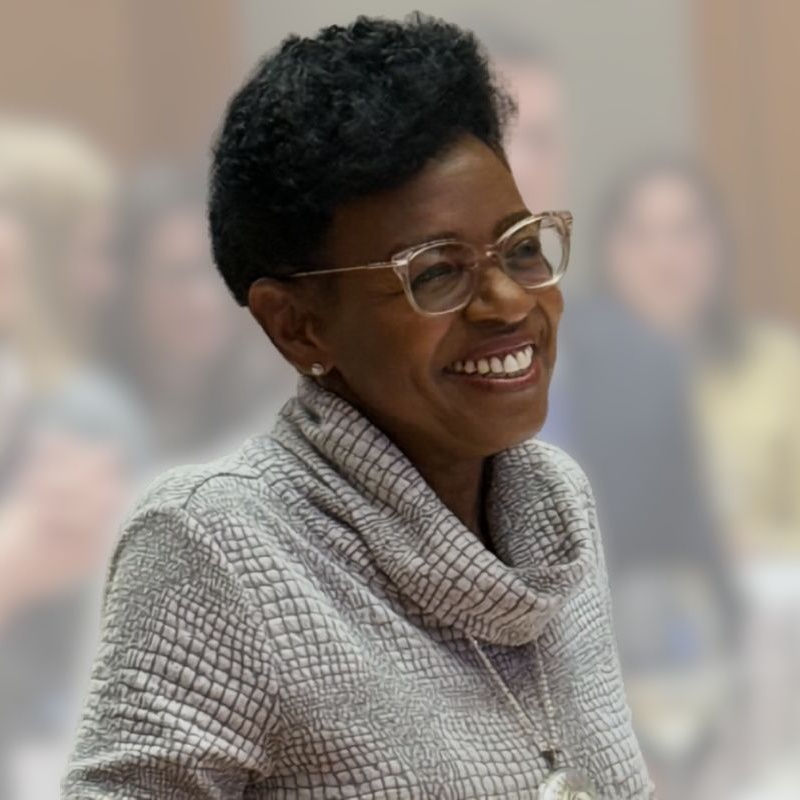
“Teachers College, in particular, has a global history that just doesn’t exist within many other institutions in the United States,” explains Williams, who has been a leading force in TC’s international work since 2008 and sees its expansive trajectory as interconnected throughout its history.
Because of our history, we’ve always been steeped in this global outlook for education.
In other words, Teachers College didn’t just happen to create the field of comparative education; its earliest international students and scholars created the conditions for the field to emerge. Similarly, TC did not just happen to embark on a slew of interesting projects for the remainder of the 20th century: infusing the concept of education as a human right into UNESCO’s strategic reorientation post World War II; scaling scholarship into the enduring World Yearbook of Education; creating curriculum and textbooks in Afghanistan from 1954 to 1979; and helping the U.S. State Department prepare teachers in East Africa — to name just a few. TC scholars were (and continue to be) called upon.
“Because of our history, we’ve always been steeped in this global outlook for education,” says Williams, who continues to oversee TC’s Office of Global Engagement, which is responsible for developing, coordinating and expanding the scope of the College’s international initiatives.
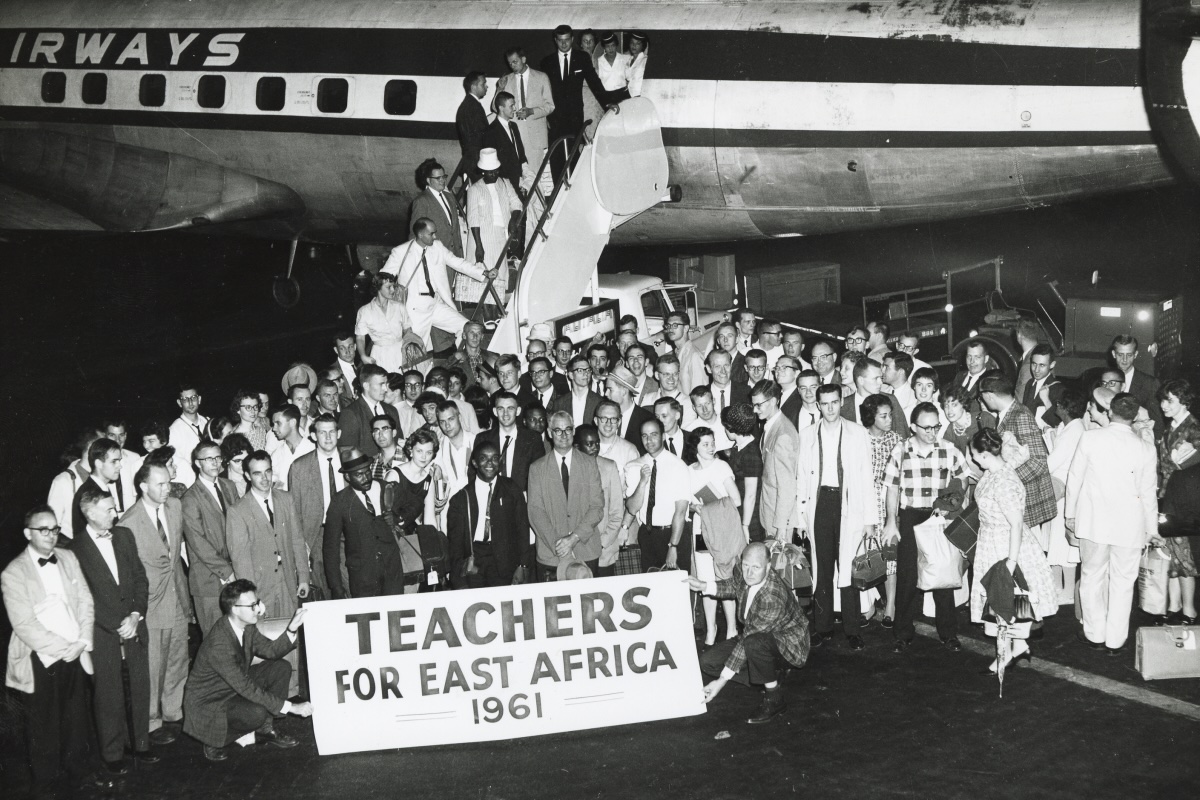
The Teachers for East Africa program welcomes 150 educators to the region in 1961 for their service in Kenya, Tanzania and Uganda. The program, one of the first international initiatives of President John F. Kennedy, would go on to place more than 600 educators in East African schools by 1972. (Photo: TC Archives)
In recent years, faculty projects abroad have spanned continents and disciplines — from offering continuing education to English language teachers and students in countries outside of the U.S. to building capacity among local speech pathologists and mental health counselors to support refugees. Carrying on in the Deweyan tradition, scholars in China have remained strong partners through the work of TC’s Center on Chinese Education, which celebrated its 25th anniversary last year. A recent analysis conducted by the Department of International & Transcultural Studies quantifies TC’s international work, finding that the College significantly outpaces fellow graduate schools of education in the volume of faculty and programs focused internationally.
Regardless of the international partner or the project, the Office of Global Engagement’s work has always been rooted in relationships “grounded in mutual respect and shared benefit,” says Williams. Helping faculty and students support research and scholarship abroad, Williams and her team are called to “navigate complexity, to engage across differences with humility, and to approach global work with an awareness of its ethical dimensions. . . . We start with our one-on-one relationships, but our focus is to build those important relationships out so that we can build partnerships that are long-lasting with maximum impact.”
In addition to supporting faculty research and practice, the College has also created academic pathways for students to expand the field of international and comparative education. In 1994, former TC President Arthur Levine charged Clifford Hill, the late Arthur I. Gates Professor of Language and Education Emeritus, with creating, naming and leading a new International & Transcultural Studies Department (ITS), with a mission to address global challenges of equity, peace, human rights and sustainable development in education.
What International Students Say
Being part of the TC community has shaped who I am. It’s about the experiences we bring as individuals — and how we use them to strengthen and give back to our community. It is never too early to start, and no action is too small to do the right thing.
The department would help usher in what Gita Steiner-Khamsi, the William Heard Kilpatrick Professor of Comparative Education, describes as a new “golden era” for international work at the College. When she joined the College in 1995, “it was like all the doors, all the opportunities to collaborate were open because we had important alumni all over the world,” says Steiner-Khamsi, who has since worked with the next generation of leading scholars in comparative education. One of her earliest doctoral cohorts established the field’s first online journal, Current Issues in Comparative Education, which will celebrate its 30th anniversary next year. Of the more than 70 TC doctoral students she has mentored, Steiner-Khamsi has witnessed the “unbelievable careers they have made and their contributions to the growth of our field.”
Nevertheless, graduates from across TC’s disciplines often go on to make contributions to their fields internationally — as economists, health policy officials, instructional designers, mental health experts and more. To be globally minded is embedded within the College itself.
“For graduate students, in particular, global education offers a framework for pursuing research and practice that is both contextually grounded and internationally informed,” says Williams, herself a doctoral graduate of TC’s International Educational Development program. “Their work often sits at the intersection of disciplines and geographies, requiring both analytical rigor and cultural fluency.”
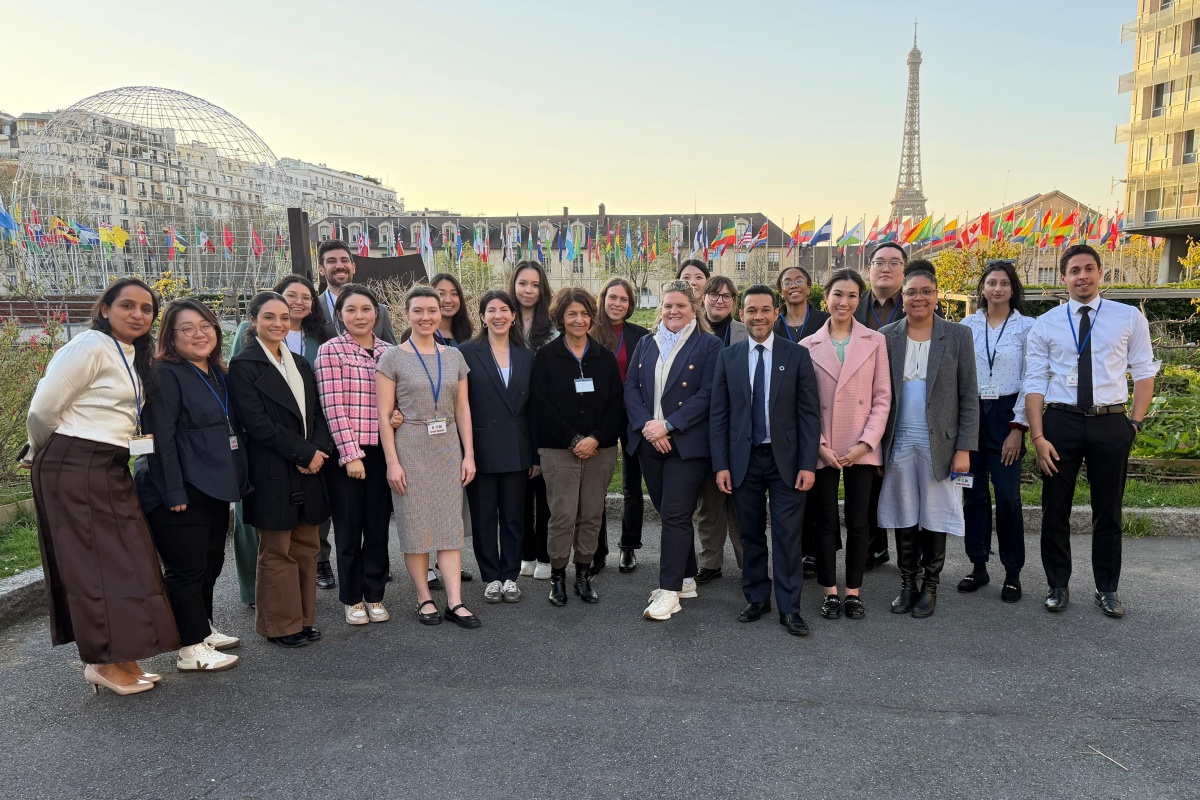
Students traveled to Paris in March to learn how global education agendas are set, coordinated, and challenged in today’s shifting international landscape under the expertise of Gita Steiner-Khamsi, William Heard Kilpatrick Professor of Comparative Education, and Jessica Riccio (Ed.D. ’08, M.Ed. ’02, M.A. ’99), Associate Professor of Teaching (both pictured center). The program is just one of the College’s growing number of TC faculty-led study abroad offerings.
To support students embarking on more of these experiences, the Office of Global Engagement launched study abroad programs in 2024 with offerings from Argentina to France, China and beyond. By implementing study abroad at the graduate level, the College has expanded existing partnerships and strategically unlocked opportunities for students and professionals to deepen their own research and practice while providing meaningful services to local partners. TC’s study abroad programs “bring real support” to communities, explains Amine Mechaal, TC’s Executive Director of Global Engagement. “Our partnerships are mutually beneficial, two-way streets.”
As TC continues its work around the world, Dewey’s famous bust in Zankel Hall will soon turn a century old. But the legend’s presence is most striking elsewhere. Hansen has experienced Dewey’s impact most profoundly in schools across the world, where he’s seen teachers embody Dewey’s most beloved principle: to embrace life as art to foster learning for its own sake.
“Dewey’s vision of learning remains very powerful. I think he’s absolutely right that if we’re doing everything we can to make learning artful, and we’re really immersed in the moment, then the future is taken care of,” says Hansen. “Dewey’s legacy is, in a wonderful, messy way, behind a lot of the good work that’s going on in schools everywhere.”