
Building on a rich history of international collaboration dating back more than a century, Teachers College has awarded a posthumous doctorate of education to Chinese scholar Tao Xingzhi (1891-1946) for his profound contributions to the field worldwide. The degree coincided with the 135th anniversary of Tao’s birth, and the 167th birth anniversary of Tao’s mentor at the College, legendary education philosopher John Dewey.
President Bailey announced the degree during a luncheon with Chinese university leaders, educators, and other TC alumni in Beijing last month, celebrating the milestone as “a well-deserved tribute over a century in the making.”
Tao studied for his doctorate at the College under Dewey from 1915 to 1917, where he built connections with TC scholars that would reverberate for generations — setting into motion what President Bailey described as a historic bond during the “Legacy of Tao” luncheon.
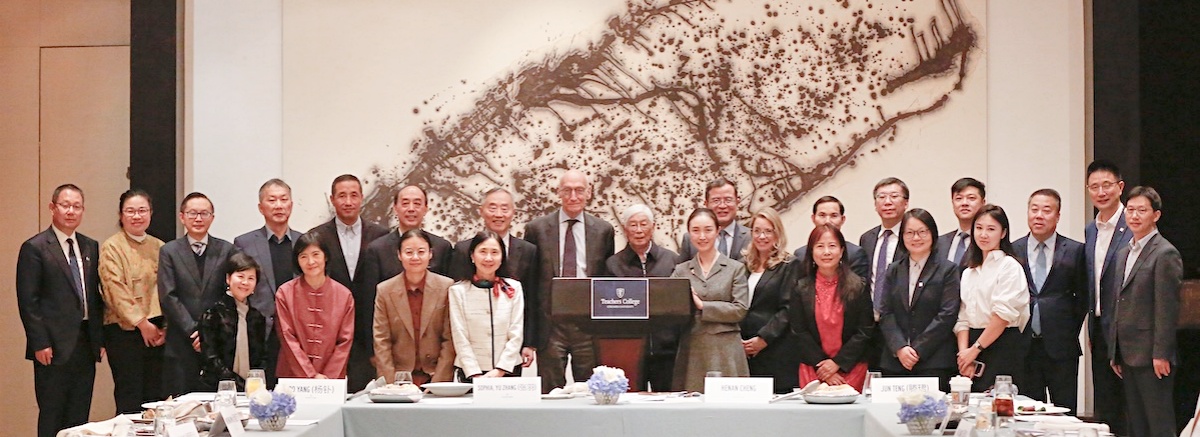
President Thomas Bailey met with Chinese university leaders, educators, and other TC alumni at the “Legacy of Tao” luncheon in Beijing last month. (Photo: Rick Feng)
“Your presence here today speaks to the strength of our community and our shared commitment to the transformative power of education,” said President Bailey, who reflected on the enduring partnership between the College and education colleagues in China, set in motion by Tao and Dewey’s relationship more than a century ago.
Academic leaders traveled from far and wide to join Teachers College in honoring Tao Xingzhi. Guests included leaders from:
- Beijing Normal University - Former vice president and honorary TC professor Mingyuan Gu; Dean Huan Song; Jun Teng, Director of the Office of International Exchange and Cooperation
- Peking University - Weifang Min, Former Chair of the Peking University Council; Kai Jiang, Dean of Peking’s Graduate School of Education; Yang Po (Ph.D. ’08), Associate Professor of Economics of Education
- Tsinghua University - Zhongying Shi, Dean of Tsinghua’s School of Education; Yu Zhang (Ph.D. ’11), Chair of the School of Education Council
- Nanjing Xiaozhuang University - President Benyu Wang; Hong Zhou, Director of the Office of International Exchange and Cooperation
- Chinese Society for Tao Xingzhi Studies - Vice Chairs Hongyu Zhou and Yuehua Gu
- Beijing International Bilingual Academy - Founder and Board Chair Wei Wang
- East China Normal University - Shuangye Chen, Associate Dean of the Faculty of Education
- Beijing City University - President Lin Liu
- Xiamen University - Qiuheng Shi, Director of the Institute of Higher Education Quality and Assessment
- Zhejiang University - Yue Kan, Dean of the College of Education
A transformative leader, Tao established Nanjing Xiaozhuang University (NJXZU) in 1927 and dedicated his life to making education more accessible in China’s rural areas, and to the movement for universal education. Having built on the philosophy of Dewey, Tao is largely credited today with shaping modern education in China.
Carousel
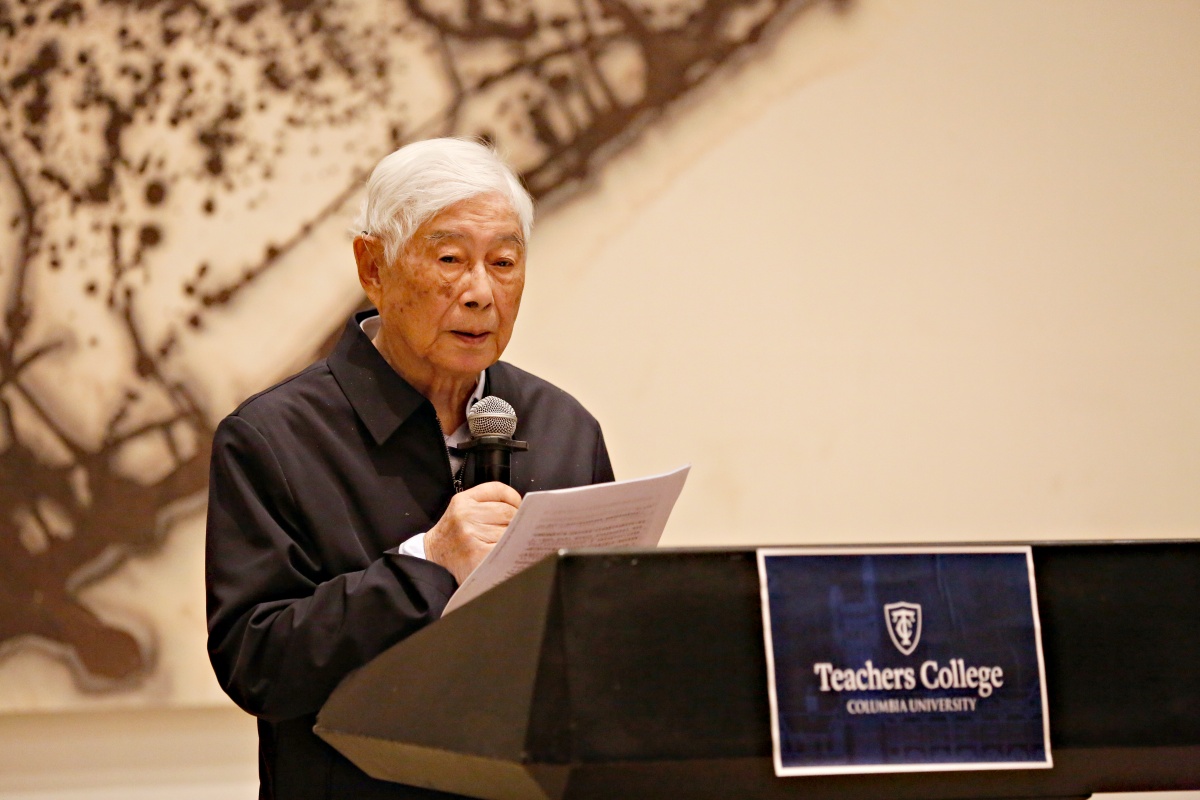
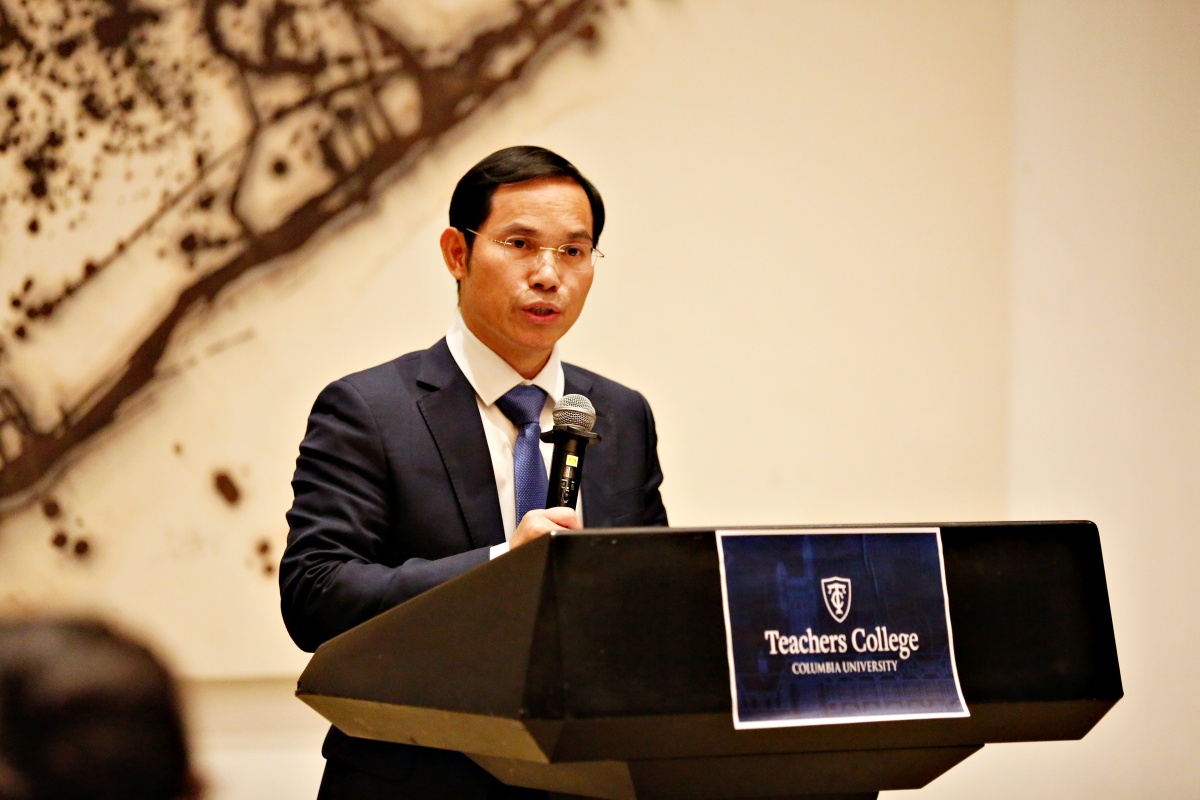
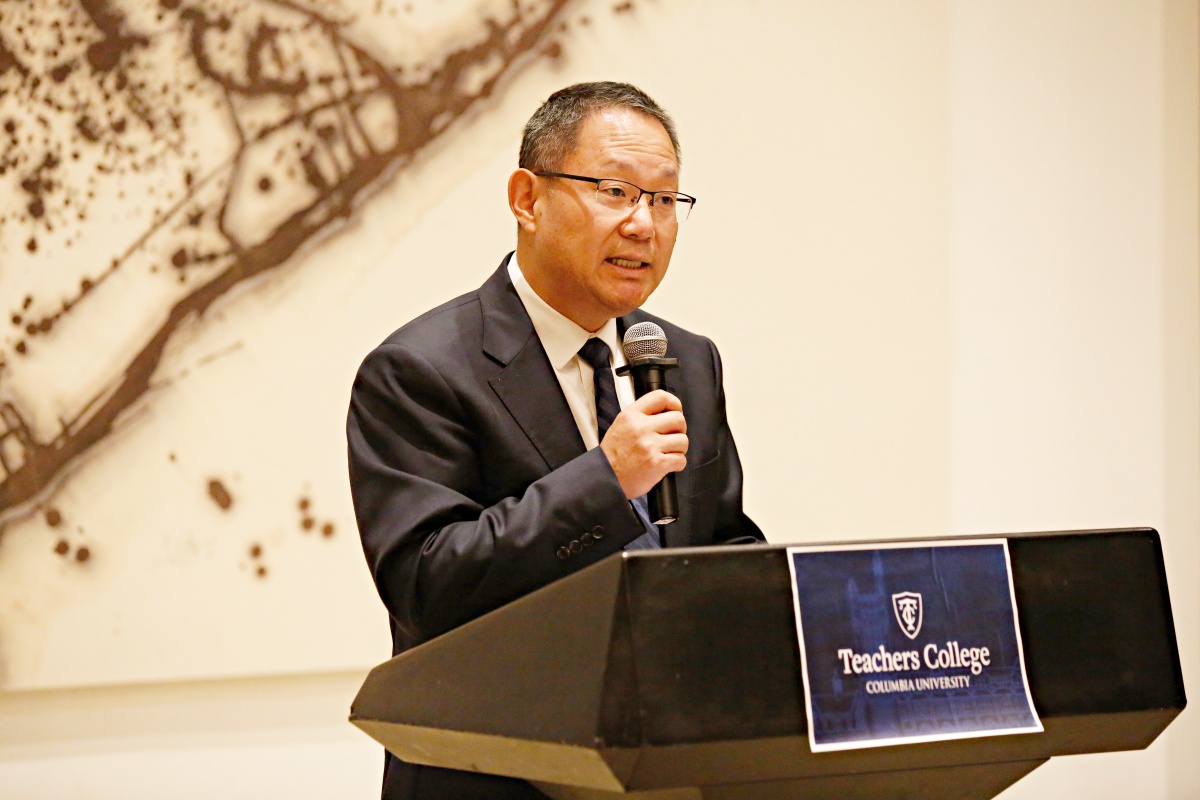
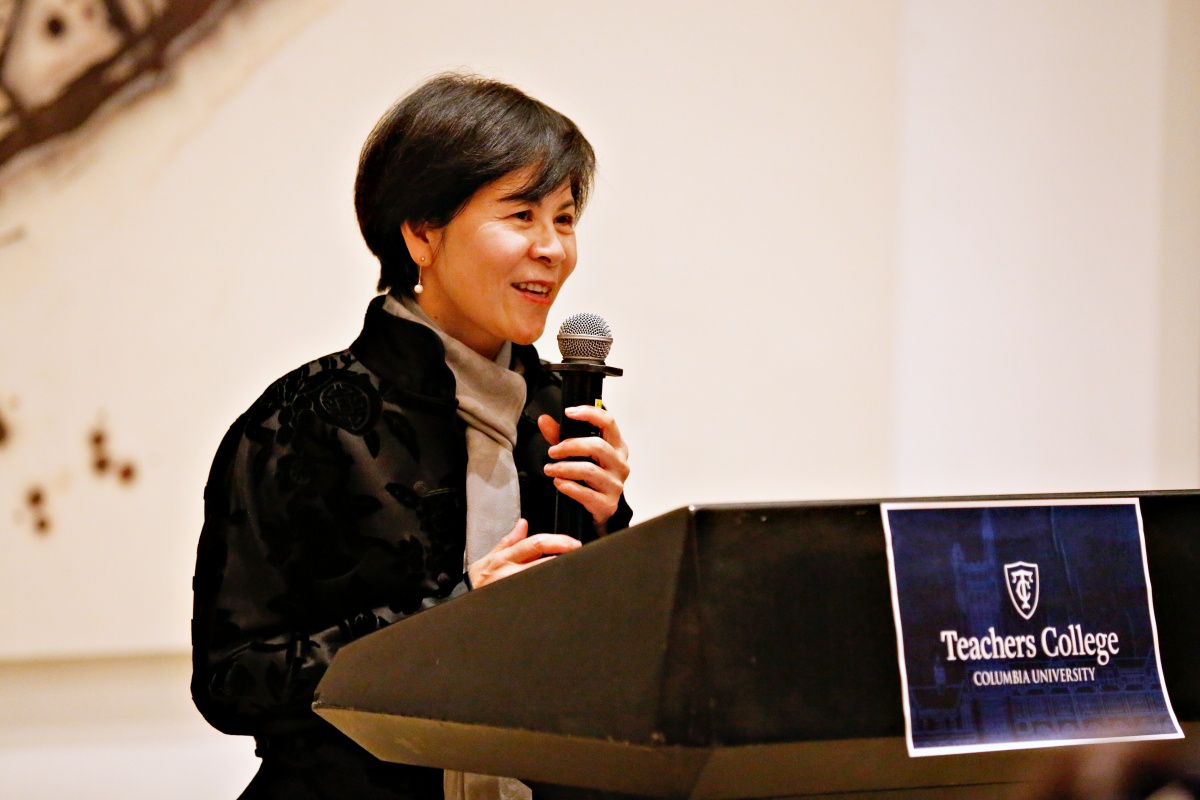
Mingyuan Gu — former Vice President of Beijing Normal University and an honorary professor at TC — shared reflections on the legacies of Tao Xingzhi and John Dewey in Chinese education. (Photo: Rick Feng)
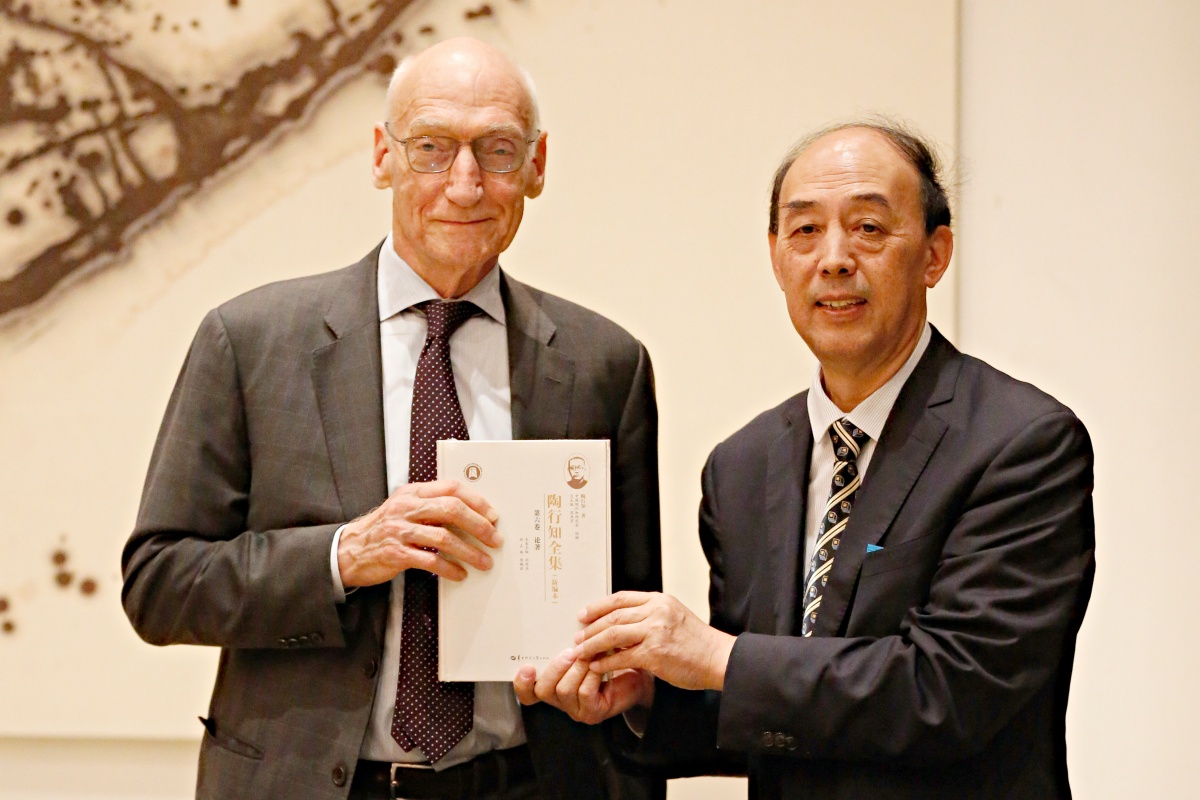
President Thomas Bailey presented the doctorate of education to Hongyu Zhou, a descendent of Tao Xingzhi. (Photo: Rick Feng)
Weifang Min, former chair of the Peking University council. (Photo: Rick Feng)
Kai Jiang, Dean of the Graduate School of Education at Peking University. (Photo: Rick Feng)
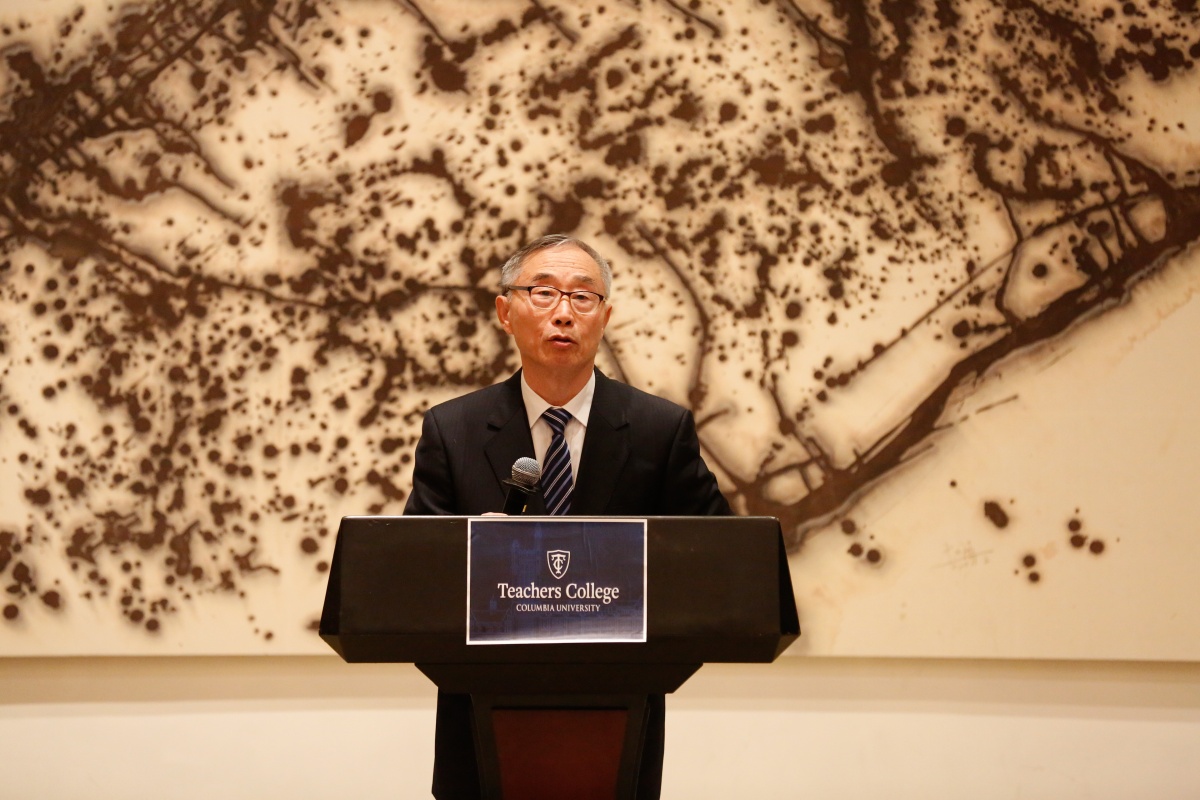
Benyu Wang, President of Nanjing Xiaozhuang University, which was founded by Tao in 1927. (Photo: Rick Feng)
Hong Zhou, Director of Nanjing Xiaozhuang University’s Office of International Exchange and Cooperation. (Photo: Rick Feng)
“Inspired by Dewey’s idea that education is life itself, Tao thoughtfully adapted those progressive principles to China’s rich cultural and social landscape,” President Bailey said. “[Tao] did not merely translate ideas; he reimagined them, giving rise to his renowned doctrine, Life Is Education, Society Is School, and the Unity of Teaching, Learning, and Doing. As you well know, this philosophy transformed how education was understood across China, bringing learning out of abstract classrooms and into the heart of local communities.”
“The exchange of ideas and perspectives between TC and our partners from China has endured for a century and continues to this day,” President Bailey said.
Alumni in Conversation
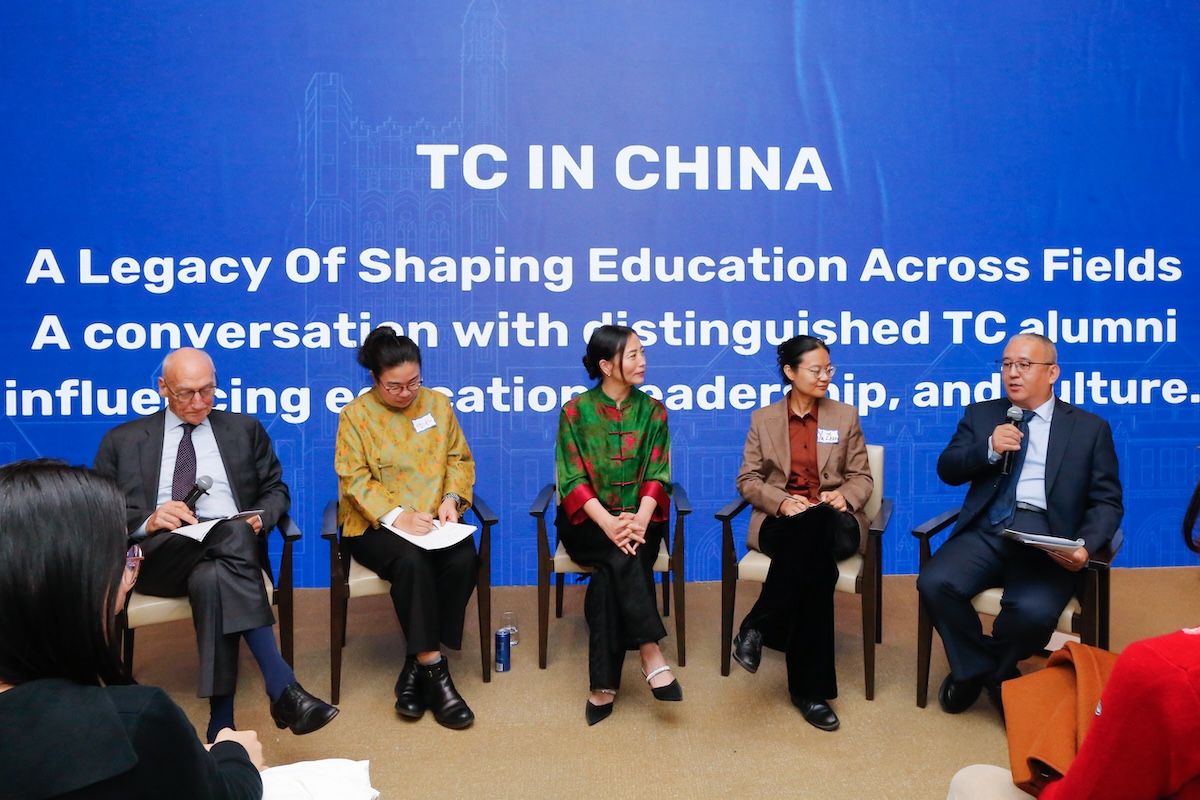
(Photo: Rick Feng)
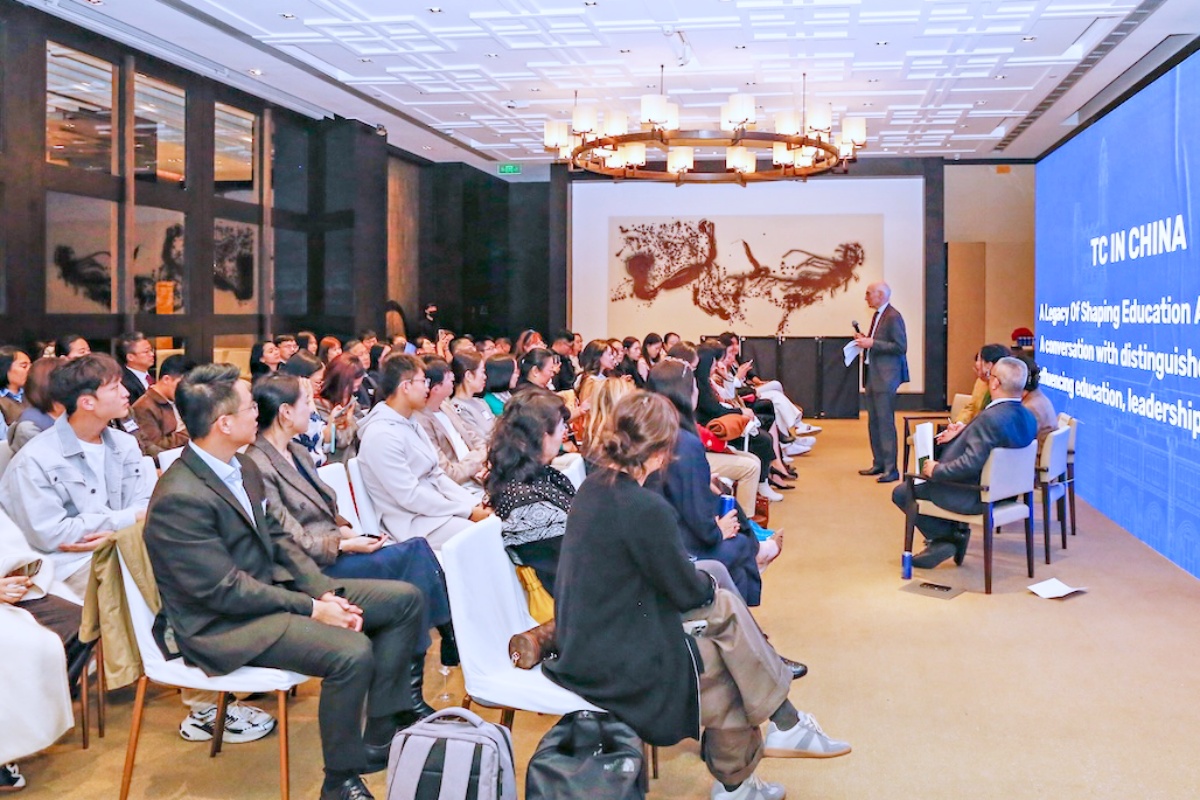
Guests gathered in Beijing to enjoy a special panel discussion — “TC in China: A Legacy of Shaping Education Across Fields” — featuring distinguished TC alumni working across education, research, leadership, and culture. Pictured from left to right: President Bailey with panelists Po Yang (Ph.D. ’08), Associate Professor at the Peking University Graduate School of Education and Senior Research Associate at the China Institute for Education Finance Research and Institute of Area Studies; Zhaodan (Jordan) Huang (Ed.D. ’12), Founder of Uni-Ed, an educational consulting agency, and member of TC’s Presidential Advisory Council; Yu (Sophia) Zhang (Ph.D. ’11), Chair of the School Council and Professor in the School of Education at Tsinghua University; and Yingshi Yang (Ed.D. ’09), Deputy Director and Researcher at the National Art Museum of China. The alumni discussed the role of education in their own lives, as well as education as a philosophical tool for self-discovery and innovation.
Carousel
(Photo: Rick Feng)
(Photo: Rick Feng)
(Photo: Rick Feng)