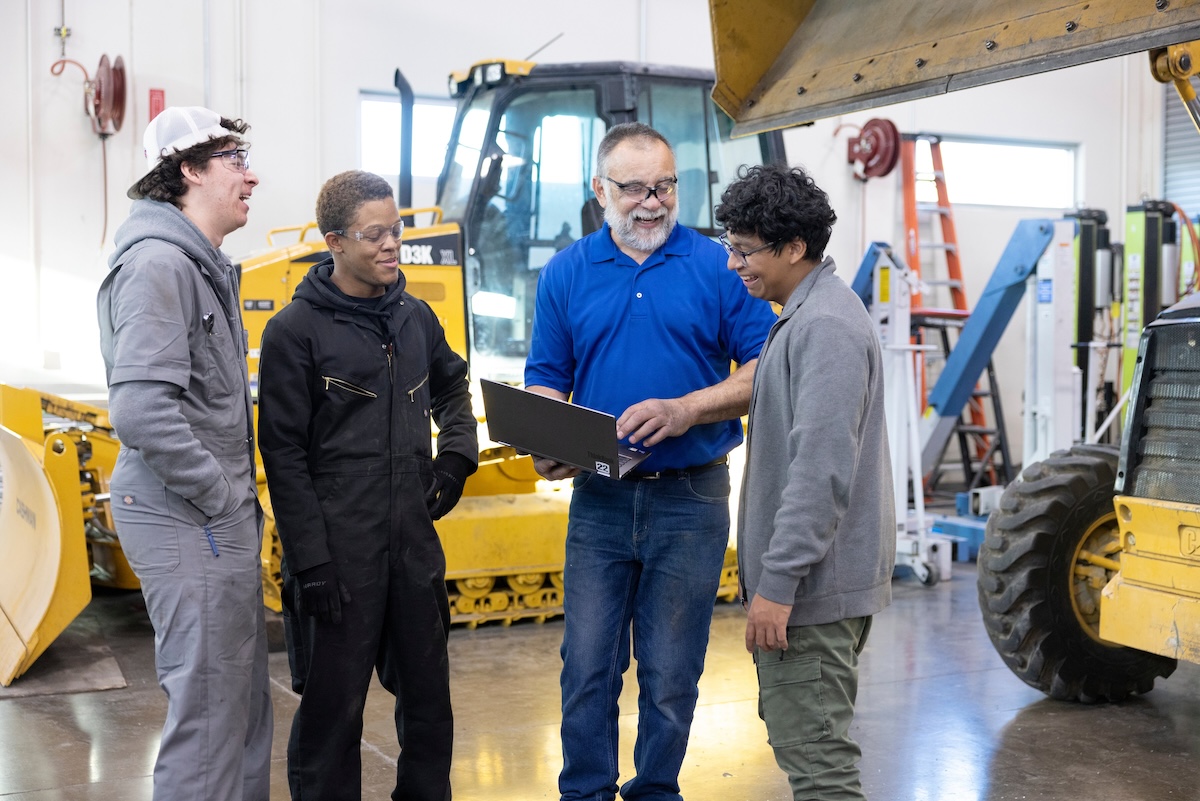
The Research: More than 1 million career and technical education (CTE) students annually miss out on the potential benefits of dual enrollment, even though research from the Community College Research Center (CCRC) shows that students who pair CTE and dual enrollment courses are significantly more likely to earn postsecondary degrees and achieve 16% higher wages by age 24.
The Impact: CCRC’s findings provide school districts and community colleges with actionable strategies to scale career-connected dual enrollment using the programs they already have, transforming high school career preparation into a strong on-ramp to college degrees and higher-paying jobs.
Across the country, an increasing number of well-paying jobs now demand education beyond high school. Yet each year, more than a million high school graduates complete substantial career and technical education (CTE) coursework without ever taking a college-level, dual enrollment (DE) course. Combining these two pathways could create an engine for student social mobility and regional talent development.
A new report from CCRC, Scaling Career-Connected Dual Enrollment, shows how K–12 districts and community colleges can tackle this challenge head-on. By integrating college coursework directly into existing high school career programs, partnerships across the nation are creating clearer pathways to college degrees and high-opportunity careers.
“There is strong evidence that students need postsecondary education after school if they want a good-paying job that provides opportunities for career advancement,” said Sarah Griffin, a research associate at CCRC. “Our research shows that creating opportunities for students to combine high school CTE and dual enrollment course-taking has great potential to help a large number of students earn college credentials after high school.”
The report uncovers three dynamic approaches for scaling career-connected dual enrollment, which aims to incorporate college level coursework into career-oriented programming. Below, explore three actionable strategies for scaling dual enrollment.
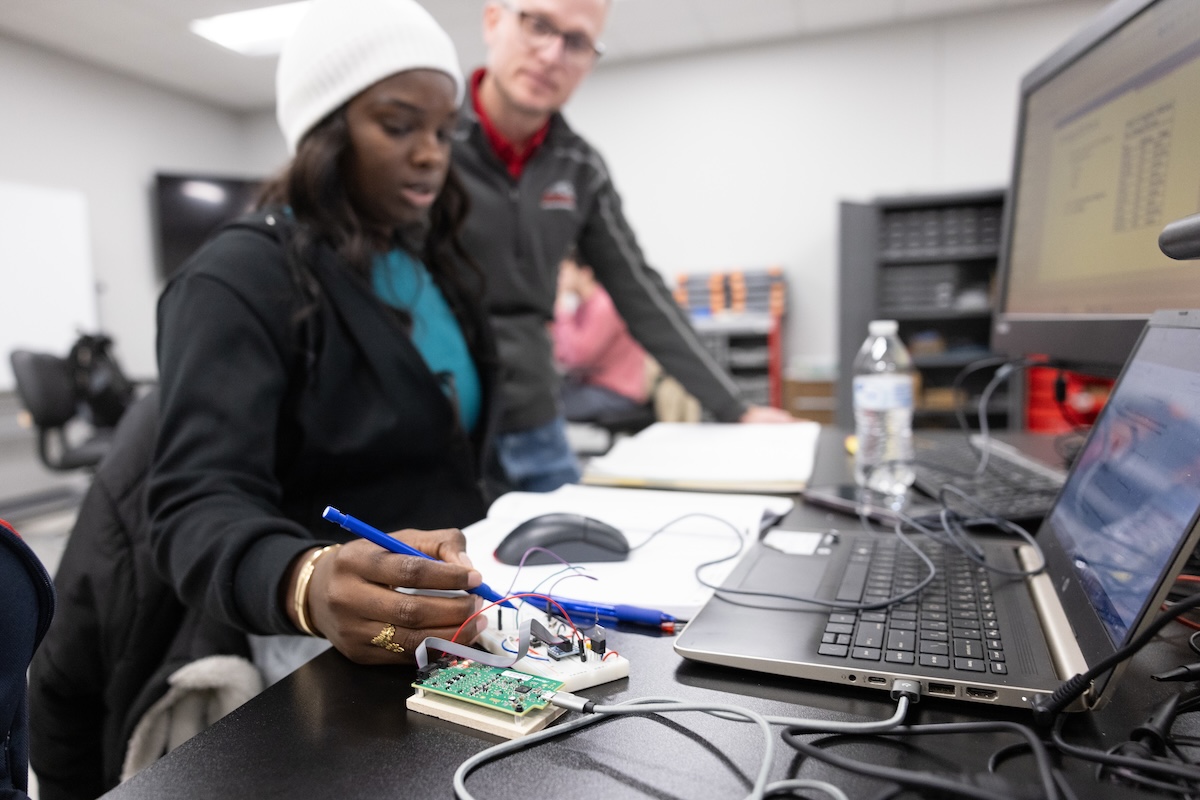
(Photo by Allison Shelley/Complete College Photo Library)
Strategy 1: Building Dual Enrollment Courses Into Traditional High School CTE Pathways
The Goal: Replace 11th- and 12th-grade high school CTE courses with CTE dual enrollment classes within existing school pathways.
Student Experience: Students could move from introductory high school classes to specialized college courses taught by qualified high school teachers or college faculty.
The Outcome: Students would have the opportunity to graduate with college credits, hands-on technical skills, and industry credentials that prepare them for the labor market and continued postsecondary education and training.
Strategy 2: Building DE Courses Into High School Career Academies
The Goal: Embed dual enrollment including CTE, technical foundations, humanities and social science courses directly into high school career academies organized around either broad interdisciplinary concepts or specific industry fields.

(Photo by Allison Shelley/Complete College Photo Library)
Student Experience: Cohorts of students in grades 10-12 could move through high school and college courses with opportunities to complete capstone projects and participate in work-based learning like job shadowing and internships.
The Outcome: This strategy would normalize college participation across the student body and build transferable, industry-specific technical skills while helping students explore postsecondary degree and career options.
Strategy 3: Enrolling High School Students in College CTE Programs
The Goal: Allow high school students to directly enroll in existing community college CTE programs and complete initial program coursework and short-term certificates in high school.
Student Experience: Seniors could spend half the school day at a college campus or regional career advancement center taking college CTE coursework using industry-standard facilities and labs.
The Outcome: Students would make substantial progress towards a certificate or applied associate degree in high school, and after they graduate, can pick up the college program where they left off.
These three strategies build on CCRC's DEEP framework for how dual enrollment can expand college and career opportunities for more high school students which they introduced in 2023.

(Photo by Allison Shelley/Complete College Photo Library)
Building Systems for Lasting Success
While these three strategies differ in structure, the goal remains the same: supporting students as they move from career exploration in high school to postsecondary education and training that leads to high-opportunity careers. The report demonstrates how colleges and schools can bring college and career preparation together, using career-connected dual enrollment to help students identify pathways that match their interests and build momentum toward postsecondary completion before they graduate.
“Most high schools offer both dual enrollment and career and technical education, but too often the two are disconnected,” concludes John Fink, Senior Research Associate and Program Lead at CCRC. “A growing number of college and K–12 partnerships are bringing them together, shifting the choice from college or career to college for career.”