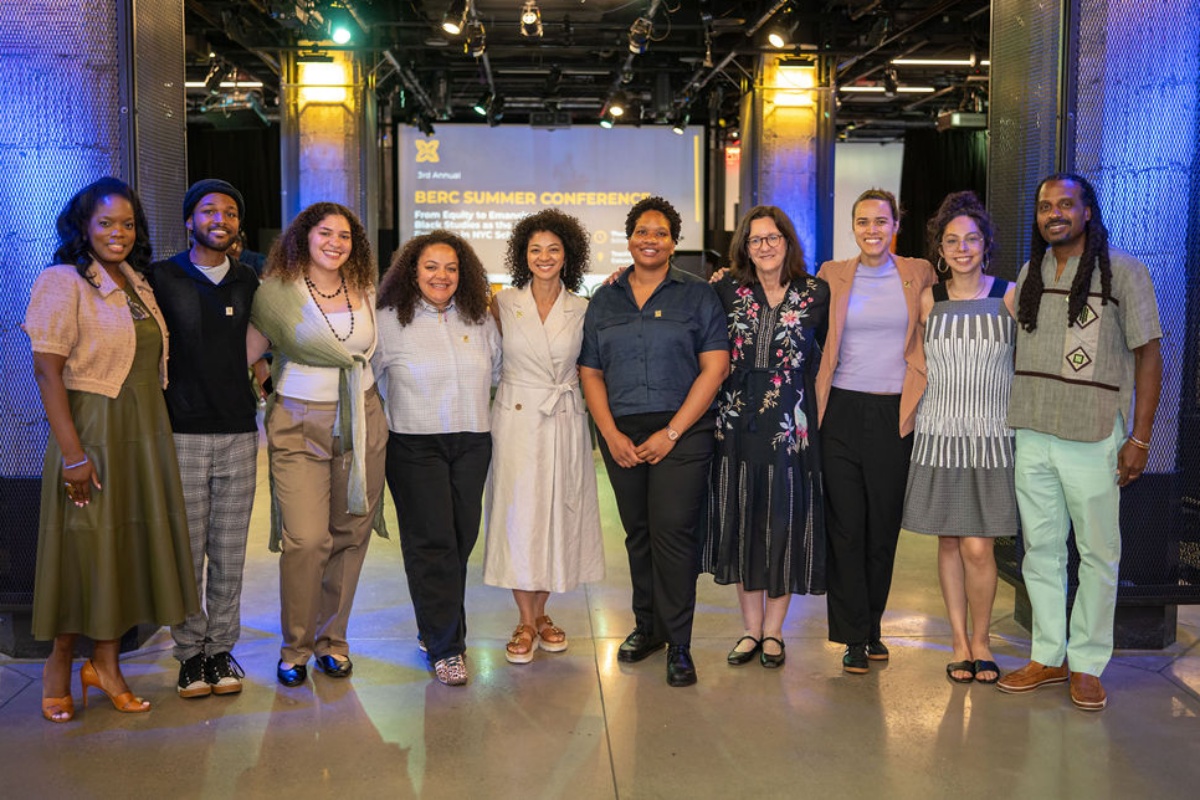
Scholars from the Black Education Research Center (BERC) at Teachers College will help lead research in a year-long study that will examine the historical and contemporary impacts of racial inequities in New York City and offer policy recommendations for consideration. Funded by the NYC Commission on Racial Equity (CORE), the research team includes experts across Black Studies, economics, law and other disciplines who will take a multidisciplinary approach to participatory research that engages communities across the city.
“Reparations begins with an honest accounting of the past and the ways its harms continue to shape the lived experiences of Black New Yorkers.” says Sonya Douglass, BERC’s Founding Director and Professor of Education Leadership. “As part of this examination of reparations in New York City, BERC will bring community-based participatory action research into conversation with community knowledge to document those harms and inform recommendations for meaningful repair.”
Over the next year, BERC researchers will collect and analyze both quantitative and qualitative data related to “the impacts of slavery and its legacies in the city of New York using relevant historical and present-day evidence,” contributing to the broader mandate established by Local Laws 91 and 92.
Among the researchers working with BERC are: William “Sandy” Darity, Jr., Samuel DuBois Cook Professor Emeritus of Public Policy, African and African American Studies, and Economics at Duke University, and a visiting professor at Howard University; Mary T. Bassett, FXB Professor of the Practice of Health and Human Rights at the Harvard School of Public Health; Tanya K. Hernández, Archibald R. Murray Professor of Law at the Fordham University School of Law; Linda Tillman, Professor Emerita of Educational Leadership at the University of North Carolina-Chapel Hill; Rosa Rivera-McCutchen, Professor of Administration and Supervision, Hunter College, and genealogist Kellie Farrish.
“This research represents an opportunity to deepen our understanding; honor lived experiences and help shape a more just future for all New Yorkers,” said CORE Chairperson Linda Tigani, who announced the researchers at a community event on Sept. 25, where she and scholar and activist Cornell West discussed the project in a conversation moderated by Emmy award-winning producer Tyrik Washington.
The study’s findings and recommendations will be presented to city officials next summer alongside an implementation plan — named the “Truth, Healing, and Reconciliation process” — that will begin in 2028.
BERC’s participation in CORE’s research study builds on the Center’s groundbreaking work to develop and implement the nation’s first Black Studies curriculum in New York City Schools. The initiative — launched in 2021 in partnership with the New York City Council — prioritized community-based research and implementation to offer meaningful results. The open-source curriculum, PK-12 lessons designed to expand student knowledge on the African diaspora, has reached more than 2,000 educators and been downloaded more than 30,000 times.
As for their next chapter, Douglass observed, “This study is an opportunity to turn historical understanding and community priorities into concrete recommendations for redress and racial justice. Our goal is to give New York City a clear foundation for action with practical steps, meaningful accountability, and lasting benefits that address longstanding harms to Black New Yorkers and strengthen the city as a whole.”