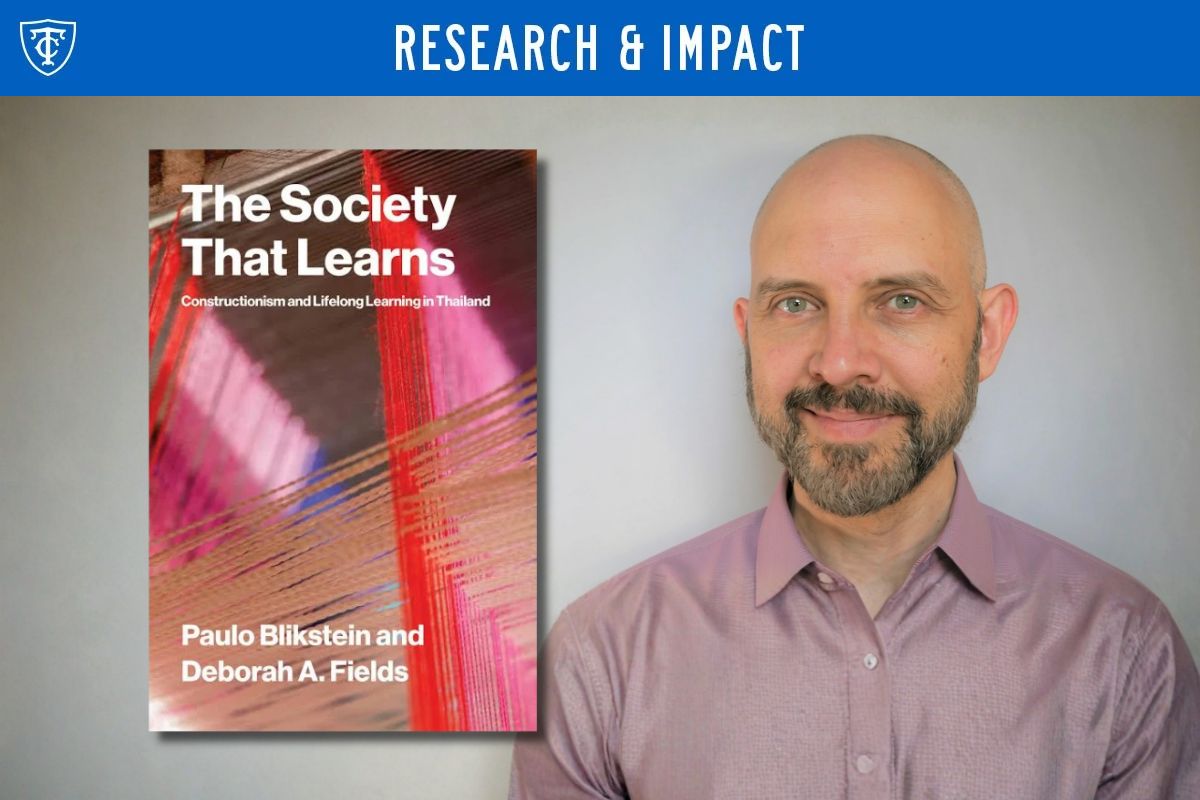
What happens when learning itself becomes the focus of a society? Or when entire villages reorganize themselves around the idea that they can overcome obstacles and solve local problems by become lifelong learners? TC’s Paulo Blikstein, Professor of Technology, Media and Learning, explores just that in his new book — The Society That Learns: Constructionism and Lifelong Learning in Thailand, co-authored with Deborah Fields, Research Professor at Utah State University, and published by MIT Press earlier this year.
Over the course of nearly a decade, Blikstein and Fields studied one of the “longest-running community development projects in the world” — Thai Constructionism, which the scholars characterize as the Thai people’s implementation of hands-on learning in culturally-relevant and sustainable ways over the course of nearly 30 years.
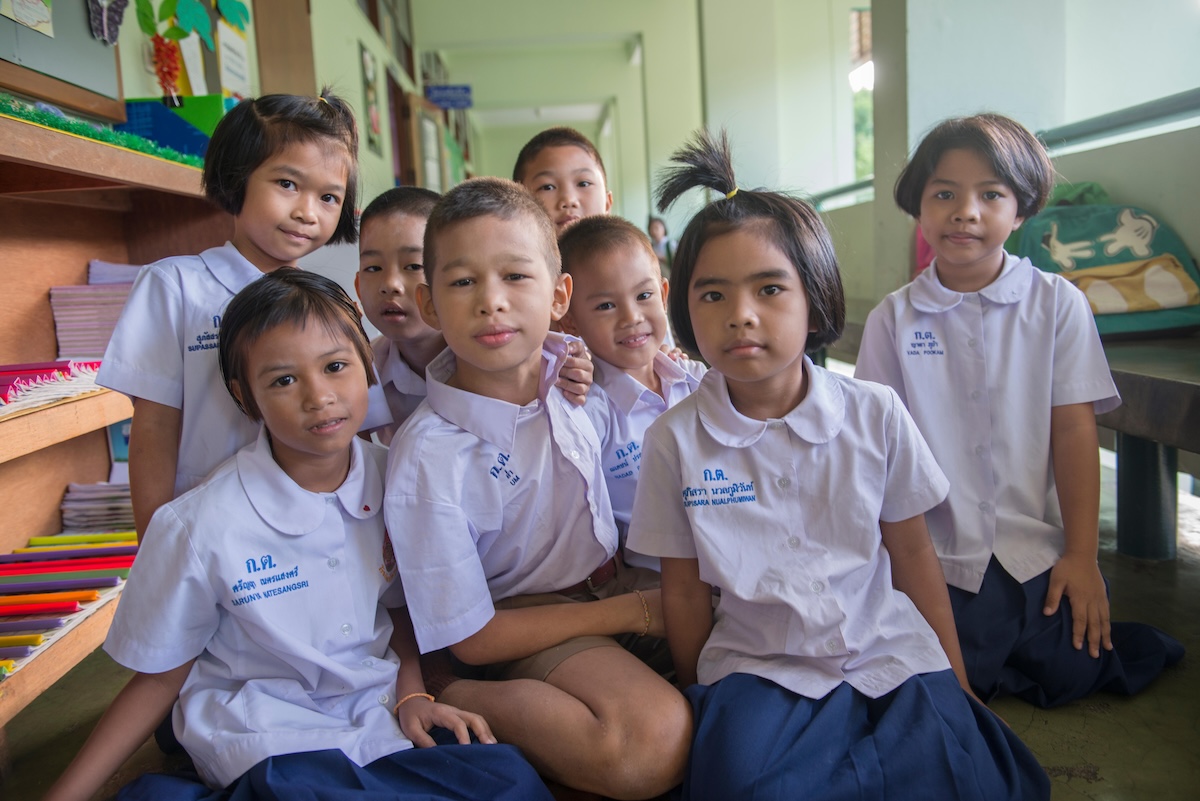
Students in a primary school in Phuket, Thailand. (Photo: Lou Linwei/Alamy)
Rooted in theory developed by scholars Jean Piaget and Seymour Papert, constructionism spread across Thailand beginning in 1996 when a group of researchers introduced the approach to prioritize digital innovation and sustainable agriculture in schools as a pathway for economic development.

Blikstein and Deborah Fields, Research Professor at Utah State University
“This book shares stories of people who became learners by coming together to think about their problems, create solutions, implement them and — in words repeated to us by many project participants — ‘reflect, reflect, reflect’ and ‘rethink, redo and re-reflect,’” write Blikstein and Fields.
Drawing from hundreds of documents and 62 interviews spread across Thailand, Blikstein and Fields offer a thoughtful look at how real-world problem solving unfolded in a variety of contexts. From how students and neighbors collaborated to build check dams and eliminate debt in the village of Ban Samkha to factory technicians in Rayong who learned to mitigate machinery breakdowns, the book demonstrates how constructionism broke out of traditional classrooms into farms, workplaces and adult life.
For Blikstein, this pursuit of knowledge outside of traditional learning environments offers a clarifying lesson. “If you believe in lifelong learning, if you believe that learning matters, it shouldn't be something you only do when you're in this special environment that we call school,” says Blikstein, who also advances constructionist opportunities for educators through FabLearn.
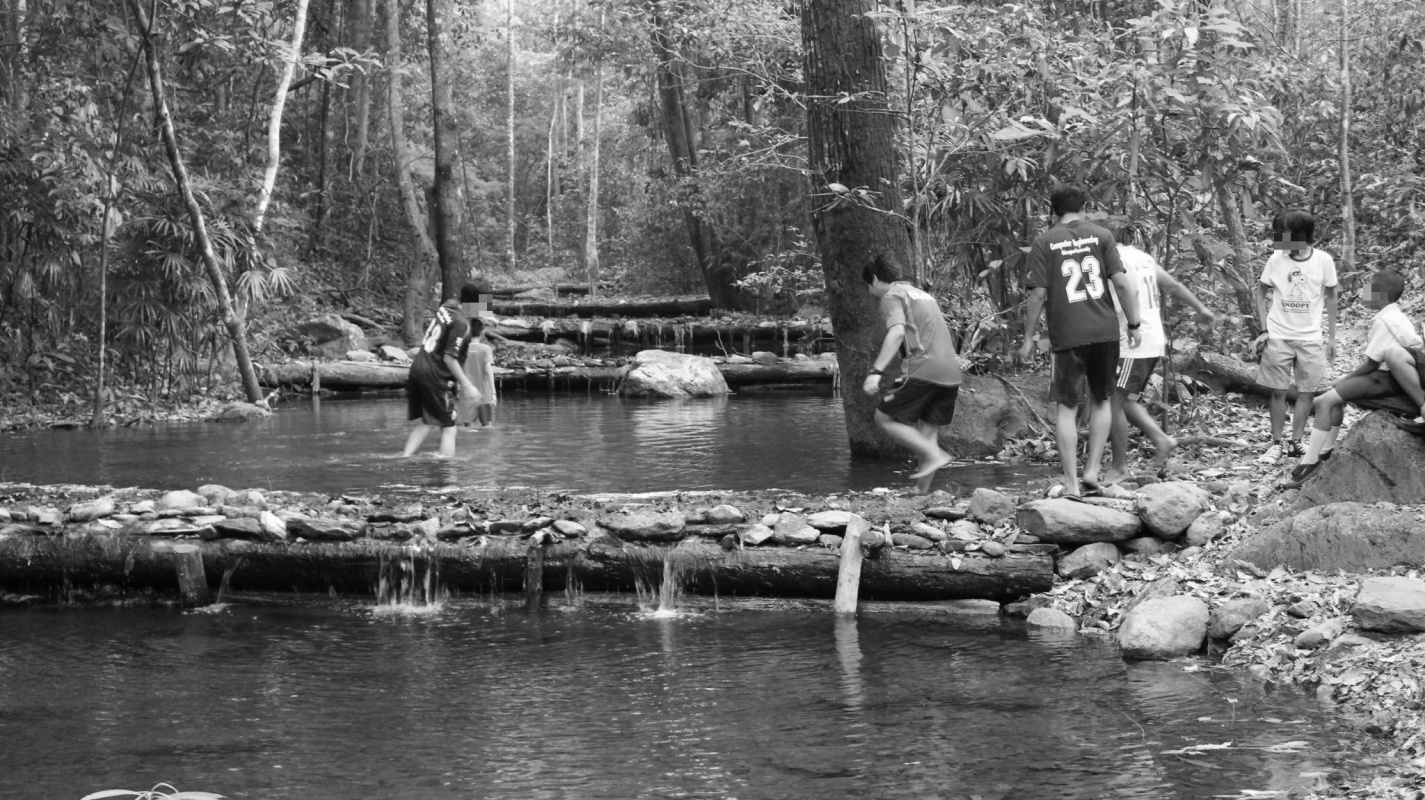
Children playing in the year-round water among a series of check dams in Ban Samkha. (Photo: Arnan Sipitakiat)
Through his extended research, Blikstein came to see similarities between Thailand and his home country of Brazil: their shared “sense of possibility” and creativity in forging better futures.
That creativity is an essential part of Thai Constructionism’s success, Blikstein says: persistence is not enough, and learning how to fail and problem-solve is a skill set in and of itself.
“We try something, it doesn't work, we study why it didn't work, and then we look for experts, we look for new knowledge, we learn, and then we try again,” says Blikstein, noting that the community-driven changes at the heart of the book take place over numerous years — often outpacing the length of a traditional study. Meaningful change takes time, and to Blikstein, is not just defined by when the effort concludes, but also how well those leading it adapt to roadblocks.
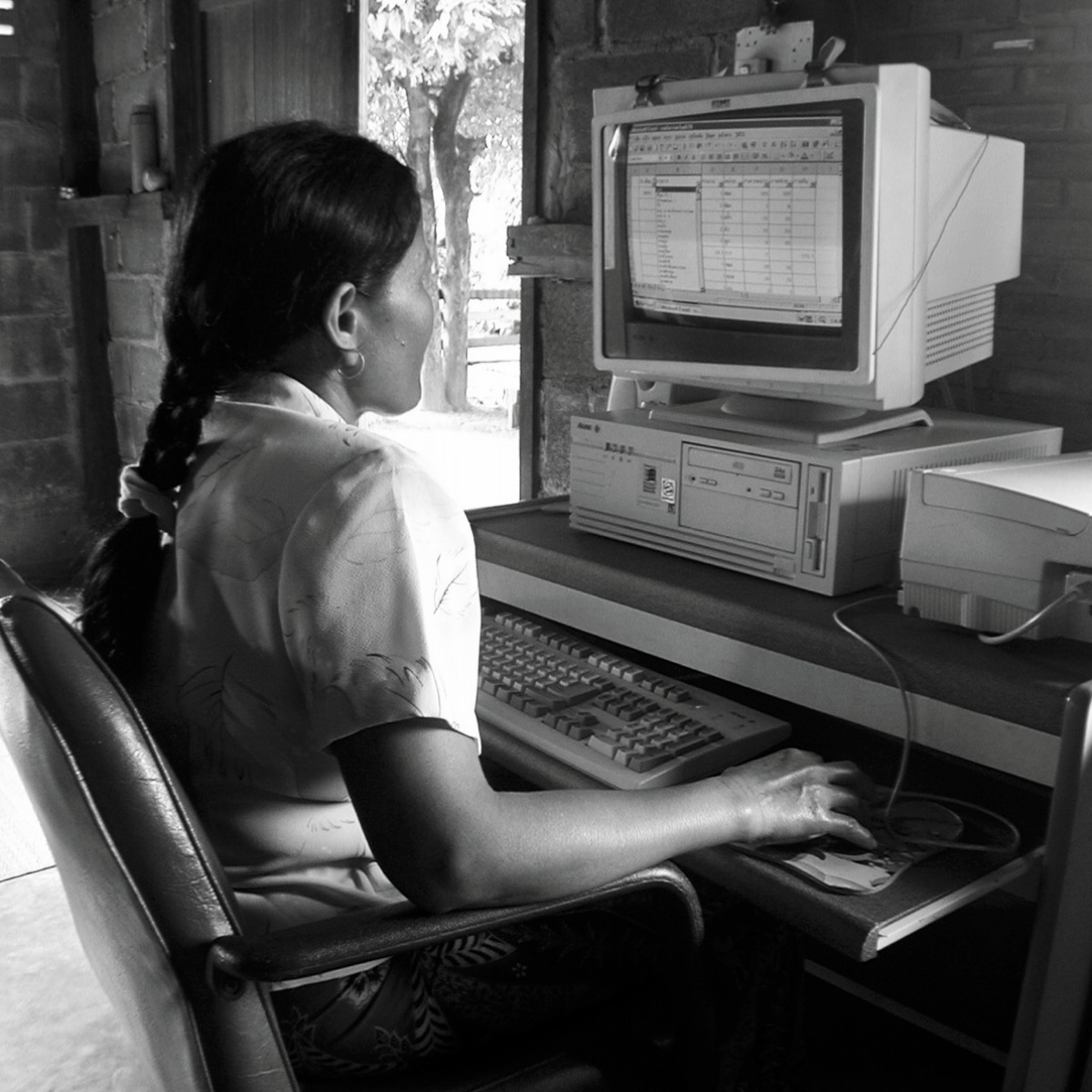
In 1999, one local woman opened her home to host a computer for community use. (Photo credit: Arnan Sipitakiat)
Crucially, Blikstein and Fields emphasize that Thai Constructionism is not a rigid recipe or standard formula to be blindly replicated; rather, the approach’s success in Thailand is built upon how local educators and citizens tailored hands-on learning to their own cultural and socioeconomic contexts.
“Borrow constructionism, but adapt it. Make it relevant to your community and the social and political landscape,” the authors warn. “What can your community, traditions, spirituality, connections and expertise contribute?”