
What if habit is a central obstacle to ending racism? That's the premise of Breaking the Deadly Dance of Racism, which reframes racism as a choreographed pattern rather than a series of isolated acts, roles that perpetrators, targets, bystanders, and allies all learn to play, often without realizing they're performing them at all.
In the new book, Derald Wing Sue, Professor of Psychology at Teachers College and TC alumna Lisa Beth Spanierman, Professor at Arizona State University, examine how perpetrators, targets, bystanders and allies each play vital roles in either sustaining or disrupting injustice. Drawing on decades of psychological research and interdisciplinary scholarship on racism, Sue and Spanierman examine how people occupy and move among these roles and offer practical strategies to “break cycles of silence and harm.”
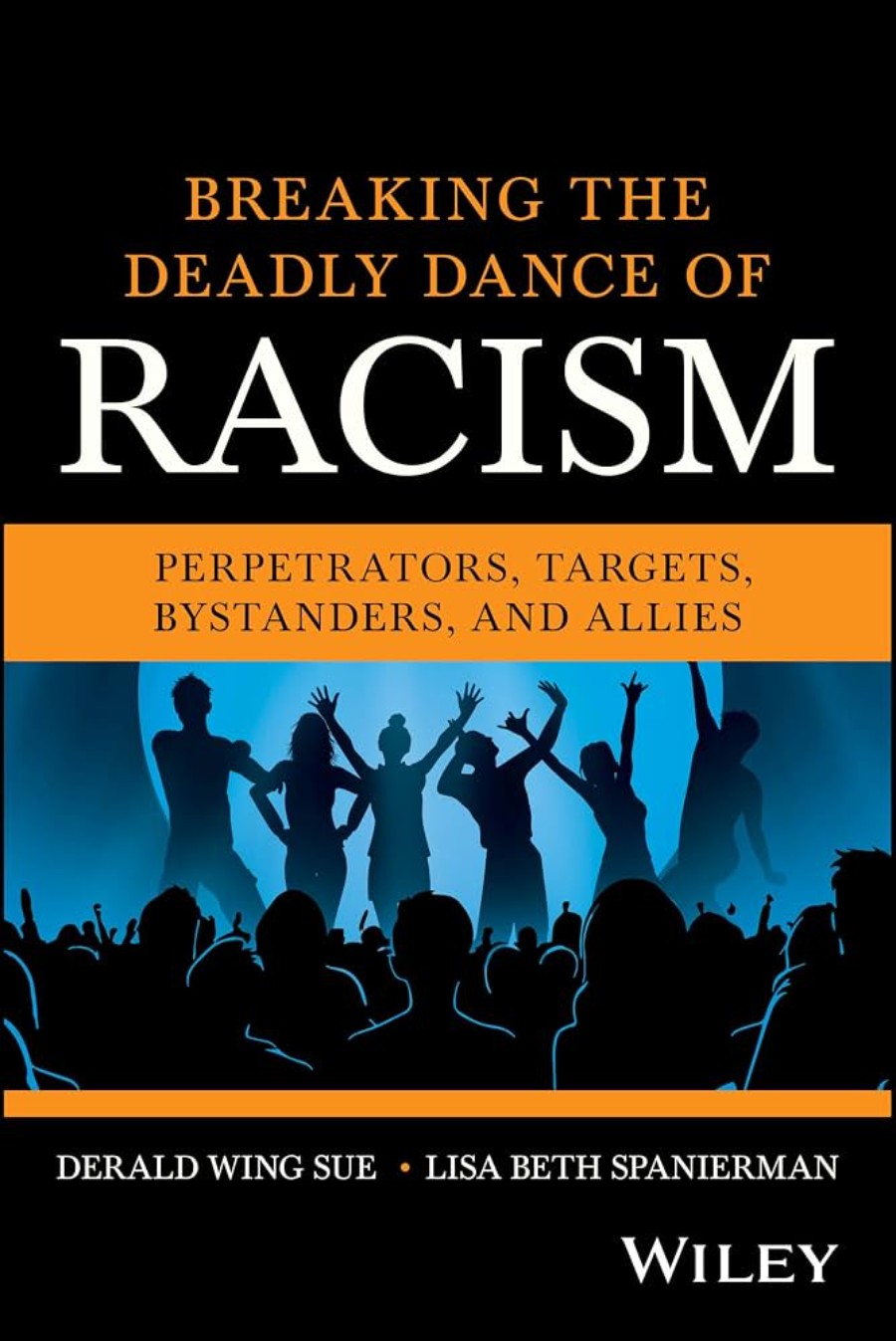
"At the heart of this framework is our guiding metaphor that racism operates like a dance,” explains Sue. “It is not simply a matter of individual bias or intent, but a patterned set of roles, rhythms, and responses that are repeated, learned, and reinforced across relationships and systems. Breaking the Deadly Dance of Racism offers a roadmap for disrupting the dance and dismantling racism at the individual, institutional, and cultural levels.”
Sue’s research spans multicultural psychology and education, microaggression theory and the psychology of racial dialogues. He has shaped the field by challenging monocultural biases and laying the foundation for cultural competency in therapy with his publication, Counseling the Culturally Diverse. With over 200 publications and 24 books, Sue is recognized globally for his contributions. He has advised President Clinton’s Race Advisory Board, collaborated with UNESCO, conducted diversity training for Fortune 500 companies and received lifetime achievement awards from the American Psychological Association and numerous other national bodies.
Building on these contributions, the book serves as a guide and offers clarity and practical tools for inspiring lasting change. Readers will find detailed, evidence-based microintervention strategies, guidance for challenging institutional policies, approaches to rewriting cultural narratives that perpetuate inequality and insights into dismantling racism at individual, institutional, and cultural levels.
"Breaking the deadly dance of racism requires more than good intentions. It requires awareness, practice, accountability, and the willingness to act,” shares Spanierman. “This book helps readers understand their role in the dance and take meaningful steps toward disrupting it."
Spanierman earned an Ed.M. and M.A. from TC in 1997. She is widely recognized for her research on racial microaggressions, white racial justice allyship, and the psychosocial costs of racism to white people. A former Associate Dean and past Vice President for Scientific Affairs for the APA’s Society of Counseling Psychology, Spanierman has authored over 85 peer-reviewed publications and serves as an Associate Editor of the second edition of the APA Handbook of Counseling Psychology. She has frequently collaborated with Sue, including as co-author of the second edition of Microaggressions in Everyday Life. Her international work includes a fellowship at the Center for Interdisciplinary Research (ZiF) in Germany, her co-leadership of an international conference on racial microaggressions, and her appointment to the Scientific Advisory Board for the Institute for Interdisciplinary Conflict and Violence Research at Bielefeld University.