Home to the nation’s first graduate program in international and comparative education, members of the Teachers College community have been leaders in the field since 1899. TC faculty and alumni were integral in the modernization of education in China, assisted in the creation of UNESCO and launched an international teacher preparation program that preceded the Peace Corps. More than 125 years later, TC students come from more than 80 countries and faculty continue their commitment to making an impact in the fields of education, health and psychology worldwide.
In recognition of the International Day of Education on January 24, we’re highlighting a handful of faculty across TC whose global work focuses on translating research into sustainable practice through capacity-building and collaborative partnerships with local organizations and experts. Recognizing that increased access to high-quality, inclusive and equitable education contributes to peace and creates more resilient societies, the United Nations General Assembly established the International Day of Education in 2018.
- Paulo Blikstein, Associate Professor of Communications, Media and Learning Technologies Design, is bringing hands-on learning to Brazilian schools and supporting teachers around the globe through the FabLearn program.
- Catherine Crowley, Professor of Practice of Communication Sciences and Disorders, is training hundreds of speech language therapists in more than 20 countries to provide high-quality services for children with cleft palate.
- Mary Mendenhall, Associate Professor of International and Comparative Education, is examining the educational policies and practices that impact students, teachers and communities experiencing displacement in Sub-Saharan Africa.
- Prem Phyak, Associate Professor in International and Comparative Education, is uplifting the perspectives and cultures of multilingual and Indigenous students, teachers and communities in Nepal and Asia.
- Lena Verdeli, Associate Professor of Psychology and Education, is improving mental health for people experiencing displacement or enduring crises in more than ten countries.
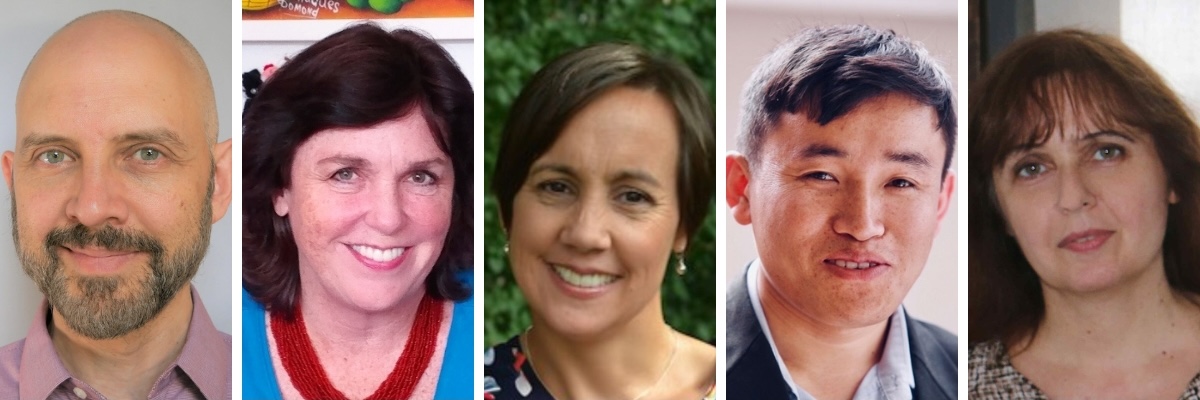
From left to right: Paulo Blikstein, Catherine Crowley, Mary Mendenhall, Prem Phyak and Lena Verdeli
Where 5 TC Faculty Are Making a Global Impact
Democratizing hands-on learning to benefit all students with Paulo Blikstein
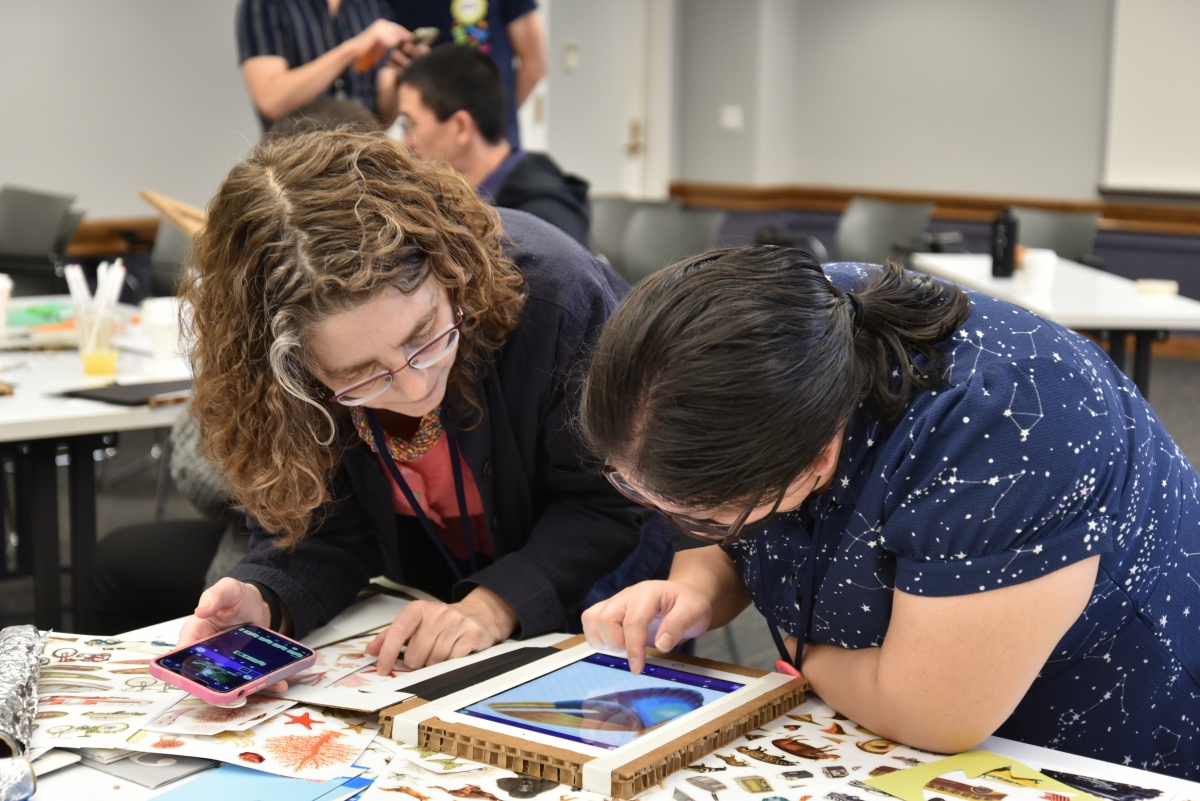
Participants at the 2023 Constructionism / FabLearn conference (Photo: TC Archives)
Through his research and roles as director of the Transformative Learning Technologies Lab and faculty director of FabLearn — a collaborative network of academics, policy makers and educators in 24 countries on six continents — Blikstein’s scholarship centers on improving access to an engaging STEM education. “When we made schooling a universal mandate, one thing that was lost was this connection with creating things, doing experiments, and how we learn through them,” explains the Associate Professor of Communications, Media and Learning Technologies Design. “We've known for a long time that the best kind of education is when you carefully combine theory and real-world experiences. Creating things and experimenting are key components in human cognition and learning.”
The benefits of hands-on learning are clear: students internalize scientific practices through experience, which supports their critical thinking skills and boosts classroom engagement. However, implementing new curricula and modernizing school spaces requires significant resources. “The big challenge is how to provide those experiences to the majority of kids in public schools,” says Blikstein, who created FabLearn to support and platform educators working to bring hands-on learning to their classrooms. “We work with educators that are in the trenches doing this work with students…[and their] voices need to be elevated because often, in our more academic conversations, we forget to listen to what they need to make this happen.”
While the work is difficult, Blikstein notes increased interest from policy makers, particularly in Brazil. For the past three years, he has been working with the city of Rio de Janeiro to implement a massive progressive education program, currently impacting more than 300 schools in a network of 1.5 million students. From developing resources and curricula to preparing teachers, “this work is taking the research that we do [at TC] and translating it to practice [by] working with secretaries of education and teachers,” says Blikstein. He also recently overhauled science and computer science education in the city of Sobral, which included the construction of makerspaces in the city’s middle schools. This transformative model has garnered interest from several other Brazilian cities.
Looking forward, Blikstein plans to implement these constructionist hands-on learning practices in more cities, and he has an upcoming book examining 30 years of similar progressive education experiences in Thailand.
Dive deeper into the impact of Blikstein’s scholarship and the Transformative Learning Technologies Lab.
Improving access to high-quality speech therapy with Cate Crowley
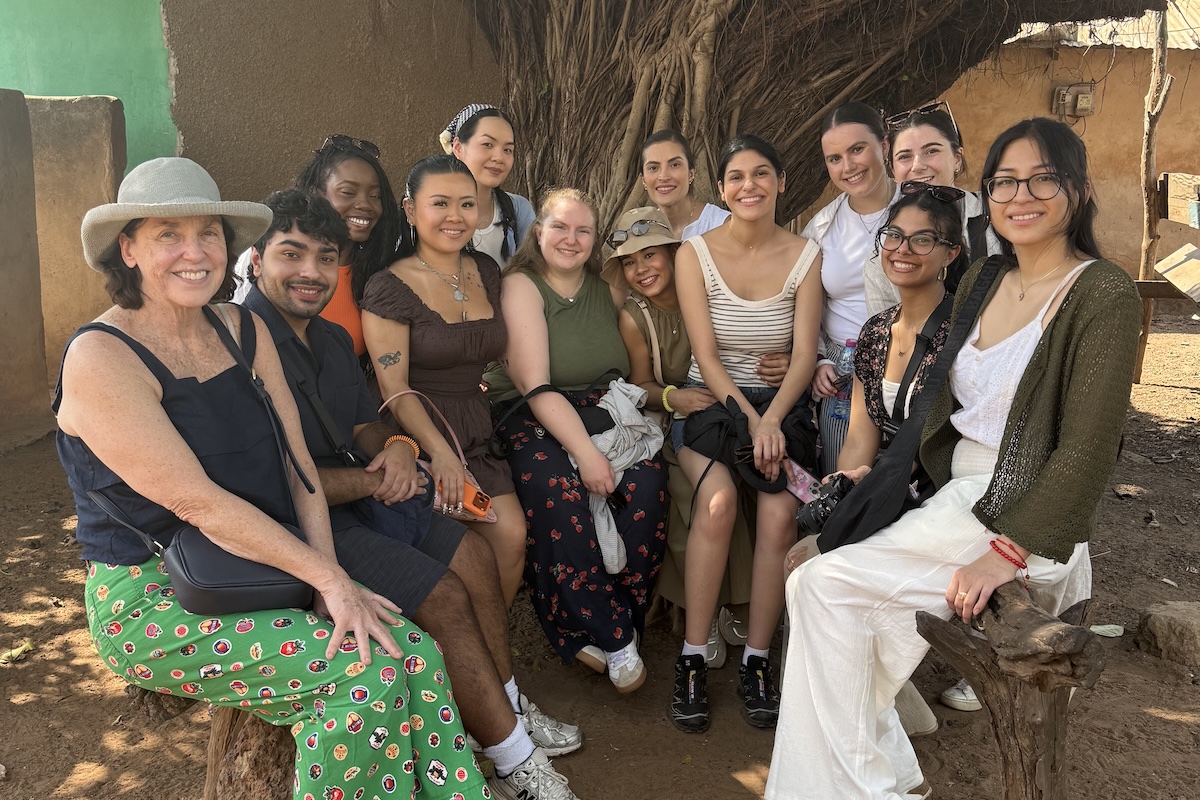
Crowley and some TC students on a training trip in Ghana. (Photo courtesy of Crowley)
In the years that Crowley, Professor of Practice of Communication Sciences and Disorders, has spent ensuring children with cleft palates have access to high-quality speech therapy, she — has noted a growing recognition of the importance of these services for children to speak confidently and be understood. She has focused mainly on building capacity to ensure children get continuous high-quality care by leading training programs in more than 20 countries on five continents, as a result of her ongoing association with Smile Train, the largest cleft charitable organization in the world.
Crowley’s international work also offers graduate students in TC’s Communication Sciences and Disorders program the opportunity to hone their skills by accompanying Crowley on these training trips. She recently returned from the 15th-annual winter trip to Ghana, where 12 masters students gained professional knowledge and experience by working with cleft and craniofacial medical teams and by offering professional development with special education teachers, creating educational materials for more than 1,000 students with developmental disabilities from schools throughout Ghana.
Crowley’s approach — which deepens the skills and improves the confidence of speech therapists through a series of in-depth workshops — has a proven positive impact on content knowledge and clinical skills. “For me, capacity building is the way to go in international work,” says Crowley, who prioritizes the needs of the community she’s working in. “I always talk to my in-country colleagues to find out what's the situation [and] how we can support and augment what they're already doing.”
Crowley is particularly proud of her work in Mexico, where she has run multiple cleft speech therapy trainings with Smile Train in Chiapas and Oaxaca involving speech therapists from across the country. “There are now thousands of Mexican children born with cleft palate who have access to high-quality speech therapy as the result of this collaboration,” she says. “Whether they live in Mexico City or in the rural and indigenous areas of Chiapas in southern Mexico and speak indigenous languages, I know kids are going to get the same quality services.”
Get a more in-depth look at Crowley’s international work, and her work on The LEADERSProject.
Demonstrating the importance of teacher and learner well-being in regions of conflict with Mary Mendenhall
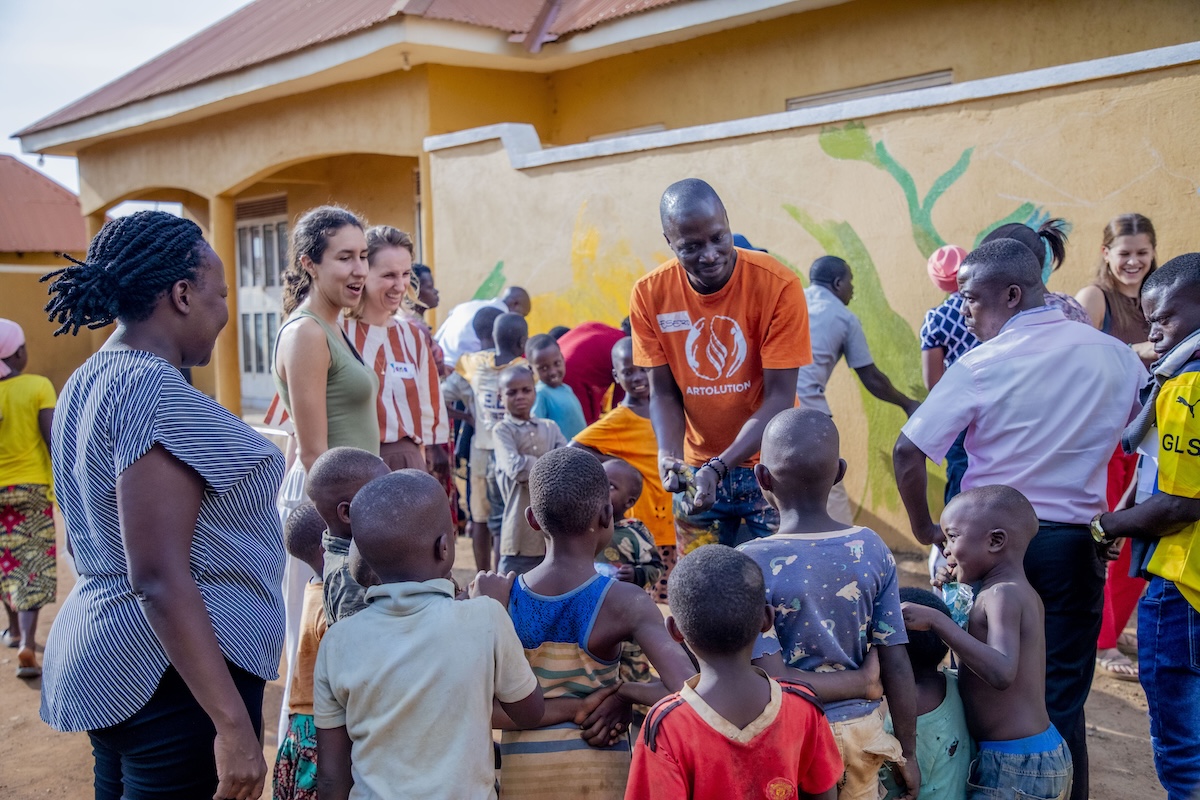
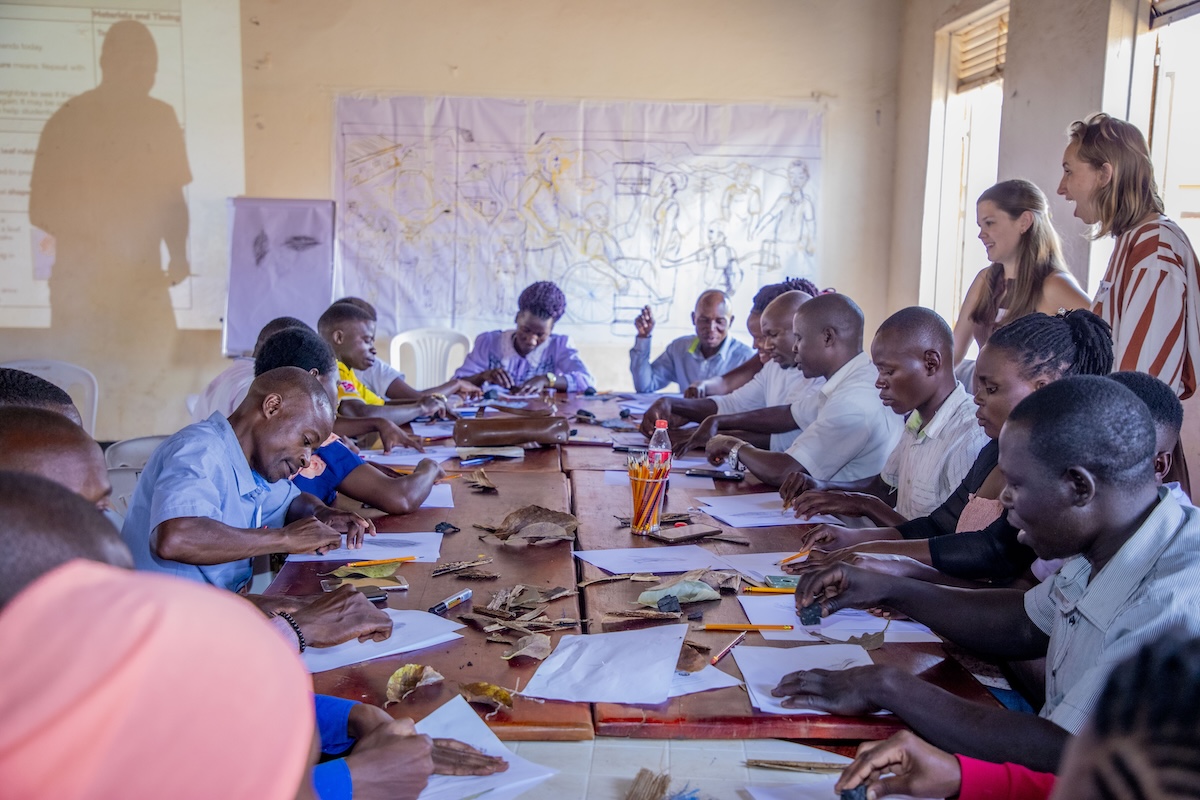
Children in Kyangwali refugee settlement in Uganda enjoying an arts lesson (Photo courtesy of the Ubumwe research team)
Mendenhall, Associate Professor of International and Comparative Education, believes deeply in the powerful role of education in achieving social progress and as such, centers her research on examining the contemporary educational practices and policies that affect students, teachers, and communities living amidst displacement, particularly in Sub-Saharan Africa. “It's not a panacea, and there are many currents working against it, but I think education is central as we navigate an ever-evolving world and social order,” says Mendenhall, Director of the George Clement Bond Center for African Education.
To support education for refugees and internally displaced people, Mendenhall focuses her scholarship on educators because, “they are the frontline responders in these settings.” “Understandably the focus is usually on the kids,” she says. “But if we're bypassing the teachers, every initiative we attempt will be short-lived and less successful.”
One of Mendenhall’s recent research projects examined the roles, resources and relationships influencing learning for displaced teachers and learners in northern Uganda and South Sudan. The four-year study — which is analyzed in depth in Mendenhall’s award-winning edited volume, Education and Resilience in Crisis: Challenges and Opportunities in Sub-Saharan Africa — showed the power of the student-teacher relationship to support learning. “Teachers show up to support the kids in their classrooms even as many deal with their own displacement. They teach their lessons, but they also assume social worker and caretaker roles, often sharing meager resources and food with their learners,” says Mendenhall. The importance of this relationship also demonstrates why supporting educator well-being is a critical aspect of successful education policy in displacement and non-displacement settings alike.
Mendenhall is also a primary investigator on the Center for African Education’s Ubumwe initiative, which provides arts education to children in Kyangwali refugee settlement in Uganda — a settlement that is home to more than 135,000 refugees from the Democratic Republic of Congo. Building on three years of curriculum implementation and teacher professional development led by Mendenhall and several TC graduate students, the larger multi-partner team is taking stock of their collective learning from research and evaluation data. Early findings suggest that implementing arts curriculum is improving attendance, is expanding teacher’s pedagogical repertoire, and strengthening relationships between students and teachers. Learn more about the Ubumwe project in this short video.
Learn more about Mendenhall’s research, here.
Empowering students, teachers and communities who speak minority languages in Nepal and beyond with Prem Phyak
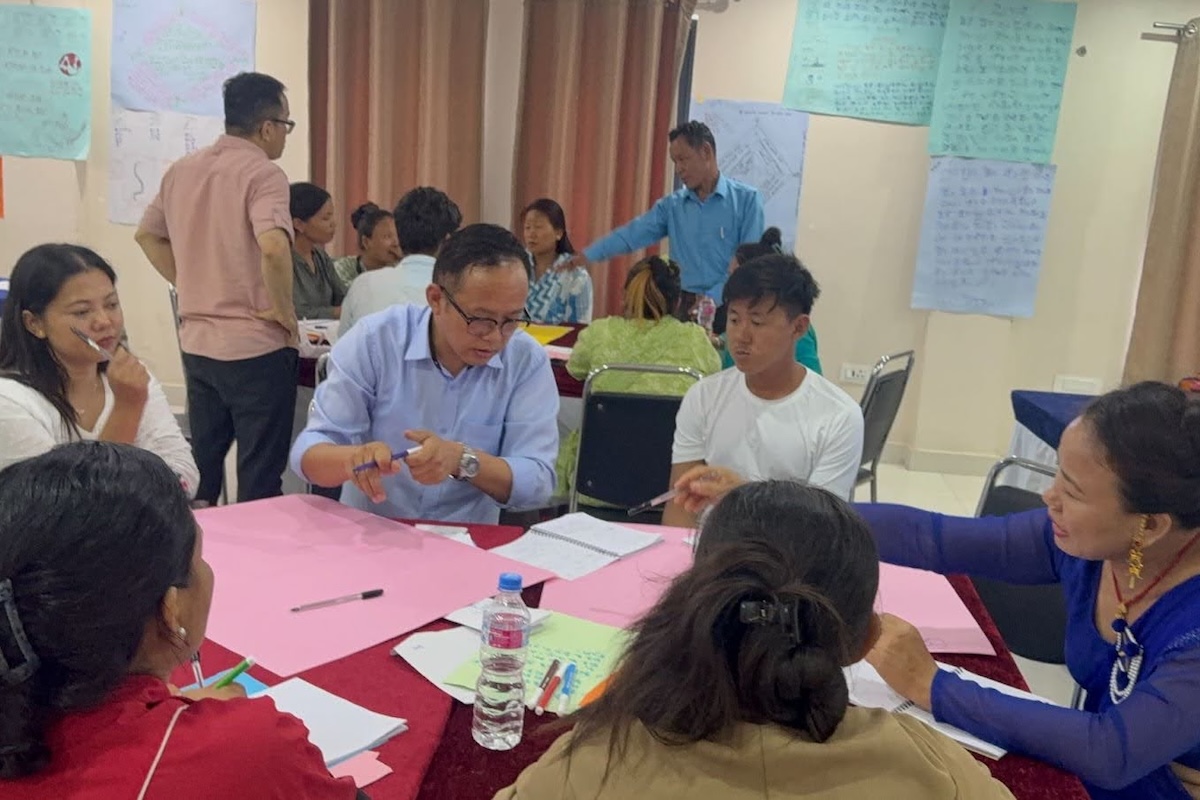
Phyak facilitating workshop for Indigenous language teachers in Nepal (Photo courtesy of Phyak)
Phyak’s scholarly interests lie in elevating the voices and knowledge of indigenous communities through promoting multilingual education policies, particularly in his home country of Nepal. There are 124 languages spoken in the country, but most public schools teach only in Nepali, while private schools favor English for instruction, policies that Phyak, Associate Professor in International and Comparative Education, argues disempower millions of Nepali children. “If their languages and language practices are not recognized as an integral part of education, they experience multiple forms of exclusion, including lack of meaningful participation in the learning processes, lack of participation in the policy-making processes for parents and, most importantly, their sense of belonging and identity,” he explains.
Due to the top-down educational approach in Asia, which Phyak describes as “a project of homogeneity,” changing the system is particularly difficult. Recognizing this challenge, Phyak opts to work directly with teachers, community organizations, teachers and indigenous youth to address pressing issues for multilingual education. “To help people understand that the way we have created and implemented policies for students coming from different linguistic and cultural backgrounds was not appropriate, I engage them in dialogue [to] understand that monolingual, oppressive language policies are historical constructs and in grassroots actions for resisting and transforming them,” he says.
Since joining TC’s faculty two years ago, Phyak has gained new perspectives on how to decolonize development through education. He is currently examining the implementation of Nepal’s Multilingual Education policy and program to better understand the ideologies and assumptions that drive international development decisionmaking and how that influences education policies at the macro, meso and micro levels.
Learn more about Phyak’s scholarship, here.
Providing critically needed therapeutic approaches for refugees and survivors of conflict with Lena Verdeli
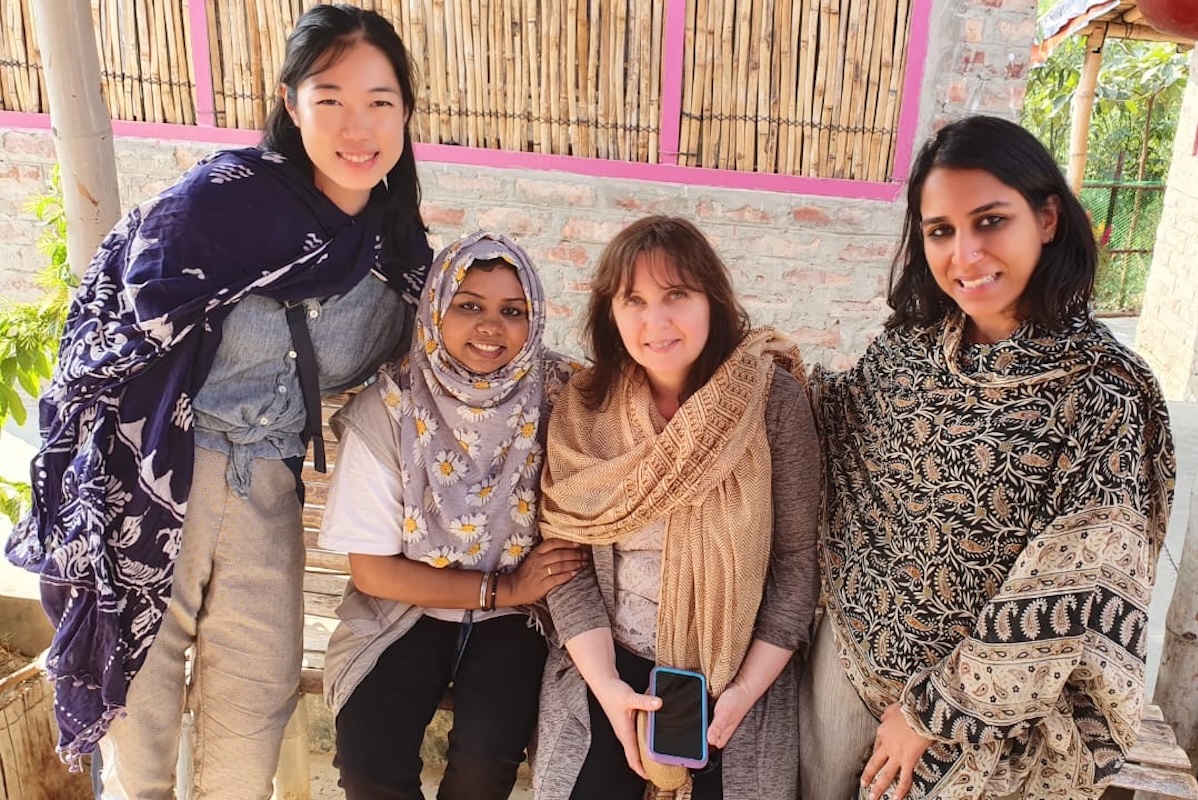
From left to right: TC alumna Cheryl Foo (Ph.D. ’22), Clinical Psychologist at Massachusetts General Hospital and Instructor in Psychology at Harvard Medical School, Mahmooda Mahmood, a clinical supervisor in Bangladesh, Lena Verdeli and alumna Srishti Sardana (Ph.D. ’23, M.A. ’16), Assistant Professor of Psychological & Brain Sciences at University of Wisconsin - Milwaukee and Founding Director of the mhSeva Lab (Photo courtesy of the Global Mental Health Lab)
Verdeli, Associate Professor of Psychology and Education, Chair of the Counseling & Clinical Psychology Department and Founding Director of the Global Mental Health Lab (GMH Lab), supports mental health in the U.S. and abroad by training local professionals and supervised lay counselors to provide evidence-based psychotherapy to people experiencing severe adversity, such as war, prolonged poverty and displacement. Her scholarship focuses on “adapting high-quality psychotherapy for culturally acceptable and feasible delivery in low-resource, high-need settings,” explains Verdeli. She primarily uses Interpersonal Psychotherapy (IPT), a modality that treats depression, anxiety and PTSD by examining the interpersonal and systemic triggers.
IPT is well-suited for people in humanitarian settings because it addresses key relevant stressors, such as death of a loved one, disputes, life changes and loneliness. It can also be effectively administered by laypeople under supervision, reducing barriers to care. “We cannot expect depressed, poor people who have such difficult lives to come to us. We have to find a way to go to them,” says Verdeli, lead author on a provider IPT manual that is distributed, free of charge, in nine languages by the World Health Organization.
To ensure that people in crisis receive sustainable and high-quality services, scalable capacity-building is paramount for Verdeli, whose recent scholarship has centered on refugee communities in Peru, Bangladesh and Lebanon, to name a few. Local practitioners are particularly vital to the successful deployment of IPT. “It's incredibly gratifying to know that we can help people dealing with constant loss and terror improve their well-being by leveraging their social network and personal strengths and resilience,” says Verdeli. “[But] we need local experts, who know their communities, to guide us in how to adapt and deliver IPT in a feasible and culturally-relevant way.”
Verdeli very recently began working with colleagues at the World Health Organization and International Medical Corps to bring IPT to Ukraine and is in the early stages of using IPT with survivors of the Tigray war in Ethiopia. This is in addition to her partnership with the Columbia University’s Mailman School of Public Health, the National Center for Disaster Preparedness and the Columbia Climate School to develop an online master’s degree in humanitarian action at University of Thessaly in Greece.
Learn more about Verdeli’s work and IPT, here.