One of the key challenges researchers face, especially in the age of misinformation, is ensuring their work can effectively reach the general public. TC’s Digital Futures Institute (DFI) is helping scholars apply new research approaches and formats that can grab and hold stakeholders’ attention at a time of extreme digital saturation through its commitment to advancing multimodal research — which uplifts and prioritizes forms of communication beyond the written word, such as audio, video and performance, throughout all aspects of the research process from collecting data to sharing findings.
The ability of these methods to expand the reach of scholarly work was on full display at DFI’s second annual Multimodal Scholarship Showcase, hosted in the Smith Learning Theater this past May. The lively event offered the TC community an opportunity to learn more about the engaging work their peers are producing in partnership with DFI.
“Building support for multimodal practices is central to our mission to create a more just future driven by research, pedagogy and community engagement — we want to make critical research more accessible,” says Lalitha Vasudevan, Vice Dean for Digital Innovation and Professor of Technology and Education. “The showcase is an exciting opportunity for us to build connections and share the work coming out of the Institute, in partnership with TC faculty and students.”
Featuring dynamic panels, video screenings and interactive displays of the range of interdisciplinary scholarship happening at TC, the event also celebrated the Institute's five-year anniversary and achievements. “We live in a world where people communicate in all kinds of ways [and] we're trying to give people at Teachers College, and in academia more broadly, options to communicate in different forms,” said Joseph Riina-Ferrie, DFI’s Associate Director of Educational Media. “We really have come a long way in terms of building support for multimodal scholarship, digital pedagogy and play-based learning over those five years.”
Carousel
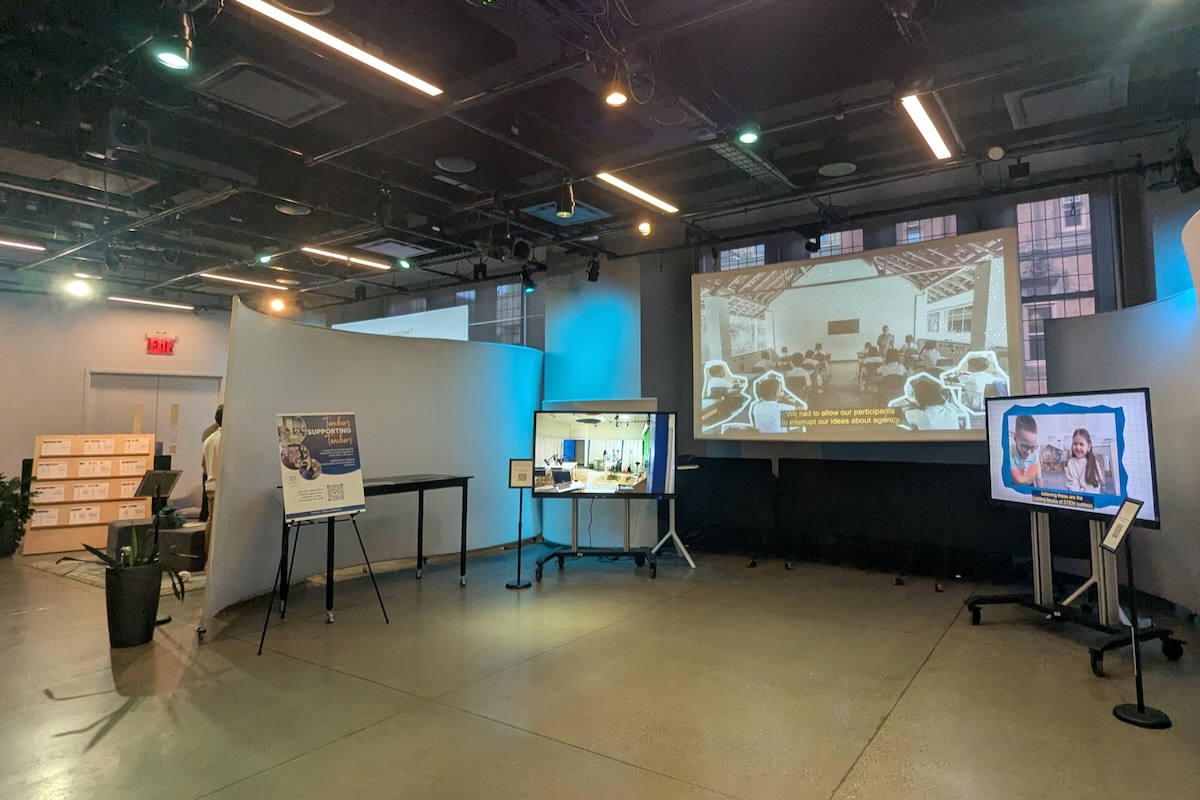
The event showcased a variety of pathways to multimodal scholarship available through DFI such as podcasts and explainer videos. (Photo: Kristin Gorski/DFI)
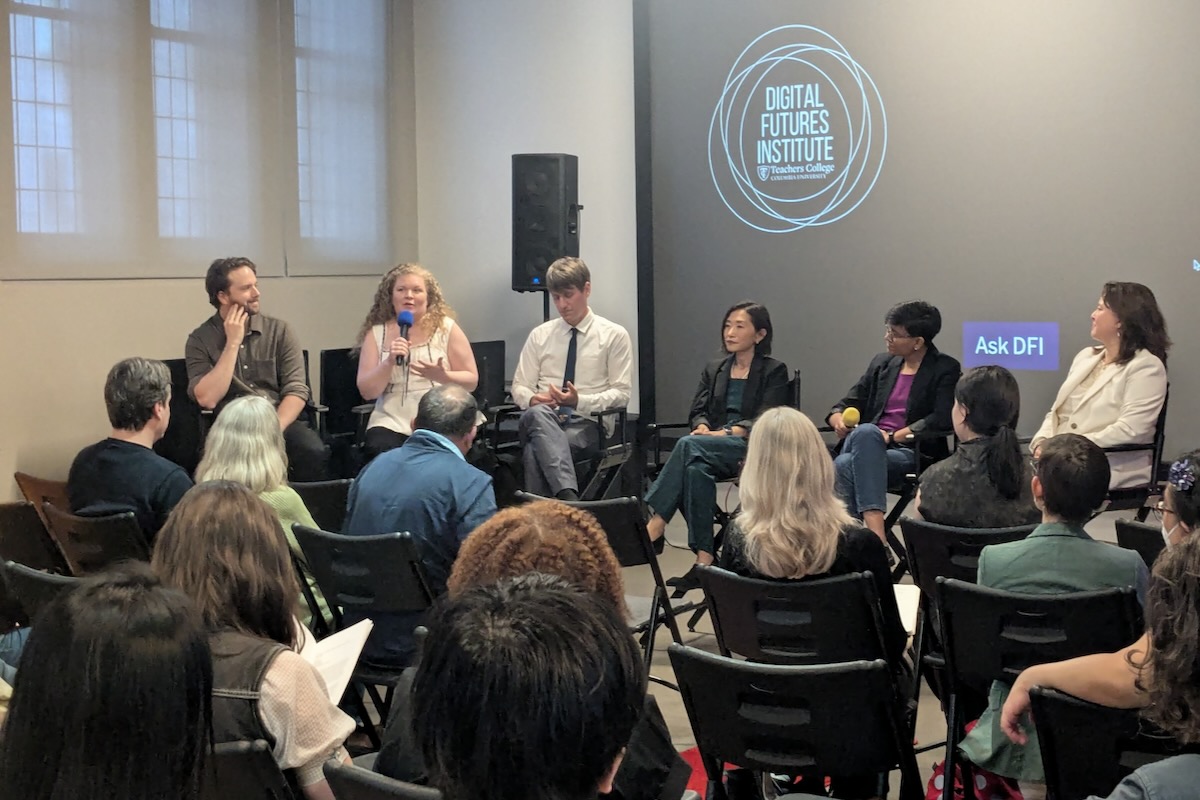
DFI staff and faculty partners answered questions on their multimodal collaborations. From left to right: Billy Collins, Studio and Media Producer; Jen Lee, Media Producer; Lucious Von Joo, Associate Director of Design Education; Haeny Yoon, Associate Professor of Early Childhood Education and Director of Play Initiatives at DFI; Maithri Sivaraman, Assistant Professor of Psychology and Education; and TC alumna Judy Yu (Ed.D. ’09). (Photo: Kristin Gorski/DFI)
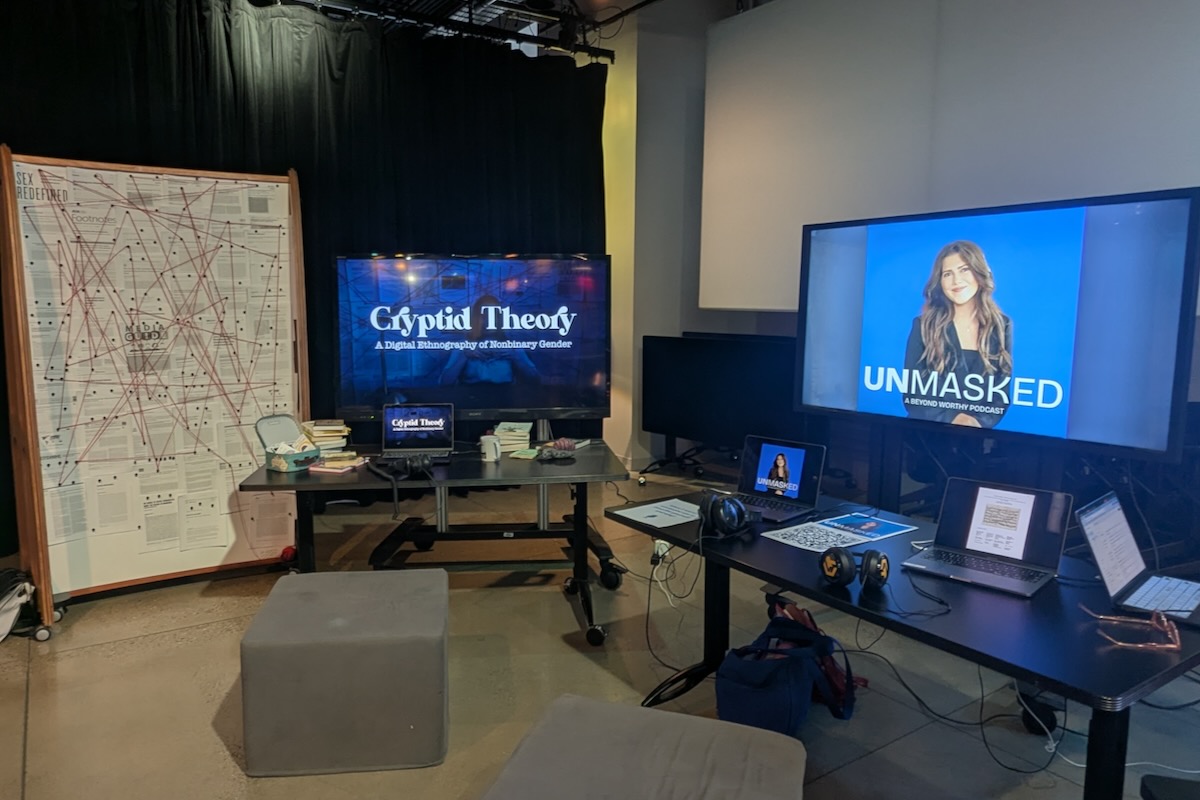
In addition to faculty projects, the showcase also featured multimedia work from students such as Shell Avenant’s (Ed.D. ’26) video essay dissertation, “Cryptid Theory,” and Rachel Peck’s (M.A. ’27) podcast “Unmasked: A Beyond Worthy Podcast.” (Photo: Kristin Gorski/DFI)
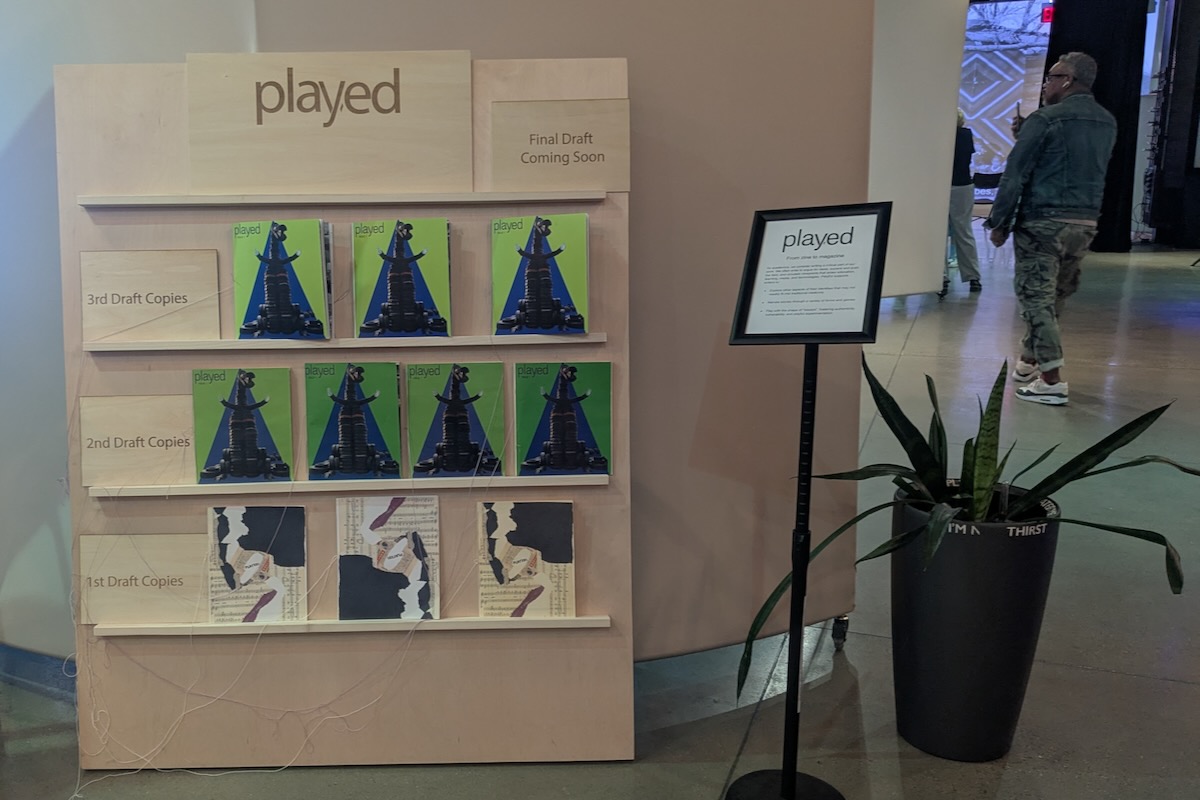
Attendees could page through the upcoming issue of PlayEd, a magazine spearheaded by Haeny Yoon, title, and Lucious Von Joo, Associate Director of Design Education, as a way to further encourage multimodal scholarship and inspire researchers. (Photo: Kristin Gorski/DFI)
Attendees learned about the various pathways of multimodal scholarship available at DFI, explored a retrospective of the Institute’s five years of work and received an inside look at upcoming projects — like the DFI Podcast Network; PlayEd, a magazine dedicated entirely to playful forms of scholarship; and the Video Journal of Education, an academic journal launched in 2026 that focuses on video-based works.
“As DFI celebrates its fifth anniversary, we're looking forward to continuing to shape research impact through multimodal innovation over the next five years,” says Vasudevan. “Our new multimedia outlets offer us another opportunity to do just that.”
One key way that DFI is furthering the conversation is through its Multimodal Faculty Fellowship, which partners TC faculty interested in developing large-scale projects with media producers. A Q&A session between producers and fellows, paired with screenings of completed and in-progress works, was a particular highlight of the showcase as speakers recounted their experiences collaborating together.
Are you a faculty member interested in expanding your work? Submit an application for DFI’s 2026-2027 Multimodal Faculty Fellowship, here!
“Being a DFI Faculty Fellow was maybe the best gift ever at Teachers College,” said Rachel Talbert, Research Assistant Professor at TC’s Edmund W. Gordon Institute for Advanced Study. “It gives you partners in bringing your scholarship into multimodal form and helping it reach beyond the walls of the academy.” With DFI’s support, Talbert worked with Lenape Center and created a collection of videos that bring the curriculum she designed in partnership with the Center to life for students of all ages.
For 2025-2026 DFI Fellow Maithri Sivaraman, Assistant Professor of Psychology and Education, the experience encouraged her to consider her work from a different point of view. “There's often a feeling of disconnect between…a very technical and precise research paper and the audience that it's intended for, which in my case tends to be parents of young children [and] teachers,” said Sivaraman, who is producing a series of explainer videos on the critical role of relational language for early math learning. “The videos that we've been creating have forced me to think about and describe my research in language that's accessible and to break down complex concepts into smaller, bite-sized chunks.”