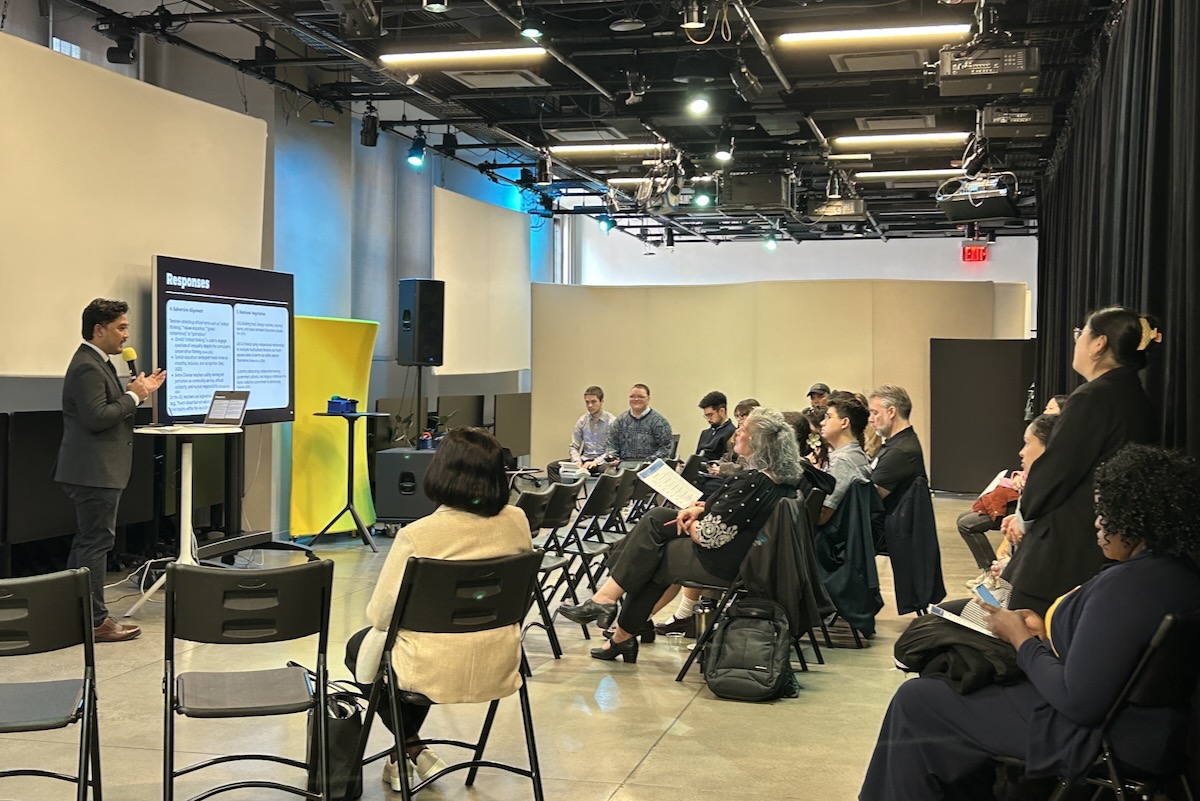
Teachers College awarded the Provost's Grant for Conference Presentation & Professional Development this year to 130 students, who presented their work during a research expo hosted by TC NEXT, the College's career services office. Fourteen grant recipients presented their posters and slideshows to the TC community in the Smith Learning Theater on April 28.
Read highlights of their research below:
Carousel
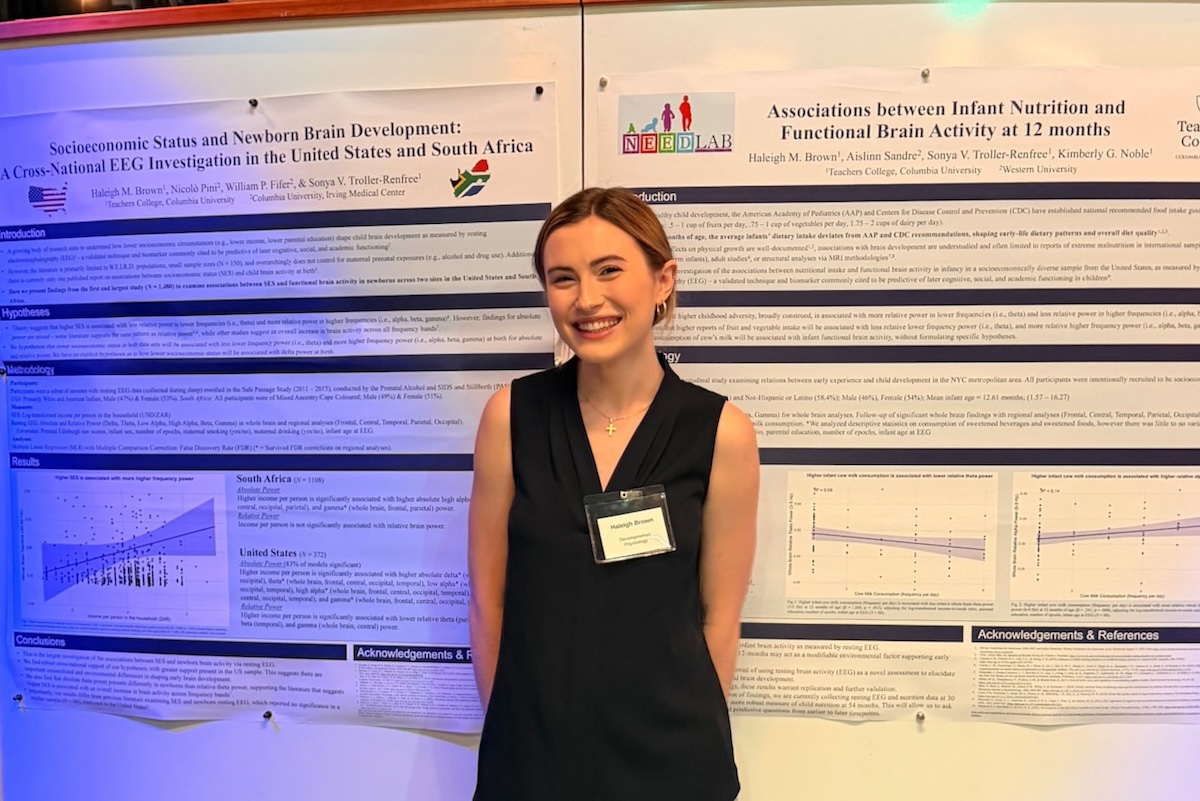
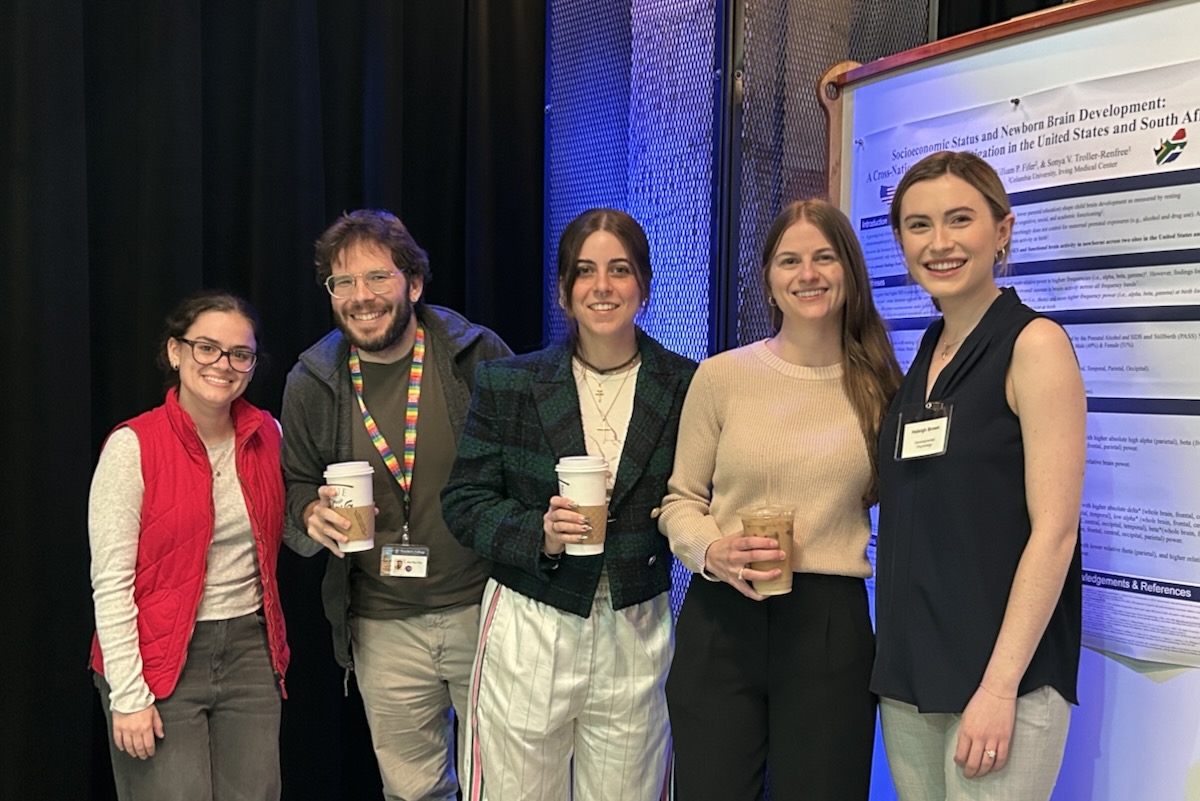
Human Development doctoral student Haleigh Brown with her posters at the research expo (Photo courtesy of Brown)
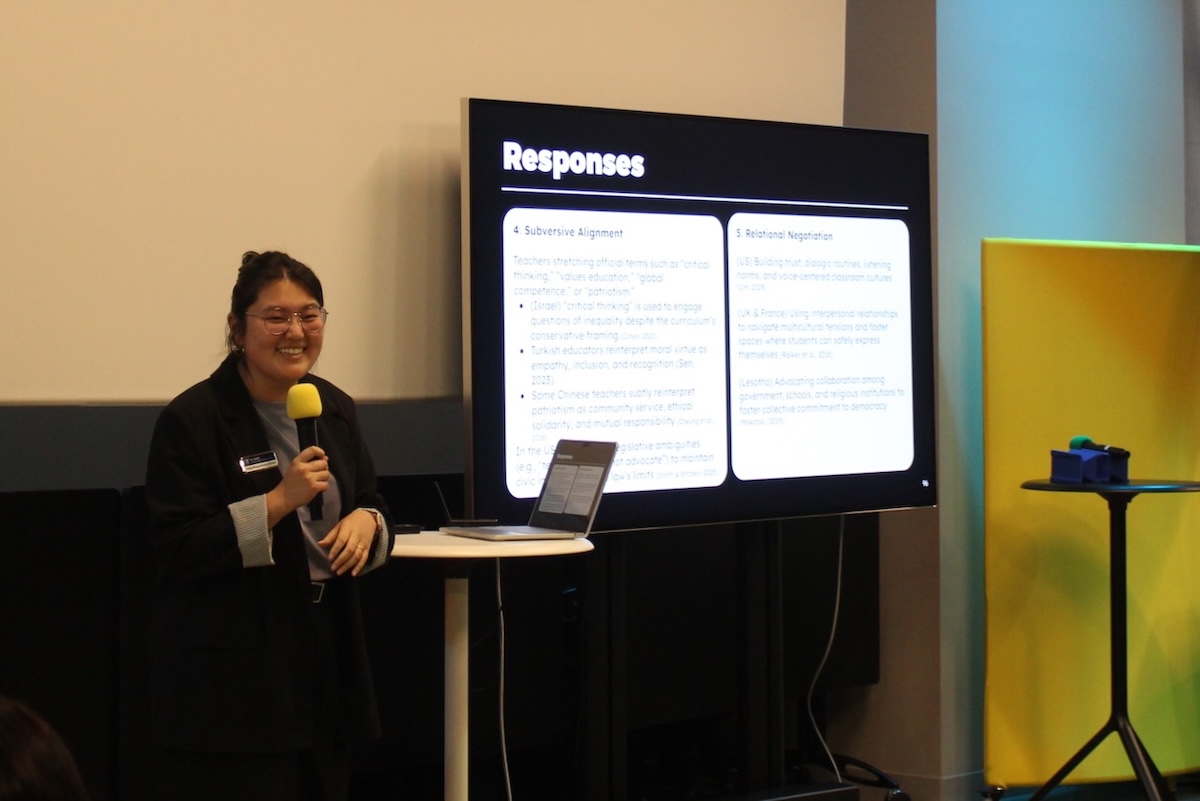
(Photo courtesy of TC NEXT)
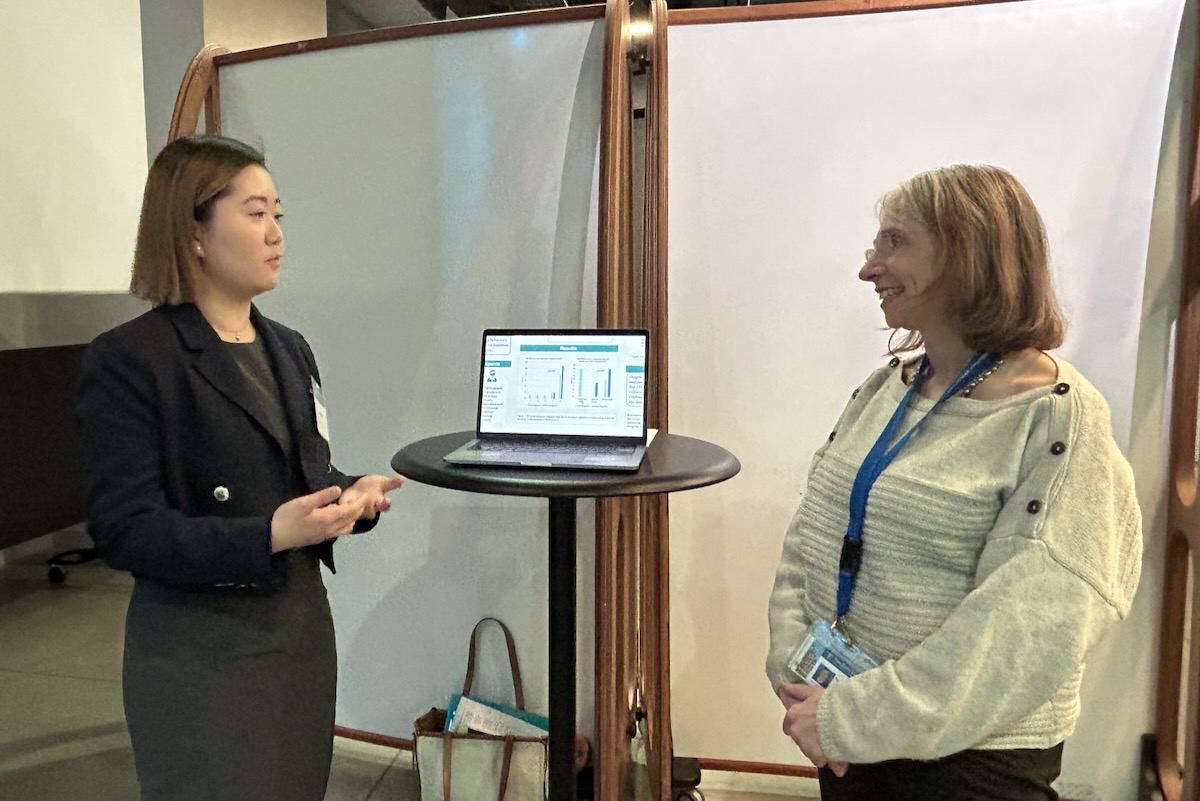
Ya Gao, Behavioral Nutrition doctoral candidate (Photo: TC Archives)
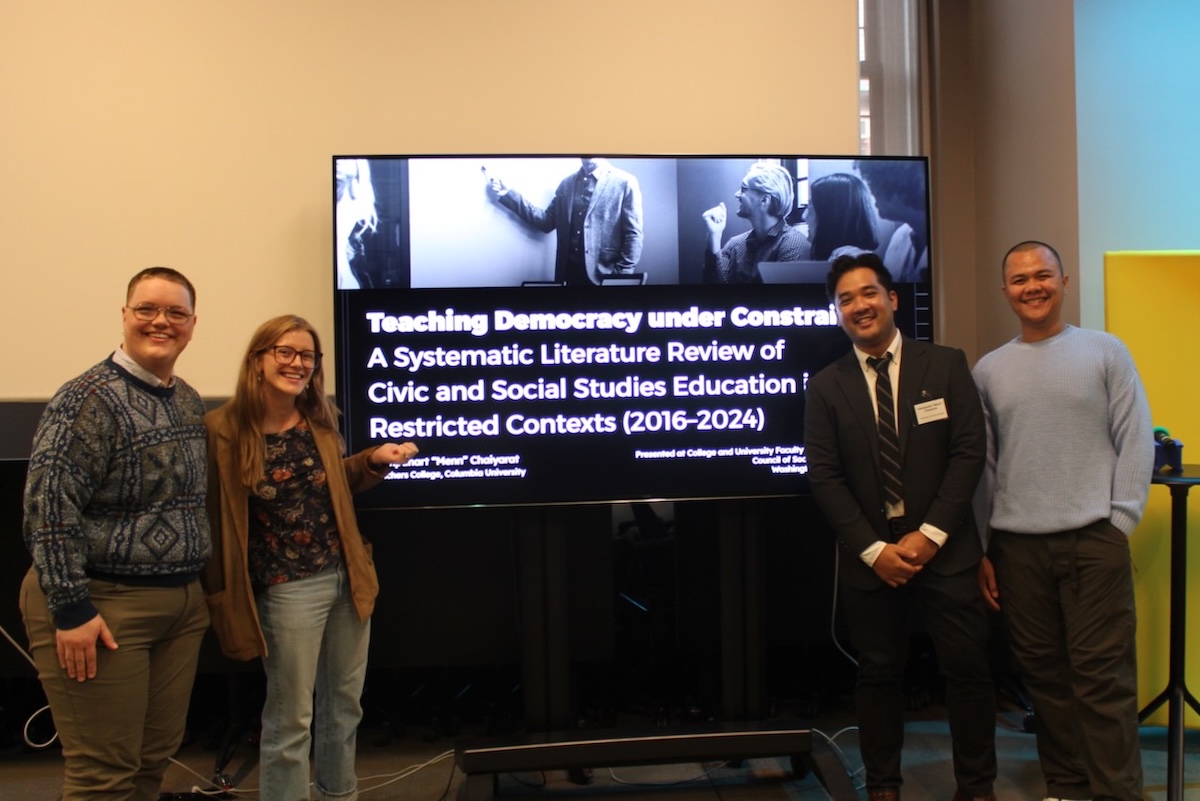
Social Studies Education doctoral student Kampanart "Menn" Chaiyarat (third from the left) with friends after his presentation (Photo courtesy of TC NEXT)
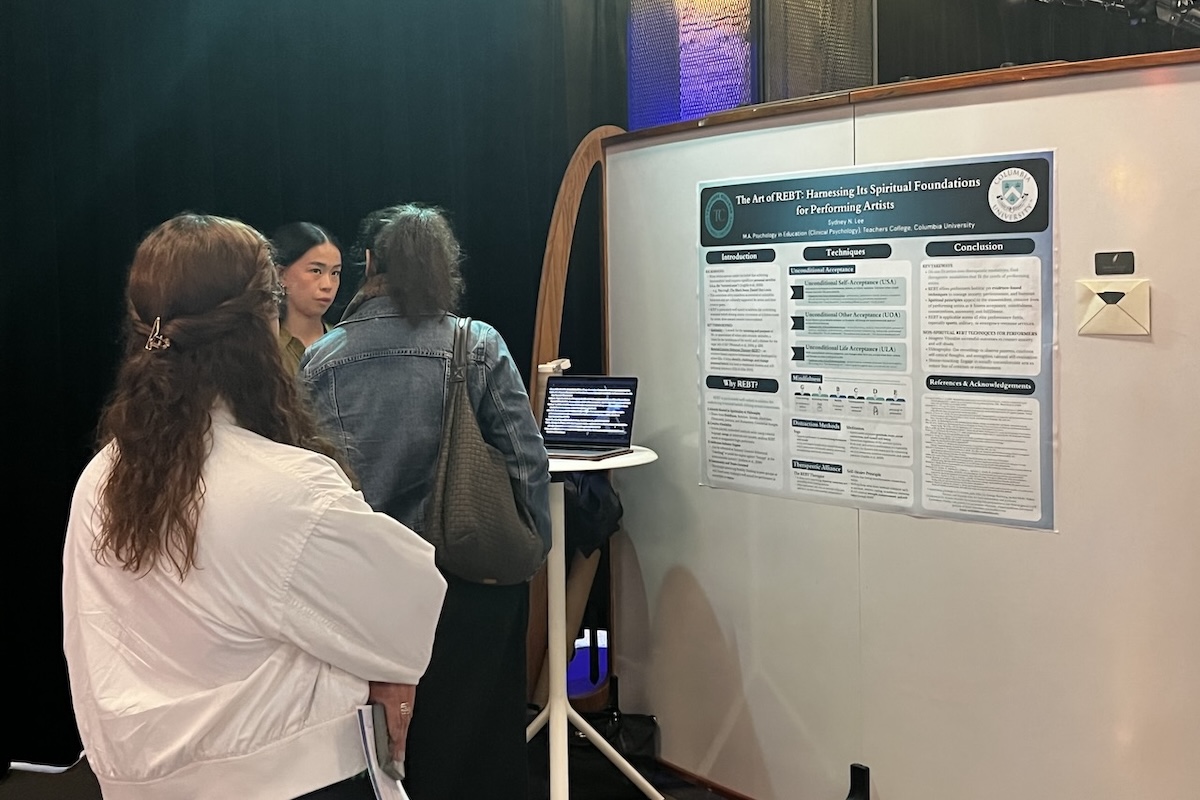
(Photo courtesy of TC NEXT)
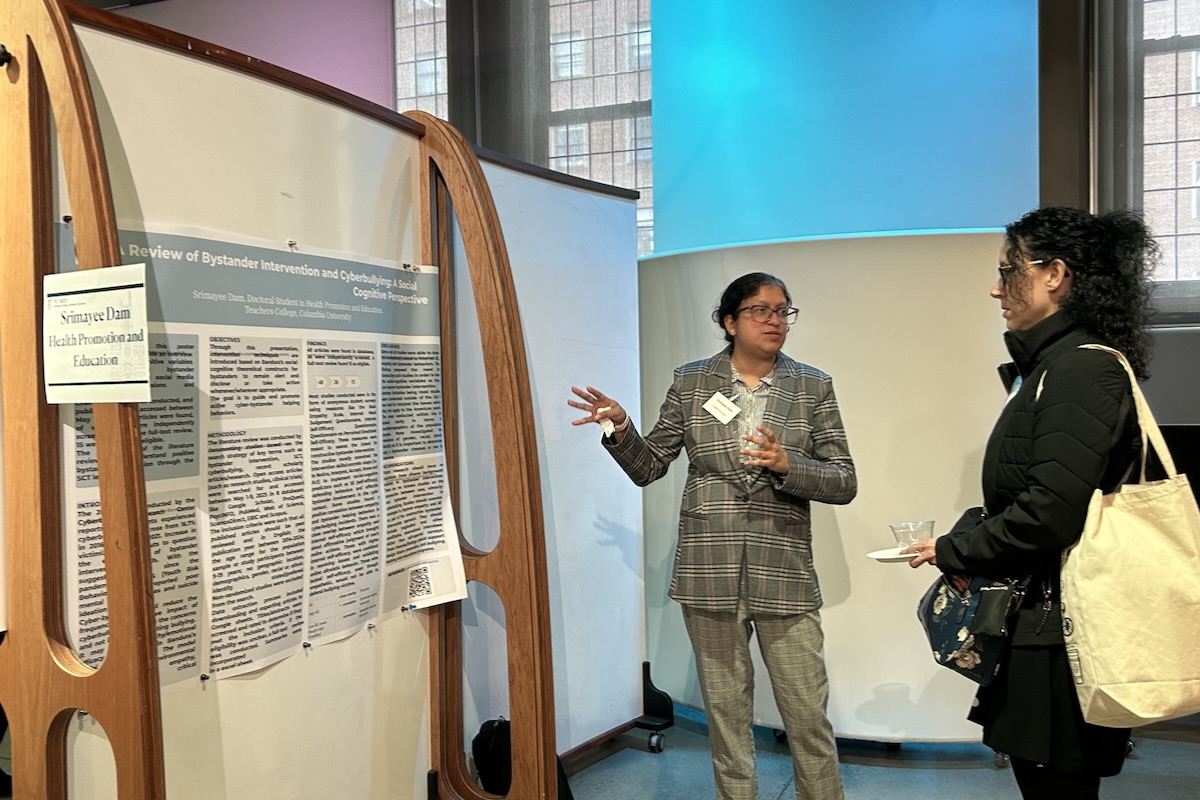
Srimayee Dam, Health Promotion and Education doctoral student (Photo: TC Archives)
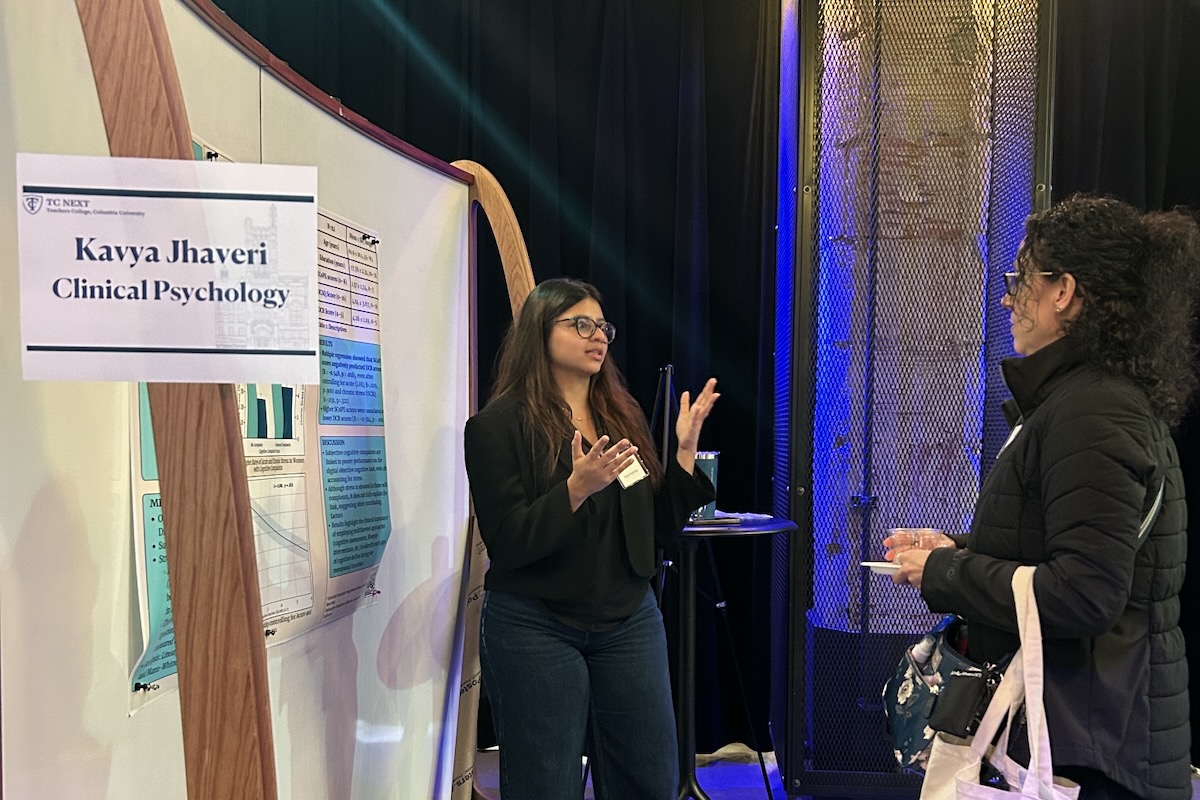
(Photo: TC Archives)
(Photo: TC Archives)
Haleigh Brown (Ph.D. student, Human Development)
Brown presented on two separate research projects examining how early experiences are associated with newborn and infant brain development. Findings from the first presentation — a study conducted with TC’s Kimberly Noble, Virginia and Leonard Marx Professor of Child and Parent Development and Education — examined how differences in early nutrition may be associated with infant brain activity, finding that cow’s milk consumption after 12 months of age was significantly associated with differences in early brain development.
The second study examined data from over 1,400 newborns in the U.S. and South Africa, finding that within hours after birth, family socioeconomic status (SES) was significantly associated with differences in newborn brain activity. The prevalence of this relationship was higher in the U.S. sample, suggesting potential sociocultural and environmental factors that may also contribute to shaping early brain development.
Kampanart “Menn” Chaiyarat (Ph.D. student, Social Studies Education)
Produced amidst global concerns of rising authoritarianism and nationalism, Chaiyarat presented his paper on what it means to teach democracy when democracy itself is constrained. This literature review of 100 studies from 2016-2024 argues that democratic education is shaped by overlapping forces of ideological control, moral and religious framing, nationalist narratives, institutional pressure, censorship, misinformation, and hierarchical school cultures. However, the paper also shows that teachers continue to keep democratic possibilities alive in classrooms through overt resistance, careful compliance, creative use of official language, and trust-building with students.
Caprice Corona (Ph.D. student, M.A. ’24, Applied Anthropology)
Inspired by anthropological considerations of value in globally connected flows of “public culture,” Corona’s presentation explored the impact of child rearing on the career trajectories of opera singers, a vocation that is physically demanding and often lacks geographical and economic stability. Her exploratory research drew from ongoing ethnographic fieldwork with singers in the U.S. Early findings showed that economic precarities, a highly-competitive, niche job market structure, inaccessible social services and gendered expectations around caregiving roles create meaningful obstacles for opera singer parents. Some who are unable to pursue their career while parenting feel a sense of longing for the act of singing and a detachment from a key aspect of their identity.
Arabella Crites (M.A. ’26, Clinical Psychology)
A standard suicide crisis intake takes around 25 to 30 minutes, however, new research from Crites presents an alternative that they found takes much less time without losing efficacy. Crites and her colleagues adapted the Suicide Crisis Inventory-2 and deployed it in large urban emergency department. Results showed that the shortened assessment not only provided accurate results, it was also easy to use and took less than five minutes to complete, making it ideal for the emergency room.
Diana Crum (Ed.D. student, Dance Education)
In this presentation, Crum — a dance educator with 20 years of experience — discussed her experience co-creating a dance-based autobiography with one of her students. The project is part of Crum’s broader research on the types of dance knowledge students develop while navigating a variety of learning spaces.
Srimayee Dam (Ed.D. student, Health Promotion and Education)
Reports of cyberbullying are on the rise, according to the Cyberbullying Research Center, and the increase in prevalence calls for improved bystander intervention. This literature review from Dam established a landscape of cyberbullying scholarship and provided an overview of the social cognitive variables that influence bystander behaviors among youth online.
Betul Demirezen (M.A. ’26, Applied Linguistics and TESOL)
Demirezen’s presentation examined the potential of candidate understanding, a practice within the repair system where a listener interjects to propose their possible interpretation of a speaker’s statement, to support and scaffold learning for English language learners. She argued that while candidate understanding is typically considered a tool to address misunderstanding or check comprehension, it can also sustain language progression and maintain the learner’s agency.
Ya Gao (Ph.D. candidate, Behavioral Nutrition)
Gao’s study explored the efficacy of culturally-relevant nutrition education in some NYC schools. Chinese American students learned about Chinese food traditions through Chinese Heritage & Identity through Food & Nutrition (CHIFAN), a volunteer-based organization promoting inclusive nutrition education. The study found that the program increased nutritional knowledge, encouraged students to try more foods and improved parent-child bonding. Moving forward, Gao hopes to leverage these findings to expand access to culturally relevant food education.
Kavya Jhaveri (M.A. ’26, Clinical Psychology)
For many menopausal women, cognitive difficulties are often attributed to acute or chronic stress, according to this project from Jhaveri. However, data from her study on 112 women at different stages of menopause, suggested that stress alone does not account for the cognitive changes reported by women going through menopause. The results highlight a need for improved assessments and interventions to understand cognitive changes and provide better clinical care to menopausal women.
Sydney Lee (M.A. student, Psychology in Education)
This project from Lee explored the efficacy of Rational Emotive Behavior Therapy (REBT) to support performing artists manage the stressors of their careers. According to Lee, REBT is particularly well-suited for this population because of its holistic, spiritually-grounded approach that can address the emotional and existential struggles artists face and help them build resilience in high-pressure situations.
Caroline Pearsall (Ed.D. candidate, Music and Music Education)
Music is a carrier of culture, values and creativity, however, some music traditions are valued more highly than others, according to Pearsall. Her presentation argued that by taking a less hierarchical approach to music studies, and by exploring all the different intercultural influences in a genre, we can not only bridge cultural divides but the field will also benefit greatly from the knowledge, history and culture contained within non-Western music.
Carolina Sotério (Ph.D. student, Technology, Media and Learning)
Sotério gave a presentation on her interactive science kit, Lab-on-a-Book, paired with an AI chatbot companion, explaining the theoretical foundations and its potential applications in under-resourced schools. With the paper-based kit, middle school students can conduct chemistry experiments without traditional lab equipment while still getting a hands-on educational experience that emphasizes agency and problem solving.
Yiyao Yang (M.S. ’26, Applied Statistics)
Yang’s stage presentation explored the reliability of using generative AI to grade data science assignments. Results found that while GenAI cannot replace human assessors, it can serve as an effective complement and has the potential to improve fairness in grading and support educators.
Eleni Zamagias (Ph.D. student, Mathematics Education)
Zamagias, assistant teaching professor at St. Joseph’s University, presented an evaluation of her institution’s computer science coursework, informed by reflection letters from students who completed computing internships. While the sample size was small, Zamagias gained valuable insights into which courses pose the greatest benefits for students. She plans to use that information to improve program offerings, for example, making a particularly well-liked elective course part of the core curriculum.