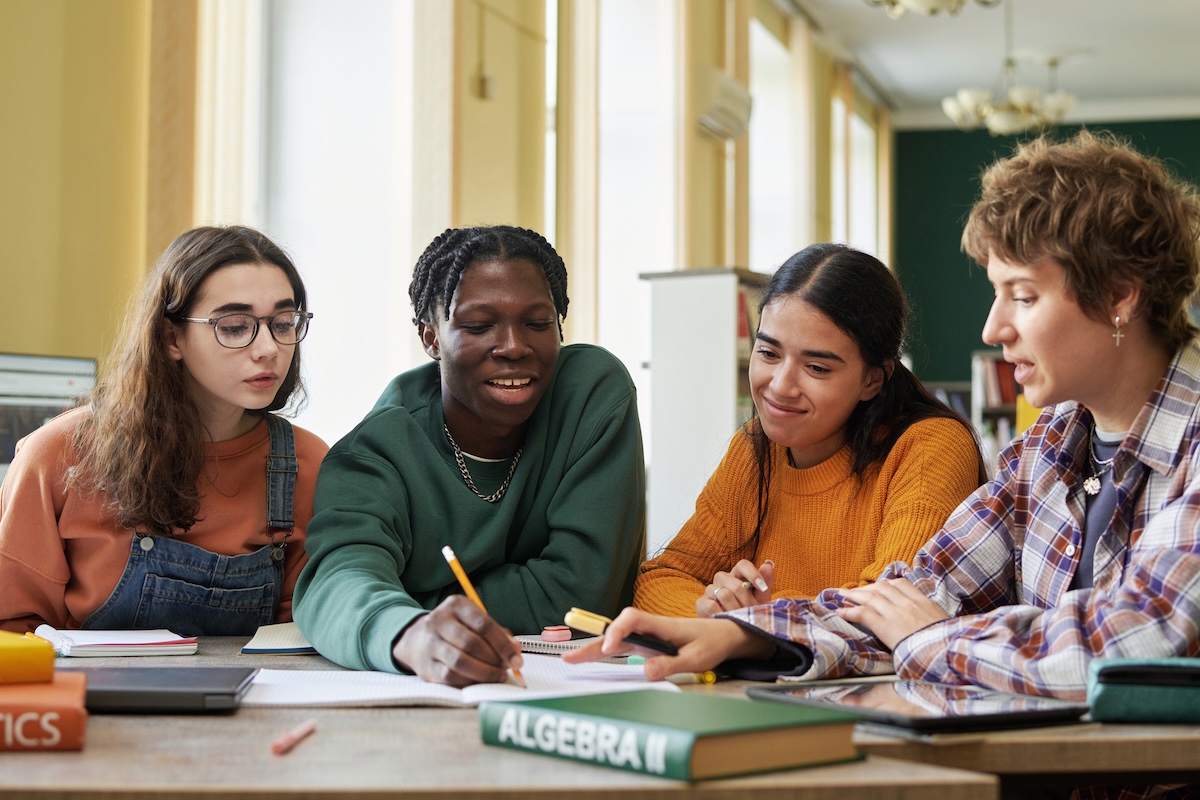
The Research: Through their respective youth participatory action research (YPAR) initiatives, TC’s Jonathan Collins and Beth Rubin bring civic engagement opportunities into local classrooms.
The Impact: Middle to high school students learn how to collaborate with others to solve problems in their local communities and effectively participate in civic life.
Empowering Students in Harlem
What’s the Project? Make Democracy Real, through which students decide how to implement a $6000 grant to improve their school over the course of an 8-week civics education curriculum. Piloted last year, the initiative was established by Jonathan Collins, Assistant Professor of Politics and Education, in 2025 as part of his multifaceted civics education work across Teachers College at the helm of both TC’s Center for Educational Equity and the School Board and Youth Engagement (S-BYE) Lab.
How Collins Helps: Collins works closely with students to strengthen their understanding of democracy’s global history and its core principles, while fostering nonpartisan dialogue about how to improve civic participation in everyday life. This learning then serves as the foundation for how students develop, pitch and vote on their own proposal to improve their school.
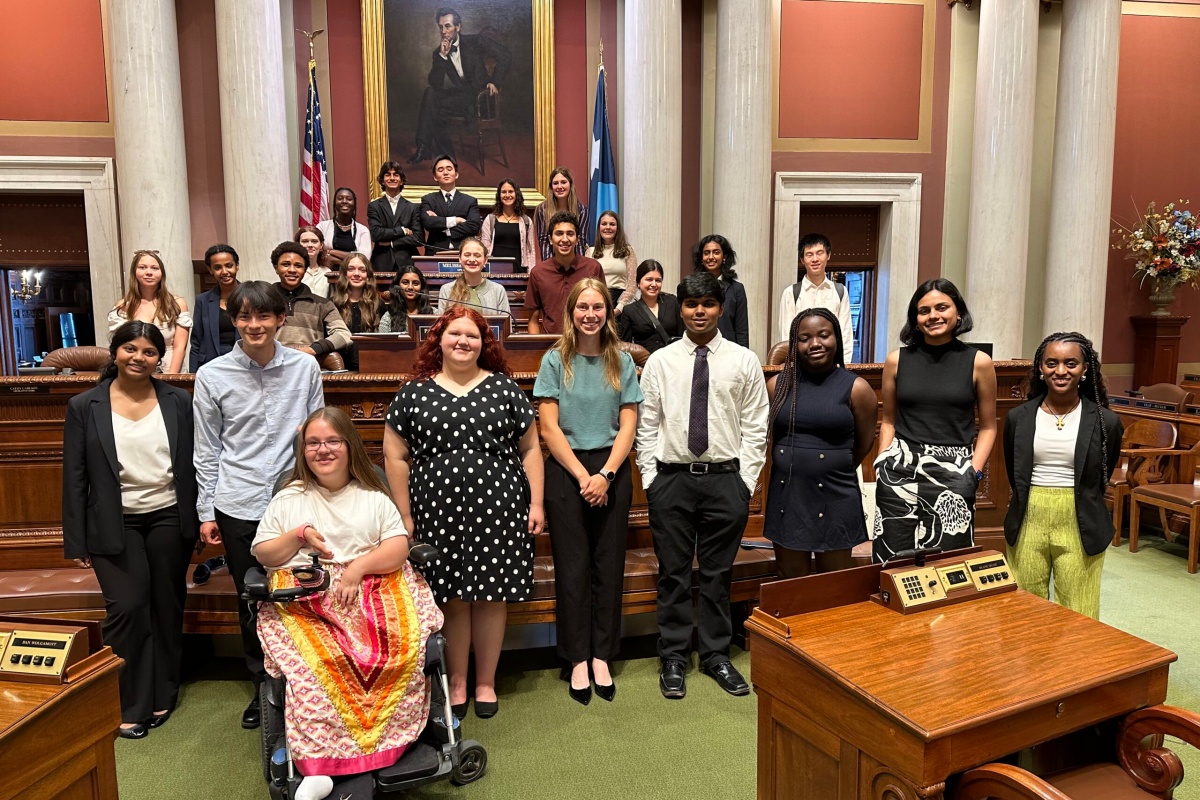
Participants in the Make Democracy Real project. (Photo courtesy of Make Democracy Real)
Make Democracy Real builds on Collins’ latest published research, “Democratizing School Reform: Race, Participation, and Redistribution in Education,” which measured how participatory budgeting curriculum impacted students during a three-year, multi-methodological field experiment.

Jonathan Collins, Assistant Professor of Politics and Education, Executive Director of the Center for Educational Equity. (Photo: TC Archives)
What’s the Impact? Middle and high school students gain hands-on experience in collaborating to fix real problems through democratic principles. Schools that participated in the project’s first year decided to develop an after-school cooking program and dedicate a room for students to reflect, relax and attend to their mental health needs.
In addition to the tangible changes students make in their schools, Make Democracy Real also offers a formative experience for children at a critical inflection point. Raised during a period of immense political division, students participating in Make Democracy Real projects often possess a certain level of ‘apathy’ about civic life, and are part of a broader civics knowledge gap.
“We have kids in our program that are thriving in advanced STEM courses but struggle to identify primary features of our government and of what a democratic institution is,” explains Collins, who has seen first-hand how the projects for Make Democracy Real imbue kids with the agency needed for civic engagement. “The light switch flips, and that's what you're always looking for — the moment where they go from thinking that a democratic process is this foreign, remote, inaccessible thing to seeing it as something that should be at the center of what change in their school can look like.”
What’s Next? Make Democracy Real is underway at four local Harlem schools this fall. Collins hopes to continue to expand access to other schools and refine the program’s curriculum.
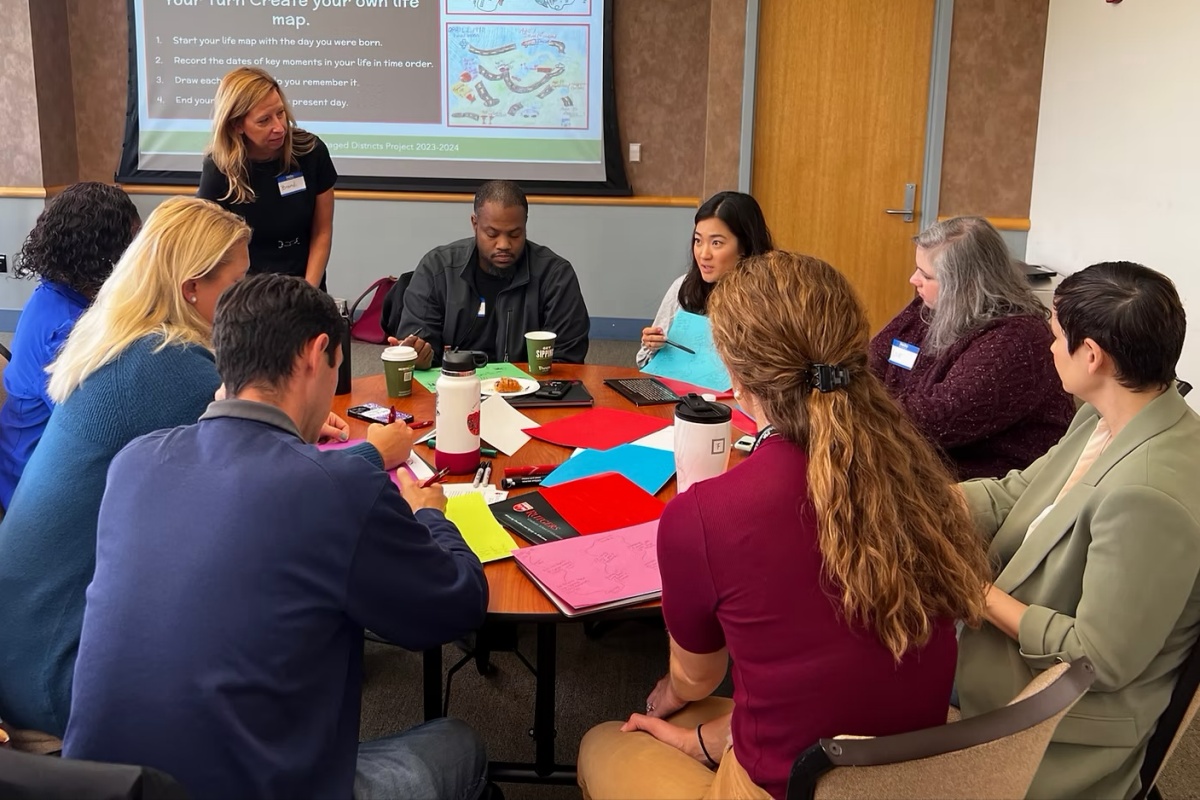
Teachers from the Civically Engaged Districts (CED) Project. (Photo courtesy of CED)
Preparing Teachers for Civics Ed
What’s the Project? The Civically Engaged Districts (CED) Project helps teachers integrate youth participatory action research (YPAR) into their classrooms to foster civic learning and engagement. The project is led by Beth Rubin, Professor of Social Studies Education, and builds on her 15 years of experience leading YPAR initiatives in New Jersey schools. Now in its fifth year, CED has expanded to working with educators in New York City.

Beth Rubin, Professor of Social Studies Education. (Photo: TC Archives)
How Rubin Helps: Since leveraging her research and scholarship to start and expand CED, Rubin has continued to enhance resources available to teachers for YPAR curriculum implementation. Her book Youth Participatory Action Research in Your Classroom: Teaching and Learning for Active Citizenship offers a practical guide for “how civic action research fosters belonging among youth, enhances communication between students and educators, and nurtures civic engagement throughout entire school communities.”
Rubin’s professional development offers teachers an opportunity to take “a more problem-solving, student-centered approach” to help students use social studies to “grapple with big civic questions.” In that pursuit, Rubin sees it as paramount to deliver resources that empower educators to partner with students in meaningful ways.
“Teachers are not interchangeable robots that you can hand a script to. CED supports teachers as they learn the ideas and practices that bring civic learning alive in the classroom,” explains Rubin, who will welcome educators to Teachers College for the next professional development session on Nov. 6. “In YPAR, you don’t know what [issue] the students are going to pick [to work on] and you don’t know what the focus of your class is going to be. That is both exciting and challenging.”
What’s the Impact? To date, CED has prepared approximately 400 NJ educators to lead an estimated 10,000 students in civic engagement projects that empower them to make positive changes in their schools and districts.
Civic learning is not just something that happens in a classroom, and I know through my research that civic learning happens wherever you are.
“Civic learning is not just something that happens in a classroom, and I know through my research that civic learning happens wherever you are,” explains Rubin, who has seen students go on to apply YPAR principles to civic action in their communities. “[This work] goes against the grain of the way schools and classrooms are traditionally set up so we can empower teachers to help young people….The whole point in identifying issues is to have learning be meaningful to kids and not just a homework assignment.”
What’s Next? Rubin is set to bring her YPAR professional development to educators in Japan this spring, with other international collaborations also in the works.