The Research: From TC’s Education for Persistence and Innovation Center, findings on how students can more effectively learn from failure.
The Impact: Helping national leaders from around the globe consider how they may institutionalize failure education in schools to better prepare future generations for major shifts.
TC’s Xiaodong Lin-Siegler, Cleveland E. Dodge Professor of Cognitive Science in Education and founding director of the the Education for Persistence and Innovation Center, drives critical, interdisciplinary conversations about how countries may more effectively invest in human capital and help populations build resilience amid immense change.
Schools prepare young people to succeed, but rarely teach them how to respond when they fail. That gap leaves them poorly prepared for the setbacks and uncertainty of a rapidly shifting world. At the U.N. General Assembly’s 81st session, which opened last month, TC’s Xiaodong Lin-Siegler called on world leaders to invest in human capital that strengthens young people’s capacity to manage failure, adapt to social and environmental change, and build national resilience.
As different nations reckon with population shifts and compounding challenges such as artificial intelligence and climate change, empowering young people to tackle new problems will become increasingly critical
“Society is changing fast, bringing unfamiliar challenges and failures into young people’s lives. Yet we’re not preparing them to face those challenges and inevitable failures in attempting to deal with them,” said Lin-Siegler, founding director of TC’s Education for Persistence and Innovation Center (EPIC). Her 2016 study, “Even Einstein Struggled” showed that changing how students understand struggle can improve their motivation and learning. “Expanding access to education and jobs is essential. So is preparing young people to keep learning when their plans fall apart.”
Why Failure Education Is Necessary
Lin-Siegler’s research found that among young people confronting personal failure and societal change, fewer than 15 percent asked what they could learn or change. About 35 percent indicated that they would avoid or ignore failures, and about 50 percent wanted to retaliate against someone they blamed. In other words, the assumption that students learn from failure automatically is misguided. However, by providing students with a framework of how to navigate failure, educators can prepare them to deal with it more effectively.
Lin-Siegler delivered this message to world leaders during a special event, “Demographic Resilience: Investing in Human Capital for Sustainable Futures,” hosted by the United Nations Population Fund (UNFPA) and the Republic of Uzbekistan. With more than half of its population under age 30, Uzbekistan is one of many nations grappling with the challenges of rapid population growth amid unprecedented demographic, technological, economic, and environmental changes.

Lin-Siegler at the “Demographic Resilience: Investing in Human Capital for Sustainable Futures,” hosted by the United Nations Population Fund (UNFPA) and the Republic of Uzbekistan. (Photo courtesy of TC’s Office of Global Engagement)
“This is where the psychology of failure becomes relevant to national development,” says Lin-Siegler, whose invitation to the U.N. was facilitated by the College’s Office of Global Engagement and the Consortium for Diplomacy and Global Action. “Countries can invest heavily in education, workforce training, and human capital. But developing people's knowledge and skills is not enough if they cannot adapt when those skills become obsolete, their plans collapse, or their efforts fail to produce the hoped-for results. The ability to learn from failure may be one of the critical links between investments in human capital and a society's capacity to change adaptively.”
Why Implicit Learning Is Not Enough
While previous generations may have learned from failure through family guidance, sports, and tough life lessons, Lin-Siegler’s research demonstrates that these means may no longer be enough.
“Families pass down experiences, but do not necessarily have the capacity to help their children or explain it…Just because people have survived the failure of generations does not mean they have understood it,” explains Lin-Siegler. “Schools and institutions can’t replace the wisdom of family, but schools can make learning from failure more accessible, evidence-based and available to all children.”
So, what would failure education look like? Lin-Siegler invites education officials worldwide to consider what would work for their students. She also explores this question in her forthcoming book, Beyond Failure: The Science of How We Gain from Setbacks, now under contract with Avery, an imprint of Penguin Random House.
“This book is not about introducing another course or telling students to work harder,” says Lin-Siegler. “It is about helping them understand why failure occurs, how it impacts us emotionally and cognitively, how to process its psychological consequences, and make better decisions about what to change, when to persist and when to pursue another direction.”
Looking ahead, Lin-Siegler continues to work with Uzbekistan and UNFPA to advance dialogue on national resilience. Her book will come out in 2028.
Leading Conversations: EPIC’s Failing Forward Award
Lin-Siegler’s UN presentation on failure and human resilience is the latest milestone in institutions applying her work on a broader scale. In 2025, EPIC welcomed tech experts to campus to discuss how AI’s future impact on longevity may disrupt human learning, failure and innovation over the lifespan.
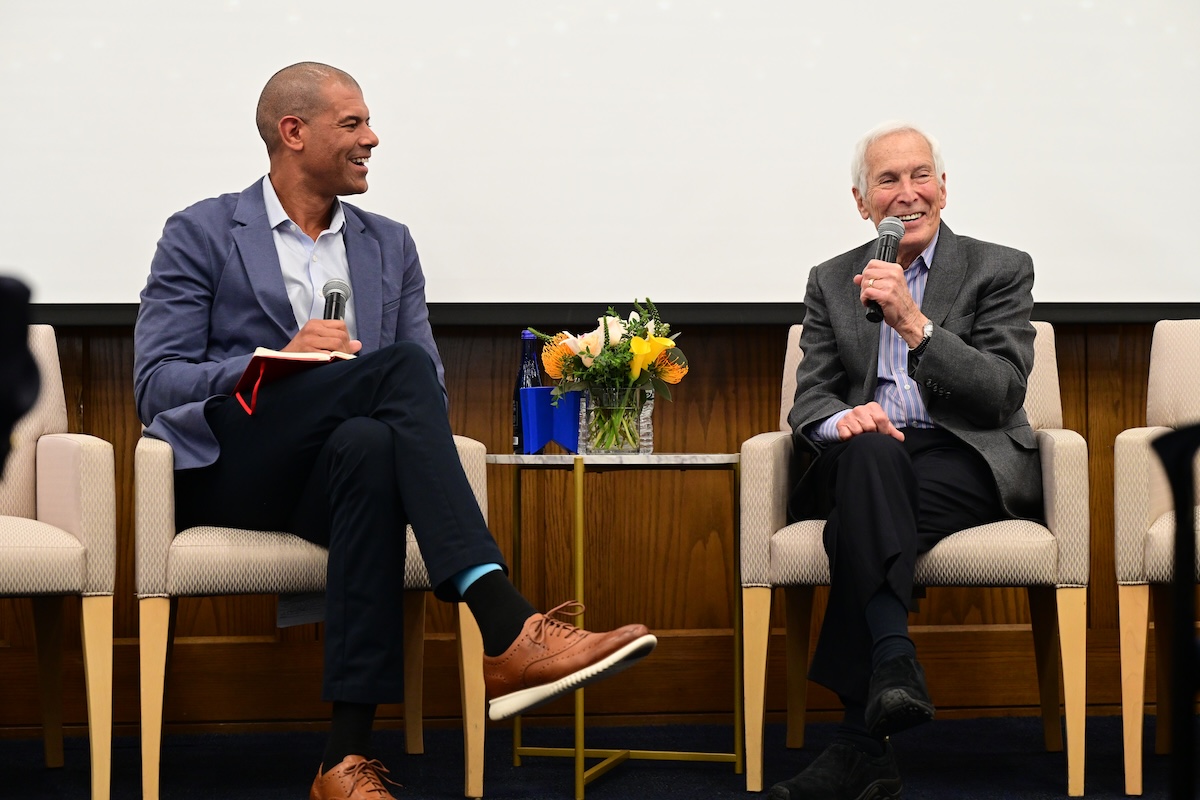
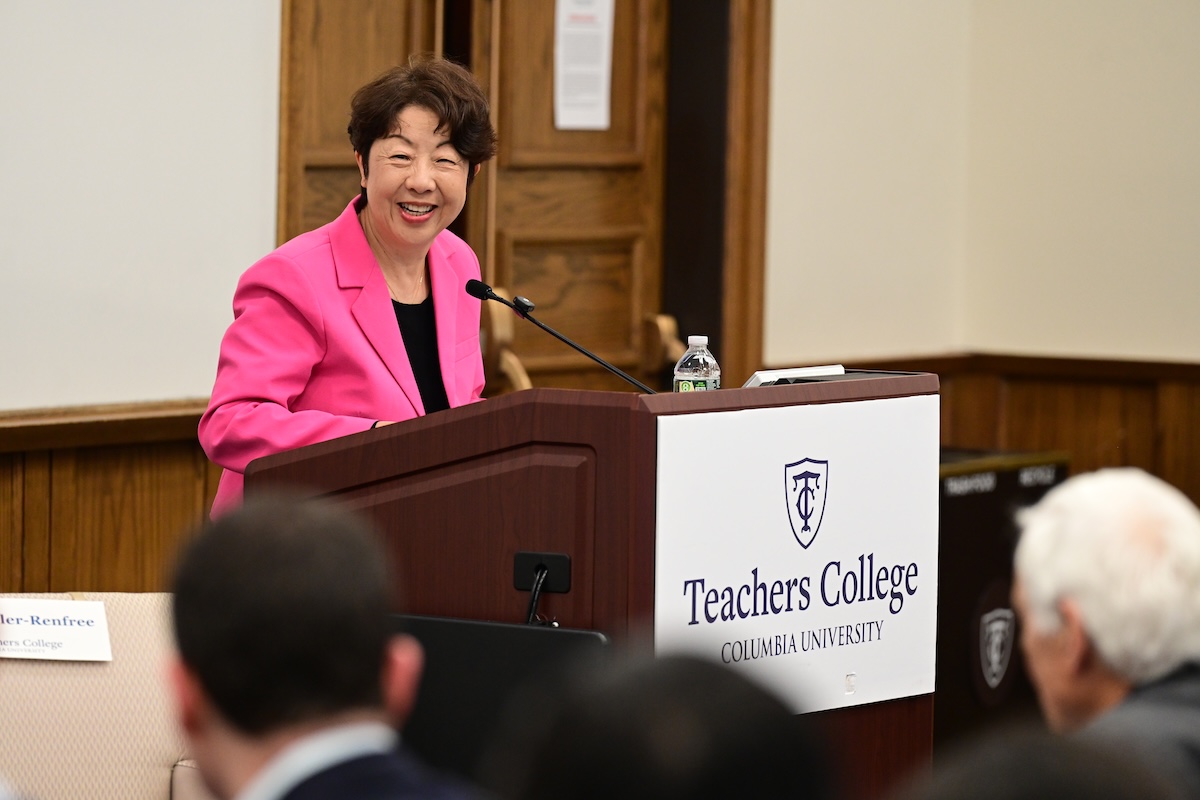
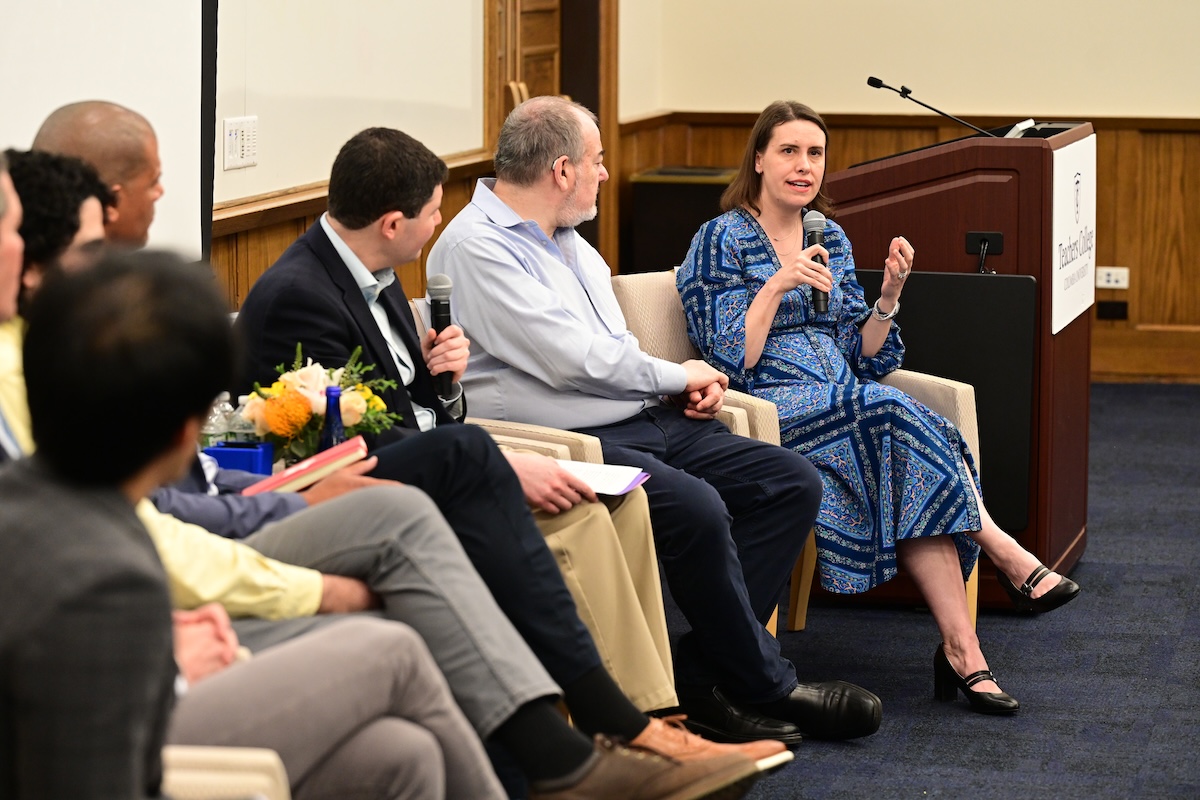
NBA champion Shane Battier (left) and Tony Award-winning producer Michael Price (right) discuss EPIC’s role in helping identify opportunities to more effectively support young people on campus last spring, when Price received the Failing Forward Award. (Photo: Chris Taggart) “Through our research, we have not found one person who is able to achieve a great deal without going through suffering, humiliation, shame, and difficulty in order to succeed,” said Lin-Siegler at the Failing Forward Award ceremony last spring. “Growing up is such a difficult process, and we need to prepare children for the challenging, competitive world ahead.” (Photo: Chris Taggart) TC’s Sonya Troller-Renfree, Assistant Professor of Developmental Psychology (right) joined other experts (including moderator Benjamin Lovett, Associate Professor of Psychology and Education, holding microphone to the left) in a roundtable discussion as part of the afternoon. (Photo: Chris Taggart) Carousel