Global Mental Health Summer Institute

Program Description:
Join a new generation of practitioners transforming mental health care worldwide.
Step into a powerful, immersive learning experience designed for those ready to make a real impact. The Summer Institute in Global Mental Health is an intensive 6-day program that equips you with practical, evidence-based tools to support individuals and communities facing adversity across the globe.
Whether you are a seasoned professional or emerging practitioner, this institute empowers you to translate knowledge into action in low-resource environments and beyond.
This isn’t passive learning. It’s hands-on, collaborative, and deeply applied. You will:
- Practice real-world interventions through interactive case studies and live demonstrations
- Learn from global leaders shaping mental health policy and care
- Build skills you can immediately apply in high-impact, high-need settings
- Join a network of passionate professionals working across countries and disciplines
Delivered through a blend of live sessions, interactive workshops, and collaborative learning, this institute delves into Group Interpersonal Psychotherapy, and the World Health Organization (WHO) Mental Health Gap (mhGap) Humanitarian Intervention Guide (HIG) to give you the tools, knowledge, and community to be part of the solution.
Group Interpersonal Therapy (IPT) training is provided by:
Helen (Lena) Verdeli, Ph.D., M.Sc.
Kathleen (Kathy) F. Clougherty, L.C.S.W.
WHO mhGap Humanitarian Intervention Guide training is provided by:
Peter Ventevogel, M.D., Ph.D.
Fuad El Musa, M.D.
Dates: May 15 - 20, 2026
Times: 9:00am - 5:00pm ET each day
Format: Online Modules with Live Zoom Sessions (See dates and times above)
Our team will support you to participate each day using Zoom audio/video technology, interactive whiteboards and chat features to ensure real-time discussion, Q&A and active participation. You will only need a stable internet connection to participate.
Price: $1,000.00
Discounts:
- 25% discount will specifically be offered to all students (Teachers College/Columbia University and non-Teachers College/Columbia University)
- 25% discount will specifically be offered to all Teachers College/Columbia University alum
- 25% discount will be offered on the registration cost to groups of 3 or more participating from the same institution.
- 50% discount will be offered to participants from Low- and Middle-Income Countries. To see if you qualify, click here.
Discounts cannot be combined and registrants will receive the best discounted price.
For more information, questions, discounts or to register: Email tcacademy@tc.columbia.edu
Please Note: This course is offered on a non-credit basis or for 3 credits. Registration for this course through TC Academy is for the non-credit offering and Academic Credits will not be awarded. For instructions on how to register for the credit offering see below.
This course can be taken for credit in accordance with TC's enrollment policies. If you are not a current student and would like to take this course for credit, please review the Non-Degree Application Instructions page on our website and proceed accordingly. Also, please note that if you plan to take this on a for-credit basis, college tuition and fees will apply. If you are a continuing student in a degree program and have approval from your advisor, you can register for this course beginning on May 4th. This course will follow summer registration and payment deadlines.
Instructor(s)
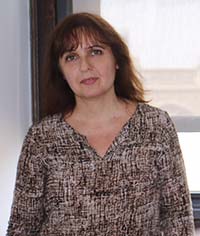
Lena Verdeli, Ph.D., M.Sc., Teachers College, Columbia University
Associate Professor in Clinical Psychology and Director of the Global Mental Health Lab, Teachers College, Columbia University.
Lena Verdeli has been teaching graduate psychology students, psychiatry residents and fellows on research and practice of empirically-supported treatments at Teachers College, Columbia University. Dr. Verdeli’s research focuses on prevention and treatment of mood disorders in adolescents and adults and has received numerous federal and foundation grants for her work. She played a key role in the adaptation, training, and evaluation of psychotherapy protocols used by non-specialists in low-resource areas and has collaborated with academic and humanitarian groups in the US and abroad in treatment studies with depressed adults in southern Uganda and war-affected adolescents in IDP camps in northern Uganda; distressed primary care patients in Goa, India; depressed and anxious persons in Haiti; and traumatized internally displaced women in Bogota, Colombia. She has served as a Technical Advisor for the WHO, Division of Mental Health and Substance Use; Chair of the Research Working group for the Family Committee at the UN; Advisory Board member of the American Foundation for Suicide Research and the Depression and Bipolar Support Alliance; and Member of the Mental Health Advisory Board of the Millennium Villages Project of the Earth Institute.
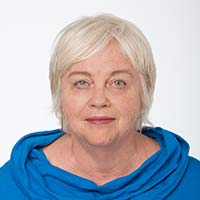
Kathleen F. Clougherty, LCSW, New York State Psychiatric Institute
Instructor in Clinical Psychiatric Social Work (In Psychiatry) at Columbia University
Kathleen F. Clougherty is a senior Interpersonal Psychotherapy (IPT) trainer and supervisor at the New York State Psychiatric Institute, Instructor in Clinical Psychiatric Social Work (In Psychiatry) at Columbia University, an instructor at the Columbia University School of Social Work, and a private practitioner specializing in the treatment of depression in adolescents and adults. She is the co-author, along with Gregory Henrichsen, of Interpersonal Psychotherapy for Older Adults. Ms. Clougherty has been a co-developer, on-site trainer and supervisor in several major international IPT studies including an adaptation of individual IPT for adults in rural India, an adaptation of group IPT for depressed men and women in southwest Uganda, and an adaptation of group IPT for depressed adolescents in internally displaced persons’ camps in northern Uganda. She currently is trainer and supervisor for a randomized controlled trial of IPT for older adults with traumatic grief, and she is developing adaptations of IPT for the World Health Organization and the Millennium Villages Project. Ms. Clougherty has done extensive training and supervision both nationally and internationally for social workers, psychiatrists, and psychologists. She was trained in IPT by Dr. Gerald Klerman, the co-developer of IPT. Ms. Clougherty received her MSW from Columbia University School of Social Work.
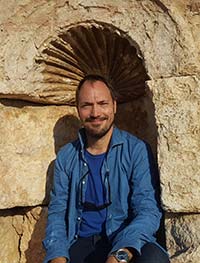
Peter Ventevogel, M.D., United Nations High Commissioner for Refugees (UNHCR)
Senior Mental Health Officer with the UNHCR
Peter Ventevogel is a psychiatrist and a medical anthropologist. Since October of 2013 he is the Senior Mental Health Expert with UNHCR, the refugee agency of the United Nations. From 2008-2013 he was the editor-in-chief of Intervention, Journal for Mental Health and Psychosocial Support in Conflict Affected Areas, published by the War Trauma Foundation. He worked with the NGO HealthNet TPO in mental health projects in Afghanistan (2002-2005) and Burundi (2005-2008) and as their Technical Advisor Mental Health in the head office in Amsterdam (2008-2011). In 2011 and 2012 he also worked as psychiatrist with Arq Foundation, the national trauma expert center in the Netherlands. Peter regularly did consultancies for the World Health Organization and the UNHCR in Egypt, Jordan, Libya, Pakistan, Sudan and Syria. He has been course director of several academic short courses such as the course ‘Culture, Psychology and Psychiatry’ (Amsterdam Masters of Medical Anthropology), and the ‘Practice Oriented Course Mental Health & Psychosocial Support in Post Conflict Setting’ (HealthNet TPO, the Netherlands).
Fuat Elmusa is a psychiatrist and international mental health specialist with nearly two decades of experience in humanitarian settings. He obtained a medical degree from Aleppo University and specializes in psychiatry in Damascus.
Since then, he has held senior roles with WHO, International Medical Corps, and Humanity & Inclusion, working across Turkey, Syria, Libya, Afghanistan, South Sudan, and Egypt. His work centers on integrating mental health care into primary health systems using the WHO mhGAP framework, alongside training, clinical supervision, and policy advisory work. He has co-authored psychosocial support guidelines, published in the American Journal of Public Health and BMC Medicine, and is currently pursuing a master's in psychodynamic therapy at the University of Exeter.
Global Mental Health Lab:
For more information about the TC Global Mental Health Lab, directed by Dr. Lena Verdeli, check out our website: www.tc.columbia.edu/gmhlab
Learning Objectives
- Deliver Frontline Mental Health Care Anywhere
Gain mastery of the WHO’s Mental Health Gap Humanitarian Intervention Guide—an essential framework for providing care when resources are limited and needs are urgent.
- Use Proven Psychotherapy at Scale
Learn Group Interpersonal Psychotherapy (IPT), a globally recognized, evidence-based approach for treating depression and trauma—adaptable for diverse cultural and community settings.
- Strengthen Family & Community Support
Discover strategies to engage families as critical partners in recovery, even in contexts where stigma and barriers are high.
- Address Suicide Risk with Confidence
Develop practical, life-saving skills to assess and manage suicide risk using brief, evidence-based interventions tailored for crisis environments.
Who Should Attend
If you are driven to improve mental health outcomes in challenging environments, this program is for you.
Ideal participants include:
- Mental health professionals
- Healthcare and humanitarian workers
- Policy makers and program leaders
- Students and early-career changemakers
Upon Completion
Participants who successfully complete this course will leave with tools that are scalable, culturally adaptable, and grounded in global best practices.
You will receive:
- A Certificate of Participation
- Training certification in Group Interpersonal Psychotherapy (Level A)
- Practical frameworks you can implement immediately
- A global peer network committed to advancing mental health equity
Testimonials
“I had the pleasure of participating in the Global Mental Health Summer Institute in April 2021. The level of commitment and passion towards building a human rights framework in global mental health, disability policy, and advocacy was incredibly inspiring. The training I received in Group Interpersonal Psychotherapy (Group IPT) was invaluable. The Summer Institute equipped me with tools and resources that have proved to be extremely helpful in my development as a clinician. I feel fortunate to have received support and training from some of the most experienced global authorities in their respective fields. The Summer Institute is by far the most meaningful training program in which I have participated to date. Not to mention, it brought together the most intellectually curious, compassionate, and motivated group of individuals from around the world who I absolutely loved connecting with!”
Alexandra Simon
“The global mental health summer institute was an incredible opportunity to learn with mental health practitioners and policy makers from around the world. Their expertise, as well as the world class teachings from Columbia University and UNHCR were a major driving factor in how I have worked in the area of global mental health in the past year. I strongly recommend this course to anyone interested and passionate about mental health, whether you are considering a career shift, or have been working in the area for many years.”
Leisha Beardmore