The 2026 Climate Education Knowledge Sharing Convening
Program Description:
Join faculty from schools of education for The 2026 Climate Education Knowledge Sharing Convening, a free virtual program hosted by the Center for Sustainable Futures at Teachers College in partnership with the Learning the Earth with Artificial Intelligence and Physics (LEAP) at Columbia University.
Over the past three years, the Center for Sustainable Futures has worked with NYC Public Schools teachers through a Summer Institute on Climate Education, developing an interdisciplinary approach to climate education rooted in research, practice, and partnership. This convening invites faculty in schools of education to learn from that work, explore adaptable resources and models, and consider how climate education can be integrated into professional learning and institutional partnerships.
Through a combination of a synchronous Zoom session and asynchronous materials, participants will engage with insights, questions, and lessons learned from three years of climate education programming in New York City. Together, we will examine how partnerships among universities, school systems, scientists, and educators can support meaningful climate learning and inspire future collaboration.
Dates & Registration
Dates: September 22, 2026
Format: Virtual, with a combination of a live Zoom session and asynchronous materials
Cost: Free of charge
Program Schedule:
- September 22: Introduction to program and overview via Zoom at 12:00-1:00 p.m. EST
- September 23 - 27: Self-paced asynchronous exploration of materials, resources, and insights from past Summer Institutes
Please Note: Zoom sessions will be recorded.
For more information or questions: Email tcacademy@tc.columbia.edu
Faculty
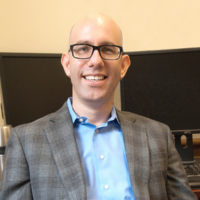
Oren Pizmony-Levy is an Associate Professor of International and Comparative Education and Founding Director of the Center for Sustainable Futures at Teachers College, Columbia University. He holds a Ph.D. in Sociology and Educational Leadership & Policy Studies from Indiana University–Bloomington. His research examines the emergence, diffusion, and impact of global education movements, with a focus on environmental sustainability education, and international large-scale assessments (e.g., TIMSS and PISA). At the Center, he leads two international projects — one on teachers' engagement with sustainability education (OECD's TALIS) and another on climate communication and education.

Christina Torres is a Professional Development Lead at the Center for Sustainable Futures and an Adjunct Professor at the Fashion Institute of Technology (FIT). She holds a Ph.D. in Science Education from Teachers College, Columbia University. Her research examines how young people engage with climate across educational, civic, and activist contexts, with a focus on the intersection of science education, youth climate activism, and climate education. Her work also explores teachers’ professional development in climate education, examining how educators and youth develop the knowledge, identities, and practices needed to participate in climate action.

Ann E. Rivet is Associate Professor of Science Education and Associate Director of the Center for Sustainable Futures at Teachers College, Columbia University, and previously served as a program officer at the National Science Foundation (2016–2019). Her research explores how students develop deep understandings of Earth and environmental science concepts, focusing on scientific reasoning, instructional design, and assessment at the middle and secondary school levels, with particular attention to crosscutting scientific concepts and phenomena-based approaches to learning large-scale Earth systems. She is actively involved in supporting the adoption of the Next Generation Science Standards (NGSS) at both policy and practitioner levels.
Learning Objectives
The 2026 Climate Education Knowledge Sharing Convening is designed to help faculty in schools of education explore ways to advance climate education through research, partnerships, and professional learning.
The goals of our convening are:
- Explore resources, program models, and lessons learned from three years of climate education professional learning with NYC Public Schools teachers.
- Examine how partnerships among higher education, school systems, scientists, and educators can support climate education.
- Identify opportunities for future collaboration and partnership beyond New York City.
Who Should Attend
This convening is designed for faculty, instructors, researchers, and program leaders in schools of education who are interested in climate education, teacher professional learning, or university-school partnerships. We encourage participation from colleagues in the United States and around the world, as well as from those at all stages of their careers and levels of experience with climate education.
No prior experience with climate science is required. Participants should bring an interest in exploring how education can respond to environmental challenges through research-informed practice, collaboration, and partnership.
Upon Completion
Upon completion, participants will have engaged with climate education resources, program materials, and examples of partnership-based professional learning that may inform their own teaching, research, program design, or institutional collaborations.
Participants will also become part of a growing network of education faculty and partners interested in advancing climate education across contexts and building future collaborations.
Important Notice: This is a non-credit program. Completion does not provide academic credit toward any degree program at Teachers College or other institutions. No transcript credit will be awarded.