Foundational Skills in Writing Microcredential
IMPORTANT: To be notified when enrollment is open, add your name and email to the pop up form.
Program Description:
Strong writing instruction begins with an understanding of the foundational skills that give every student the confidence and tools to express their ideas clearly and effectively.
Foundational Skills in Writing, a microcredential developed by Teachers College, Columbia University's Advancing Literacy team of staff developers, equips K–8 educators with evidence-based strategies to teach the building blocks of written expression, from sentence construction and mechanics to composition and voice.
This fully online, self-paced program is designed for educators who want to understand the research behind foundational skills in writing and instructional practice as well as how to scaffold instruction, and create classroom environments where young writers thrive. Developed by TC literacy experts, the coursework blends research with practical application, giving you frameworks you can bring directly into your teaching practice.
New York State educators will earn 20 CTLE hours upon completion, making this microcredential a meaningful and credentialed step in your professional development journey.

Whether you're looking to strengthen your writing instruction from the ground up or refine an already solid practice, the Foundational Skills in Writing microcredential offers depth, flexibility, and rigor.
Format: Asynchronous Online Modules. Takes approximately 20 hours to complete.
Full Microcredential Price: $495
Please Note: This microcredential has rolling registration. Once registration is complete, learners will have 6 months to complete their chosen course.
Any questions? Email tcacademy@tc.columbia.edu
Instructors
Amanda Hartman leads TC Advancing Literacy’s K-2 staff development, designs the coaching institutes, and supports all staff developers with methods of staff development. Amanda has an MA in Bilingual and Multicultural Education from Teachers College. She presents at conferences around the world. She is the coauthor of various professional texts including *One-to-One: The Art of Conferring with Young Writers*, and of several titles in the Units of Study in Reading, Writing, and Phonics series including *Superpowers: Reading with Phonics and Sight Word Power*, *Playing with Phonics*, and *From Tip to Tail: Reading Across Words*.
Heather Burns is a lead secondary staff developer, with particular expertise in small group work and book clubs in middle and high school, as well as critical literacies. She has also been an innovator in working with older readers who need extra support. Heather is co-author of *Critical Literacy Clubs*, a unit of study for grades 7-9. She was both a classroom teacher and a literacy coach for many years in Connecticut and New York City before joining TC Advancing Literacy. Heather has experience with curriculum design and implementation, and holds a Master of Science in Education, a Reading Specialist/ Reading Consultant Sixth Year degree, and an Intermediate Administrative Certificate.

Kristi Guinness’s video work across the pandemic showed educators that virtual learning can be joyous and engaging. Many teachers will especially know her videos with high frequency words and K-2 reading. She is also a co-author of the first grade unit, *Building Good Reading Habits*. In her work as a staff developer, Kristi enjoys supporting schools as they take on new curriculum and, most importantly, helping all students in becoming strong and passionate readers and writers. Before joining TC Advancing Literacy, Kristi taught both primary and upper grades in New York City. She holds an MA in Curriculum and Teaching from Teachers College.

Molly Picardi is a primary staff developer and classroom libraries specialist at TC Advancing Literacy. She works with teachers, coaches, and school leaders in the New York City area and across the country to strengthen their reading and writing instructional practices and to design engaging, student-driven classroom libraries. Prior to joining Advancing Literacy, Molly taught primary and upper grade special education in New Orleans and New York City. She is especially passionate about fostering inclusive classroom communities and helping all students to fall in love with reading and writing. She is a co-curator in the TCRWP Classroom Libraries and is a coauthor of *Becoming Experts and Writing Research-Based Nonfiction*.
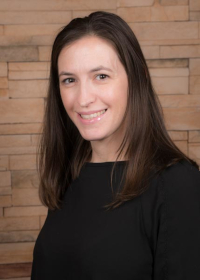
Nancy Brennan brings experience and interest in working with recent immigrants and multilingual learners, as well as neurodiverse students, to her work. Nancy taught in Queens for many years prior to joining TC Advancing Literacy. There she gained experience working with a large population of multilingual learners in both general education and inclusion settings. Her classroom served as a literacy lab site for teachers and administrators. At Advancing Literacy, she continues this interest in inclusion and access.
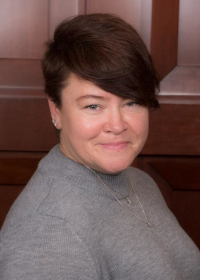
Natalie Louis has been a lead researcher in TC Advancing Literacy’s work with phonics instruction and science of reading. Natalie brings years of classroom experience and staff development in thousands of classrooms, as well as humor and common sense to all of her work. She has been instrumental in supporting educators to teach more phonics with grace and expertise. Natalie has also supported teachers in grades 3-8 in understanding the phonics needs of their students, and in innovating ways to incorporate this knowledge into curriculum and instruction. Natalie is a co-author and thought partner of many texts in the K-2 Units of Study in Reading, Writing, and Phonics.
Learning Objectives
By the end of this microcredential, participants will be able to:
- Build instructional confidence across transcription, text structure, critical thinking, syntax, and craft.
- Teach the writing process explicitly via structured lessons that guide students through planning, drafting, revising, editing, and publishing.
- Develop systematic transcription fluency through foundational instruction in handwriting, spelling, and keyboarding to build student automaticity and reduce cognitive load.
- Connect reading and writing intentionally, using mentor texts to highlight and replicate genre-specific features.
- Establish predictable daily writing routines that allow students to write for diverse, authentic purposes.
- Assess student writing in real-time to provide immediate, actionable, and asset-based feedback that drives growth.
- Cultivate an inclusive, culturally responsive community that positions every student as a capable writer while valuing their cultural and linguistic identities as assets.
- Deploy targeted instructional scaffolds to ensure multilingual learners and students with diverse needs succeed in rigorous writing tasks.
- Identify the key developmental stages of writing in elementary-aged students and use that knowledge to set appropriate instructional goals.
- Apply evidence-based strategies for teaching foundational writing mechanics, including grammar, punctuation, spelling, and sentence structure.
- Use formative assessment tools to diagnose student writing challenges and design targeted, responsive instruction.
- Scaffold the writing process—from prewriting and drafting to revision and editing—in ways that support writers at varying skill levels.
- Foster student motivation and writing identity by creating a classroom culture that values voice, effort, and growth.
Who Should Attend
This microcredential is designed for K–8 classroom teachers, literacy coaches, and instructional specialists looking to strengthen their understanding of research related to writing development and instruction. If you're ready to move beyond simple, isolated, teacher-driven writing tasks and instead, build a writing classroom rooted in research and student agency, this program is for you.
Upon Completion
Participants who successfully complete all six microcourses of microcredential will earn a verified Certificate of Participation and an official Digital Badge—valuable credentials that showcase your commitment to professional growth and can be shared on LinkedIn or digital portfolios.
View our sample program badge and certificate below:


Licensed educators in NY state are also eligible for a Continuing Teacher Leader Education (CTLE) certificate for a total of 20 CTLE hours for the microcredential.