Introduction to Philosophy:
Inquiry, Critical Thinking & Debate
Program Description:
How do we define justice, determine what is true, and decide how we should live together?
In Introduction to Philosophy: Inquiry, Critical Thinking & Debate, high school students explore some of life's most challenging questions through philosophical discussion, critical thinking, and creative expression. Students examine how philosophical ideas can help us understand contemporary issues, question assumptions, and consider different perspectives on the world.
Led by Sara Hardman, Assistant Professor of Teaching in the Philosophy and Education program at Teachers College, Columbia University, alongside a team of trained philosophy facilitators, this summer pre-college program introduces students to philosophical inquiry through collaborative dialogue and creative activities. Topics include justice, democracy, identity, climate change, truth, beauty, and the purpose of education, with opportunities to connect philosophical ideas to literature, poetry, film, and improvisation.
A rigorous, discussion-based introduction to philosophy
Students learn to construct reasoned arguments, evaluate competing viewpoints, ask thoughtful questions, and support their ideas with clear explanations. Through guided discussions and creative projects, they practice listening carefully, engaging respectfully with disagreement, and applying philosophical frameworks to complex social and ethical questions. Students also have the opportunity to create an original philosophical work, such as a zine, piece of creative writing, or performance.
Who should consider this program?
Designed for students ages 14–17, Introduction to Philosophy is ideal for teenagers interested in philosophy, the humanities, ethics, literature, social issues, or pre-law studies.
No previous philosophy experience is required. Students strengthen their critical thinking, discussion, and writing skills while exploring how philosophical inquiry can help them engage more thoughtfully with complex questions in college and everyday life.
Dates: July 12 - 23, 2027
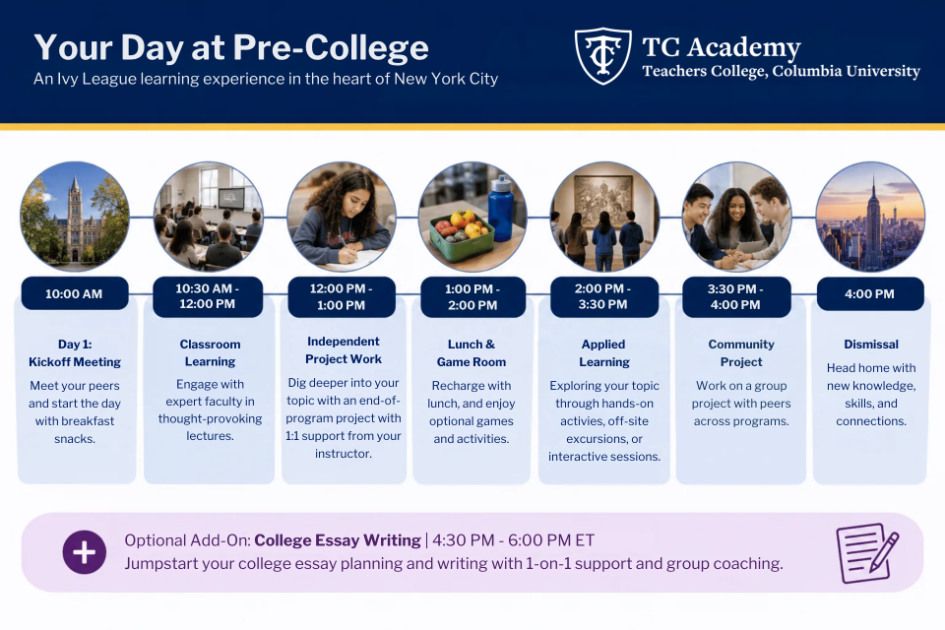
Times: 10:00am - 4:00pm Monday through Friday
Location: In-person at Teachers College
Price: $3,995
Questions: Email tcacademy@tc.columbia.edu
Instructor
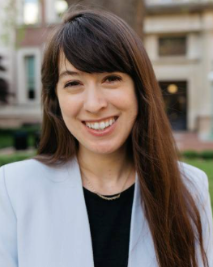
Sara Hardman is a Lecturer in the program of Philosophy and Education at Teachers College, Columbia University. She received her doctorate in Philosophy and Education from Columbia University in 2022, and her primary research interests include aesthetics and feminist philosophy. In her current role, she has taught courses such as “Philosophies of Education,” “Ethics and Education,” “School and Society,” “Education and the Aesthetic Experience,” and “Critical Perspectives in Philosophy of Education.” Sara studies and researches education in the broad sense of the term, one that includes schooling as much as it includes human development. She encourages her students to think about how we become who we are, and how we relate to the world and to others. Sara is also the coordinator of the program’s Philosophy Outreach group, where she organizes opportunities for students to learn how to facilitate pre-college philosophical conversation. She is also a long-time supporter and volunteer for the New York High School Ethics Bowl.
Sara will be working with a team of faculty and doctoral students from the program, who have all been trained in pre-college philosophy facilitation, particularly the Philosophy for Children method. They have a passion for introducing philosophy to K-12 students, and expanding students’ skills in the art of philosophical discourse.
Learning Objectives
By the end of Introduction to Philosophy: Inquiry, Critical Thinking & Debate students will be able to:
- Strengthen college-level critical thinking and communication skills by synthesizing ideas, engaging with complex questions, and expressing reasoned perspectives in spoken and written form.
- Explain foundational philosophical concepts by describing key ideas related to justice, democracy, truth, identity, beauty, and ethics.
- Analyze contemporary social and ethical questions by applying philosophical concepts to issues such as climate change, artificial intelligence, gender norms, and social responsibility.
- Construct clear philosophical arguments by presenting a position, explaining the reasoning behind it, and supporting claims with relevant examples.
- Evaluate competing perspectives by identifying differences in reasoning, questioning assumptions, and considering alternative interpretations of a philosophical problem.
- Participate in productive philosophical dialogue by articulating ideas clearly, listening attentively, asking substantive questions, and responding constructively to disagreement.
- Connect philosophy with the arts by interpreting how literature, poetry, film, theater, or other creative forms explore philosophical questions.
- Develop an original philosophical work by communicating an idea or argument through a creative format, such as a zine, piece of writing, or performance.
Who Should Attend
This program is suitable for any high school student who has a desire to ask big questions, dialogue about philosophical issues, and create a work of philosophy. It is suitable for both students who have philosophy experience and for students who are completely new to the subject.
Students interested in any undergraduate program will find that it intersects with philosophy at its foundation. However, this program might be a particularly relevant stepping stone for students interested in studying subjects in the arts and humanities, as well as for pre-law students.
Please Note: TC Pre-College courses are open to students ages 14-17. All courses are conducted in English and learners should have sufficient fluency to participate.
Upon Completion
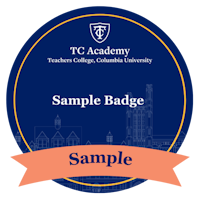
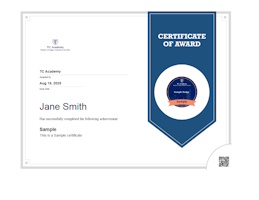
Participants who successfully complete this program will earn a verified Certificate of Participation and an official Digital Badge—valuable credentials that can be shared on LinkedIn or digital portfolios.
View our sample program badge and certificate below: