Reading Assessment and Intervention: Research to Practice for Classroom Teachers

Program Description:
Every classroom has struggling readers, students whose difficulties may stem from gaps in foundational instruction, uneven skill development, language and learning difference, or even dyslexia. Yet many teachers receive piecemeal or fragmented professional development in a complete Science of Reading framework and the assessment tools needed to identify and address these challenges.
This two-week, self-paced professional development course bridges research and practice, equipping K–12 educators with a deeper understanding of how reading develops, what can disrupt that development, and what to do about it. Grounded in current research, the course moves through five focused modules covering the core components of reading, risk factors for reading difficulties and disability, evidence-based models for differentiating instruction, and targeted intervention strategies applicable across grade levels.
Learning activities are designed for real classroom application, whether you're teaching in person or remotely. Participants complete the course at their own pace over two weeks and submit a final project that combines theory with practice: a structured reflection on course content and a plan for applying what you've learned in your own setting.
This course is appropriate for classroom teachers, special educators, academic intervention specialists, and other educational professionals working with readers across the primary grades through high school. By extension, the course is also appropriate for adult basic education students.
Dates & Registration
Dates: January 4 - 18, 2027
Format: Online, Self-Paced Modules
Time Commitment: Takes approximately 10 hours to complete
Price: $295
- For bulk enrollments of 5 of more participants, please contact TC Academy for a 10% discount.
Questions: Email tcacademy@tc.columbia.edu
Faculty
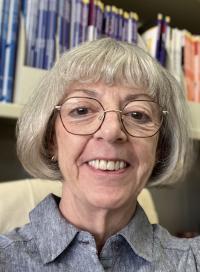
Susan Garni Masullo
Associate Professor of Teaching; Director of the Advanced Certificate in Literacy
Susan Garni Masullo, Ph.D. is a Senior Lecturer and Director of the Advanced Certificate in Literacy offered within the programs in Applied Sciences of Learning and Special Education at Teachers College. Formerly, she was the Director of the Reading Practicums in the Reading Specialist Program at Teachers College. Prior to coming to TC, Dr. Masullo had an extensive career as a reading/learning specialist working with children, adolescents and adults who struggle with literacy as well as academic and learning tasks. Her professional interests involve the clinical applications of research to literacy assessment and intervention across the lifespan. She is frequently asked to consult in K-12 schools and professional organizations on reading, writing, and learning disabilities, and presents at conferences on related topics. She currently serves on the Board of Advisors of the New York Branch of The Reading League. In her free time, she enjoys maintaining a small private practice working with older adolescents and adults.
Learning Objectives
At the completion of this course, participants will be able to:
- Identify the major components of skilled reading, explain how they develop across grade levels, and recognize where and why processes can break down
- Describe how cultural, linguistic, cognitive, and neurological factors shape reading development for both typically developing and struggling learners
- Apply current research-based models of reading to make more informed decisions about assessment and differentiated instruction
- Recognize the defining characteristics of dyslexia, other reading disabilities, and factors that put readers at risk, and plan for targeted interventions to address those characteristics
- Select and implement evidence-based intervention strategies targeting word recognition, decoding, spelling, fluency, vocabulary, and comprehension for students across the primary grades through high school
- Develop an action plan for applying new knowledge and strategies within your own professional context
Who Should Attend
This course is appropriate for general education classroom teachers, special education teachers, content area teachers, academic intervention specialists, and other educational professionals who work with both typically developing and struggling readers in the schools and related settings.
Its purpose is to provide these professionals with insight into reading acquisition and development, reasons how that development can be jeopardized, methods for differentiating instruction using a research validated model, and interventions that can be used with all readers.
The course’s teaching applications are designed for students from the primary grades through high school and have implications particularly for those who struggle.
By extension, the course is also appropriate for teachers of adults who are participating in basic literacy programs or preparation programs to sit for the TASC.
Upon Completion
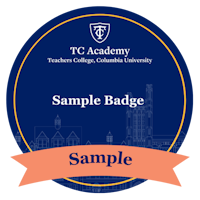
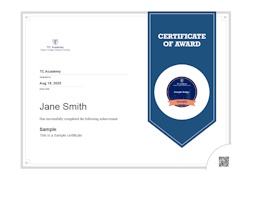
Participants who successfully complete this program will earn a verified Certificate of Participation and an official Digital Badge—valuable credentials that showcase your commitment to professional growth and can be shared on LinkedIn or digital portfolios.
View our sample program badge and certificate below:
Licensed educators in NY state are also eligible for a Continuing Teacher Leader Education (CTLE) certificate for a total of 10 CTLE hours.
Important Notice: This is a non-credit program. Completion does not provide academic credit toward any degree program at Teachers College or other institutions. No transcript credit will be awarded.