Writing About Fiction Reading Microcredential
Program Description:
Great fiction doesn't just get read, it gets written about. From close reading responses to literary analysis essays, the ability to write thoughtfully about fiction is a foundational skill for students as they move from elementary school to middle school and high school. And teaching it well requires more than assigning prompts.
Writing About Fiction Reading equips educators in grades 3-8 with the knowledge and instructional strategies to guide students through the unique demands of writing a response to fiction, such as developing a clear analytical lens to crafting evidence-grounded essays.
Drawing on current research in literacy instruction and the expertise of TC Advancing Literacy’s team of staff developers, this program explores how reading fiction invites particular ways of thinking, noticing, and writing; and how teachers can make those habits visible and explicit in their classrooms, ultimately supporting higher level comprehension and writing skills.
Participants leave with practical tools they can use immediately, ready to build a classroom culture where students don't just read great stories, they have something meaningful to say about them.
Microcourse 1: Writing About Reading Fiction as a Tool for Comprehension
Participants will explore the role of writing about reading as a critical tool for deepening comprehension. Participants will examine research on the reciprocal relationship between reading and writing processes, and develop practical strategies for implementing note-taking, summarizing, and question-driven writing with fiction texts.
Microcourse 2: Composing Writing About Fiction Reading
Participants will focus on supporting students as they compose longer, more complex pieces of writing about fiction that draw on foundational comprehension tools. Participants will explore the writing process through multiple lenses, examining how critical thinking, text structures, syntax and sentence construction skills, and craft study work together to produce thoughtful literary responses.
This microcredential is made up of two asynchronous microcourses. Microcourses may be taken individually. Badges and certificates of participation will be given for completion of each microcourse. To earn the microcredential, learners must complete all two microcourses.
Format: Asynchronous Online Microcourses
Full Microcredential (Microcourses 1-2) Price: $225 - a $25 bundle discount
Individual Microcourse Price: $125 per microcourse
Please Note: This microcredential and its individual microcourses have rolling registration. Once registration is complete, learners will have 6 months to complete their chosen course(s).
Any questions? Email tcacademy@tc.columbia.edu
Instructors

Emily Butler Smith is Director of TC Advancing Literacy who leads all aspects of the organization's work including managing partnerships with schools and districts, supporting virtual and in-person events at Teachers College, and collaborating with staff developers on all projects. She brings her experience as a classroom teacher, staff developer, and parent to her work with TC Advancing Literacy. Emily completed her doctorate at Teachers College with a focus on mentor text study in writing instruction. She taught in Colorado and New York City before joining the staff at Teachers College.
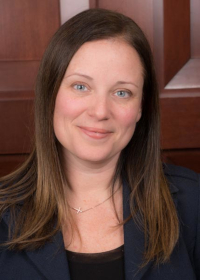
Heather Burns is a lead secondary staff developer, with particular expertise in small group work and book clubs in middle and high school, as well as critical literacies. She has also been an innovator in working with older readers who need extra support. Heather is co-author of *Critical Literacy Clubs*, a unit of study for grades 7-9. She was both a classroom teacher and a literacy coach for many years in Connecticut and New York City before joining TC Advancing Literacy. Heather has experience with curriculum design and implementation, and holds a Master of Science in Education, a Reading Specialist/Reading Consultant Sixth Year degree, and an Intermediate Administrative Certificate.
Learning Objectives
- Understand the distinctive features of writing about fiction, including how literary analysis, personal response, and critical interpretation differ in purpose, structure, and craft
- Apply research-based strategies for scaffolding fiction response writing across grade levels and student readiness
- Use mentor texts and exemplar student writing to model strong analytical thinking and support student independence
- Design classroom routines and instructional sequences that build students' capacity to write about fiction with depth, specificity, and voice
- Develop effective feedback and conferring practices tailored to fiction response writing
- Explore assessment approaches that honor both the analytical and expressive dimensions of writing about fiction
- Examine relevant research on writing about reading to enhance comprehension and critical thinking
- Discuss the reciprocal relationship between reading and writing and foundational pedagogies that shape writing about reading
- Implement research-based writing about reading strategies including note-taking, annotating, summarizing, asking and answering questions and responding to text in personal and analytical ways
- Explore instructional strategies for supporting reading comprehension before, during, and after read-aloud experiences
- Discuss the selection of culturally responsive, relevant, and purposeful fiction texts that matter to children
- Facilitate productive student conversations to support writing about fiction reading
- Utilize assessment strategies for evaluating student responses including criteria checklists and progressions
- Apply responsive teaching practices and various pathways to support and respond to the various needs of learners within your classroom
- Apply effective coaching techniques to guide students through each stage of composing text-based writing, from planning and drafting to revising and finalizing.
- Use responsive teaching practices during writing conferences and small-group instruction to address the immediate needs of individual students as they write about fiction reading.
- Support students in transforming their annotations, notes, and summaries into well-organized written responses, including text-dependent responses, and literary essays.
- Assess student research writing using standards-based rubrics and tools that evaluate meaning, organization, use of evidence, and language conventions.
- Differentiate instruction based on the purpose and context of writing (prompted or self-generated) and teach students the appropriate structures and strategies for each type.
Who Should Attend
This program is designed for 3-8 classroom teachers, literacy coaches, and curriculum specialists who want to strengthen their instructional practice around fiction and writing. It is especially valuable for English Language Arts educators looking to move students beyond surface-level plot summary toward richer, more confident literary engagement, and for any teacher who incorporates narrative texts across content areas.
Upon Completion
Participants who successfully complete all two microcourses of this microcredential will earn a verified Certificate of Participation and an official Digital Badge—valuable credentials that showcase your commitment to professional growth and can be shared on LinkedIn or digital portfolios. View our sample microcredential badge below.
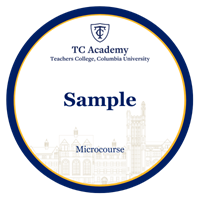
Additionally, a Certificate and Digital Badge will be awarded for each individual microcourse completed, recognizing your achievements every step of the way. View our sample microcourse badge below.
Sample Badges:
Licensed educators in NY state are also eligible for a Continuing Teacher Leader Education (CTLE) certificate for a total of 6 CTLE hours for the microcredential or 3 CTLEs for each individual microcourse.