Young Minds: Early Childhood Education and Development

Program Description:
You're about to unlock the secrets of how children become who they are.
Watch a toddler take their first wobbly steps or babble their first words—what's actually happening in their brain? Why does a simple peek-a-boo game matter so much? In Young Minds: Early Childhood Education and Development, you'll discover the hidden forces that shape every child's journey from birth to the start of elementary school.
What you'll gain:
You'll decode the mysteries of early childhood—understanding not just what happens as children grow, but why it matters. You'll explore how a baby's first relationships literally wire their brain, why cultural backgrounds shape the way children see themselves, and how everyday interactions become building blocks for future success. From attachment patterns to emotional regulation, language explosions to social breakthroughs, you'll see childhood development come alive through both groundbreaking theories and real-world application.
Why this pre-college experience matters:
This isn't just theory—you'll learn how to use this knowledge while getting a head start on college-level thinking. Whether you're considering a future in a classroom, a therapy office, a community center, or just want to explore your interests, you'll walk away knowing how to create environments where children truly thrive. You'll also understand how the American education system supports (or sometimes challenges) young learners, giving you insider knowledge to navigate and improve these systems.
By the end of Young Minds, you'll be able to:
- Read the developmental story behind children's behavior
- Create spaces that nurture healthy emotional, social, and cognitive growth
- Understand how family dynamics, culture, and society shape who children become
- Apply evidence-based strategies to support children through their most critical years

Ready to see childhood through completely new eyes and explore potential college majors? Whether you're considering education, psychology, social work, or simply care deeply about children's futures, Young Minds will transform how you understand—and support—the incredible journey of growing up.
Dates: July 6 - 17, 2026
Times: 10:00am - 4:00pm Monday through Friday
Location: In-person at Teachers College
Price: $3,995
For more information, questions or to register: Email tcacademy@tc.columbia.edu
Instructor
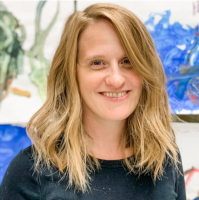
Amanda R. Fellner, Ed.D. is an Assistant Professor of Teaching in the Curriculum and Teaching Department at Teachers College, Columbia University and the Faculty Co-Director at the Rita Gold Early Childhood Center, also located at Teachers College, Columbia University. She holds a BA in Early Childhood Education from the University of South Carolina and an Ed.M. in Cognitive Psychology and an Ed.D. in Curriculum and Teaching from Teachers College, Columbia University. Amanda has been working in the field of early care and education for over a decade, working as a teacher, administrator, teacher educator, and consultant. Using ethnographic and multimodal methods, her current work examines young children’s spatial practices, re-examining common understandings of what children can/should be allowed to do, as well as investigating teachers’ practice related to children’s risk-taking. Amanda is also engaged in research that looks more broadly at classroom practices in early care and education settings while focused on bringing the lived experiences of both children and teachers into view.
Her published and in-press works are listed below:
Kuutti, T., Fellner, A.R., Björn, P.M. & Sajaniemi, N. (2025) Social reality in inclusive early childhood education settings. Journal of Research in Special Educational Needs, 25, 701–713.
Fincham, E.N. & Fellner, A.R. (2025). Eating Lunch: Toddlers’ lunchtime entanglements. In C.Y. Myers, K. Smith, M. Tesar, & R. L. Hostler (Eds.), Reframing the Everyday in Early Childhood Pedagogy. Routledge.
Fellner, A.R. & Templeton, T.N. (2023). Sitesensing: Methods for connecting to young children’s worlds. In A.L. Goodwin, C. Genishi, & H. Yoon (Eds.), Diversities in early childhood: Rethinking and doing. Teachers College Press.
Recchia, S. L., Fellner, A. R., & Fincham, E. N. (2022). The rights of the toddler: The complexities of supporting young children’s becoming and belonging in an inclusive classroom community. In F. Press & S. Cheeseman, (Re)conceptualizing children’s rights in infant-toddler care and education: Transnational conversations. Springer.
Fellner, A. R. (2020). Moving through playground spaces: Exploring the sensory, material, and embodied experiences of 2-year-olds in playground spaces (Doctoral dissertation, Teachers College, Columbia University).
Fincham, E. N., & Fellner, A. R. (2019). Including Autism: Confronting Inequitable Practices in a Toddler Classroom. Occasional Paper Series, 2019(42), 7.
Fincham, E. N., & Fellner, A. R. (2016). Transitional practice: Teachers and children in-between classrooms in one early childhood centre. Journal of Early Childhood Research, 14(3), 310-323.
Learning Objectives
By the end of Young Minds, you'll be able to:
- Read the developmental story behind children's behavior
- Create spaces that nurture healthy emotional, social, and cognitive growth
- Understand how family dynamics, culture, and society shape who children become
- Apply evidence-based strategies to support children through their most critical years
Who Should Attend
TC Pre-College courses are open to students ages 14-17. All courses are conducted in English and learners should have sufficient fluency to participate.
This course is a good fit for students who are interested in early childhood education and development and may be considering education, psychology, social work, or simply care deeply about children's futures.
Upon Completion
Participants who successfully complete this program will earn a verified Certificate of Participation and an official Digital Badge—valuable credentials that can be shared on LinkedIn or digital portfolios.
View our sample program badge and certificate below:

