Emily Bailey Publishes Chapter "Making Meaning Up: Building Autistic Worlds Through TEACCH Artifacts"

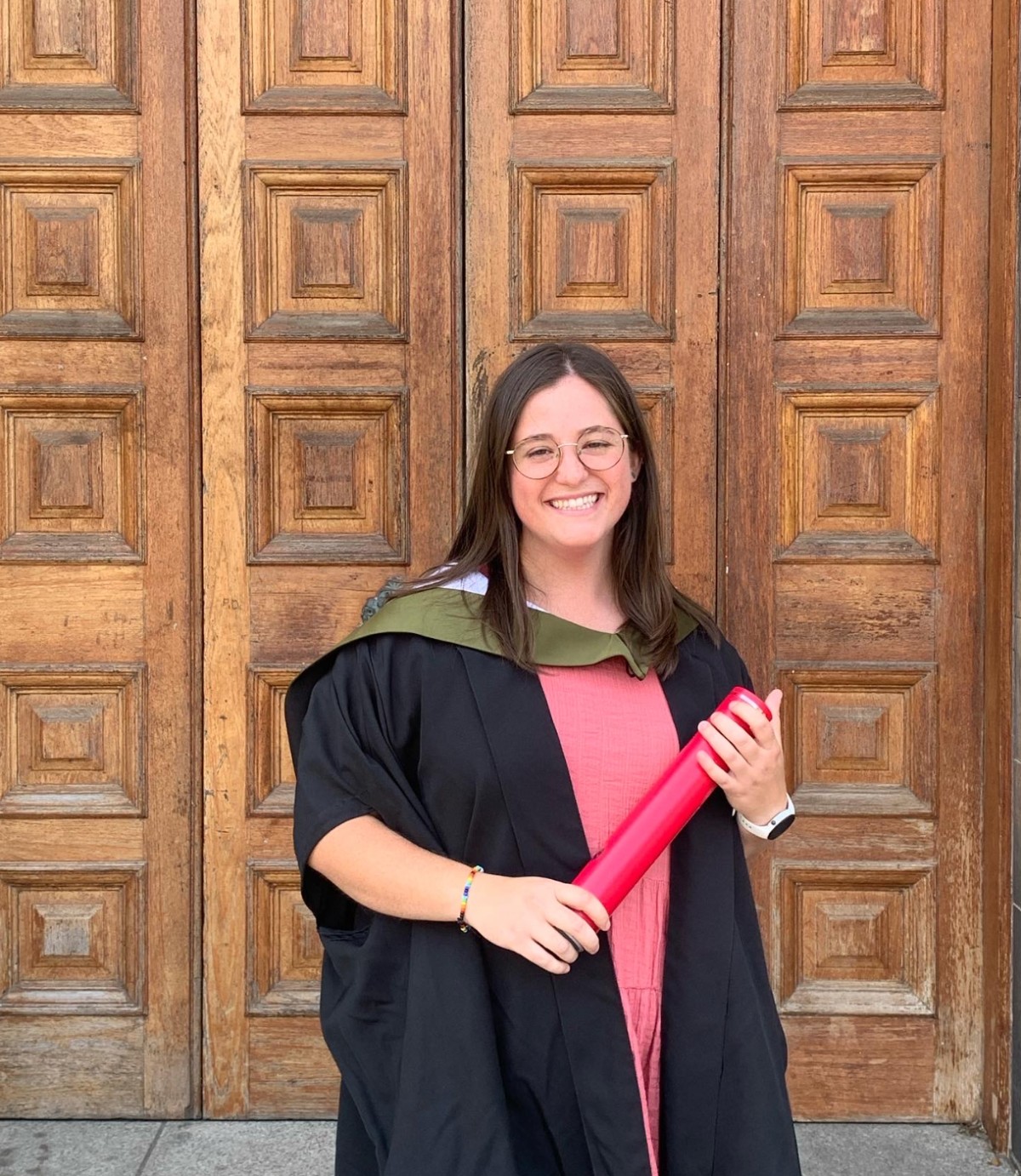
Programs in Anthropology are proud to announce that Emily Bailey has published her first book chapter titled "Making Meaning Up: Building Autistic Worlds Through TEACCH Artifacts." Bailey is currently a Ph.D. Candidate in Anthropology & Education. Bailey's work can be found in Applications and Practices for Empowering Neurodivergent Learners, edited by Krysia Emily Waldock and Nathan Keates (2025).
Bailey's chapter is based on ethnographic research conducted at a special education school (called an insitut medico-educative or IME) for autistic, learning disabled youth between the ages of 11 and 22 in Paris, France. In particular, the work examines the IME's employment training program, which takes the form of a publicly facing café where autistic youth and non-autistic special educators work side-by-side to run the business. Through an examination of café participants' interactions, which are often mediated by artifacts developed using TEACCH principles, this chapter asks: How do autistic youths and their non-autistic educators at Café Ensemble work together to co-produce and maintain a “figured world” which legitimizes, and even privileges, autistic ways of being? In addressing this question, this chapter demonstrates how autistic youths make use of the communication tools around them to exert agency over, manipulate, and reinforce accepted ways of being and doing in the café space and interrogates the complex ways non-autistic special educators respond to these efforts.
Applications and Practices for Empowering Neurodivergent Learners explores the integration of inclusive learning strategies to accommodate neurodivergent learners in education. It examines applications and practices for effective learning, accessibility, and personalized education. This book covers topics such as digital technology, personalized learning, and pedagogy, and is a useful resource for educators, sociologists, academicians, researchers, and scientists. The full book and Bailey's chapter can be read at this link.
We congratulate Emily on this great achievement!