It is a tentative hope no doubt, and more a flickering flame than bonfire. The pandemic continues to challenge each of us, and some are suffering more than others, as has been true this entire year. The uncertainty of the future can feel daunting. Yet, there are small signs that the economy is improving and the job market for our students and graduates is opening up. The vaccine roll-out, while uneven and flawed, is indeed happening and quickening. There is chatter among our TC leaders about returning to in-person classes this fall, even though an official plan has not yet been announced. There has been a heartening steady stream of forums at TC and in our larger society focused on addressing racial injustice and discrimination -- although they have occurred amidst deeply disturbing hate crimes directed toward those in our Asian communities. Still, alongside our anger, fear, and grief, our hope grows.
Amanda Gorman, the National Youth Poet Laureate of the United States, wrote this hopeful poem for these times:
The Miracle of Morning
I thought I’d awaken to a world in mourning.
Heavy clouds crowding, a society storming.
But there’s something different on this golden morning.
Something magical in the sunlight, wide and warming.
I see a dad with a stroller taking a jog.
Across the street, a bright-eyed girl chases her dog.
A grandma on a porch fingers her rosaries.
She grins as her young neighbor brings her groceries.
While we might feel small, separate, and all alone,
Our people have never been more closely tethered.
The question isn’t if we will weather this unknown,
But how we will weather this unknown together.
So on this meaningful morn, we mourn and we mend.
Like light, we can’t be broken, even when we bend.
As one, we will defeat both despair and disease.
We stand with healthcare heroes and all employees;
With families, libraries, schools, waiters, artists;
Businesses, restaurants, and hospitals hit hardest.
We ignite not in the light, but in lack thereof,
For it is in loss that we truly learn to love.
In this chaos, we will discover clarity.
In suffering, we must find solidarity.
For it’s our grief that gives us our gratitude,
Shows us how to find hope, if we ever lose it.
So ensure that this ache wasn’t endured in vain:
Do not ignore the pain. Give it purpose. Use it.
Read children’s books, dance alone to DJ music.
Know that this distance will make our hearts grow fonder.
From a wave of woes our world will emerge stronger.
We’ll observe how the burdens braved by humankind
Are also the moments that make us humans kind;
Let every dawn find us courageous, brought closer;
Heeding the light before the fight is over.
When this ends, we’ll smile sweetly, finally seeing
In testing times, we became the best of beings.
Since spring break, I have heard several TC folks say some version of, “The semester is almost over!” It is not. We have six more glorious weeks (40% of the semester!) to be in class, to read, talk, study, wonder, learn, and grow. As we move into the next phase of normal and the “future of work” becomes our present, I urge you to remember all you are learning in the S-OP program, and all you are contributing. I urge you to remind yourself of why you came to Teachers College and all you want to do in your work and in your lives as a result of your time here. I am grateful to all of you for sustaining my own hope during this most difficult year.
Let’s continue to be hopeful together.

Sarah Brazaitis, PhD
MA Program Director
Current Student Profile
Colin Corcoran is a first-year M.A. student in the Social-Organizational Psychology program. Before attending Teachers College - Columbia University, he ran his own residential interior design studio. While working as an interior designer, Colin discovered a passion for understanding human behavior. A drive to understand his clients on a deeper level allowed Colin to interpret their needs in the context of creating beautiful and uniquely functional spaces that improved the way his clients lived their lives. Through his human-centered interior design work, Colin learned how to navigate family organizations, the dynamics of couples' relationships, and other intimate parts of human life, including religion, race, and culture. Colin Corcoran is a first-year M.A. student in the Social-Organizational Psychology program. Before attending Teachers College - Columbia University, he ran his own residential interior design studio. While working as an interior designer, Colin discovered a passion for understanding human behavior. A drive to understand his clients on a deeper level allowed Colin to interpret their needs in the context of creating beautiful and uniquely functional spaces that improved the way his clients lived their lives. Through his human-centered interior design work, Colin learned how to navigate family organizations, the dynamics of couples' relationships, and other intimate parts of human life, including religion, race, and culture.
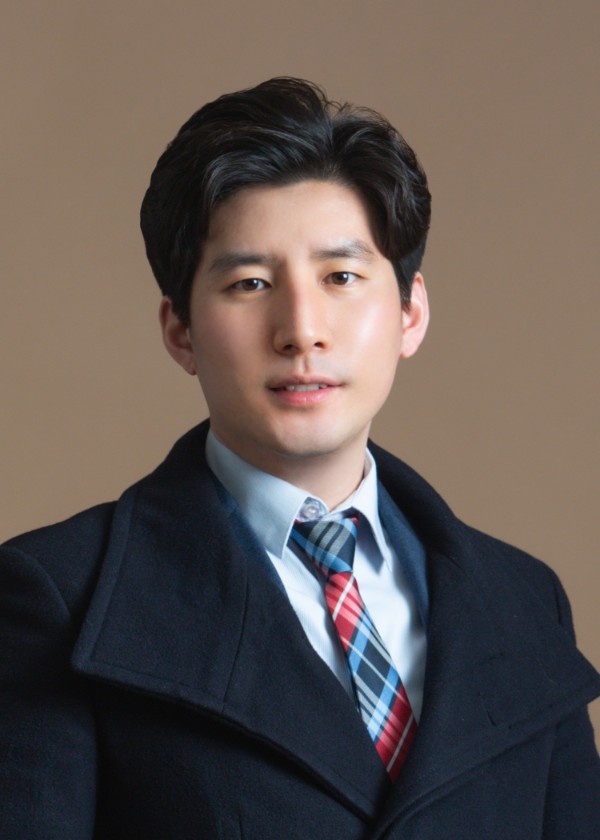
Gun Jun (David) Yoon is a 2017 M.A. graduate in Social-Organizational Psychology. Prior to TC, he majored in Communication Studies at UCLA and worked at the National Academy of Sciences, Republic of Korea. His inspiration to learn more led him to TC, where he sought to expand his intellectual as well as professional horizons, and to explore the intersection between Eastern and Western practices. During the M.A. program, he developed a special interest in conflict resolution, leadership, group dynamics, and organizational development (OD). After returning to Korea, David chose to live in solitude for two years. He traveled alone, practiced meditation, read hundreds of books, and studied East-Asian classics including Saju (a traditional multi-purposed study in East Asia known as “the four pillars of destiny”). He thinks this journey of soul-searching and finding the meaning of life was one of the best moments of his life. David is currently working at SL, a car component manufacturing conglomerate whose clients include Hyundai and Kia in Korea, GM and Ford in the U.S., BMW in Germany, and Geery in China. As a HR Specialist at the company headquarters, he is applying what he learned at TC to lead projects in Global HR, HRM and HRD, which he hopes will positively influence over 12,000 employees worldwide. His passion to help others through advanced knowledge and experience has only just begun. Gun Jun (David) Yoon is a 2017 M.A. graduate in Social-Organizational Psychology. Prior to TC, he majored in Communication Studies at UCLA and worked at the National Academy of Sciences, Republic of Korea. His inspiration to learn more led him to TC, where he sought to expand his intellectual as well as professional horizons, and to explore the intersection between Eastern and Western practices. During the M.A. program, he developed a special interest in conflict resolution, leadership, group dynamics, and organizational development (OD). After returning to Korea, David chose to live in solitude for two years. He traveled alone, practiced meditation, read hundreds of books, and studied East-Asian classics including Saju (a traditional multi-purposed study in East Asia known as “the four pillars of destiny”). He thinks this journey of soul-searching and finding the meaning of life was one of the best moments of his life. David is currently working at SL, a car component manufacturing conglomerate whose clients include Hyundai and Kia in Korea, GM and Ford in the U.S., BMW in Germany, and Geery in China. As a HR Specialist at the company headquarters, he is applying what he learned at TC to lead projects in Global HR, HRM and HRD, which he hopes will positively influence over 12,000 employees worldwide. His passion to help others through advanced knowledge and experience has only just begun.
Colin's passion for interpreting people motivated deeper learning and the pursuit of a new career path. The S-OP MA program at TC was an ideal opportunity for Colin to use his experience within a dynamic learning community to gain the skills needed to effect real change in organizations and society. With a deep understanding of human behavior and continued experiential learning, Colin is confident that he will be able to co-create individualized organization change capable of fostering new ways for people to work, produce and impact our global community.
Colin began an internship this spring with Veldhoen + Company, a leading international consultancy specializing in integrated workplace strategy, using the philosophy they founded called Activity Based Working. Veldhoen uses a holistic approach to organization change to foster new ways of working capable of having a global impact by transforming how we all work. Veldhoen's integrated approach believes physical space is a crucial element of whole organization change. Colin will use his experience as an interior designer to bring value to Veldhoen while simultaneously applying his new knowledge from TC and gaining ongoing experiential learning.
Eventually, Colin aspires to be a catalyst for impactful change in the organizations within our society. His ultimate goal is to work and support change leaders in organizations to develop diverse, equitable, and inclusive environments focused on meeting all organization members' needs. Colin believes that a holistic, integrated, and strategic approach to change that prioritizes individual and collective needs is the strongest way for organizations to achieve their goals.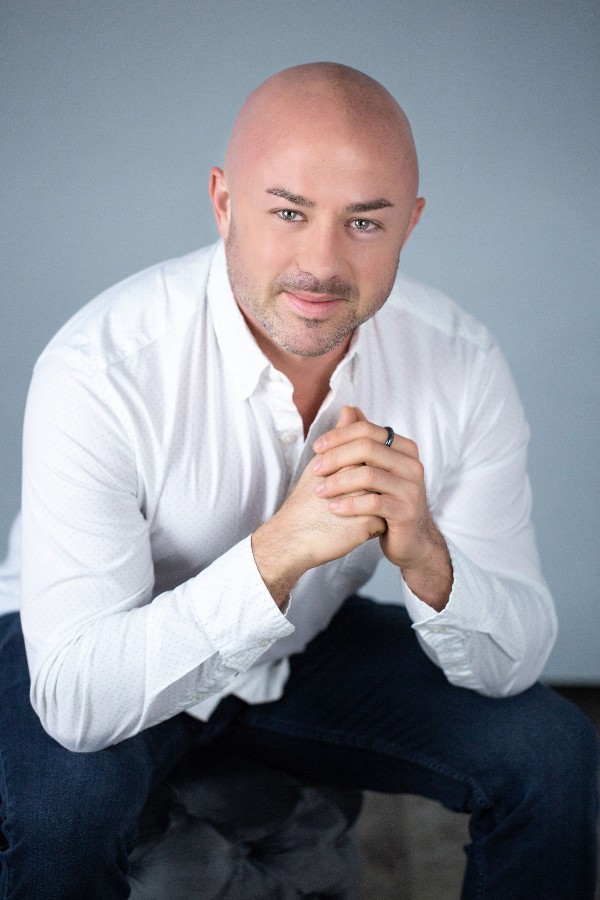
Colin's passion for interpreting people motivated deeper learning and the pursuit of a new career path. The S-OP MA program at TC was an ideal opportunity for Colin to use his experience within a dynamic learning community to gain the skills needed to effect real change in organizations and society. With a deep understanding of human behavior and continued experiential learning, Colin is confident that he will be able to co-create individualized organization change capable of fostering new ways for people to work, produce and impact our global community.
Colin began an internship this spring with Veldhoen + Company, a leading international consultancy specializing in integrated workplace strategy, using the philosophy they founded called Activity Based Working. Veldhoen uses a holistic approach to organization change to foster new ways of working capable of having a global impact by transforming how we all work. Veldhoen's integrated approach believes physical space is a crucial element of whole organization change. Colin will use his experience as an interior designer to bring value to Veldhoen while simultaneously applying his new knowledge from TC and gaining ongoing experiential learning.
Eventually, Colin aspires to be a catalyst for impactful change in the organizations within our society. His ultimate goal is to work and support change leaders in organizations to develop diverse, equitable, and inclusive environments focused on meeting all organization members' needs. Colin believes that a holistic, integrated, and strategic approach to change that prioritizes individual and collective needs is the strongest way for organizations to achieve their goals.Alumni Profile
Recommended Readings
This podcast suggests that Gmail and Slack are "killing us" and gives suggestions on what to do about it.
If you have wondered recently, as I have, "Am I losing my mind?" it may help to know we are not alone. Read on for the brain science behind "pandemic brain." Reading recommendation courtesy of PhD student, Angelica Leon.
If Zoom fatigue is still plaguing you, as it is me, it may help to know you are not alone in that either. Read on for two pieces about a theoretical argument undergirding Zoom fatigue. Reading recommendations courtesy of PhD student, Molly Forgang and MA student, Jimit Thakkar.