“I never thought about what was involved in lesson development. This is really fun!”
Teachers College students in International and Comparative Education are working on their curriculum design skills in the class ITSF 4093 Curriculum and Pedagogy in International Contexts. This course explores the opportunities and challenges of different approaches to developing curricula and preparing instructional materials across different national contexts. Specifically, this course pushes students to make thoughtful and intelligent decisions in developing curriculum by both reflecting upon our own assumptions and perspectives of curriculum and considering factors that must be taken into account when designing a curriculum for a particular setting or context.
One part of the course focuses on the practical skills needed for curriculum planning, design, and implementation. The culminating project involves small groups of students working with a ‘live client’, that is, an outside organization that has requested a curriculum. This year nine groups of students are working with a range of organizations, most of which are based in the global south. The organizations students are engaged with include Oxfam and the Pakistan Ministry of Education, as well as smaller organizations such as the Minority and Indigenous Group of Zimbabwe and Room to Read.
Examples of the curriculum topics are the development of a curriculum guide to accompany stories that address gender bias; contributions to school curriculum; and work with school management committees and parents in fragile contexts. The curriculum design approach that our program uses is the same as the one used by the Curriculum and Teaching Department at Teachers College: Understanding by Design (McTighe and Wiggins, 2016).
The process involves both the creative left brain as well as the right brain. Lesson planning first involves the identification of learning outcomes and then a scaffolding of activities to take place in the classroom, under the guidance of the educator. This logical thinking also involves an identification of learning supports and assessments. On the creative side, curriculum developers use their imagination to think about what would be engaging, innovative and successful.
As one student states:
“What I love the most about curriculum writing is the process. It is a continuous practice of reflection and adaptation. The creative, critical, and innovative thinking skills go beyond the curriculum writing experience and influences me on so many levels.”
In previous years, some students have opted to continue working with their live clients after the course has concluded, extending the learning experience and at times culminating in a complete curriculum.
There are different opportunities for students in our program to work on their curriculum development skills. These include the development of a human rights education curriculum in the Human Rights in Africa course, the International Perspectives on Peace and Human Rights Education, and the development of a curriculum-focused IP. These products are something that students can list on their CVs and potentially show to future employers.
Aside from these practicalities, curriculum development is simply fun! Students may want to take advantage of one of these courses in developing this skill set.
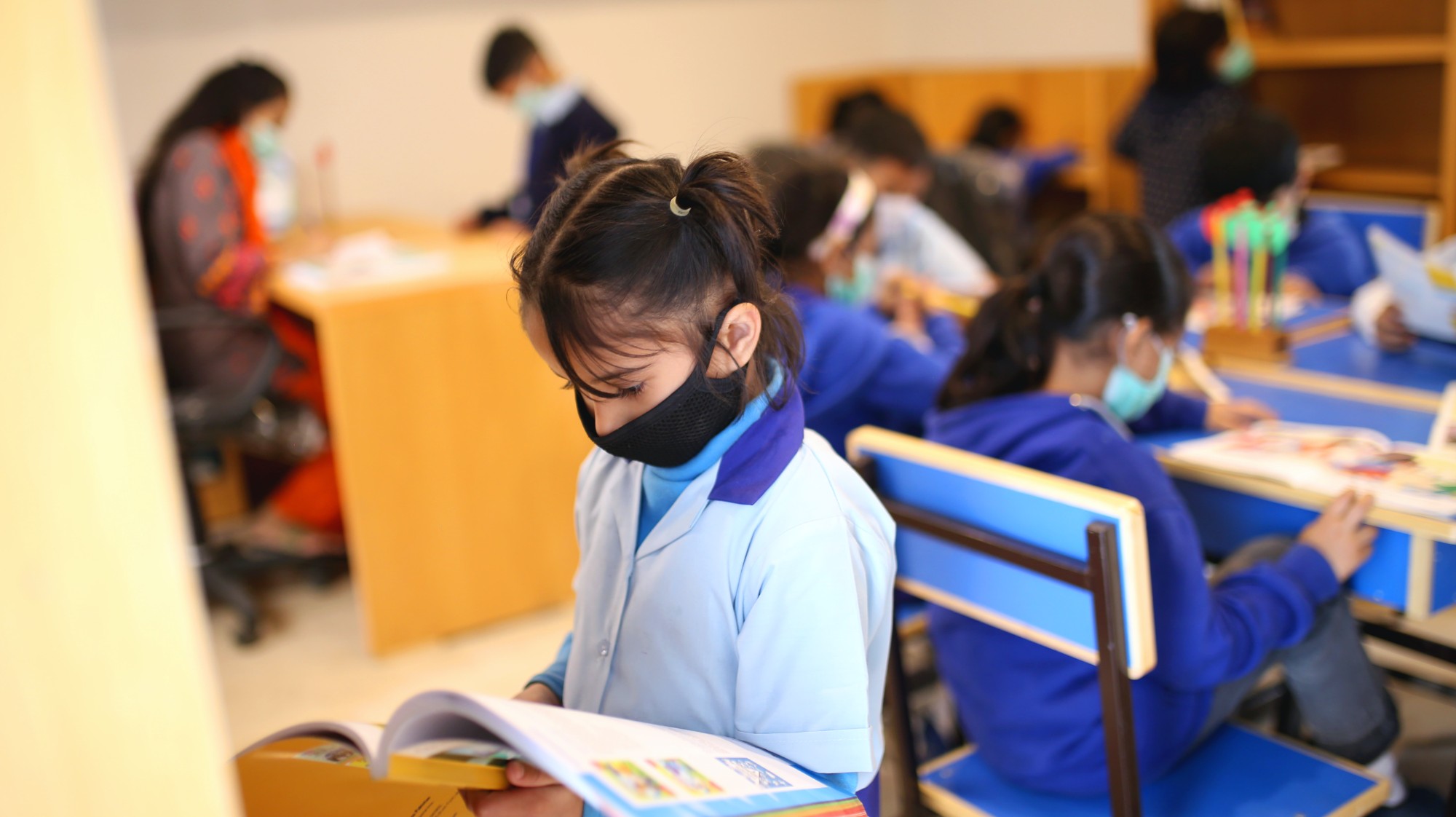
Photo credit: Muneer Ahmad, Pakistan.