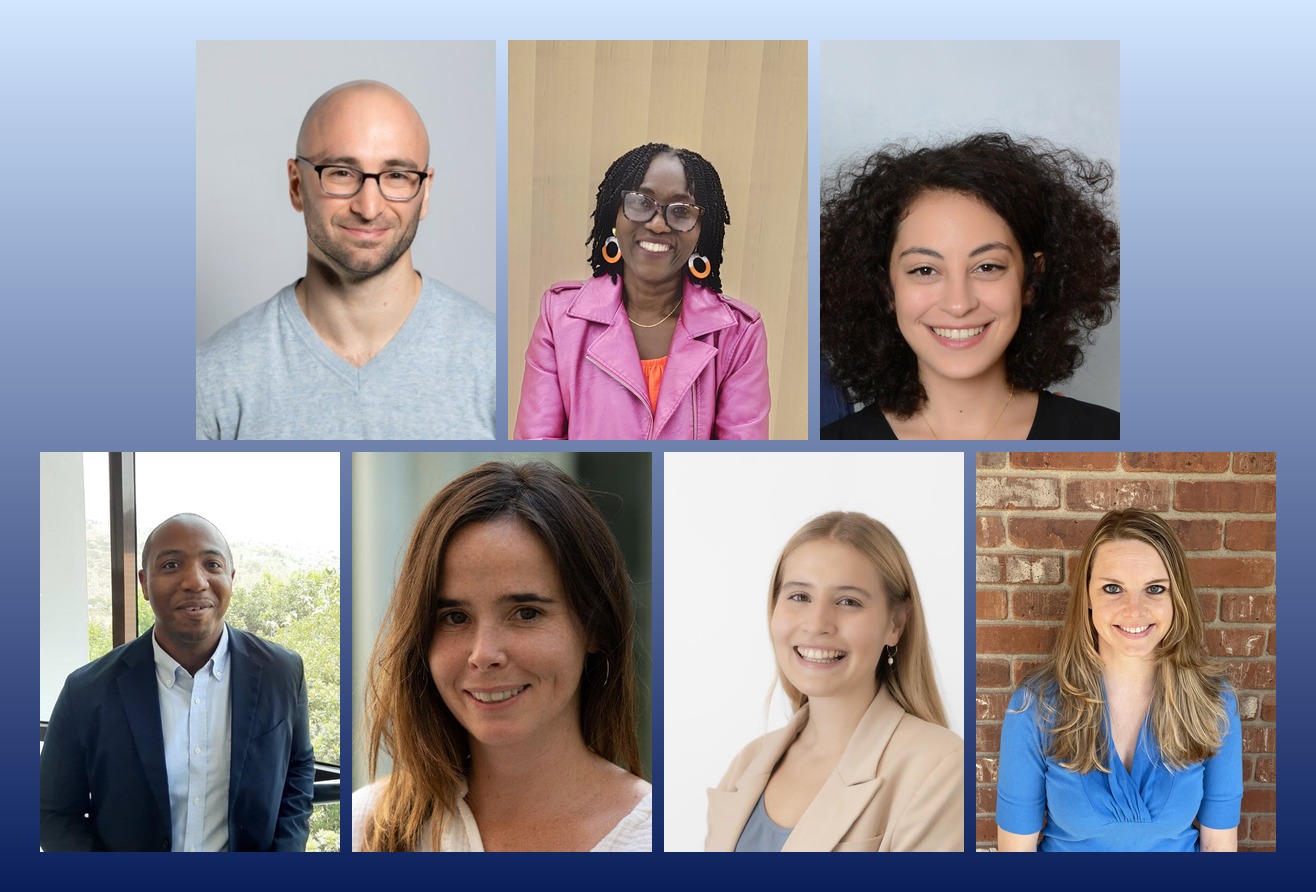
Dissertation Spotlights highlights this year's PhD graduates across International and Comparative Education. Their work reflects the breadth of research produced across the program, spanning education, conflict, displacement, citizenship, gender, climate, food systems, and global governance. Congratulations to the new Drs.!

01 · Dissertation Spotlight
Whitney Hough
Teachers as Transformative Agents in Protracted Conflict: The Case of Cameroon
About the Research
Teachers in conflict-affected regions play crucial yet understudied roles as they navigate politicized, insecure, and morally complex school environments. Drawing on 150 interviews across seven regions of Cameroon, this study shows how secondary school teachers exercise strategic, relational, and survival-oriented forms of agency, creatively adapting their practice even as their roles are reshaped by overlapping crises. By foregrounding teachers' perspectives, the study shows how they reinterpret peacebuilding roles and adapt their work under duress, highlighting the possibilities and constraints of teacher agency in protracted conflict and informing more responsive teacher support structures.
What Inspired It
Years of working in education made clear that teachers in conflict-affected contexts shoulder enormous responsibilities with little visibility in research or policy, and that we understand far too little about their lived experiences, decision-making, and risks. That gap made it ethically and intellectually important to build a grounded, teacher-centered understanding of education in protracted conflict — one rooted in teachers' realities rather than external assumptions.
Key Finding
This study reframes how we understand teachers' work in conflict — not as heroic or deficient, but as deeply strategic, morally complex, and shaped by the dual pressures of danger and purpose.

02 · Dissertation Spotlight
Samaya Mansour
Citizenship Otherwise: Decolonial Reclamations of Life, Belonging, Dignity, and Futurity Amidst Displacement in Lebanon
About the Research
This dissertation examines how displaced Syrians living in protracted displacement in Lebanon navigate, practice, and enact citizenship beyond formal legal status. Displaced Syrians confront exclusion and stigma by actively reclaiming life, belonging, dignity, and futurity through everyday practices. They transform education, work, volunteering, and leisure into acts of citizenship, build belonging through relationships and everyday presence in Lebanon, and assert dignity by rejecting humanitarian refugee subjectivities, reclaiming memory, and engaging in futuremaking. As a result, they refuse humanitarian governance and reconstitute citizenship beyond legal status, enacting a decolonial form of political being conceptualized as citizenship otherwise.
What Inspired It
This research emerges from participation in the October 17, 2019, Lebanese uprising and broader Arab youth movements since 2011, where citizenship was enacted through protest, art, and everyday resistance rather than legal status. Seeing displaced Syrians continue to assert dignity, belonging, and political agency despite exclusion and humanitarian containment compelled an examination of how citizenship is lived and reimagined under conditions of displacement, and the development of an alternative narrative of education, belonging, and citizenship.
Key Finding
Displaced Syrians reclaim dignity and selfhood by refusing the humanitarian "refugee" subject position and resisting aid practices that produce dependency and stigma. They draw on memory to reassert themselves as moral, historical, and capable subjects, re-narrating what it means to be Syrian in Lebanon.

03 · Dissertation Spotlight
Darren Rabinowitz
Environmental Provisions in Constitutions (EPICs) to Citizenship Action: Do Environmental Rights Matter in Education and Activism?
About the Research
This dissertation examines Environmental Provisions in Constitutions (EPICs) and whether these rights relate to education policymaking and student civic and environmental learning outcomes. Although more than 80 countries across the globe have enshrined a right to a safe and clean environment within their constitutions — many naming future generations as rights holders — little is known as to whether these rights explain environmental outcomes.
What Inspired It
This research was inspired by a conversation with advisor Professor Oren Pizmony-Levy, exploring the educational role of constitutions, how and why rights spread globally, and the ways rights are translated into national norms, values, policy priorities, and learning environments. Further inspiration came from youth climate activists using environmental rights to hold governments and corporate actors accountable, leveraging high-profile court cases to educate the public and peers on environmental and climate issues.
Key Finding
Countries with EPICs show students reporting more opportunities to learn about protecting the environment at school, greater engagement in environmental organizations, and more pro-environmental behaviors as adults. In Norway's case, its EPIC was used to legitimize and sustain environmental and sustainability education in national policy and curricula even during shifting global educational movements and test-based accountability pressures.

04 · Dissertation Spotlight
Sara Pan
Climate Disasters, Internal Displacement, and Adolescent Girls' Education in the Honduran Sula Valley
About the Research
This dissertation examines how the aftermath of climate disasters — specifically Hurricanes Eta and Iota, and the internal displacement they caused — impacted access to education for girls in the Sula Valley region of Honduras. Through three stages of fieldwork, this case study involved interviews with girls affected by climate disasters who dropped out of school, girls still enrolled in public schools, adult family members, public school teachers and administrators, and representatives of governmental and nongovernmental organizations.
What Inspired It
Given the frequency and intensity of climate disasters in Honduras, the urgent need to contextualize how climate shocks affect girls' right to education inspired this study. It contributes to the field of Comparative and International Education by documenting the complex and nonlinear relationship between climate disaster aftermath and education loss among girls in the Honduran Sula Valley.
Key Finding
The relationship between the aftermath of climate disasters and education loss among girls is nonlinear and complex, defying simple cause-and-effect assumptions and requiring more nuanced frameworks for understanding climate vulnerability and educational access.

05 · Dissertation Spotlight
Theresa E. Cann
Decolonizing Ghana's Higher Education: The Role of Women in Activism Toward Gender Equality
About the Research
This study examines the role of women in decolonizing Ghana's higher education to promote gender equality. It investigates women's perspectives on the decolonization of higher education, their active engagement in advancing structural transformations to address gender inequality, and their articulated contributions to Ghana's higher education landscape — including in curriculum development, teacher compensation, and digital literacy.
What Inspired It
The existing literature on Ghanaian women's experiences in higher education has frequently been framed by discrimination, thereby overlooking their resistance and contributions. This research centers the voices of Ghanaian women, emphasizing their articulated contributions and forms of resistance to gender inequality — voices that deserved to be heard.
Key Finding
It was profoundly encouraging to discover the significant contributions of women to Ghana's higher education. Through this research, women's efforts will no longer remain invisible but will be codified into Ghana's contemporary history of education.
06 · Dissertation Spotlight
Sarah Jennings Ingraham
The Food Systems of Bordeaux: An Exploration of Changing Foodscapes in Local and Global Contexts from the Perspectives of City Residents
About the Research
This dissertation explores how residents of Bordeaux construct "foodscapes" to support their health and well-being amid shifts in local food culture driven by globalized industrial food systems. Defined as socially shaped and personally perceived food environments, foodscapes were illustrated by participants through colorful hand-drawn maps that reflected their food choices and behaviors.
What Inspired It
The opportunity to carry out ethnographic research while immersing in a new language and culture was a driving inspiration, as was the chance to develop a broader, global perspective on a complex and pressing issue.
Key Finding
Ethnography is a powerful methodology that centers lived experience and amplifies participant voices. The process of navigating its complexity also deepened confidence and reinforced the ability to achieve ambitious goals — a reminder that rigorous, immersive research transforms the researcher as much as the field.
07 · Dissertation Spotlight
Kevin Anthony Henderson
The World Economic Forum in Global Education Governance: Legitimacy, Script Formation, and National Translation of the Fourth Industrial Revolution
About the Research
This dissertation examines how the World Economic Forum — best known for its annual Davos summit — sought to position itself as a credible actor in global education governance. It traces the strategies the WEF used to build that standing, how it promoted a vision of education centered on preparing workers for a technology-driven future, and how that vision landed in India, where policymakers adapted it to fit national priorities rather than adopting it wholesale.
What Inspired It
While working in Asia for an international NGO focused on higher education, the phrase "Fourth Industrial Revolution" kept appearing in leadership meetings, strategy documents, and reform plans. That raised a question: how had this idea spread so quickly, and why was the World Economic Forum suddenly so central to conversations about the future of learning? That question became the foundation of this research.
Key Finding
The World Economic Forum built its influence in education through a steady combination of reports, partnerships with established institutions like UNESCO, and high-profile gatherings like Davos — not through any formal authority. When its message reached India, policymakers wove it into existing narratives around national development and cultural renewal, making it their own.