
How We Share Knowledge Matters
ICEP’s Lunch & Learn with Dr. Will Brehm invited faculty and students to think differently about how knowledge travels.
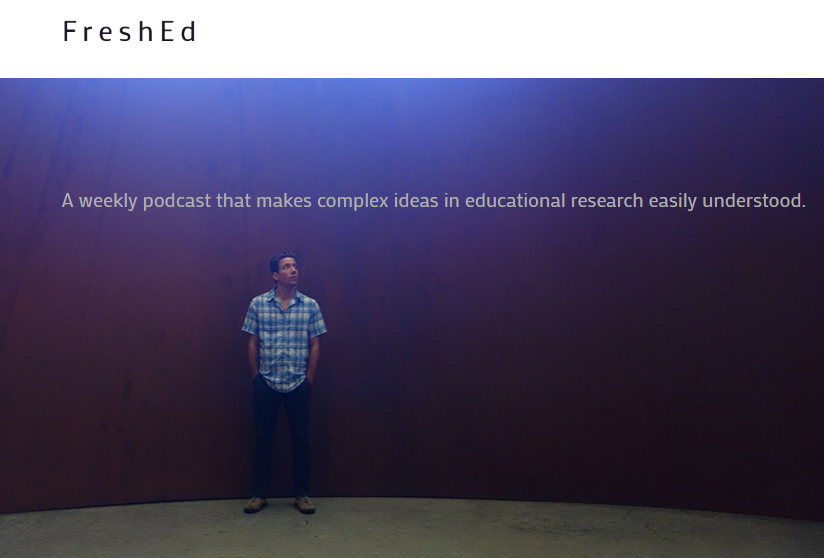
Dr. Will Brehm research interrogates how comparative and international education intersects with international relations and the political economy of development, focused primarily on the Mekong sub-region of Southeast Asia.
What if the way we share knowledge matters just as much as the knowledge itself?
Knowledge does not have to remain behind a paywall or inside a journal. Sometimes, it travels through a pair of headphones. That idea sat at the center of a recent Lunch & Learn hosted by the International and Comparative Education Program (ICEP), where faculty and students gathered to explore how knowledge is produced, shared, and challenged across global education contexts.
The conversation featured Dr. Will Brehm, whose work spans comparative and international education, international relations, and the political economy of development, with a regional focus on the Mekong sub-region of Southeast Asia. Across his scholarship, Brehm has examined educational privatization, regional identity formation, community-based education, and the politics of knowledge production. He is also the author of Cambodia for Sale and co-editor of several influential volumes, including Memory in the Mekong and Education and Power in Southeast Asia.
During the session, Brehm encouraged participants to think beyond traditional academic dissemination. Drawing on his widely recognized podcast, FreshEd, he introduced what he described as the “sonic possibilities” of knowledge, asking students to felect on how sound might be used in their research endeavors, through data collection efforts, particiatipant engagment, and later dissermination effors.
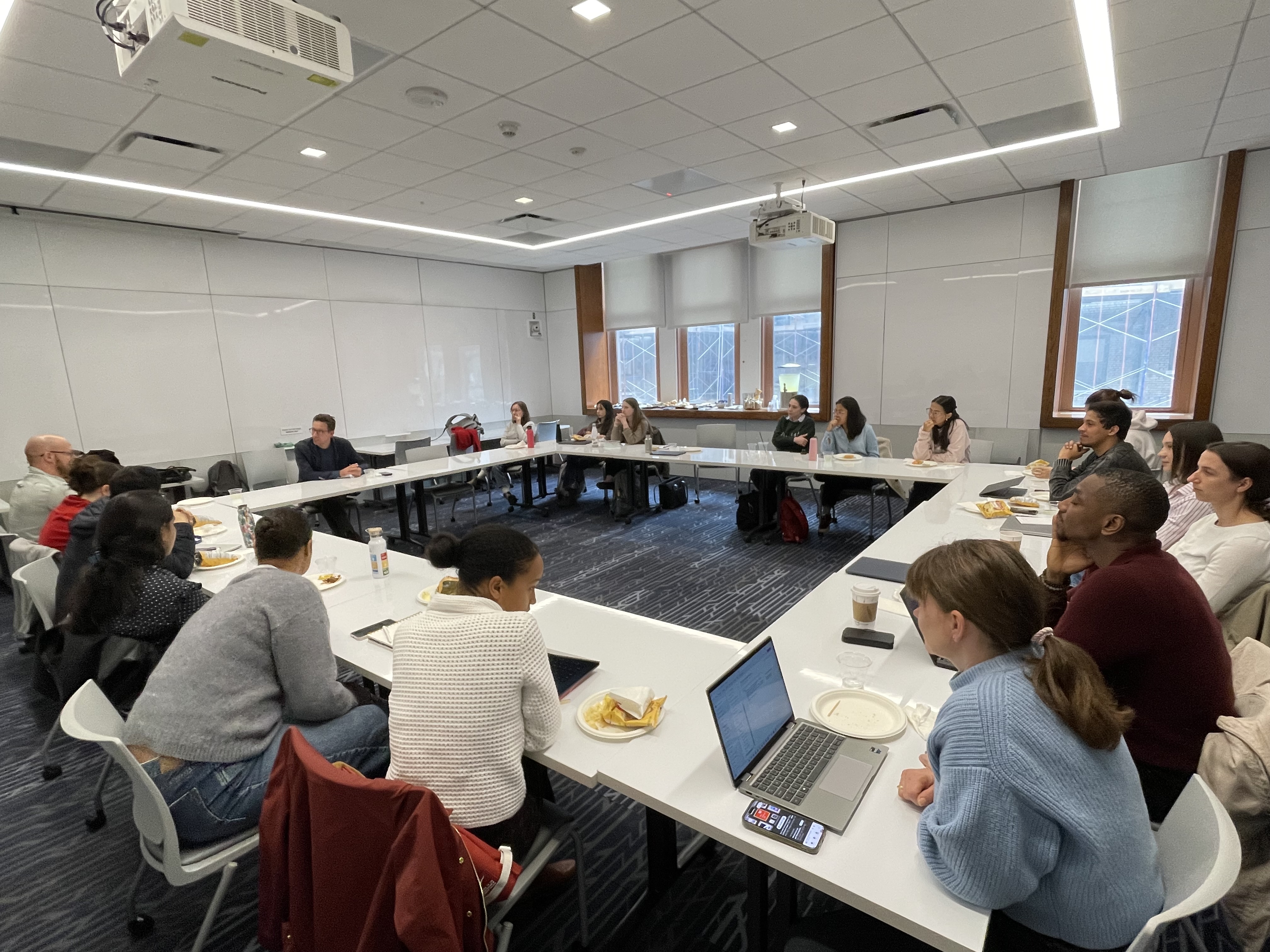
Faculty and students gathered for ICEP’s Lunch & Learn on knowledge production, dissemination, and access.
With more than one million downloads and listeners in over 180 countries, FreshEd offers a powerful example of how scholarship can travel far beyond the academy. In that sense, the discussion was not only about alternative media, but about the broader politics of knowledge itself: who gets to produce it, who gets to access it, and how different formats reshape the ways ideas are received and circulated.
Knowledge doesn’t have to live behind a paywall or inside a journal. Sometimes, it travels through a pair of headphones.
ICEP’s Lunch & Learn series continues to create space for interdisciplinary and forward-looking conversations like this one. Dr. Brehm’s visit offered a compelling reminder that how we share knowledge is just as important as the knowledge itself.
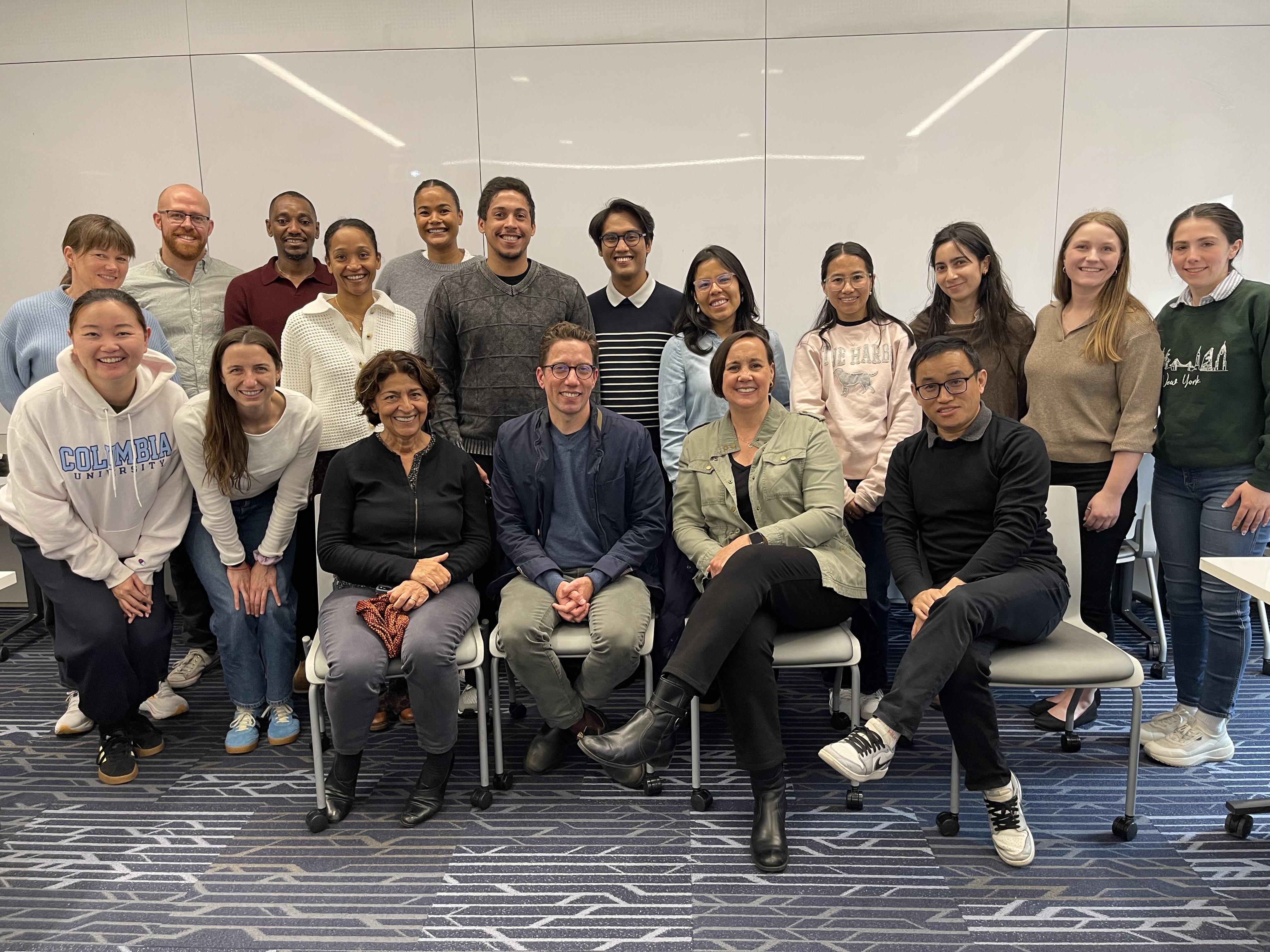
ICEP Students and Faculty