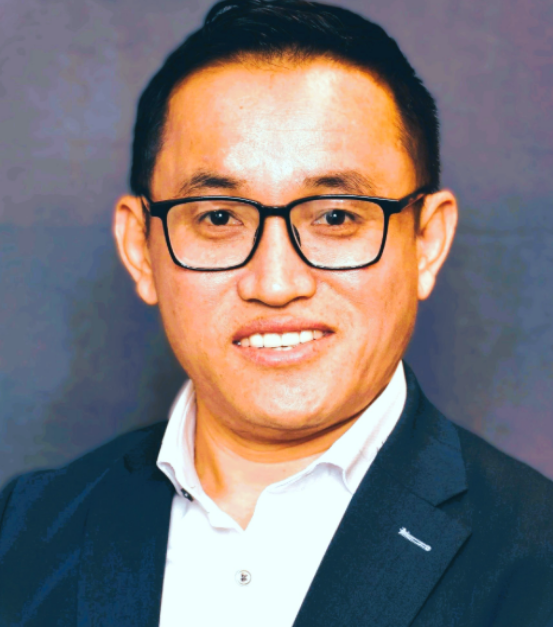
Dr. Prem Phyak, TC faculty in the International and Comparative Education Program, contributes to decolonial language scholarship through his recent article Developing decolonial language awareness: an exploration of Indigenous countertexts and youth language reclamation in land-based education, published in November 2025 in Language Awareness. His expertise in translanguaging is also reflected in his role as co-editor and contributor to the The Handbook of Translanguaging published by John Wiley & Sons Ltd in the same month.
Dr. Phyak’s research broadly explores the intersection of language, society, and education. Taking language as a sociopolitical and epistemic phenomenon, his research examines the centrality of language in creating equitable, inclusive, and transformative educational spaces in the Global South. His research broadly covers language policy, multilingual education, translanguaging, decoloniality and Indigenous education, and teacher education.
Developing decolonial language awareness: an exploration of Indigenous countertexts and youth language reclamation in land-based education
In his article, Phyak argues that research on language awareness should shift toward decolonial perspectives that “center land, more-than-human relations, and community-based knowledge systems.” He introduces decolonial language awareness (DLA) as a framework for understanding and resisting the loss of Indigenous languages. Drawing on community-based participatory action research with the Yaakthung (Limbu) community in eastern Nepal, he explores how Indigenous youth engage in land-based education to reconnect with their language, challenge dominant ideas about language and literacy, and create alternative forms of knowledge that reflect Indigenous ways of knowing.
The Handbook of Translanguaging
Through The Handbook of Translanguaging, Dr. Phyak contributes to and helps shape broader discussions on the theory and practice of translanguaging. As a term, translanguaging describes how multilingual speakers can flexibly utilize their full linguistic skills to communicate, learn, and express oneself. The handbook brings together scholars to examine theoretical underpinnings of translanguaging, practical applications, and implications for research, education, and language policy. This book serves as an essential reference for academic researchers, educators, and students working at the intersection of language studies and education.
In addition to these two publications, Dr. Phyak has also recently co-authored Teacher agency for Indigenous languages in education: A decolonial perspective from Nepal and served as first author of Translanguaging space, decoloniality, and epistemic justice in educational spaces. Congratulations to Dr. Phyak on these exciting publications and his continued contributions to the field of multilingual and language education research.