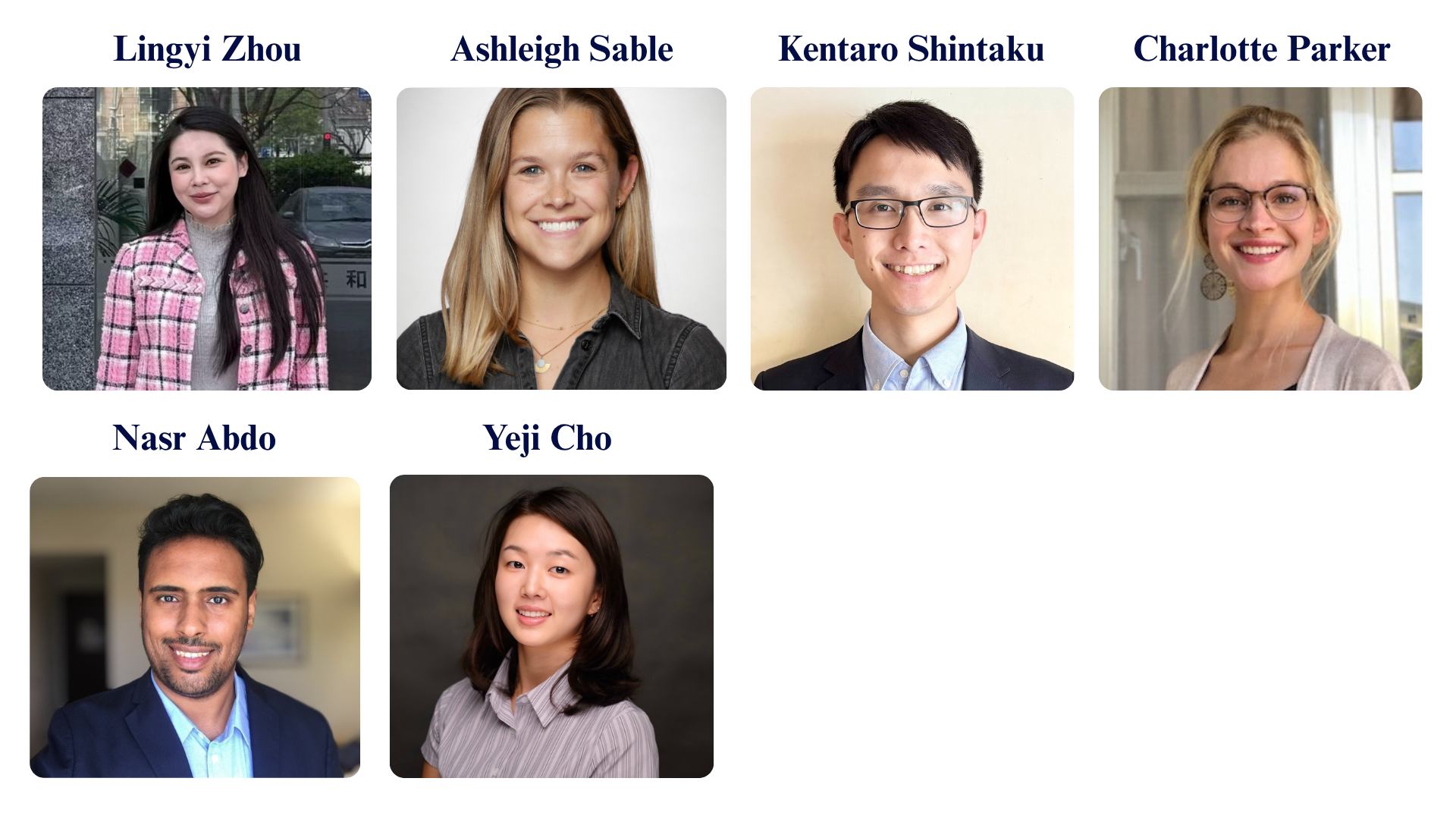
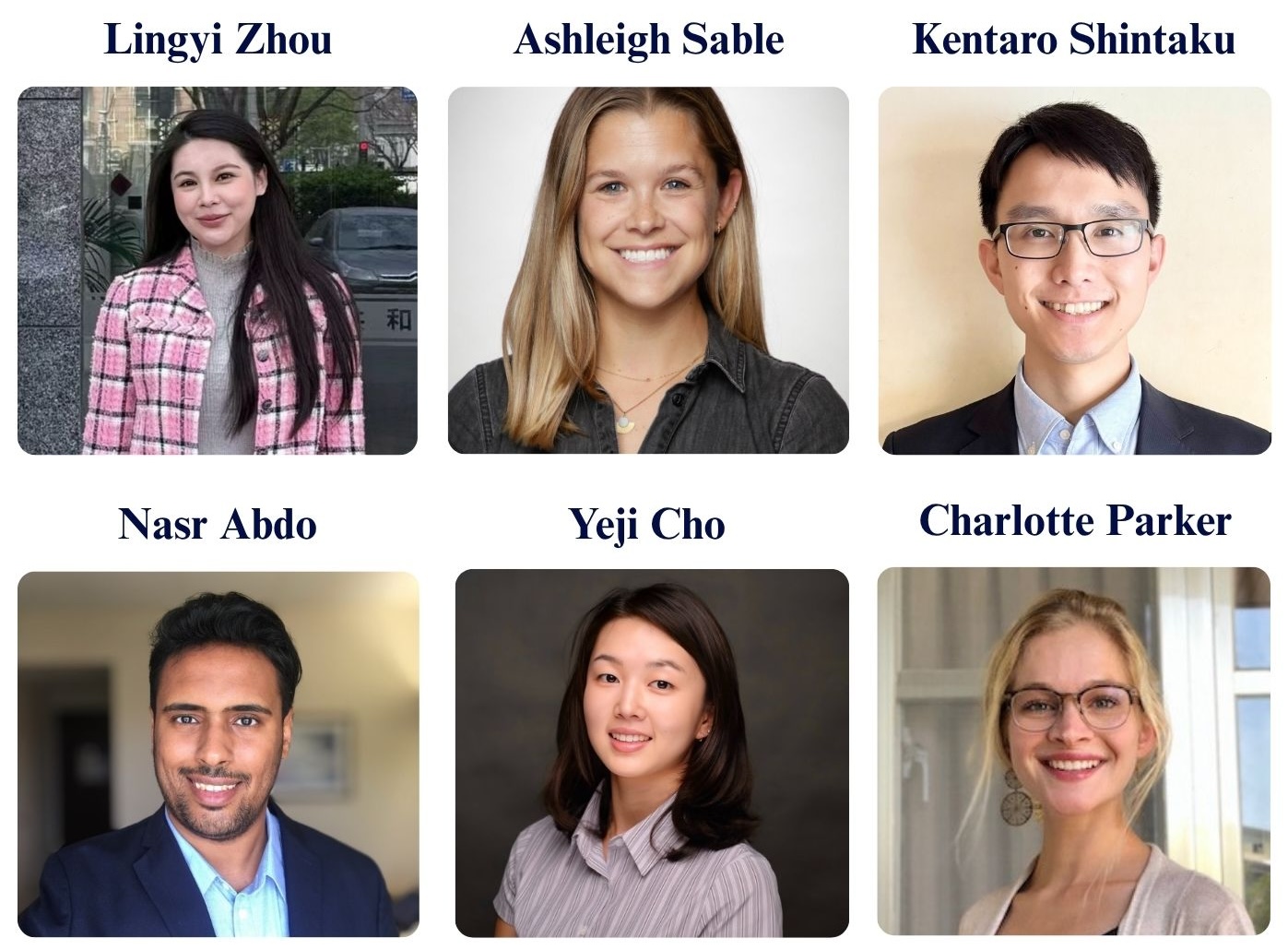
The ICEP program welcomes six new doctoral students this year. Read more below to learn about each incoming student, their past experiences, and future research interests at TC.
Lingyi Zhou
Lingyi Zhou earned her master’s degree in ICEP at Teachers College, and her path to the doctoral program has been shaped by living, studying, and working across Switzerland, China, the United Kingdom, and the United States. This international background informs how she thinks about education as something that travels and shifts meaning as it crosses borders.
Her research examines China’s engagement with global education governance, building on scholarship on policy borrowing and lending. The literature has often understood China through the lens of policy reception, translation, and localization. Lingyi is more interested in how China participates more actively in agenda-setting and norm-shaping within multilateral education governance, rather than only adopting ideas formed elsewhere. She is currently working on how China is reorienting its national education strategy through its engagement with UNESCO, particularly around AI and STEM education, and is drawn to international organizations as the platforms where this kind of influence is negotiated and built.
Her analytical approach took shape during her master’s integrative project, a comparative critical discourse analysis of vocational and continuing education in Shanghai and Taiwan, where she built an original coding framework to trace how policy language frames and legitimates educational stratification. That habit of reading policy closely now anchors how she studies China on the world stage. This interest has developed further through her work as a research assistant at the Center for American Education Studies at East China Normal University and at the University of Hong Kong’s Education Policy Unit. She has also examined refugee and migration education in Morocco and completed an intensive program on global education governance in Paris, with site visits to UNESCO, the OECD, and IIEP.
Over the long term, she hopes her work can help scholars and policymakers in different parts of the world make better sense of one another’s education reforms, and clarify how a country like China comes to take part in influencing and shaping them.
What feels special about TC is that I already know it from the inside. I came here for my master’s, and choosing to stay for the doctorate was an easy decision, because this is a place that has consistently met my curiosity with generosity. Mentors here took my questions about China and education seriously long before they became a dissertation, and ICEP in particular is a community where conversations move easily across countries and perspectives, and where being from many places at once feels ordinary rather than something to explain. - Lingyi
Ashleigh Sable
Ashleigh Sable’s research focuses on how teachers in refugee and conflict-sensitive contexts foster social-emotional development through play-based learning. An advocate for teacher well-being, she is particularly interested in teachers' experiences in emergency (EiE) contexts. Her scholarly interests center play-based pedagogy, critical and sociocultural theory, and the decolonization of humanitarian aid. She utilizes mixed-methods approaches to capture the complex realities of classrooms in crisis settings.
Professionally, Ashleigh brings seven years of experience as a primary school teacher in Prague, Czech Republic, Sur Baher, Palestine, Washington D.C., and Brooklyn. Her frontline experience leading diverse classrooms of learners informed her understanding of how educators navigate resource shortages and systemic challenges, and how locally-driven educational initiatives support both the students and the broader communities they serve. Additionally, she has engaged with international organizations to analyze play-based interventions in emergency contexts and support foundational literacy and numeracy coaching practices. Ashleigh is passionate about the link between practice and implementation, and continues to engage in youth-facing work with newcomer students in the NYC-metro area.
She holds a Masters of Education in International and Comparative Education from Teachers College, as well as a Masters of Teaching from the University of Virginia School of Education and Human Development. As a graduate student, she served as a research assistant to Dr. Mary Mendenhall on Ubumwe 2.0, where she co-developed an arts-based curriculum for psychosocial support in refugee contexts in Uganda. As a Zankel fellow, Ashleigh taught human rights education to newcomer students and facilitated an after-school English tutoring program at a public middle school in NYC. Additionally, she serves on the editorial board of the Current Issues in Comparative Education (CICE) journal at Teachers College.
At Teachers College, I have been able to integrate coursework with practical experiences that add depth to my theoretical and methodological foundations. Being able to work as a research assistant on projects related to EiE and engage in student-facing initiatives in the NYC community has given life to my research interests and motivated me to pursue doctoral studies. Additionally, I love how multicultural the student population at TC is! I love connecting with international students whose diverse perspectives challenge my thinking and deepen my research ideas. - Ashleigh
Kentaro Shintaku
Kentaro Shintaku’s research interests include positive, interdisciplinary, and intergenerational approaches that can inspire ideas and actions for a more sustainable and peaceful world, focusing on the existential threats of climate change and nuclear war. His work incorporates actual cases of climate-peace solutions, including the Megatons to Megawatts (M2M) Program (1993–2013), which transformed 20,000 Russian nuclear warheads into US civilian nuclear fuel that sustained roughly 10% of U.S. electricity over two decades.
He holds a B.A. from Daisaku Ikeda College at Soka University of America and an M.A. in Education Policy and Analysis from Harvard University. He currently serves as a Fellow at Soka Institute for Global Solutions and the Managing Coordinator of Columbia Climate School’s Cooperative Nuclear Disarmament and Sustainability Initiative (CNDSI) in the Advanced Consortium on Cooperation, Conflict, and Complexity (AC4).
Prior to joining TC, he launched a project at Harvard for middle and high school educators to teach nuclear weapons threats in collaboration with institutions such as the Ikeda Center for Peace, Learning, and Dialogue, the Soka Institute for Global Solutions (SIGS), EdEthics, and PBS LearningMedia. He has also served as a Fellow at SIGS, supporting its projects on sustainability, nuclear disarmament, and Pre K-12 global citizenship education.
His empirical and policy-oriented education research includes work on climate change education with Dr. Fernando Reimers and UNESCO, fieldwork in Sweden and Denmark on outdoor learning, and various writings published in English, Chinese, and Japanese.
As someone who grew up in a forest kindergarten in Hokkaido, Japan, I’ve been inspired by TC’s strong commitment to environmental and sustainability education, exemplified by the Center for Sustainable Futures and the new MA program in Sustainability & Education. I’m particularly excited to work with my doctoral advisor, Dr. Oren Pizmony-Levy, who directs the center’s work with New York City educators to teach about climate change, including its summer and winter institutes.TC is also personally meaningful to me because Daisaku Ikeda, the founder of my alma mater, Soka University of America, delivered a lecture at TC in 1996 titled “Thoughts on Education for Global Citizenship” — a speech that inspired me to choose the path of education. In the speech, he called for education that reflects global discourse on such critical issues as environment, peace, human rights, and global justice. I hope to contribute to realizing these ideals in practice. -Kentaro
Yeji Cho
Yeji Cho will be working under the guidance of Professor Gita Steiner-Khamsi and other incredible faculty to explore how countries borrow and lend education policies and how those policies change across contexts.
Born and raised in Seoul, Yeji has seen K-12 education from multiple angles: as a student in Korean public and private schools and in the American system, and later as a teacher and researcher in those same settings. She studied at Boston University's Wheelock College of Education and Human Development, specializing in STEM Learning. There she received the Currier Award in Achievement in Science Education and a full travel grant to the American Educational Research Association Annual Conference, where she presented co-authored research on e-learning trends in South Korea.
She earned her Master of Arts in International Education Policy Analysis at Stanford University, where she worked in the World Education Reform Database Lab under Professor Patricia Bromley and the Higher Education and Diversity Lab under Professor Christine Min Wotipka. Her thesis, on global trends in gender-related education reforms between 1970 and 2021, was presented at CIES, the ASU+GSV Summit, and the SWAYWO Conference at Stanford GSE, with travel support from the ICE/IEPA MA Fund for Academic and Professional Development and the Master's Student Travel Fellowship. Outside of her research, she has taken part in international forums including the Trilateral Youth Summit and the International Model UN Universal Periodic Review.
Her research interests center on comparative education policy, global governance, and how reforms get translated as they move between countries, with a growing interest in international large-scale assessment data and special education. Before TC, she worked in schools and in the edtech sector in Seoul, most recently at TagHive, the company behind Class Saathi, the world's first AI-powered Bluetooth clicker system, now used in more than 15,000 classrooms.
What draws me to TC is that it sits where scholarship and practice actually meet. New York is home to the UN and the institutions that shape global education policy, which means the conversations happening in classrooms at TC are never far from the decisions being made outside them. What makes it even more compelling is the community itself: scholars and practitioners from every part of the world and every kind of education system, all working through the same questions. That kind of intellectual environment is rare, and it is exactly what I have been looking for. - Yeji
Nasr Abdo
Nasr Abdo’s research lies at the intersection of peace education and counter-radicalization in emergency settings, where he observes the systemic weaponization of curricula in conflict contexts as part of long-term radicalization efforts targeting K-12 students. He is currently working on the contexts of Lebanon and Yemen.
He graduated with a bachelor's degree in education from the University of Aden, Yemen, followed by two MA degrees from the University of Michigan, Ann Arbor. The first was from the School of Education in Teaching and Learning, and the second was from the Department of Middle Eastern Studies in Teaching Arabic as a Foreign Language.
Nasr's professional experience spans more than 16 years, starting as a program assistant coordinator for a US Department of State-funded program to build students' capacity through language skills in Yemen, followed by an EFL teaching position at AMIDEAST-Yemen. In the United States, he taught Arabic as a foreign language at SUNY Cobleskill, Middlebury Language Schools, the University of Michigan, Ann Arbor, the University of Minnesota, and Columbia University. Besides Modern Standard Arabic language courses, he taught Arabic debate skills, Arabic calligraphy, and Gulf and Yemeni dialect courses. In addition, he designed the Yemeni dialect curriculum at Middlebury Summer School.
He is a recipient of several awards, including the US Embassy in Yemen Access Program award, the British Council Global (X)change award, the Fulbright FLTA Program award, and the Telluride Association award.
For me, TC is more than an academic institution; it's a leading vehicle of progress in education research. The deep roots of Teachers College and its contributions to the community in New York, the US education system, and international education systems are remarkable across curricula and research. - Nasr
Charlotte Parker
With a background in multilingual education spanning over 10 years, Charlotte is driven by a passion for inclusive education and the promotion of linguistic human rights. Motivated by the belief that linguistic justice is essential for ensuring social justice and equity in education, her research interests center on the impact of language policy practice in facilitating or constraining the potential of linguistic pluralism. She is particularly interested in examining decolonial and transformative pedagogies for equitable language policy planning and education.
Prior to her time at Teachers College, Charlotte began her career in education as a language instructor teaching Spanish and Mandarin Chinese at the elementary level, and went on to work as an English Teaching Fellow for Fulbright Taiwan. Fueled by her curiosity to better understand the systemic issues contributing to language loss and disruptions to children’s social-emotional
development, Charlotte then worked as a family service specialist for an early education center serving high-need families. After returning to Taiwan, she spent two years working for The Language Flagship’s Chinese program at National Chengchi University, where she supported students receiving immersive language education and training.
Charlotte holds a bachelor’s degree in Sociology and Anthropology from the University of Puget Sound, and a master’s degree in International Education Development from Teachers College, where she specialized in decolonial and multilingual dimensions of education. While at TC, Charlotte’s research examined stakeholders across multiple levels of the policy process involved
in Taiwan’s Development of National Languages Act, and drew upon critical ethnography as a methodological framework to understand the role of language ideology in shaping mother tongue-based multilingual education. With her future doctoral studies and research, Charlotte hopes to contribute towards a future in which students can freely exercise their full linguistic repertoires as a universally protected human right.
The incredible faculty and community at TC have been instrumental in guiding me to delve deeper into the work I’m most passionate about. It is a tremendous honor to learn from and collaborate with the Teachers College faculty, and I am thrilled to have the privilege to continue working with Dr. Prem Phyak as an advisor and mentor. I am deeply grateful for the support and guidance of Dr. Phyak and the broader TC community as I begin this next chapter. - Charlotte
Good luck Lingyi, Ashleigh, Kentaro, Yeji, Nasr, and Charlotte!
Final Note
The International and Comparative Education Program prepares doctoral students to enter academia and/or assume leadership positions in various organizations in the field. Our teaching framework emphasizes theory, disciplinary and content knowledge specific to sub-fields, research methods, and applied skills. If you are interested in learning more about our doctoral program, visit our website.