Study Abroad with Teachers College: Learning Peace in Practice in Costa Rica
What does peacebuilding look like beyond textbooks?
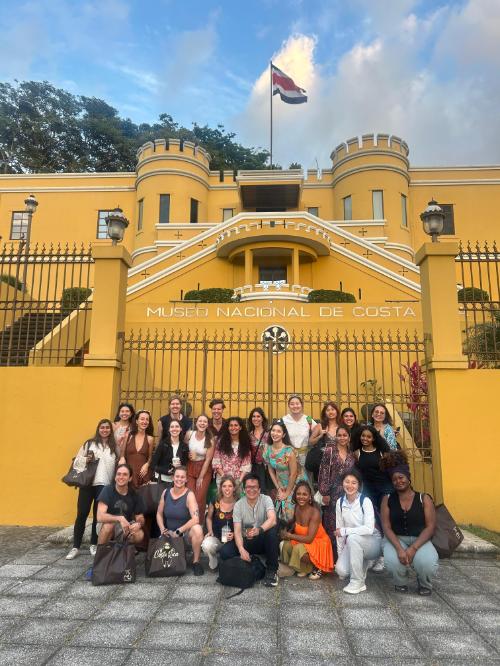
In January 2026, graduate students from Teachers College participated in an immersive study abroad experience in Costa Rica, hosted in partnership with the United Nations mandated University for Peace. Designed around education, conflict, and peacebuilding, the program invited students into place-based learning where theory met lived experience and classrooms extended into communities.
Led by Dr. Garnett Russell, Associate Professor of International & Comparative Education Program, with support from Jazmin Guardado, International Projects and Partnerships Manager in the Office of Global Engagement, the program combined interactive seminars, site visits, guest lectures, and daily reflection to explore how education shapes identity, opportunity, and social change.
The partnership between the two institutions initially gained momentum and was energized by the Global Peace & Education Symposium held in Spring 2024 at Teachers College, which brought together TC & UPEACE faculty, TC alumni, and peacebuilding practitioners to explore peace education and peacebuilding within broader conversations on international education and human rights. Subsequently, in July 2024, UPEACE & TC signed a Memorandum of Understanding at the UPEACE campus in Costa Rica to formalize this collaboration. This study abroad experience underscored an important step in continuing the collaboration between Teachers College and the University for Peace. This January 2026 program marked the second Costa Rica study abroad collaboration between Teachers College, Columbia University and the University for Peace.
Throughout the program, students engaged directly with peacebuilding practitioners and organizations working at the intersection of education and development. From conversations with local educators to visits with community-based initiatives, participants encountered perspectives that challenged assumptions and deepened understanding. Many described moments when abstract concepts suddenly became tangible, as global frameworks collided with local realities.
Alongside academic growth, students were encouraged to reflect on their own positionality within global education spaces. Through guided discussions and informal conversations, participants grappled with questions of privilege, responsibility, and what it means to engage ethically across cultures. These reflections were complemented by formal lectures from UPEACE faculty and Dr. Russell, a guest lecture from UNHCR, and an applied, hands-on workshop focused on humanitarian and refugee assistance and conflict resolution.
Jazmin Guardado accompanied students throughout the trip, supporting both logistics and learning while helping foster a strong sense of community among participants. Reflecting on the experience, Jazmin emphasized the importance of creating spaces where students can connect deeply with both places and people.
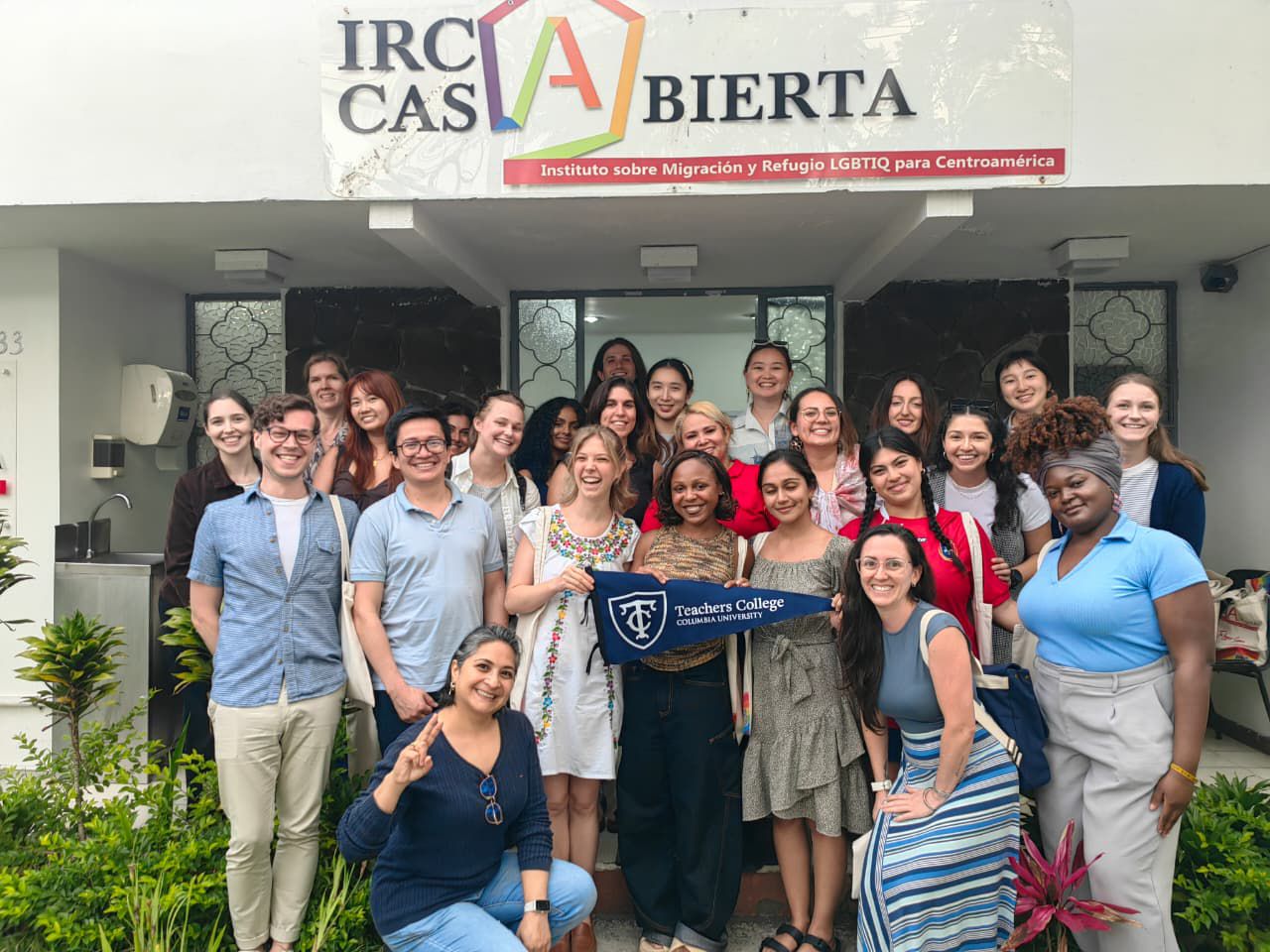
“Peacebuilding requires, amongst many other components, a deep commitment to relationship building – and it is hard to see that in action when speaking abstractly about it from a classroom in New York. I was deeply humbled both by our generous hosts (IRCA CASA Abierta, Fundacion SIFAIS, UNICEF Costa Rica, Inter-American Court of Human Rights, Cafe Toledo, and La Casa del Alto), as well as our TC students who showed such a natural ability to make connections in new environments and across cultures and language barriers.”
Students also left with practical skills, including cross-cultural communication, critical thinking, collaboration, and adaptability. For several participants, the program helped clarify future paths in international education, peacebuilding, policy, and humanitarian work.
“The Costa Rica Study abroad program with UPEACE provided me a much needed reset. Since being back I’ve recognized more faces in the TC hallways, gained a confidence in myself I didn’t know I had before, as well as living the Pura Vida lifestyle while in NYC. I applied on a whim for this program and I am so happy I did. I would highly recommend it to any TC student, even for those outside the education departments like myself.” - Max Sklar, 1st year MA student in Psychology in Education
Of course, learning did not stop when class ended. Shared meals, group travel, and late-night conversations created space for connection and collective reflection, reminding students that some of the most meaningful learning happens outside formal sessions.
“My time in Costa Rica was one of the most transformative parts of my experience at Teachers College. What stayed with me most was seeing how community-based organizations approach education not as a system of delivery, but as a space of care, dignity, and relationship.” - Catherine Zhang, 2nd year MA student in International & Comparative Education program
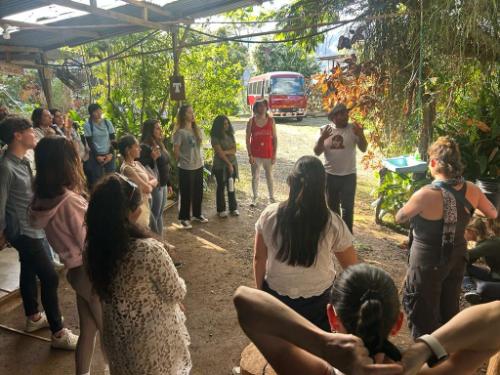 The Costa Rica study abroad program reflects Teachers College’s commitment to experiential, globally engaged education through its partnership with the University for Peace. More than a single course, it offers students the opportunity to think deeply, connect across cultures, and imagine new ways education can contribute to a more just world.
Students eager to take their learning global can look forward to upcoming study abroad opportunities in France, Italty, Morocco, and Argentina, offering new ways to explore education, culture, and social change across diverse international contexts!
“One of the aspects I valued most about the Study Abroad experience was the balance between theory and practice. Through courses with Garnett Russell and faculty from the University for Peace, whose work across diverse Latin American contexts enriched our discussions, I engaged with key dimensions of peace education such as migration, the environment, and gender. These conversations were continually grounded through visits to organizations and institutions in San José, which made it possible to problematize theoretical frameworks through real-world experiences and to confront the tensions between the normative ideals of peace education and the limits of work on the ground. Observing peacebuilding efforts across multiple scales, from grassroots initiatives like Fundacion SIFAIS and Finca El Toledo to national and international institutions including IRCA Casa Abierta, UNICEF Costa Rica, and the Inter-American Court of Human Rights, broadened my understanding of how peace is negotiated and enacted in practice. Taking place at a pivotal moment in my doctoral training, this experience expanded my perspective beyond my primary research focus and allowed me to return to my work with fresh analytical lenses.” - Leonardo Arevalo-Rojas, Doctoral Candidate in International and Comparative Education program