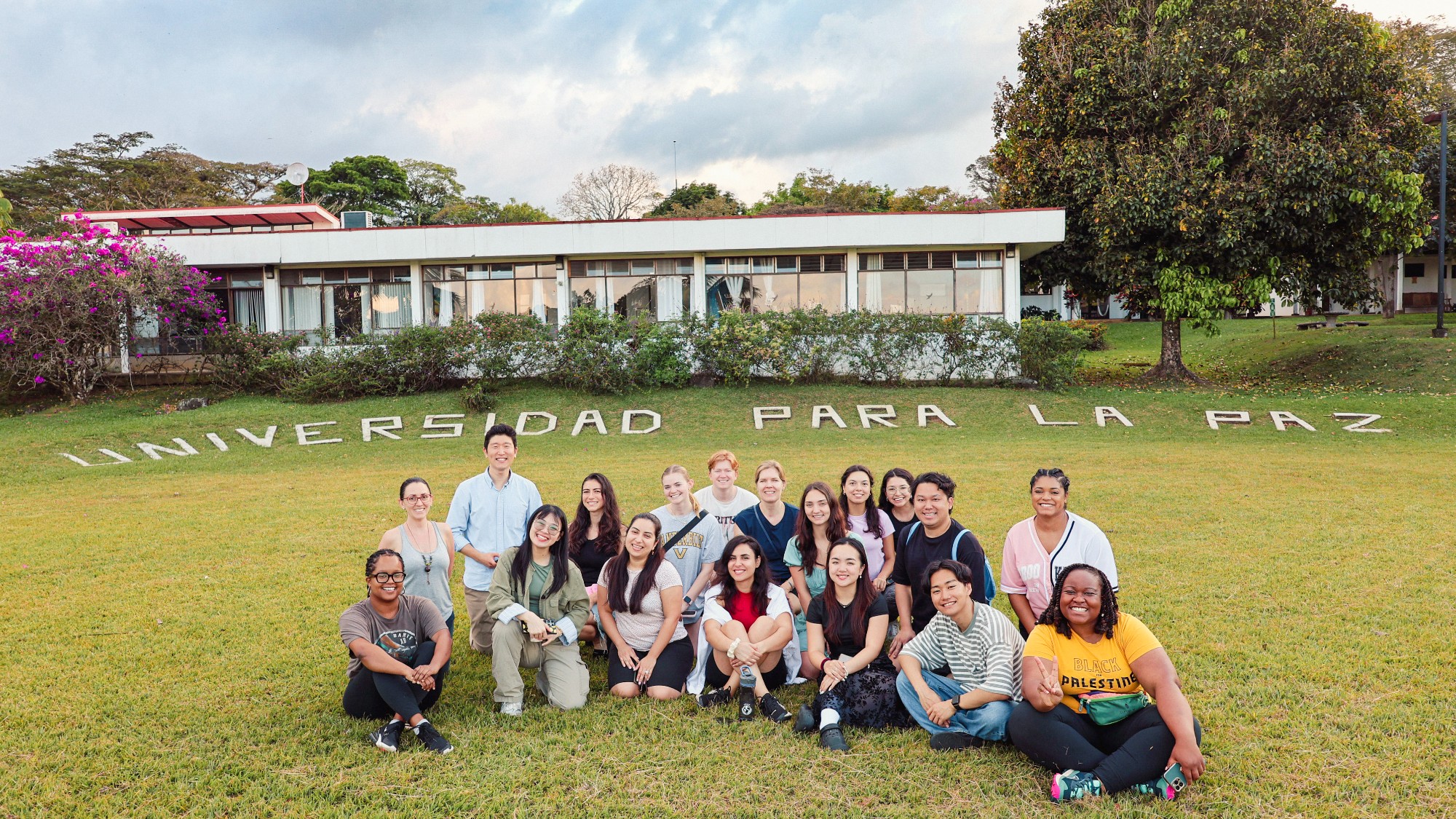
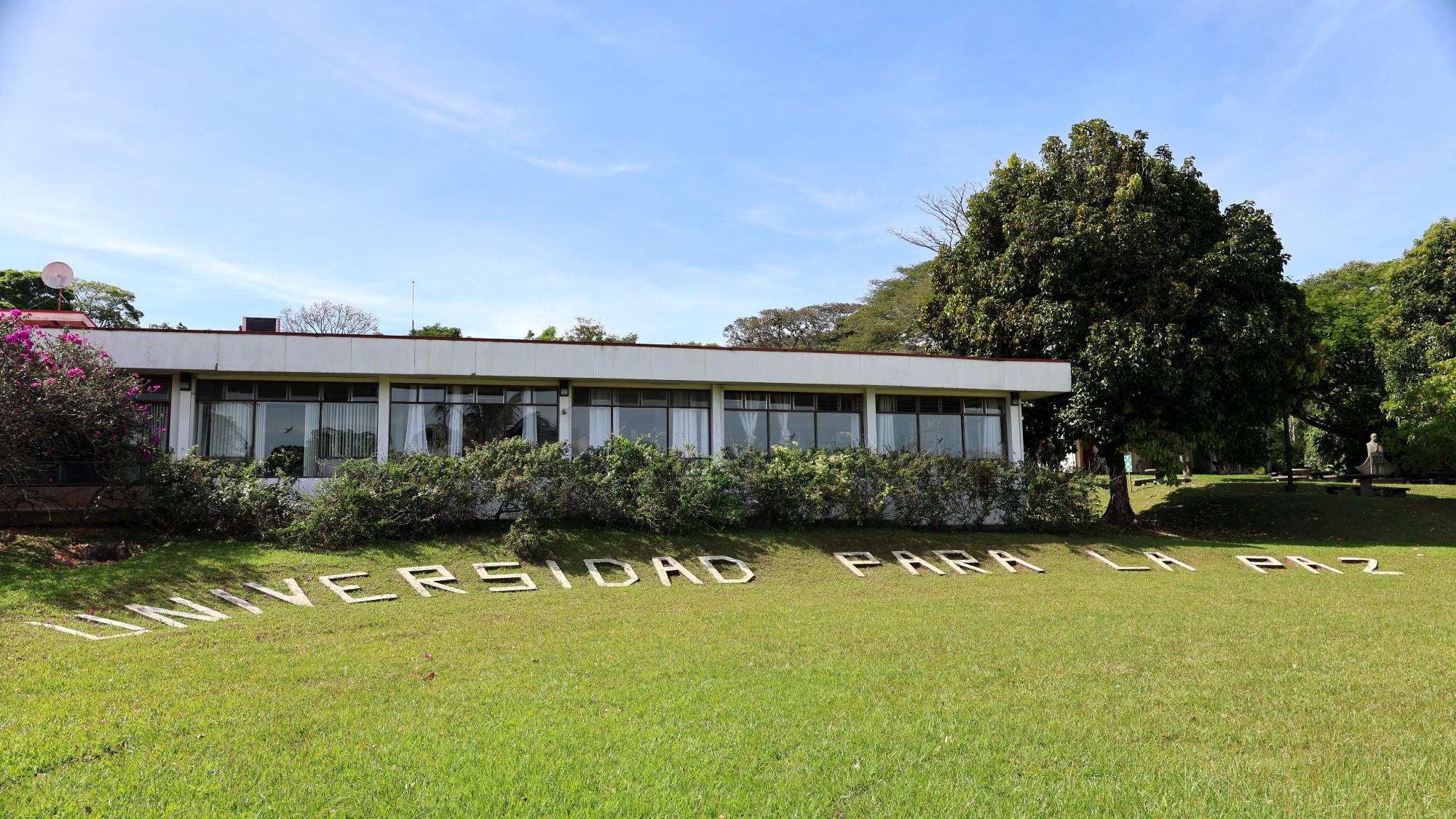
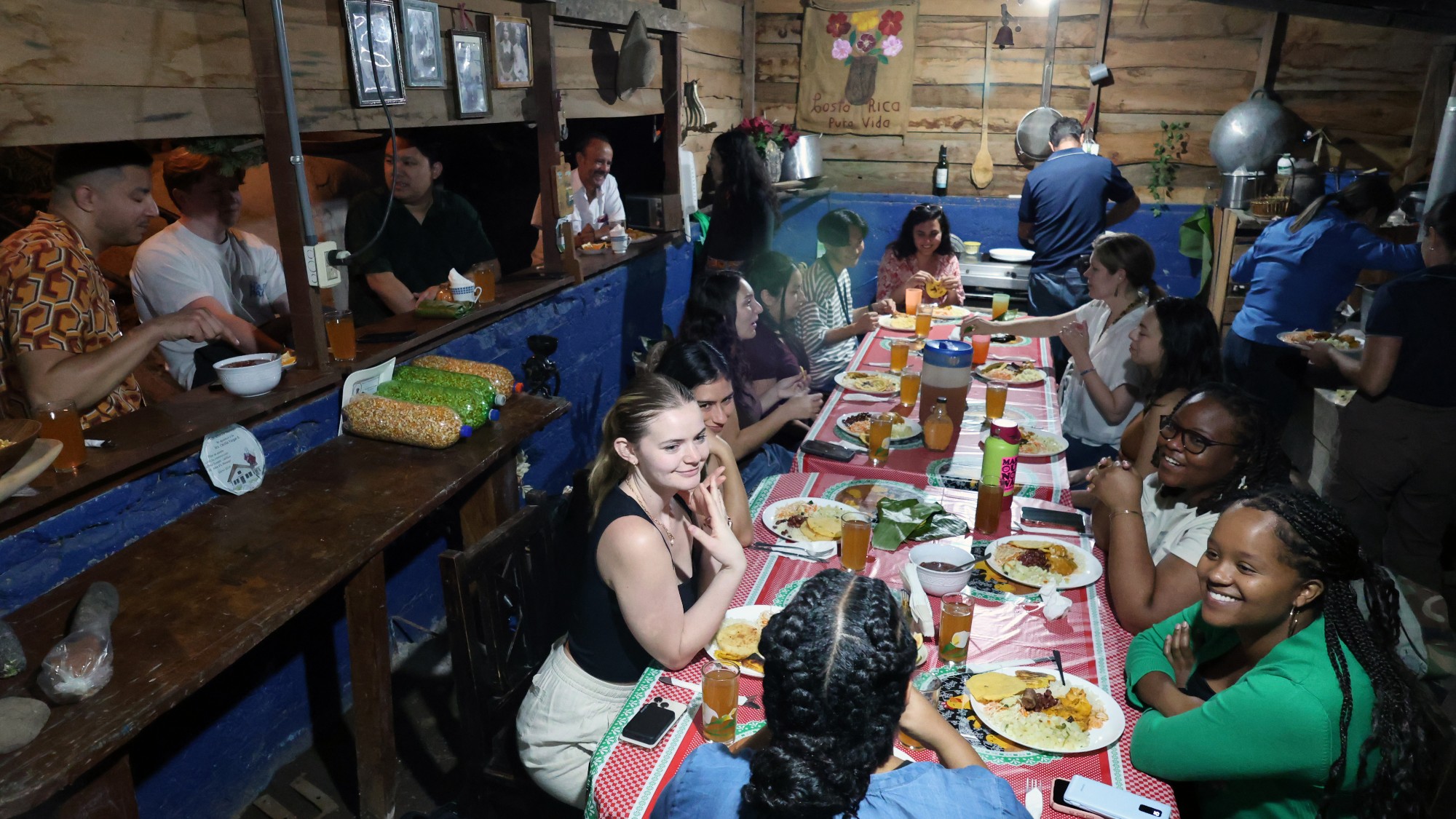
In January 2025, a group of 16 graduate students from Teachers College, Columbia University, embarked on a transformative academic journey to Costa Rica. Organized by the Office of Global Engagement in collaboration with the United Nations University for Peace (UPEACE) and led by Prof. Garnett Russell from the International and Comparative Education Program (ICEd), this ten-day study abroad program explored the intersections of education, conflict, and peacebuilding. While the itinerary included various site visits throughout San José, the majority of sessions were held at the UPEACE campus in Ciudad Colón, an institution uniquely mandated by the United Nations to advance peace education worldwide.
Carousel
Studying Education, Conflict, and Peacebuilding in Costa Rica
Costa Rica provides a unique and fitting setting for the study of education’s role in fostering peace. Unlike most nations, Costa Rica abolished its military in 1948, redirecting those funds toward social welfare, education, healthcare, and environmental conservation. This political choice has positioned the country as a global model for sustainable peacebuilding and human rights advocacy. At UPEACE, the group explored the multifaceted relationship between education, conflict, and peacebuilding. The curriculum delved into critical themes such as migration, gender and identity, sustainability, and transitional justice. Through lectures, discussions, and site visits, students analyzed how education serves both as a tool for conflict resolution and a mechanism for social transformation.
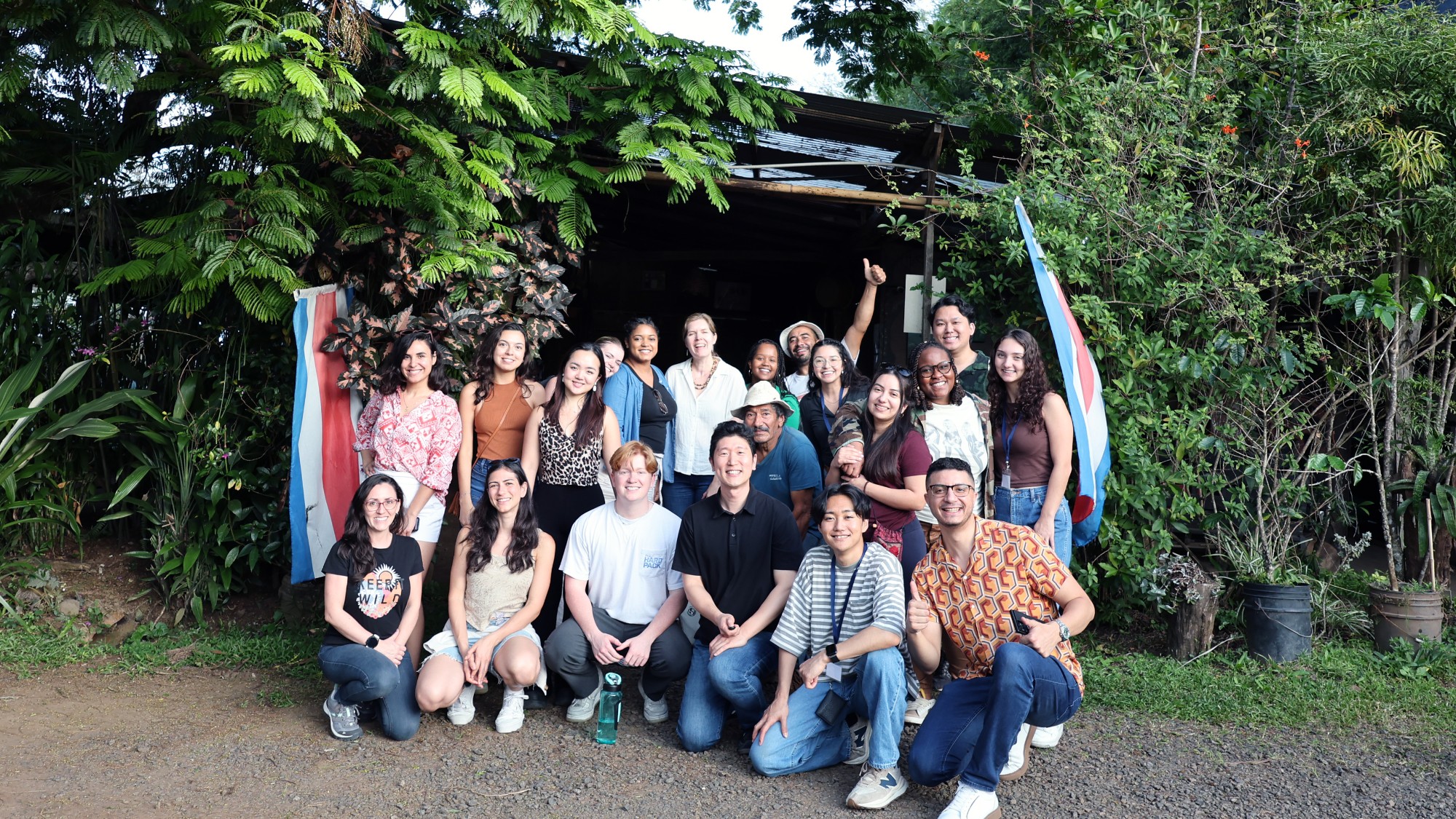
Beyond the university walls, students engaged with international organizations such as UNICEF, gaining first hand insights into programs that support displaced populations and marginalized communities. Local organizations, including Fundación Sifais and Casa Abierta, showcased how education is leveraged in different ways—through sports, leadership training, and community dialogue—to foster inclusion and equity. By immersing themselves in Costa Rica’s socio-political landscape, students witnessed how peace wasn’t just present through the absence of war, but was demonstrated as an active, ongoing process—one upheld through education, social initiatives, and sustainability efforts.
ICEd Student Reflections: Insights and Impact
How did the course challenge or reinforce your beliefs about education’s role in peacebuilding?

For Sierra Cazassa (Second-Year MA Student, International and Comparative Education), the experience reinforced her belief that education is a vehicle for inclusion and social empowerment. Visiting organizations like Fundación Sifais, she saw how education extends beyond the classroom to foster dialogue, creativity, and leadership in marginalized communities. She was particularly struck by how art and music were used as tools for peacebuilding, reshaping her understanding of what education can look like.
“Through discussions with classmates and conversations with local leaders, I saw firsthand how education creates spaces for open dialogue and social empowerment. Organizations like Fundación Sifais demonstrated that when education extends beyond traditional classrooms, it becomes a powerful force for inclusion and peace.”
For Jamie Marshall (First-Year MA Student, International and Comparative Education), Costa Rica’s commitment to demilitarization challenged his assumptions about national security. Initially skeptical, he came to see how education, civic engagement, and strong institutions work together to sustain peace. Observing how peace is embedded in Costa Rica’s national identity—from school curricula to community-led initiatives—reshaped his perspective on how societies can prioritize peacebuilding.
“I learned about the history and culture of Costa Rica and was able to see "strength" from a different perspective. Costa Rica demonstrates how strong institutions, democratic governance, and diplomacy can serve as mechanisms for stability. Costa Rica’s emphasis on education as a peacebuilding tool highlights the power of addressing root causes of instability, such as poverty and inequality, in fostering long-term peace.”
For Joe Kim (First-Year MA Student, International and Comparative Education), visiting Casa Abierta, an NGO supporting LGBTQ+ migrants, was a deeply personal and transformative experience. It challenged him to confront and unlearn biases, illustrating how education is as much about reflection and empathy as it is about knowledge. The open conversations he had there reshaped his understanding of peacebuilding as an ongoing process of listening and learning.
“Education has the power to unlearn as much as it teaches. The conversations I had with LGBTQ+ immigrants at Casa Abierta pushed me to examine my own perspectives and reminded me that peacebuilding starts with listening and understanding others’ lived experiences.”
For Paola Abril (Second-Year MA Student, International and Comparative Education), the course expanded her understanding of how migration, environmental sustainability, and gender intersect with education and peace. Engaging with faculty and NGOs deepened her knowledge, but learning alongside a diverse cohort of peers was just as impactful. This experience strengthened her commitment to international education policy, where she hopes to integrate peacebuilding principles into global learning environments.
“Both the class lectures led by Prof. Garnett Russell and our site visits to local, migrant and refugee-serving NGOs, deepened my knowledge of these intersecting themes. In and outside of class, each one of our classmates brought a unique perspective to our conversations, enriching our overall learning environment as we engaged in debates in our airy classroom overlooking San José and shared anecdotes over large, family-style meals. I can confidently say that I would not have as robust of an understanding of how education intersects with conflict and peacebuilding across a multiplicity of contexts without this study abroad experience.”
Looking Forward
The study abroad course in Costa Rica is now a Signature Study Abroad Course offered annually through the Office of Global Engagement in partnership with the University for Peace, providing future students with the same opportunity to explore education, conflict, and peacebuilding firsthand. For those interested in similar global experiences, the Morocco program on Education, Refugee & Migration Policies & Practices, led by Prof. Mary Mendenhall, offers an interdisciplinary, field-based approach to studying migration and education. This course examines Morocco’s critical role as both a transit and destination country for refugees and migrants en route to Europe, exploring the challenges, policies, and practices that shape their educational and psychosocial outcomes. Applications for this program are now open and will be accepted through March 15th at 11:59 PM ET.