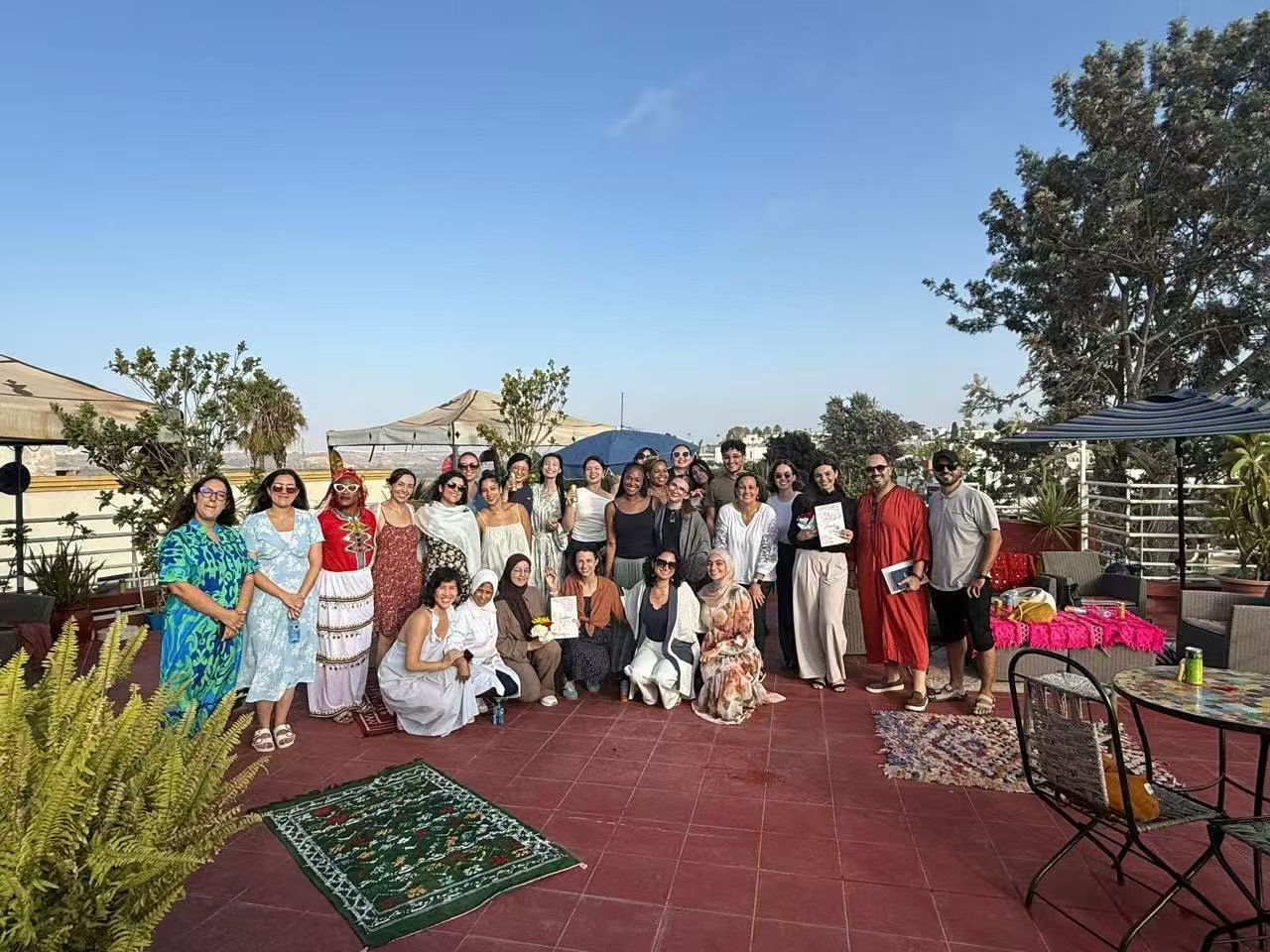
In July 2026, 20 graduate students from Teachers College and Columbia University traveled to Morocco through the course Education, Refugee & Migration Policies & Practices, led by Dr. Mary Mendenhall and supported by IES Abroad and TC’s Office of Global Engagement. One word that came to describe our collective learning experience was “tension.” During Q&A sessions with guest speakers, in classes with Dr. Mendenhall, and over meals, we tried to reconcile the many contradictions we encountered: learning about the precarity many migrants face in Morocco while we moved freely through the country ourselves; confronting how labels like “refugee” or “economic migrant” carry stigma and can separate people who may share similar hopes and dreams for their futures; hearing first-hand accounts of discrimination alongside the state’s official stance of welcoming migrants; and, more fundamentally, trying to study migration responsibly in Morocco while grappling with the dehumanizing approach to migration currently unfolding in the United States. And finally, we sat with the tension between the difficult topics we discussed and the beauty of Morocco - the warmth of the people we met and the country’s rich culture and history.
Trip Overview
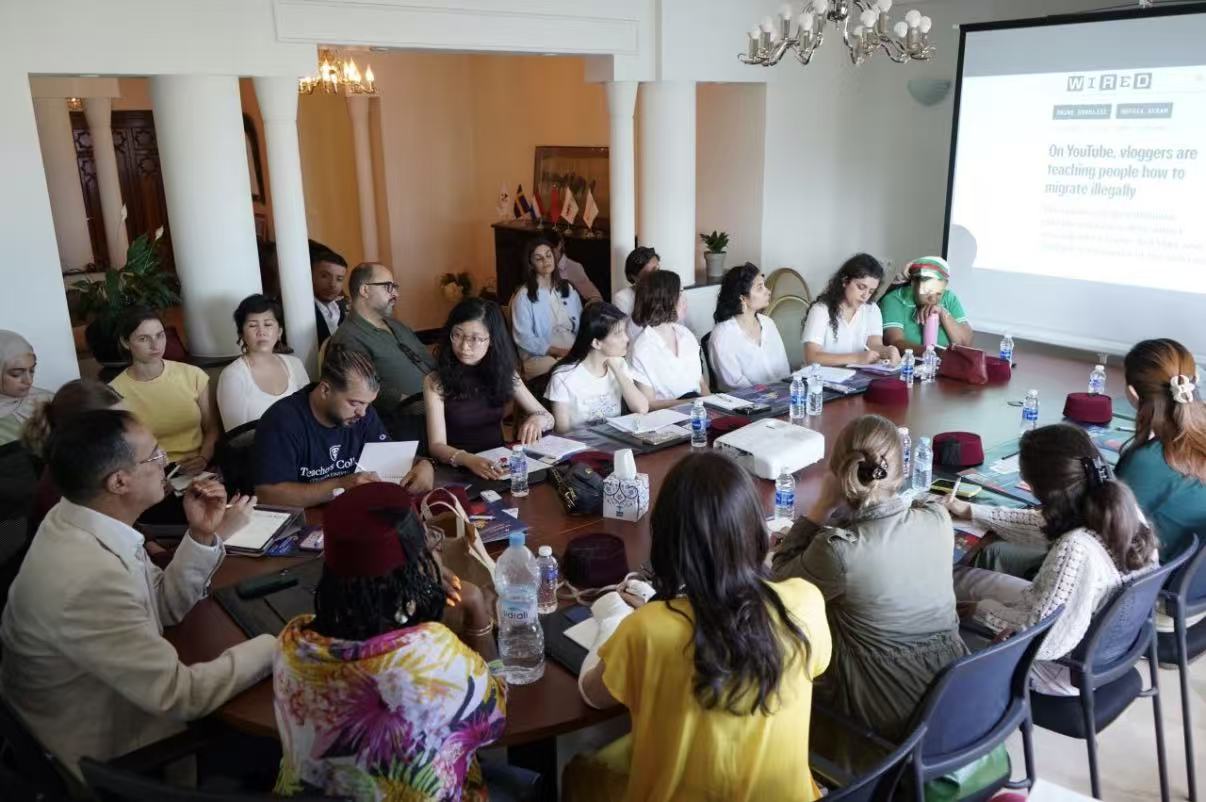
Over twelve days, the cohort moved between classroom sessions, guest lectures from Moroccan and international scholars, and site visits across Rabat, Fes, and Tangier. Together, these three cities trace Morocco’s layered position as a country of origin, transit, and destination for migration.
Rabat: Where Policy Is Written
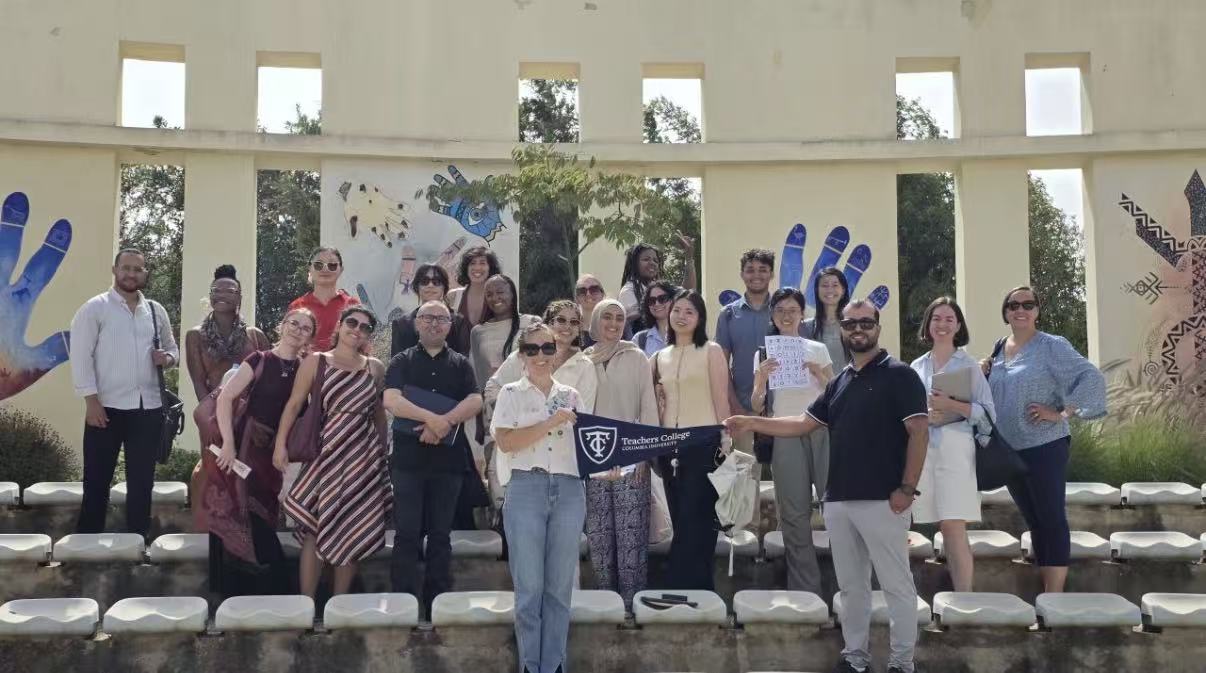
Our first week was based in Rabat, beginning with orientation at the IES Center and a guided tour of the city — including the Kasbah of the Udayas, the Old Medina, Hassan Tower, and the Mohammed V Mausoleum — alongside a welcome dinner at Dar Keltoum. Here, in the capital, the course dove into the history of migration in policy and the on-the-ground work of organizations. The group met with the African Migration Observatory; Groupe Antiraciste d'Accompagnement et de Défense des Étrangers et Migrants (GADEM), an organization working directly on migrant advocacy and integration; Fondation Orient-Occident (FOO), which supports migrants and refugees through social and psychological support; United Nations High Commission for Refugees (UNHCR); and the Royal Institute of Amazigh Culture (IRCAM). We were struck by how issues of funding and legal hurdles challenged organizations, as well by how diverse and powerful the stories of the individuals were.
Tangier: Migration's Historical and Present Edge
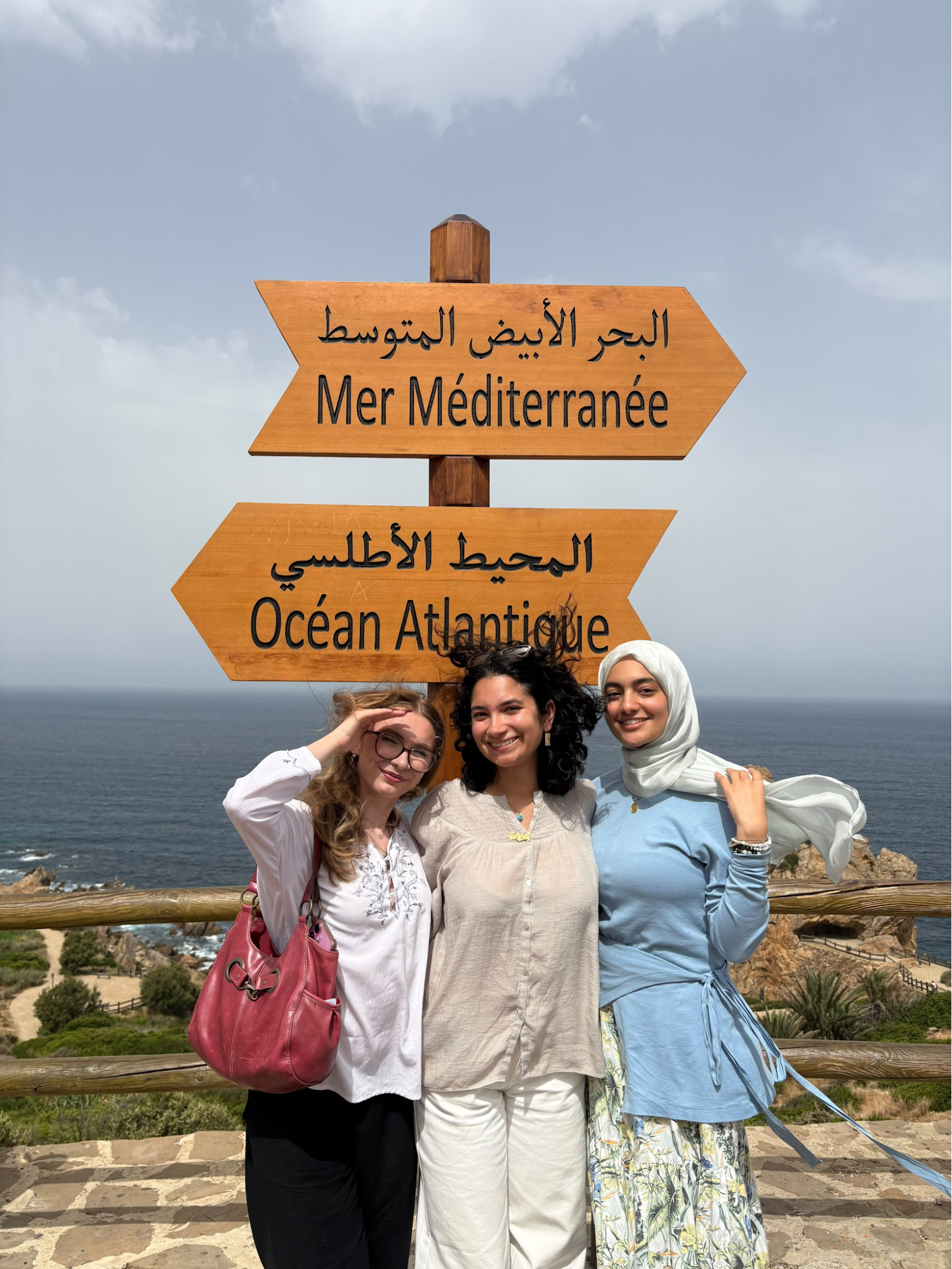
The second half of the program moved to Tangier by fast train, beginning with a guided city tour that included the Old Medina, the Fortified Casbah, and Café Hafa. Tangier is located just 14 kilometers across the sea from Spain. Here, a guest lecturer placed Tangier's present-day migration pressures within a much longer history — the city's position as a crossing point long before it became a checkpoint. The site visits included the DARNA Association, which works across different pillars to support women, children, and families, and the Nordic Center for Conflict Transformation.
Student Reflections
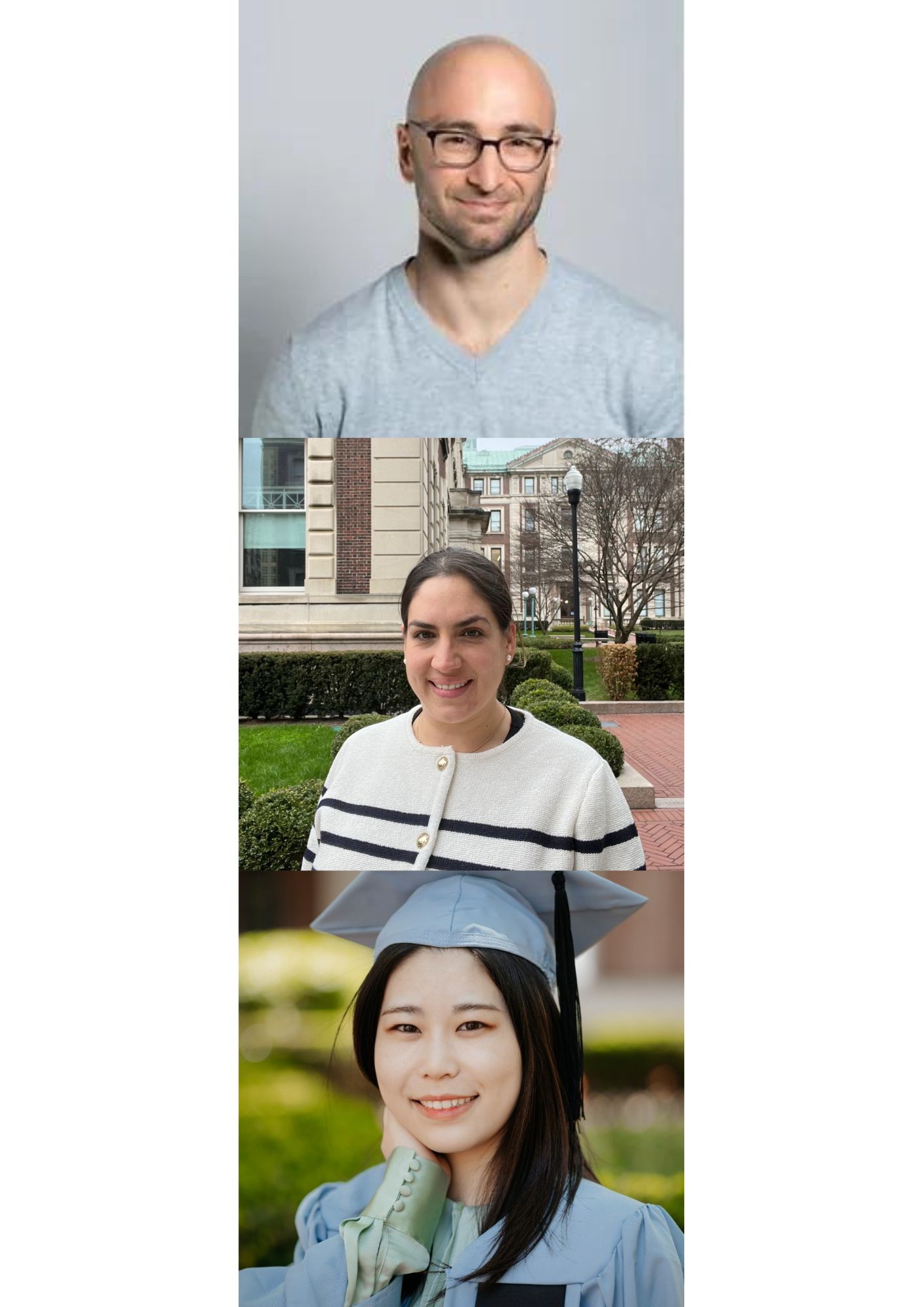
“Unlike classes I’ve taken in New York, which might focus on our own experiences or course readings, the Morocco class allowed us to reflect on and juxtapose experiences of so many different stakeholders. The academics studying the topic, the governmental agencies working through legal frameworks, the grassroots organizations attempting to address the needs of those the system didn’t, and the actual migrants themselves. It was illuminating to dive more deeply into the Moroccan context and see where stories overlapped, aligned, or contradicted each other. I was left with a strong sense of how multifaceted the migrant experience is.”
- Katarina Holtzapple, ICEP MA
“What struck me most deeply about our Morocco study abroad program was the resilience and strength of the migrants and refugees we encountered. Whether it was the Congolese women at DARNA who have rebuilt their lives through textile and culinary skills, the Palestinian woman who met with us at IES — currently pursuing her PhD while teaching English at an NGO — or the children we met at the kindergarten run by the Orient Occident Foundation, each of them showed me a tenacity and vitality that I deeply admire. I also treasured every guest lecture we attended. Hearing Moroccan scholars and NGO leaders speak from such varied perspectives on migration, migration policy, and peacebuilding made me realize just how far we still have to go in addressing these issues. Another lesson I take from this experience is that the distance between policy and practice is vast, filled with real-world obstacles — and that education has a role to play here that should not be underestimated. For those of us training to be educators, this is a matter we must take seriously. Studying alongside peers from diverse cultural backgrounds, and having the chance to engage closely with local communities as well as refugees from Sub-Saharan Africa and the Middle East, reminded me of how essential mutual respect across cultures truly is.”
- Miaofan Tang, ICEP MA
"The graduate study-abroad program in Morocco was an unforgettable opportunity that challenged my perception of self and the world around me. This trip was also a great sequel to Professor Mendenhall's Summer A course - ITSF 5110: Education, Refugees & Forced Migration. While her Summer A course provided a broad overview of the refugee experience, this course allowed us to delve into a specific context, Morocco, for application. In reflecting on this experience, I have three take-aways:
- Storytelling is a decision made by the storyteller, not an obligation to the masses for public consumption. - Storytelling creates connection and serves as a tool of advocacy. In Morocco, however, I became deeply aware that storytelling can also be exhausting and extracting. To continue to release parts of one’s self into a world that has already taken so much is brutal. It was at the crossroads of this cognitive dissonance that I resolved to live in the tension between storytelling and silence, understanding the power of choice that storytellers possess. It was deeply meaningful to honor such a choice during our time in Morocco. And now, when stories are shared, I recognize the responsibility I carry to protect the story and the storyteller. We must all ask ourselves, “What will we do with these stories” to affect change, give back to the storyteller, and express gratitude for entrusting us with parts of him or herself.
- C.R.E.A.M. = Cash. Rules. Everything. Around. Me. - Before Morocco, I was unaware of how much foreign aid the US government previously provided. The depletion of USAID has significantly affected the work of humanitarian aid organizations internationally. Additionally, the EU is paying Morocco and other North African countries billions of Euros for border externalization, which has encouraged inhumane actions among border patrolling authorities. The decrease in funding from America and the increase in funding from the EU have created a precarious situation for many migrants and refugees in Morocco, particularly those from sub-Saharan Africa.
- There’s Room for Everyone at The Table - I enjoyed hearing from various perspectives on the topic of human migration in Morocco. I was affirmed and challenged in my beliefs by site visits, guest lecturers, and my colleagues. Varied perspectives are important when discussing critical issues because each person represents a demographic with similar thoughts. If we sit in silos or echo chambers, we never get a chance to challenge our thinking and/or that of someone else.”
- Gabrielle Westbrook, ICEP Ed.M.
Closing
We returned to Rabat on July 25 for a final class session with Dr. Mendenhall, workshopping how to translate what we'd seen into something usable — presentations, briefs, our own research going forward. In sum, we acknowledged the inherent tensions in migration work, reflected on initiatives and programs addressing migration in Morocco, and sought to understand what can change. Our experience was deeply shaped by being in Morocco, talking to people face-to-face and walking through the cities we were reading about. Yet, at the same time, we understood that our trip was short and there is more to learn. Each person left wondering how such a unique experience like this one now shapes our work, our lives, and our life-callings.
Written by Miaofan Tang, Gabrielle Westbrook, Katarina Holtzapple, and Issa Rooney